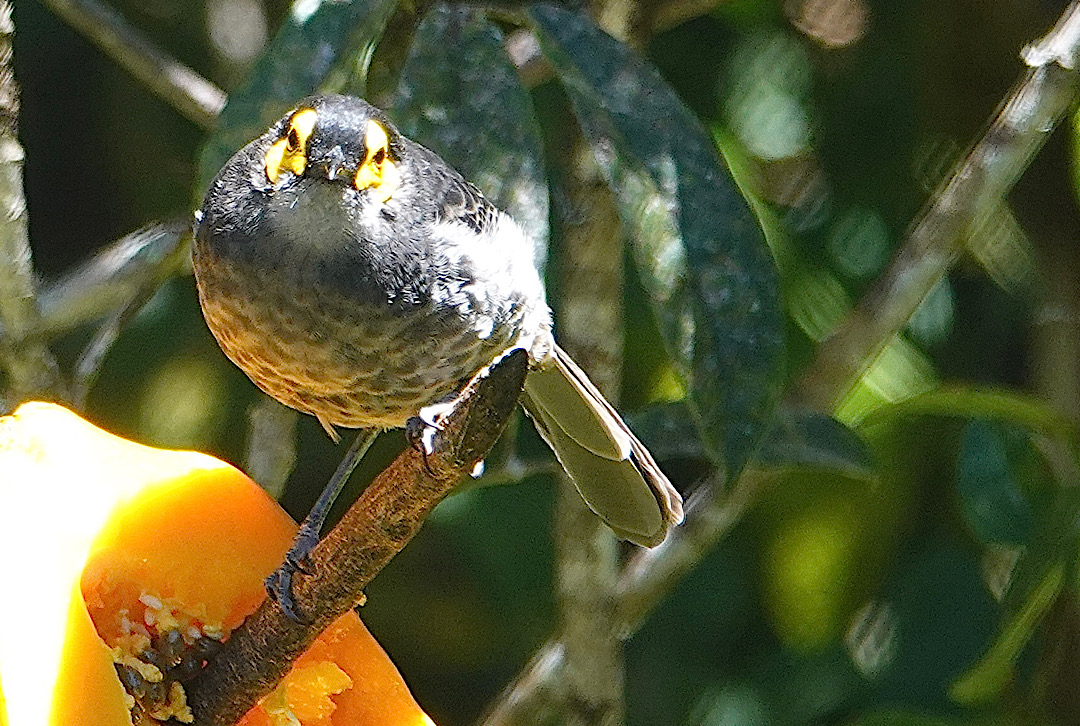
Some visitors come to PNG just for the natural wonders. Life here is fantastically diverse. The island contains about 5% of all the living species on the planet (a large percentage of which are found nowhere else). Its forests form the third-largest contiguous rainforest and contain more than 2000 species of orchids, some 2000 species of ferns, and more than 800 species of birds. Although our tour group’s focus is the human inhabitants, everyone was delighted to devote a chunk of one day this week to birds.
Because we’d had such a long day Tuesday (flying to Mt. Hagen in the Western Highlands, visiting its central market, driving to a village to attend the Independence Day celebrations there, and more), our group leader Christopher declared we would not try to depart well before dawn the next morning (the original plan). That would have allowed us to reach our first birding spot as the sun was coming up and the birds were at their liveliest. Instead we reached the Kumul Lodge around 10:30.
The lodge had two observation decks where guests could sit quietly, their lenses pointed at the fruit mounted on sticks set up near thick brush.
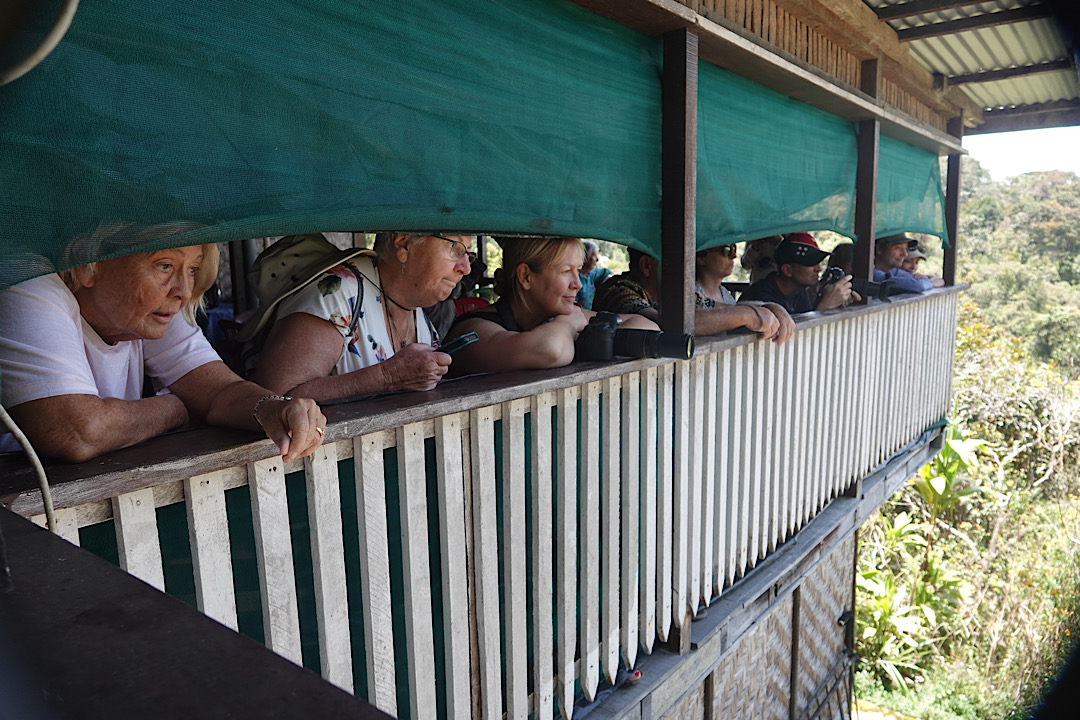
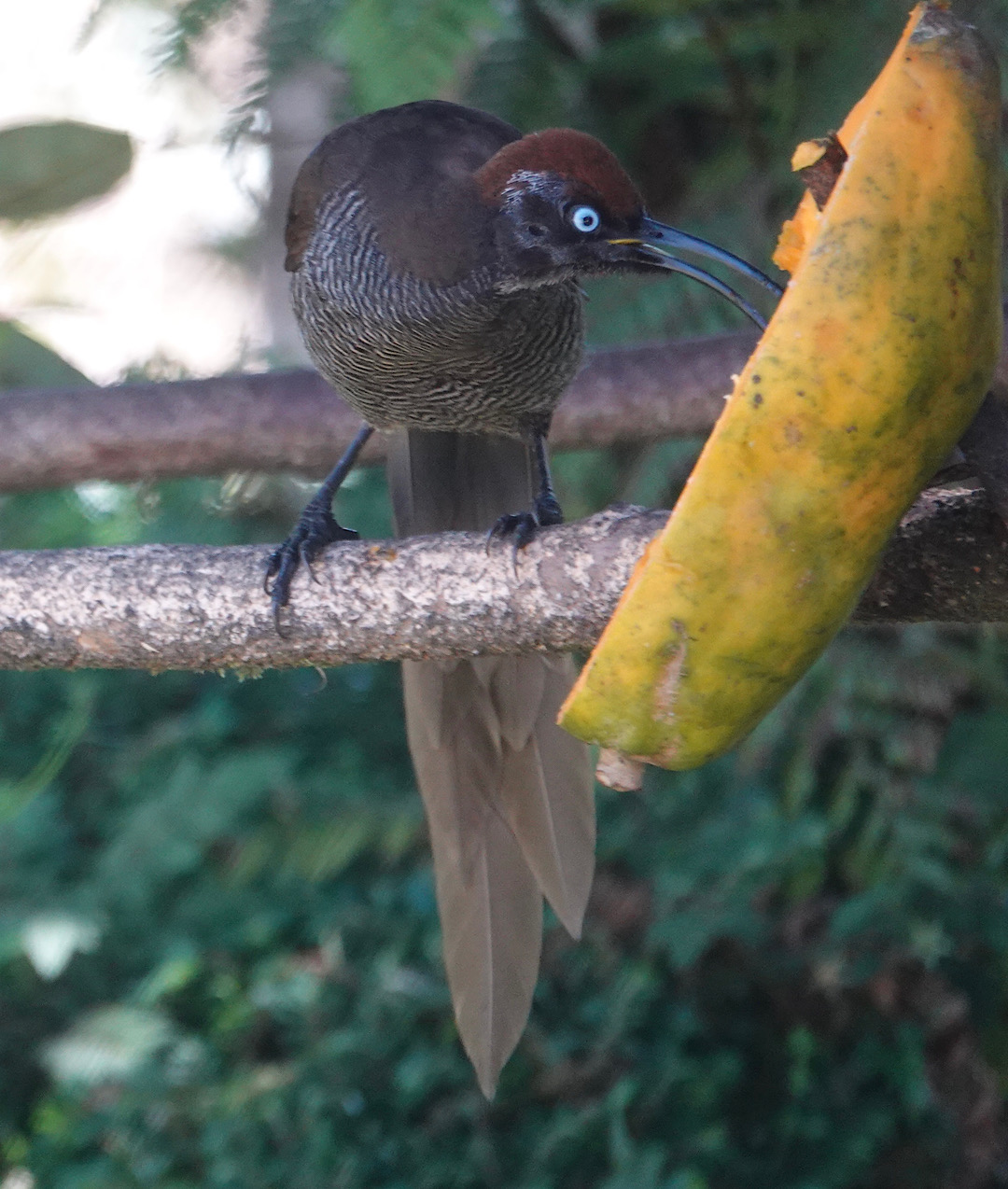
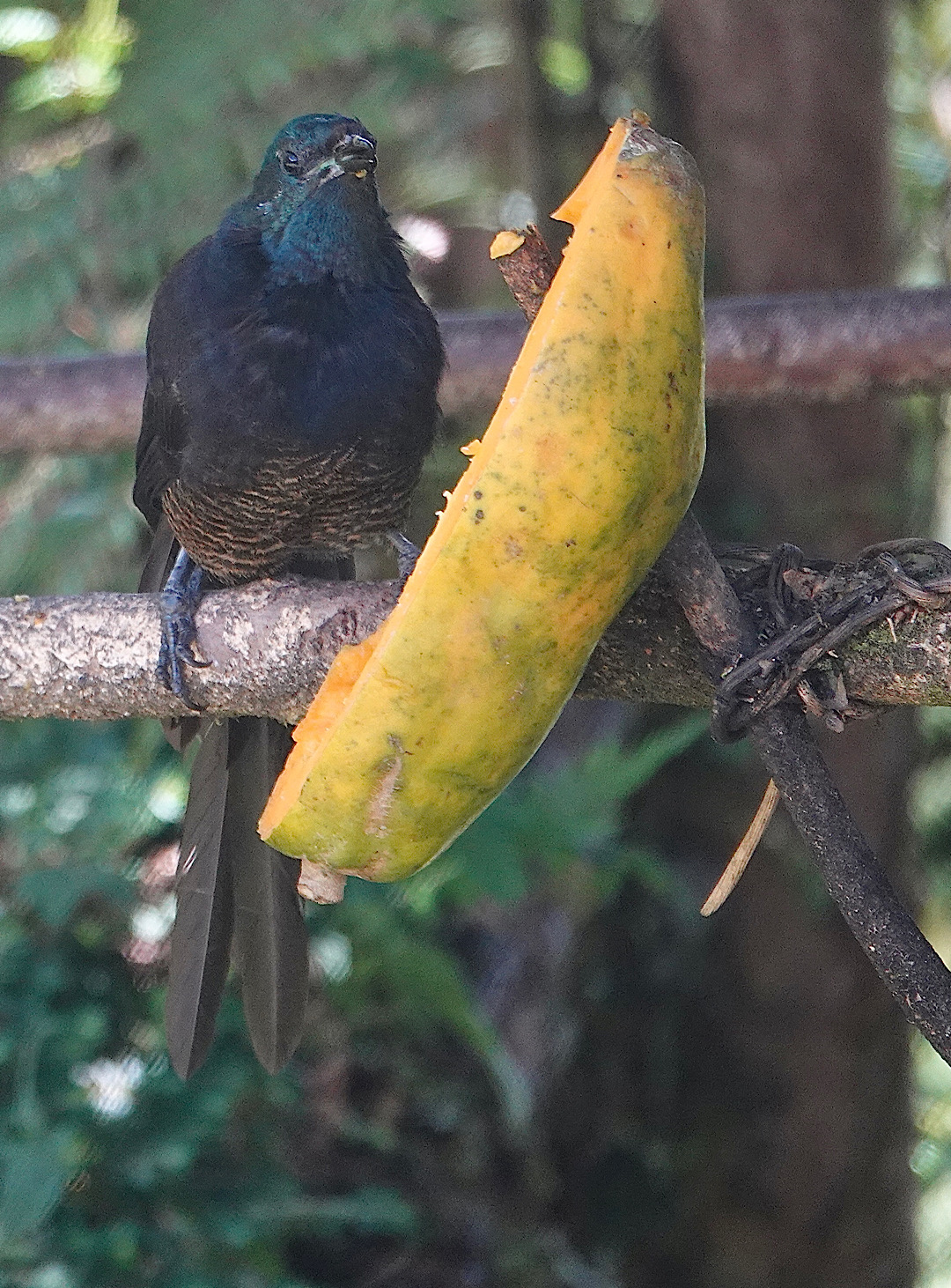
At once, shutters started clicking. Someone whispered that the long white object hanging from a perch across the yard was the tail of a Ribbon-Tailed Austrapia — one of the dozens of birds of paradise in PNG. There’s a case to be made that birds of paradise are the most amazing avians in the world. They perform fantastic dances when they’re courting mates. But they’re also very beautiful, even when not performing.
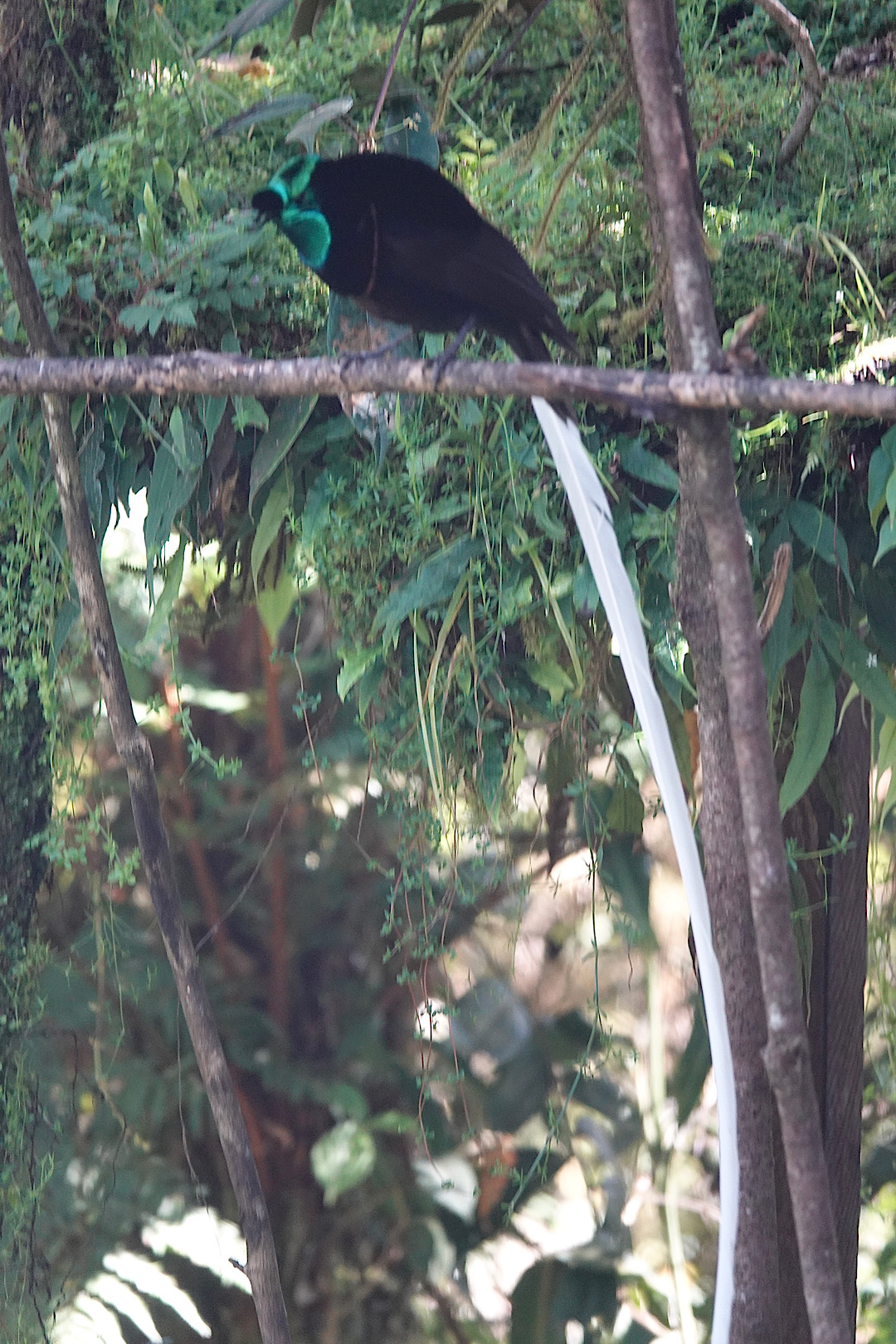
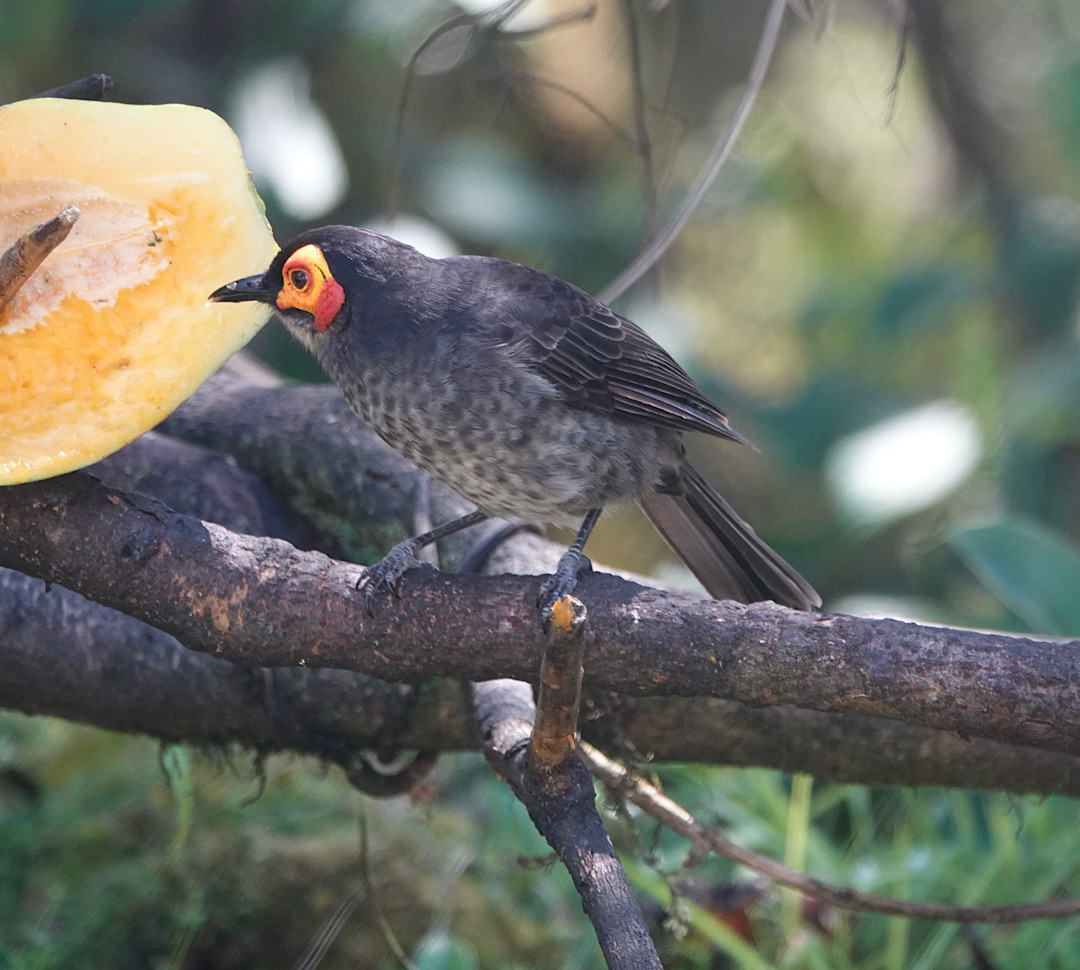
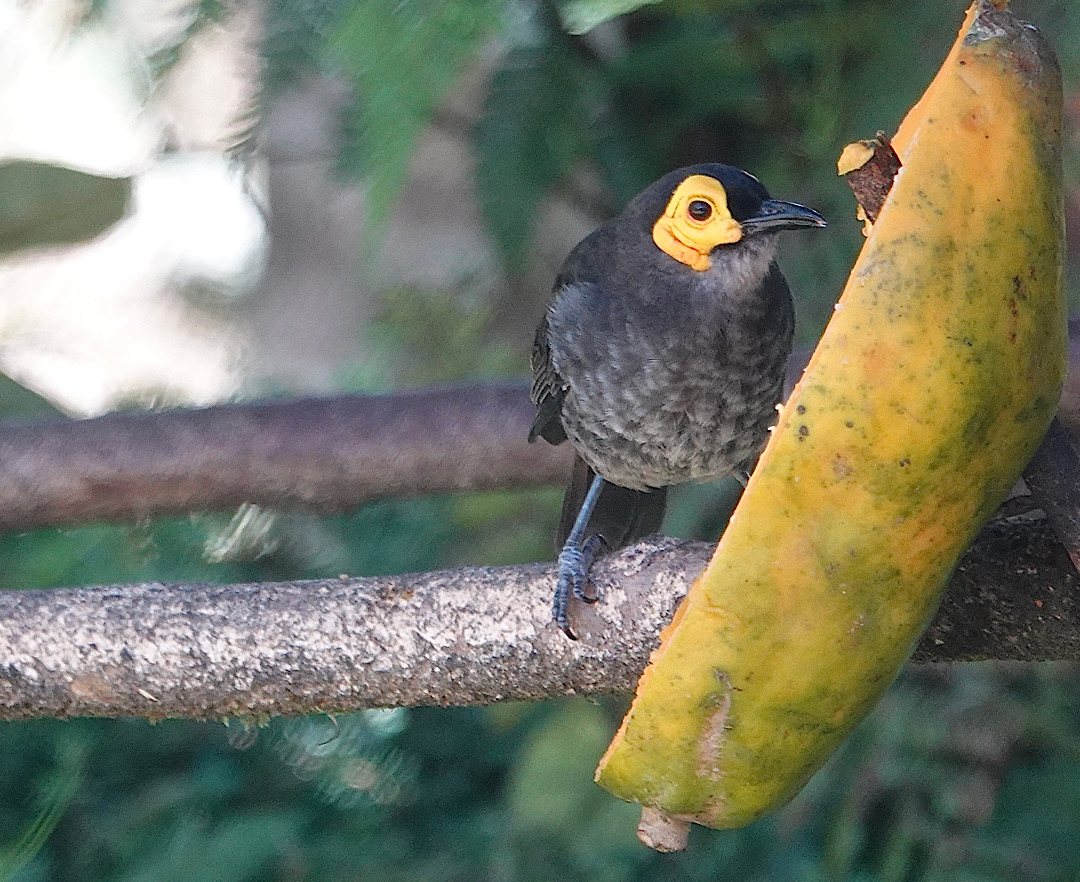
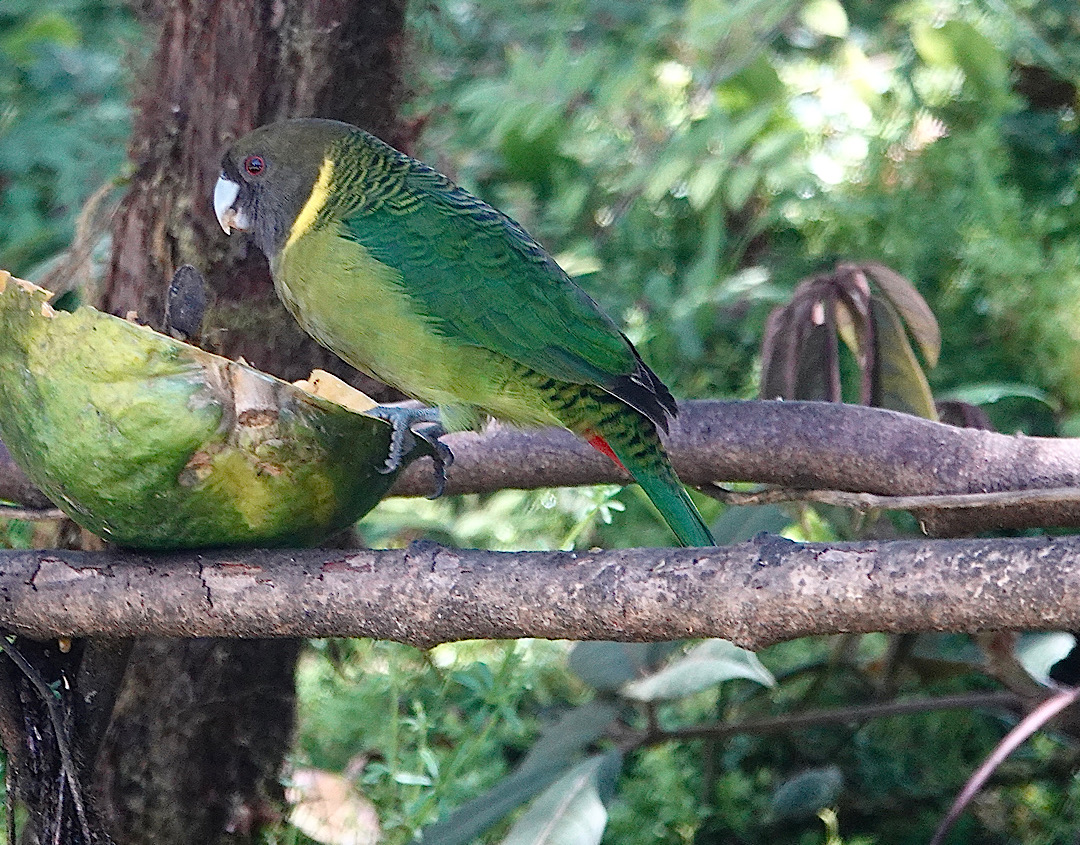
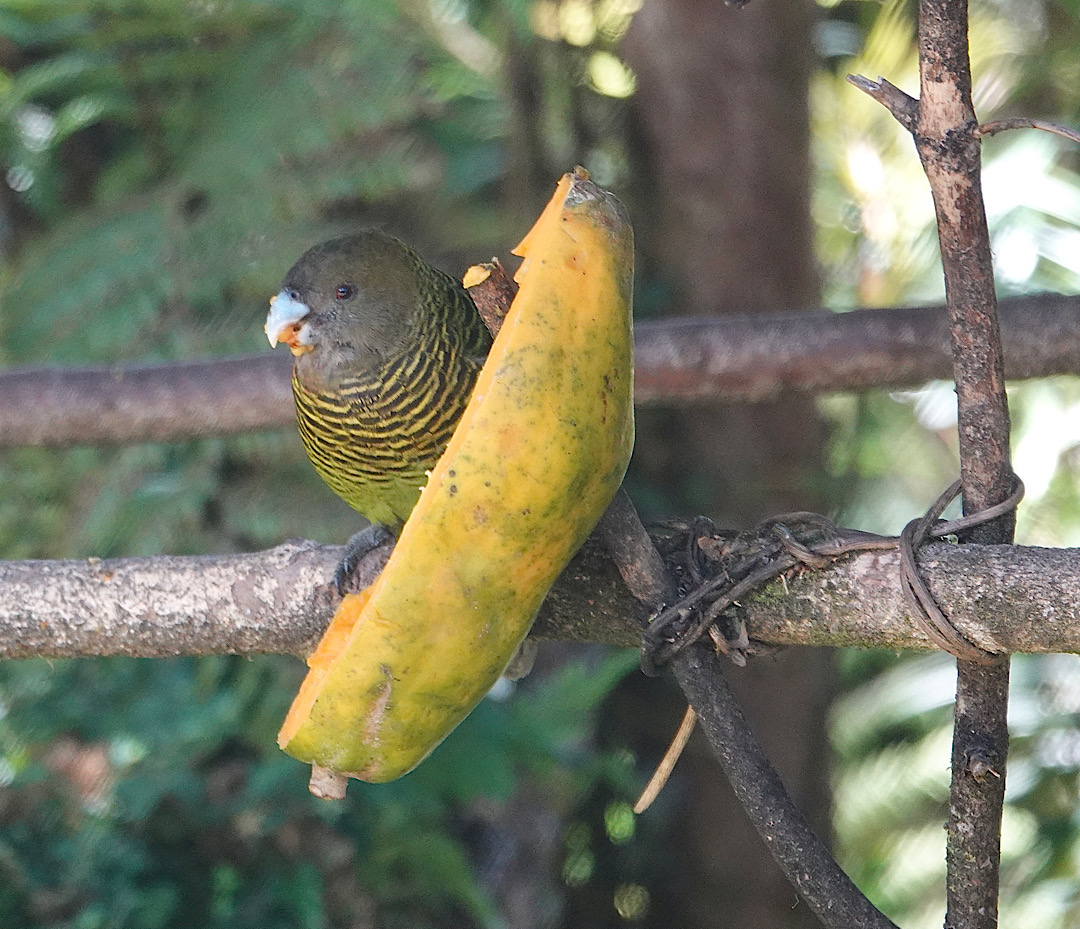
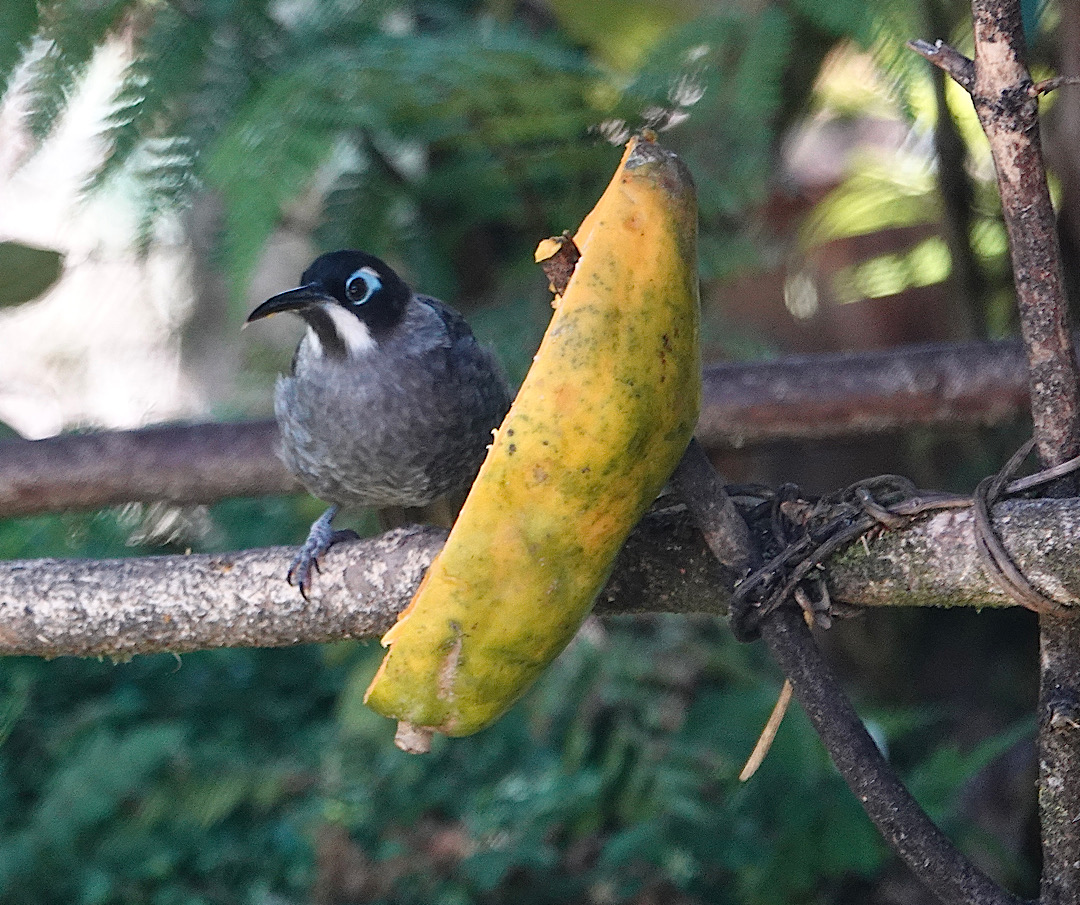
This fellow was very elusive; my best photo (above) wasn’t very good. But we saw many other beauties, including a couple different types of honeyeaters.
We ate lunch at the Kumul, then drove to another birding lodge not far away. On its observation platform, no one saw much of anything, so Christopher led us on a short hike up a hill to a spot overlooking a stand of forest. In short order, someone spotted a King of Saxony bird of paradise hidden in a distant tree. For me this was a frustrating experience. As hard as I tried, I couldn’t see it. Other group members tried to direct my gaze. Only when we were about to leave and I looked through someone’s very expensive binoculars, did I finally locate it. So if I had a birding list, I could add the King of Saxony to it.
I’ve never been tempted to start or maintain such a list, but I should keep a log of days spent outdoors in beautiful country, dazzled by the world around me. I’d have to add this one for sure.
 At home and abroad