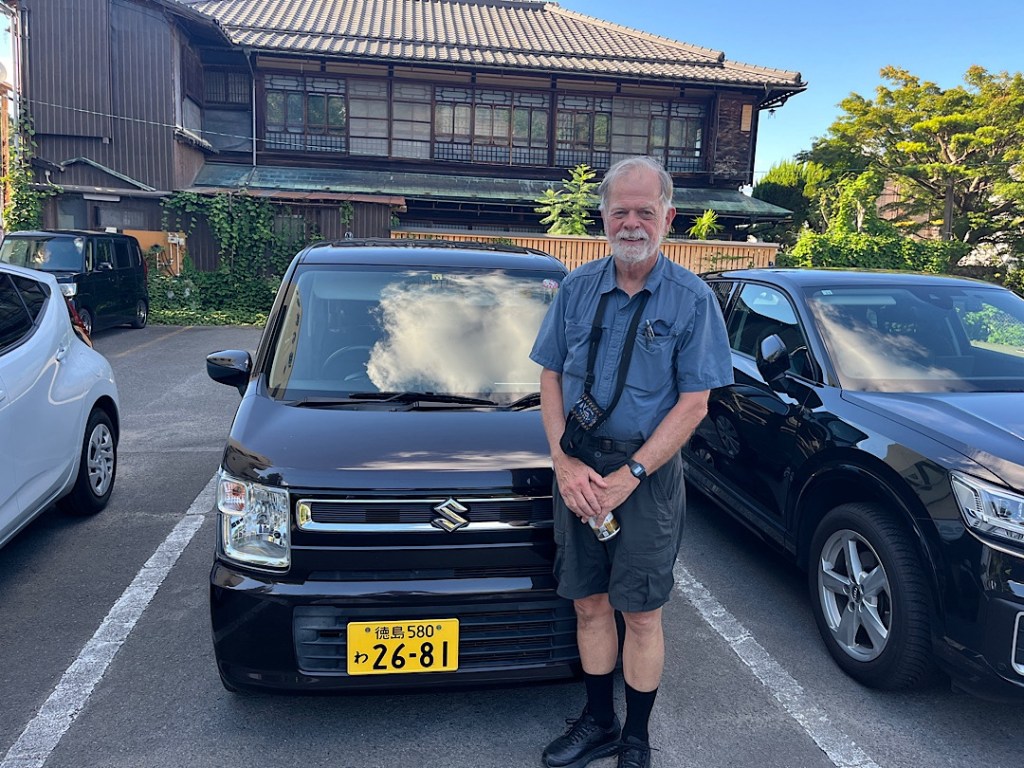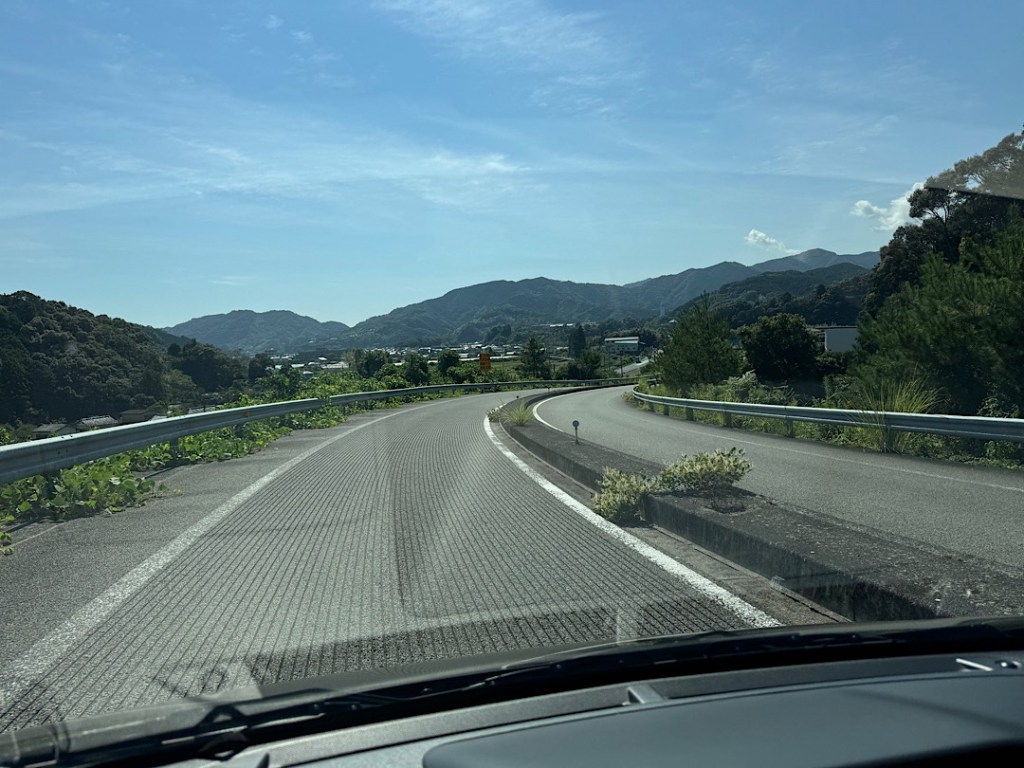
It looked tiny, but our little kei car handled well and felt surprisingly roomy inside.
After making a big loop around Shikoku, in the course of which we logged 579 kilometers (360 miles) on the odometer, we safely delivered our cute little Suzuki hybrid to the Budget car rental office in Matsuyama yesterday afternoon (Wednesday, 10/2). The experience taught me a lot about driving in Japan, and I’m happy to share some key lessons learned.
The bad:
Traffic flows on the left, and that requires some adjustment. However, after all Steve’s driving experience this past year (including our motoring all over Zimbabwe and braving four left-hand-drive Caribbean countries over really bad roads crammed with terrible drivers), he has never been more tuned up for driving on the left. He said the switch hardly required any mental adjustment.
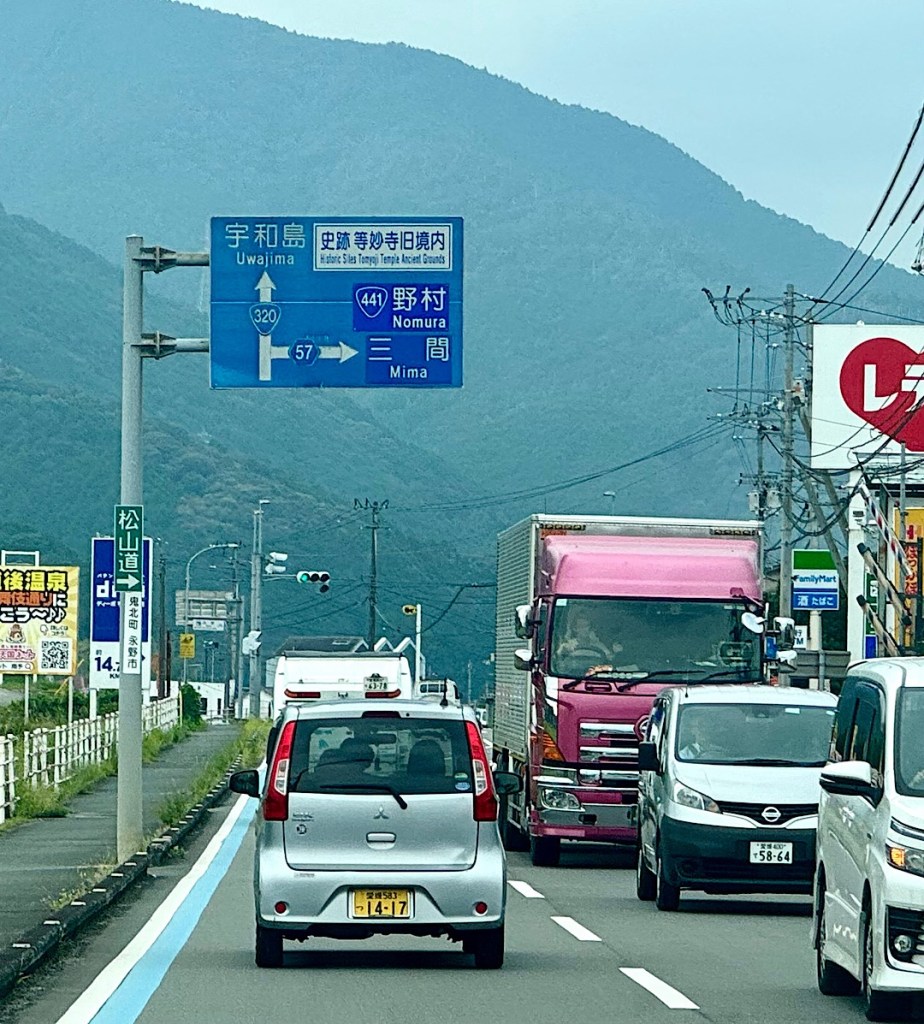
But both of us are essentially illiterate here, and Japanese road designers communicate a lot of information via signs. Although most big intersections included town names written in Roman letters…
Like this one
…many warnings were incomprehensible. It all required adjustment.
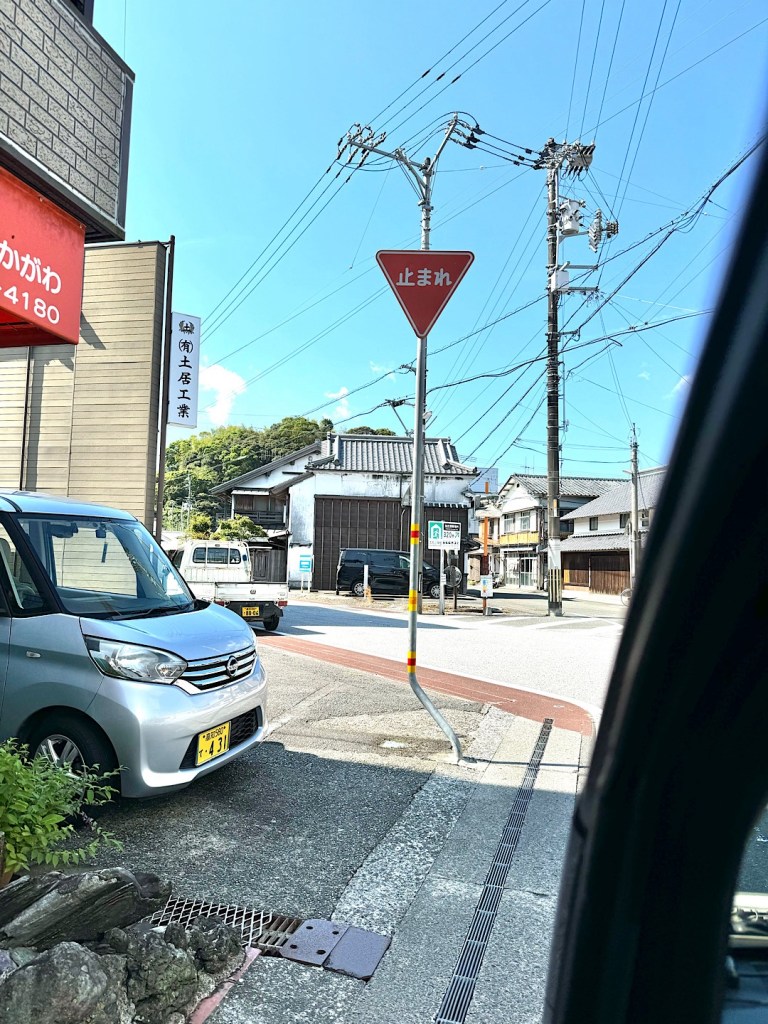
Would you recognize that this is a stop sign? it took us a while.
Google Translate has been indescribably helpful on this trip, but we couldn’t use it while moving at 30 or 40 or 50 miles an hour.
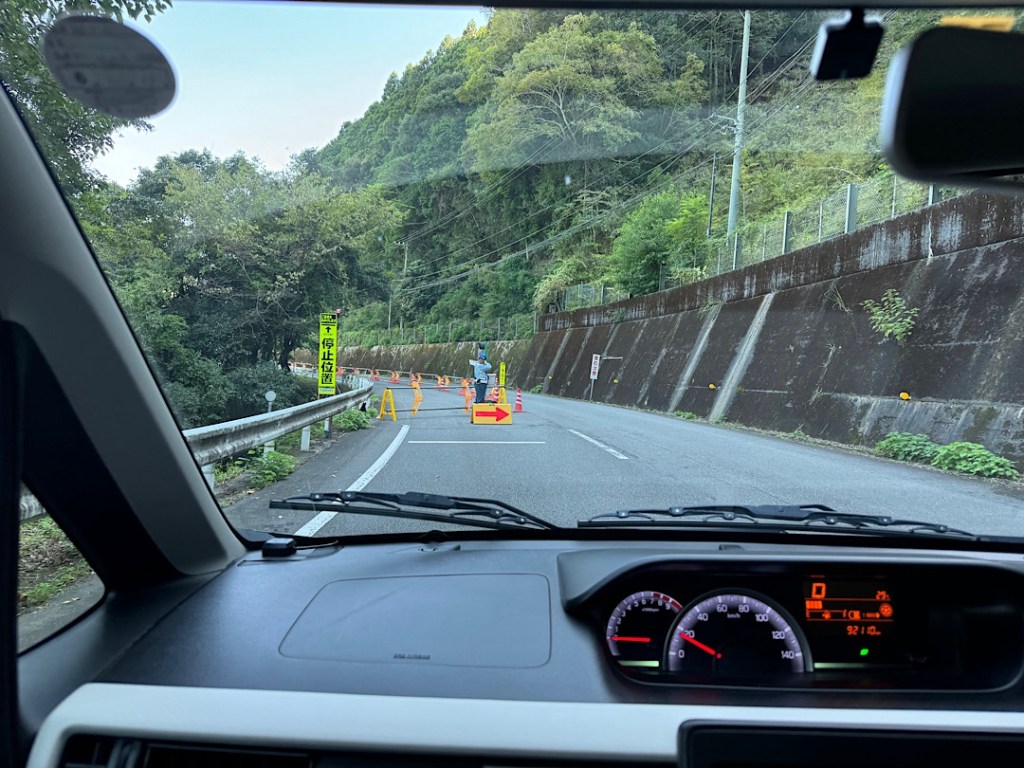
This was a rare case where we were able to figure out the sign meant “Road construction ahead” because the traffic stopped long enough for us to use Google Translate.
Google Maps worked reliably and made it almost effortless to navigate. Still, being unable to read the signs was often unnerving.
The good:
There’s a lot to love about road-tripping in Japan. Every highway we traveled was in excellent condition, with never a pothole in sight.
We didn’t see a single wreck anywhere, not even any traffic cops. The other drivers were perhaps the best we’ve ever shared the road with — universally law-abiding and courteous. No one tried to pass us, even when we were going slower than they obviously wanted to go.
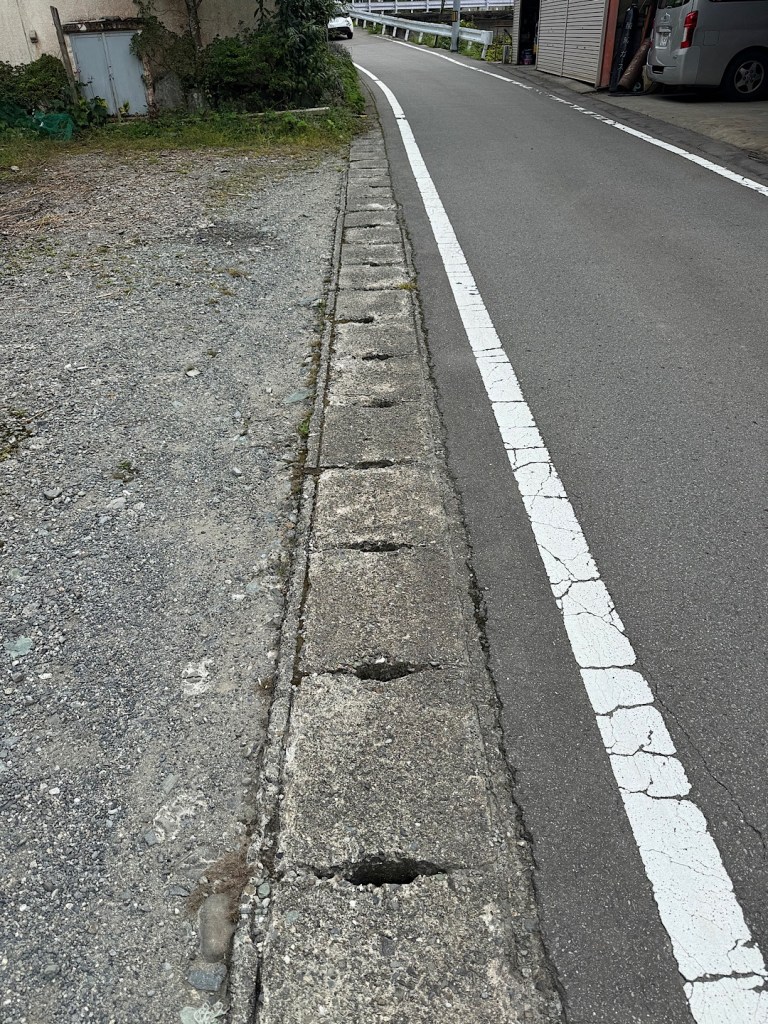
Most of our travel was in mountainous areas where drainage ditches were necessary to channel rainwater. But unlike in the Caribbean, the Japanese neatly cover almost all their drainage channels, so I never was terrified we would edge into one of them and wreck our vehicle.
On Grenada or Jamaica or elsewhere in the Caribbean, this would be an open, menacing hazard.
The ugly
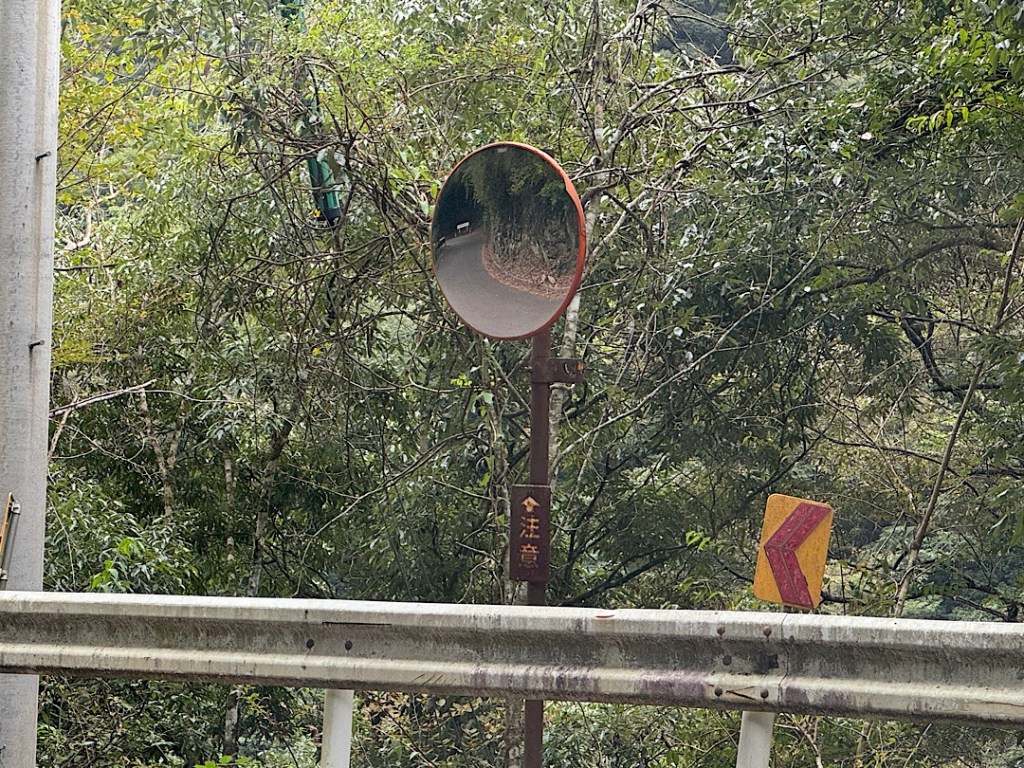
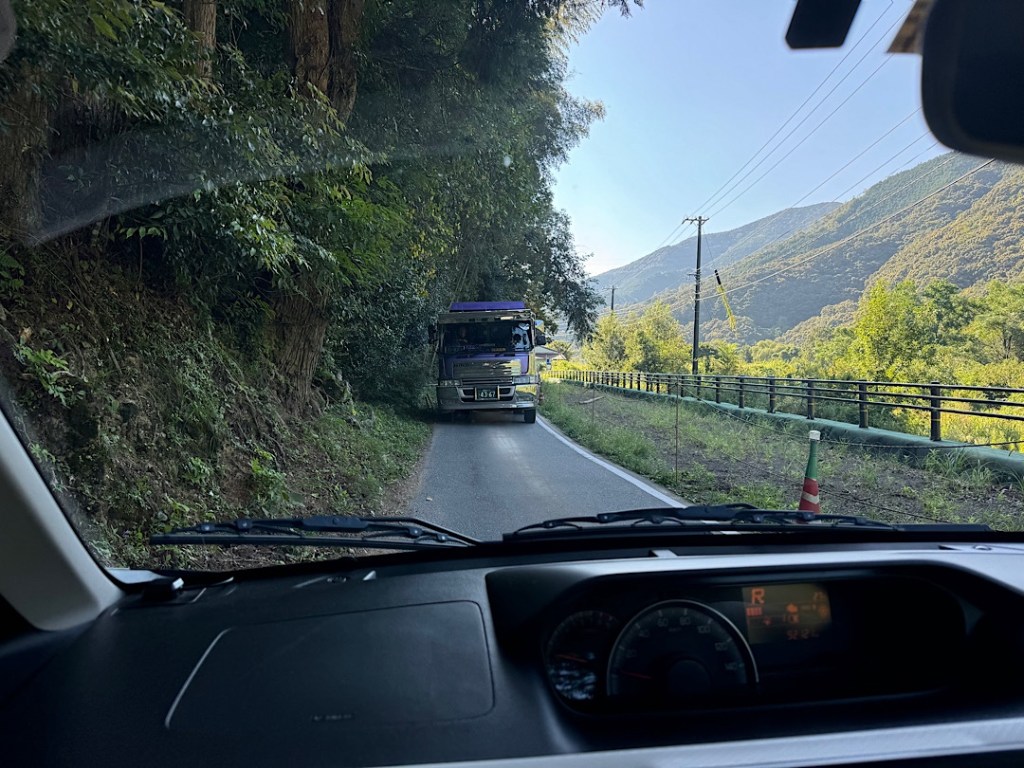
We rented the car because we wanted to visit some very isolated rural areas. In such areas, we found a fair number of one-lane roads. These would have been much scarier (and more dangerous) had the Japanese not installed countless mirrors that enable drivers to see around the bends. I got adept at spotting the mirrors and checking to see if someone would be coming at us.
Here the coast was clear.Only once did we come to an impasse. In this case the solution was obvious: we backed up, as did the two cars behind us, until we got to a spot in the road where the truck could pull around us.
The quintessentially Japanese
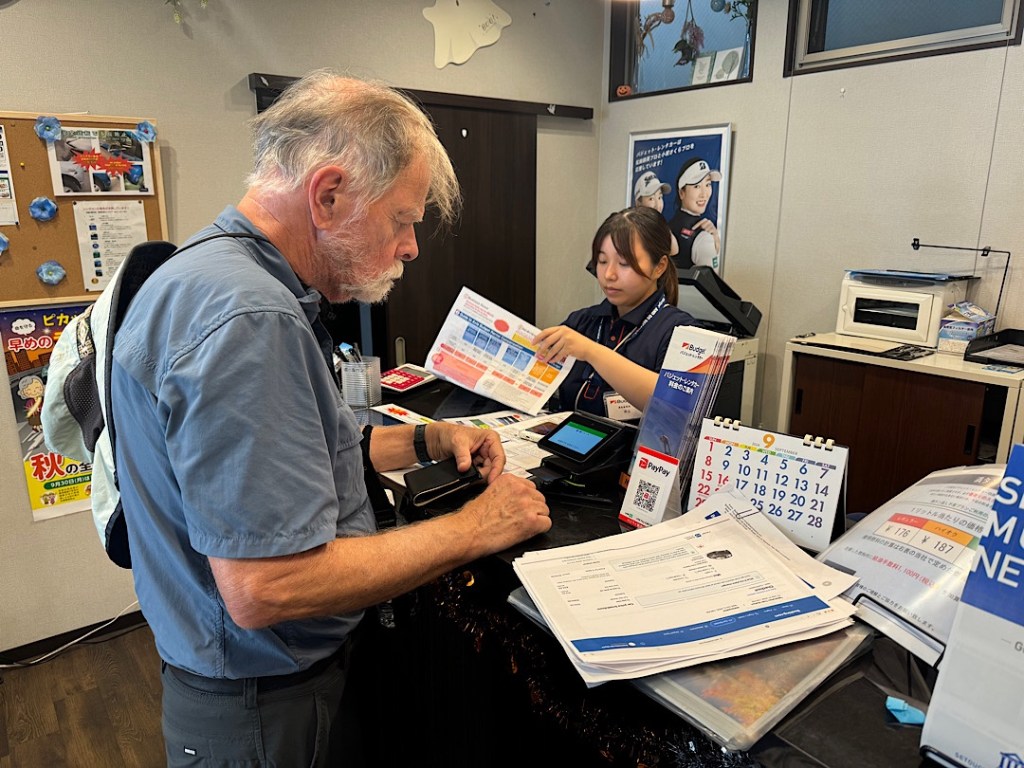
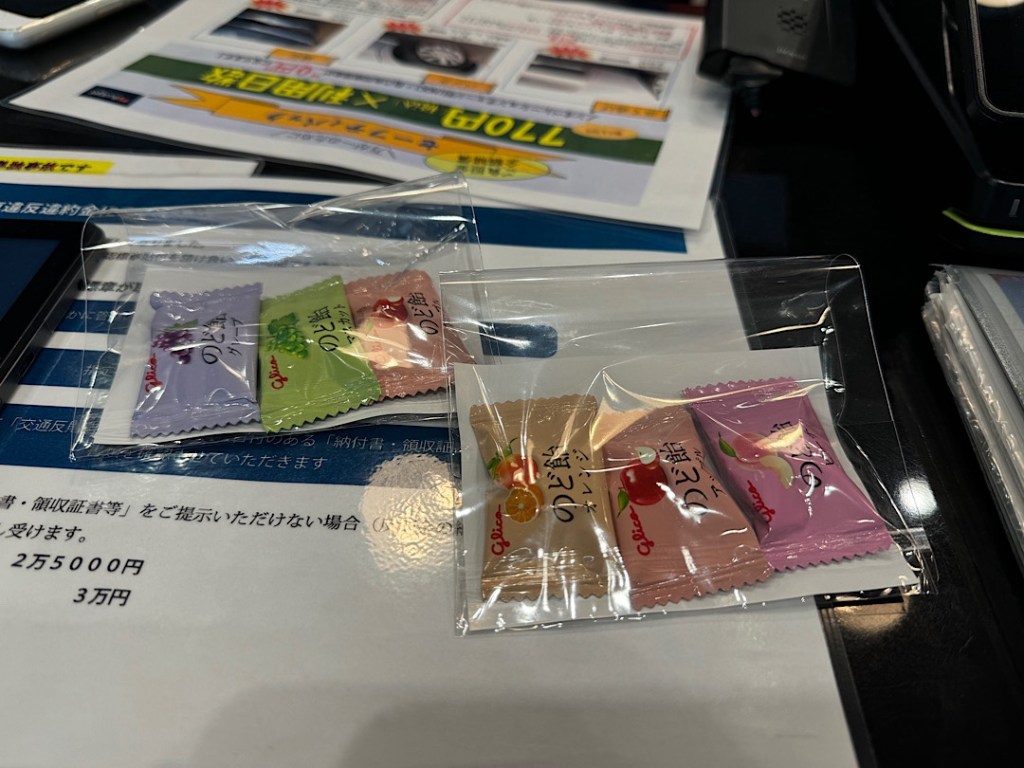
Picking up the car from the Budget office in Takamatsu was fascinating. We had to fill out many forms and the frazzled young woman behind the counter required us to watch a video on her tablet that illustrated in graphic detail all the bad things that could happen if we didn’t watch out for bicycle riders, or we sped around corners, or we broke other common-sense rules of the road. Before we left the office to check out the vehicle, the clerk presented both of us with a small gift.
Two packets of candy!
All these steps took so long she didn’t spend a ton of time explaining the GPS system to us, so we never really understood it.
The robotic GPS lady voice chided Steve every time he went over the speed limit or braked too hard or turned too abruptly to suit her, which was annoying. Then she started giving us driving instructions that contradicted the sensible ones from Google Maps. After a few days, we began thinking of her as an addled vagrant who’d somehow found shelter under our dashboard where she muttered to herself and occasionally called out misinformation. Finally we figured out how to turn her off entirely.
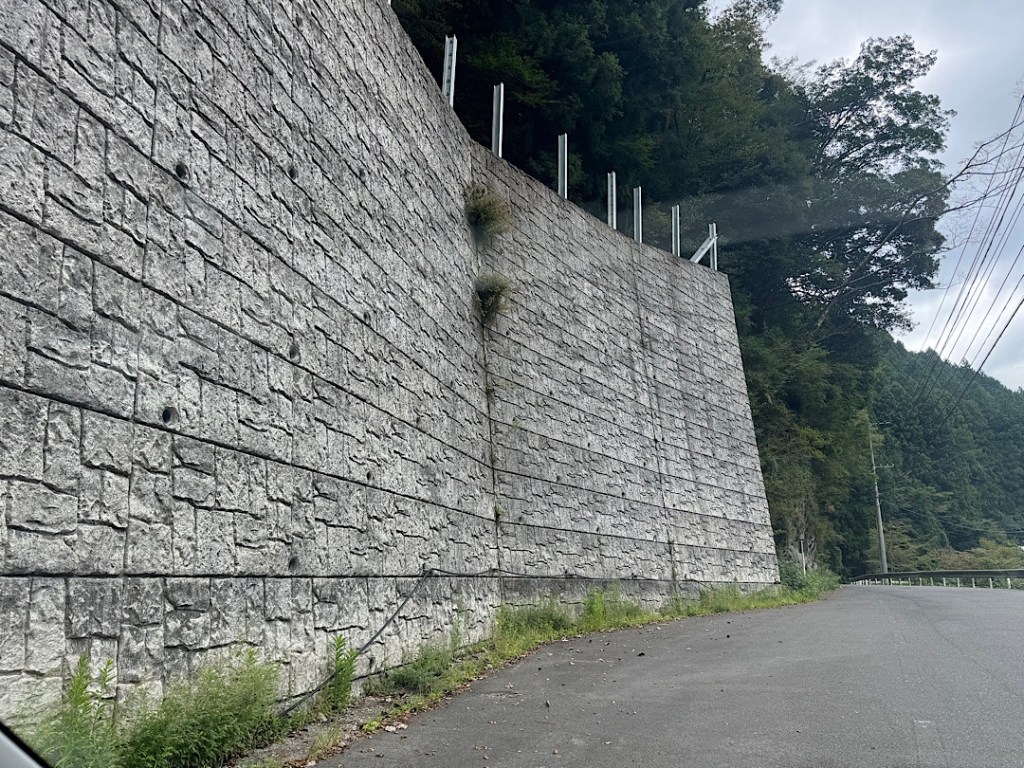
Although the roads we traveled were sometimes single-lane, we were astonished by the enormous amounts of work — and concrete! — the Japanese have put into shoring up steep roadsides to prevent landslides and damage from falling rocks.
Here’s one example. Here’s another — and a flagman signaling that workers up ahead were adding more.
Steve says a big reason the Japanese economy has stagnated for several decades is because the politicians have borrowed so much money to spend on huge infrastructure projects. He notes that they have borrowed the money from themselves (Japanese bond holders) and the expenditures have resulted in Japan having great roads and trains and other public infrastructure (this in contrast to many other countries that shall be nameless.) But that’s a subject for another kind of blog.
We’ll be on Shikoku for one more day, using public transportation again, including the ferry we hope to take to Hiroshima (back on Honshu) tomorrow.
We’re alive after more than two days of driving around, but I’ll wait to share what it’s been like behind the wheel (and in the front passenger seat.) I don’t want to jinx us before we turn in our little Suzuki WagonR in two and a half days.
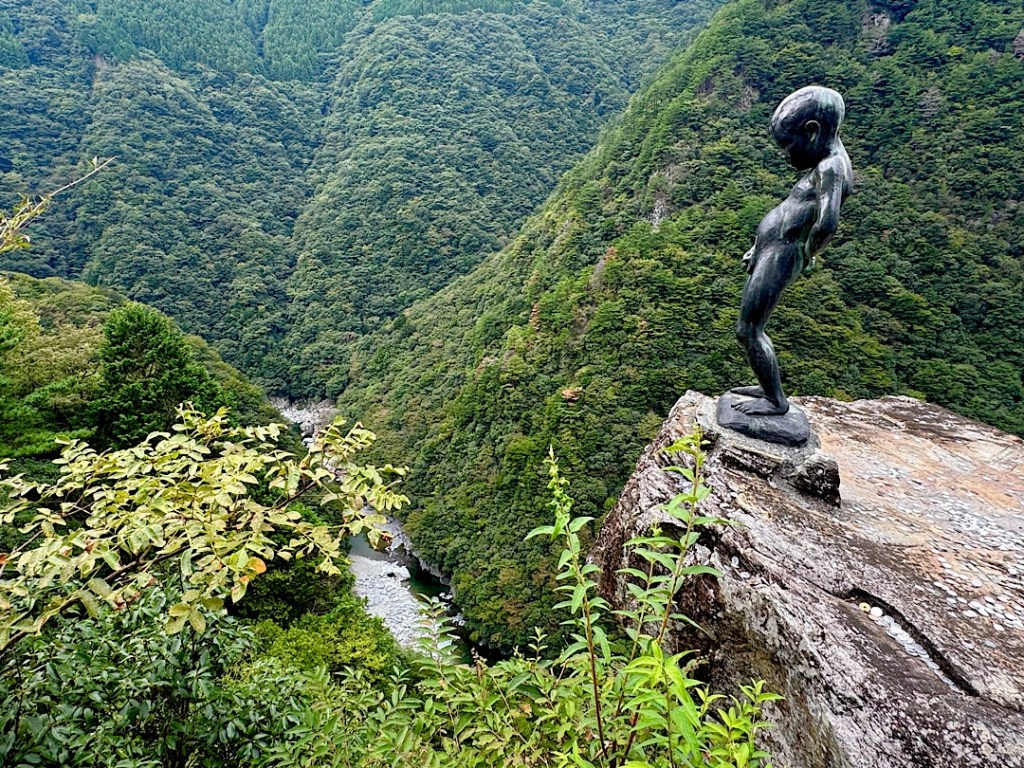
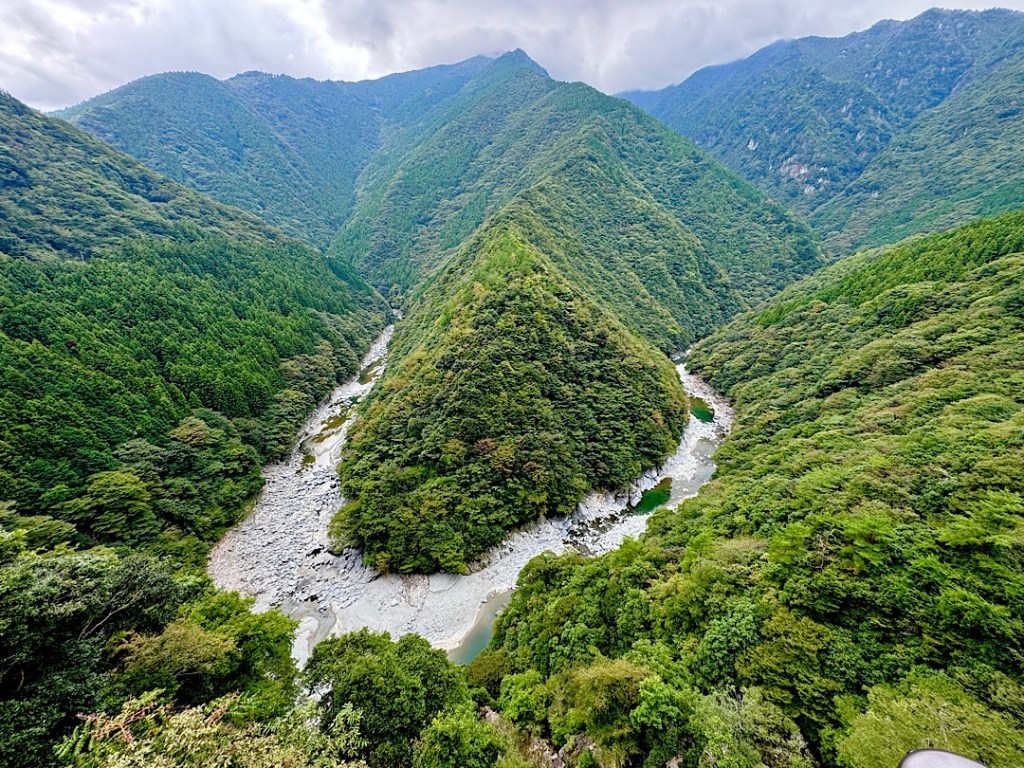
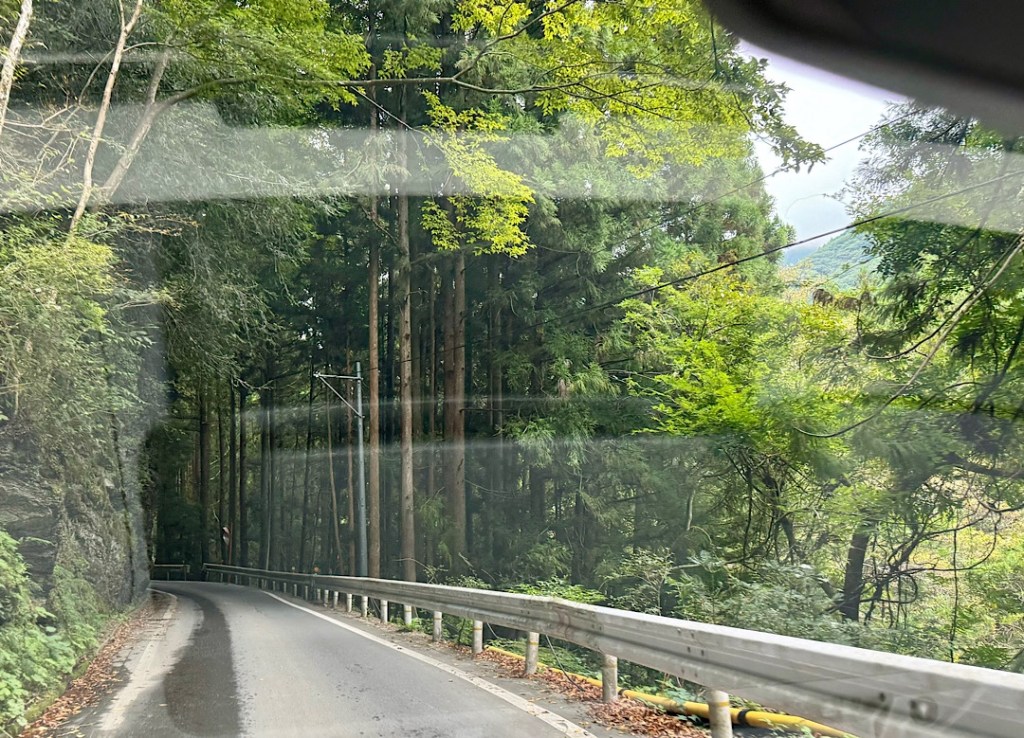
We rented the car because we wanted to visit some of the wildest terrain in Japan, places where the trains don’t penetrate, deep within the mountains of Shikoku (one of Japan’s four main islands.) Yesterday afternoon we drove into the densely forested Iya Valley on roads notched out of almost-vertical cliffs, byways that often narrowed to a single lane.
The boy peeing into the valley cut by the river far below is an iconic figure.A photogenic bend in the river.One of the one-lane sections of the road.
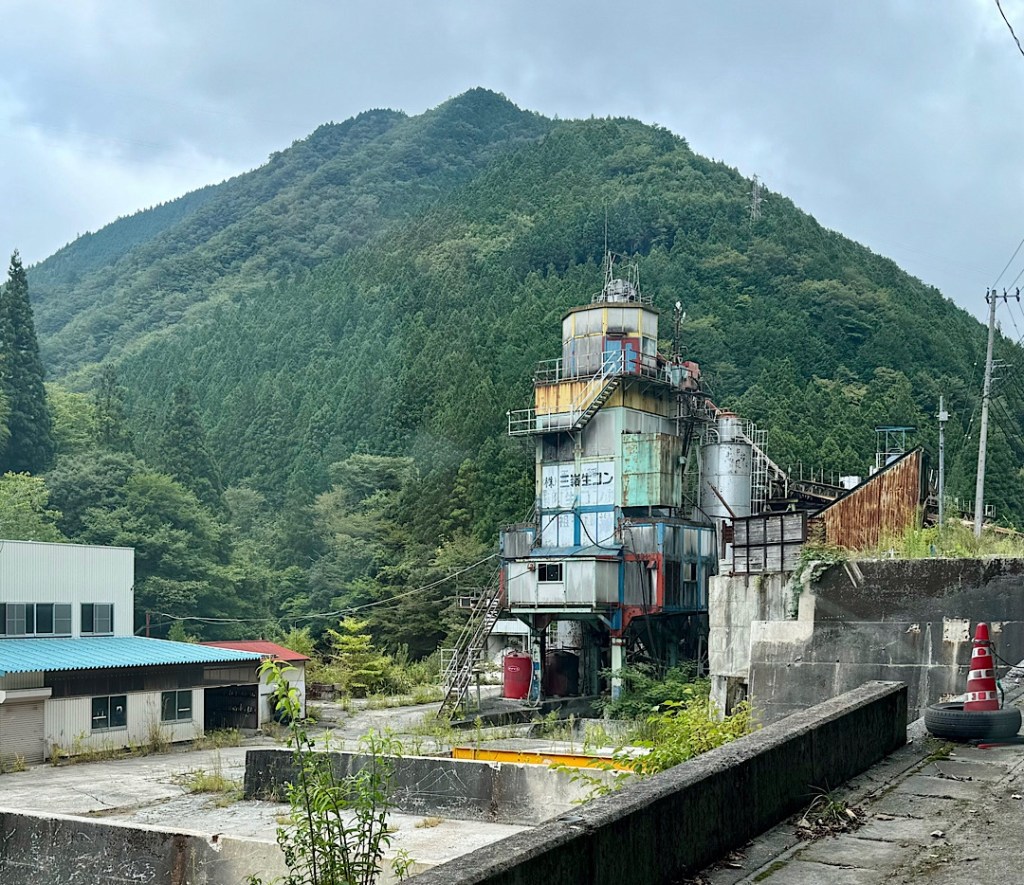
The urban buzz in Tokyo and Kobe and even Takamatsu to me felt more advanced and sophisticated than anything I’ve experienced anywhere else on earth. After 10 days of that, it was jolting to begin passing buildings and one-time enterprises in the Iya Valley that showed signs of decay. Like this facility:
What was it? What did people once do here?
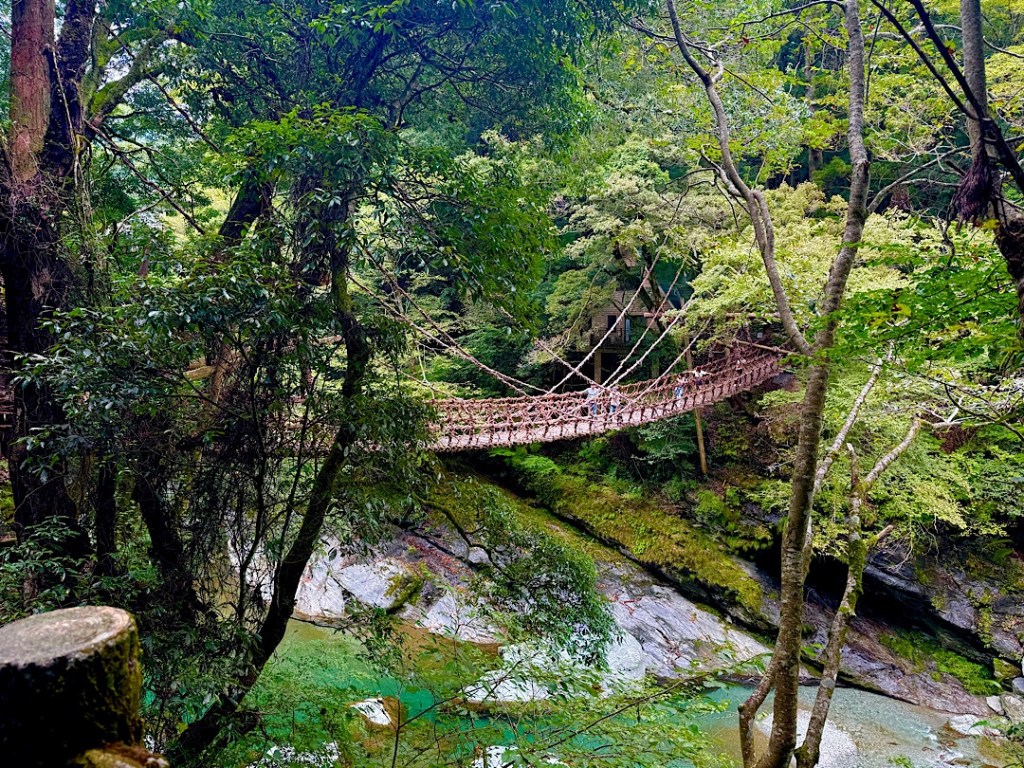
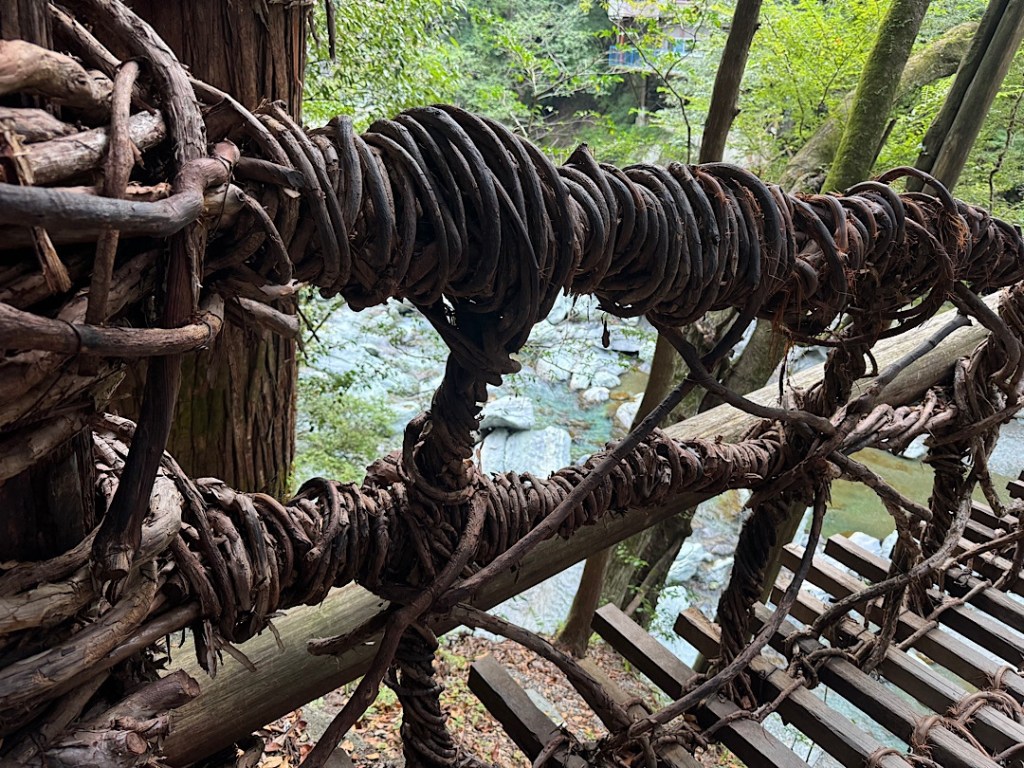
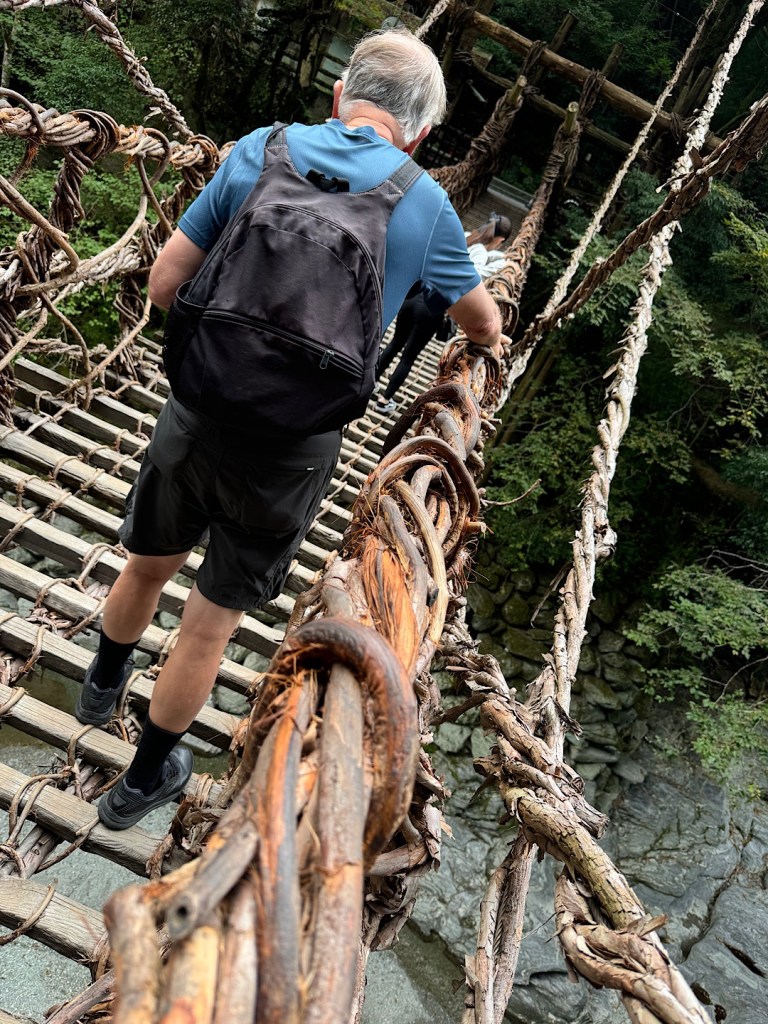
Steve and I were staying in the town of Miyoshi, a base for tourist activities in the area: hiking and mountain climbing. Bathing in hot springs. Walking across bridges that historians think are 800 to 1200 years old, built entirely from vines and planks.
The venerable Kazurabashi bridge was 5 minutes from our Japanese inn.Six tons of vines are required to hold it together.It was surprisingly scary to walk across!
Only about 2300 people live in Miyoshi. If there’s a convenience store in town, we couldn’t find it. It felt like at last we were seeing the effects of Japan’s deadly demographics: an aging population, young people opting not to marry or have children. Countrysides emptying out.
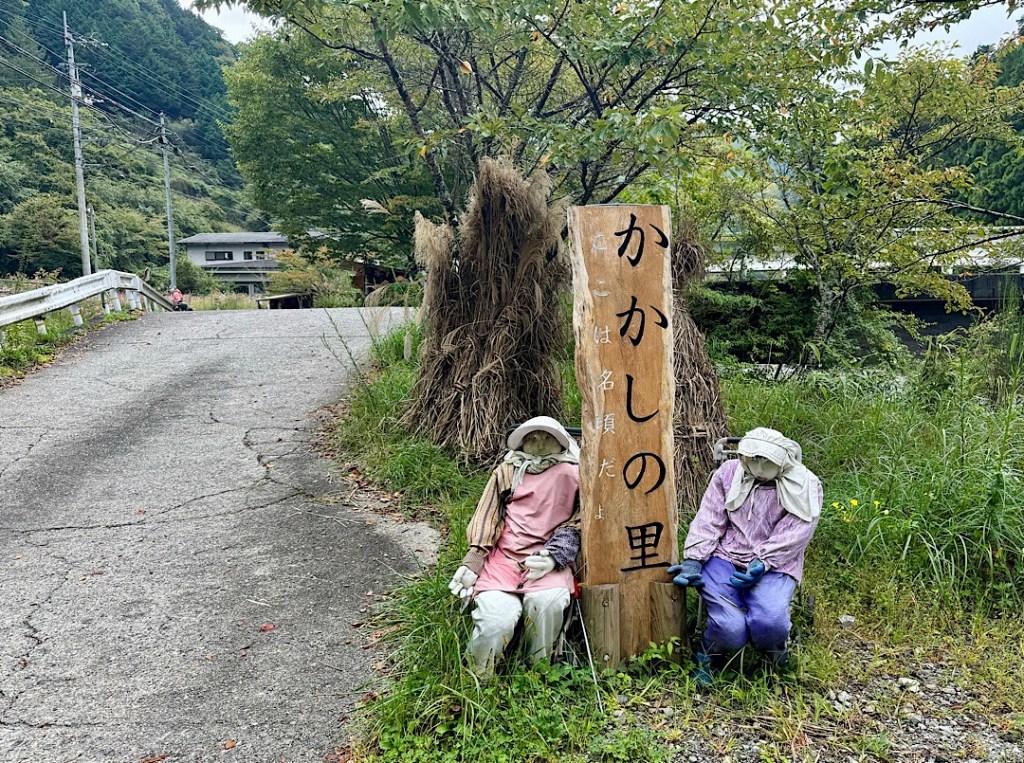
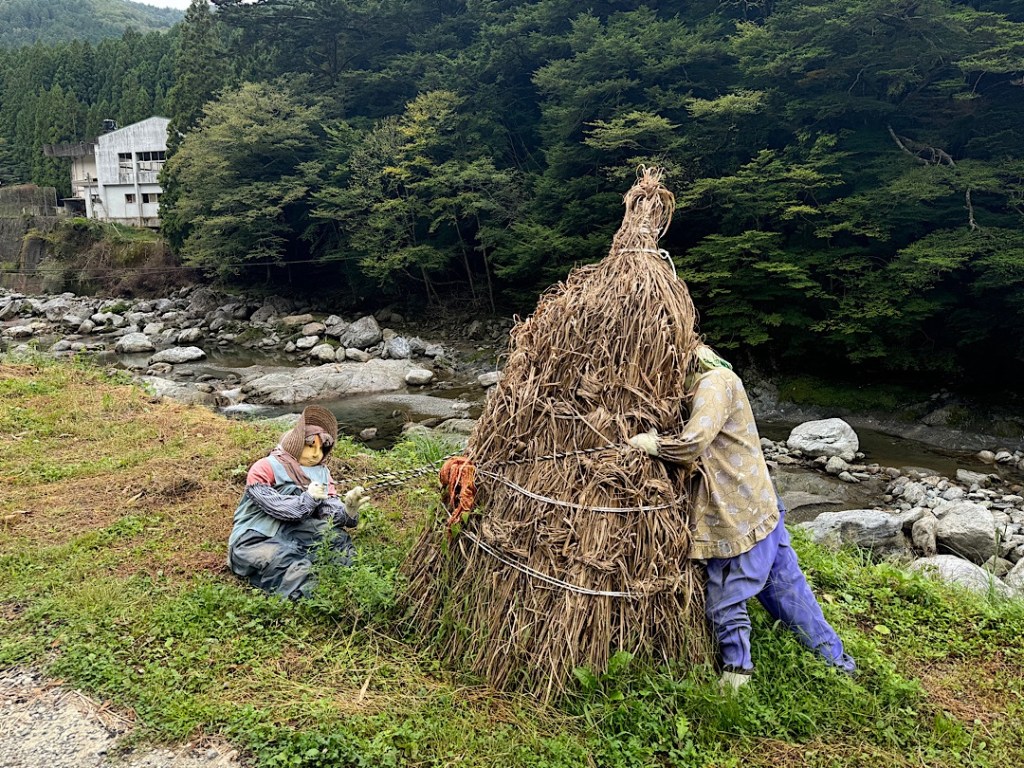
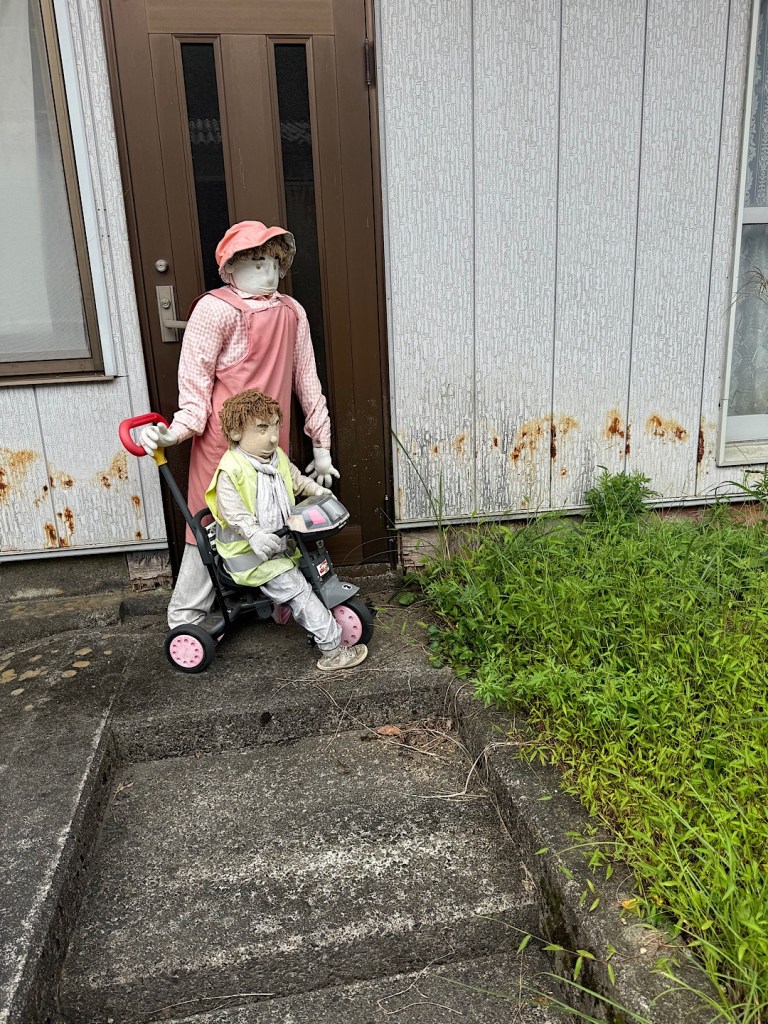
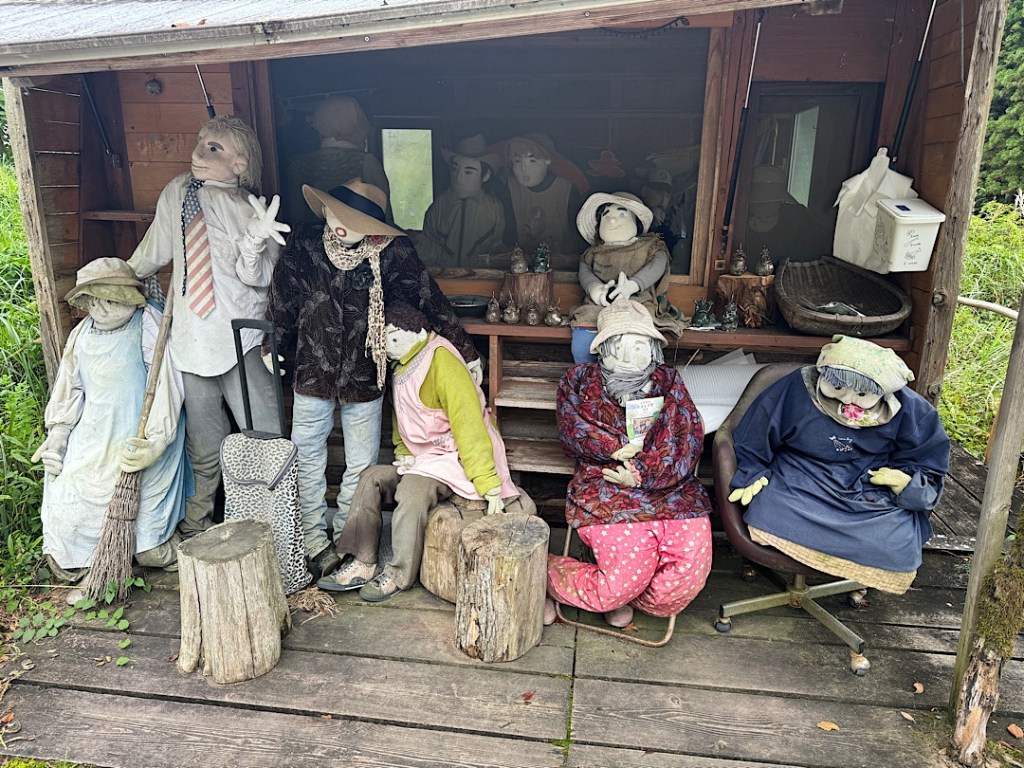
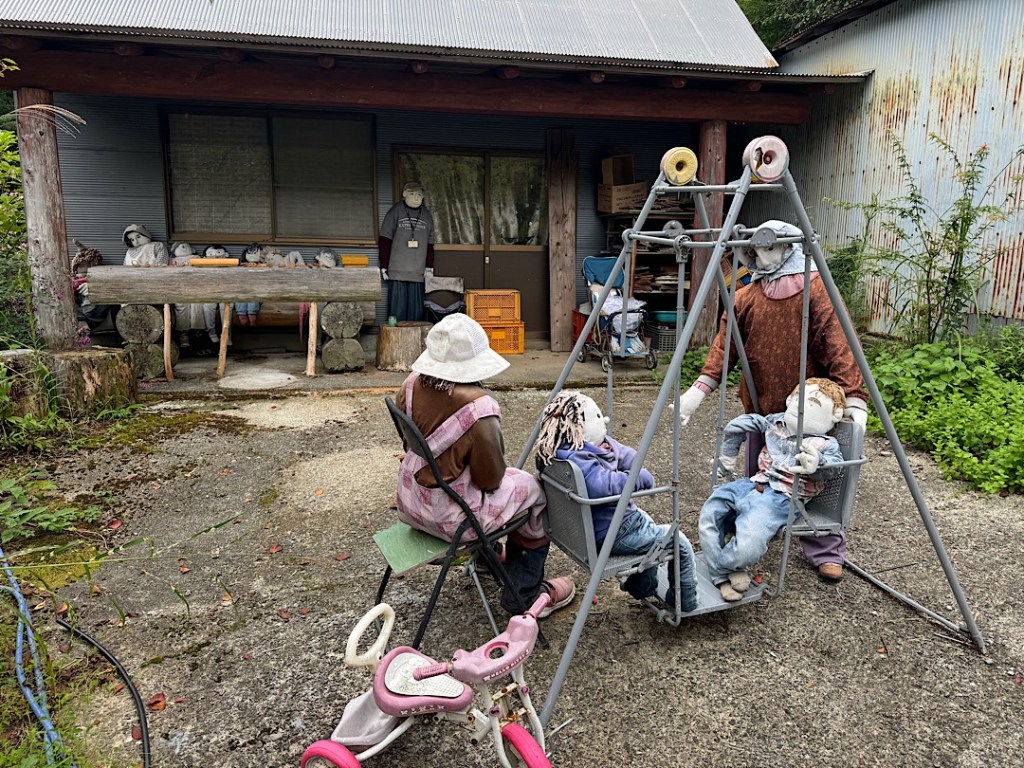
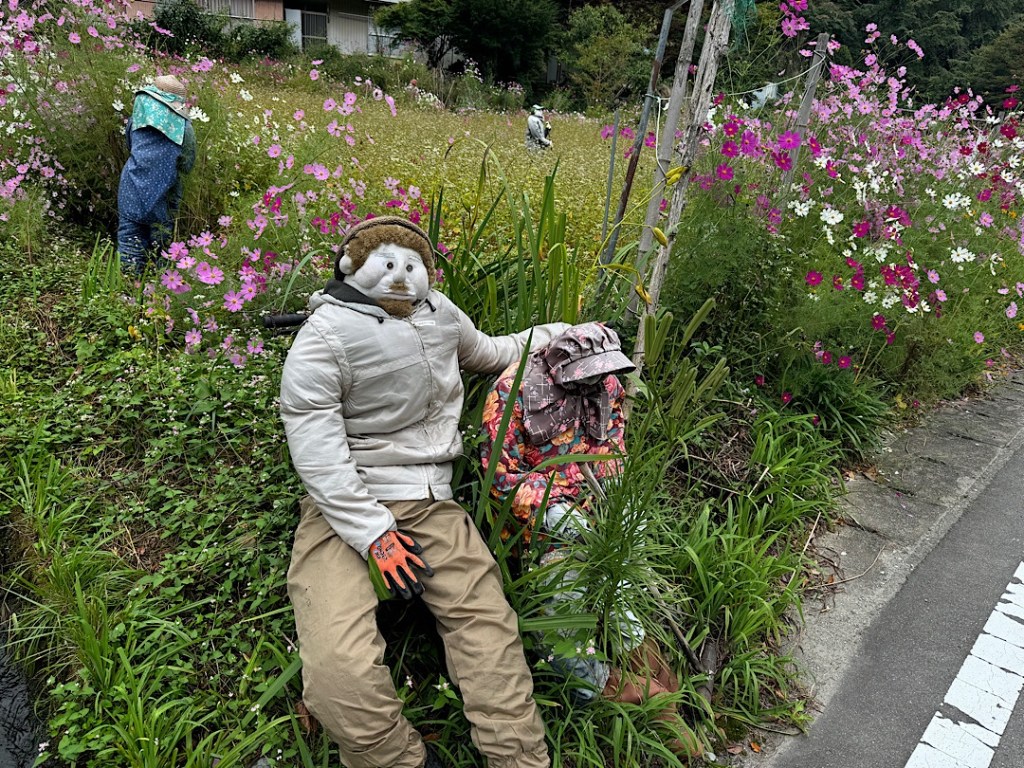
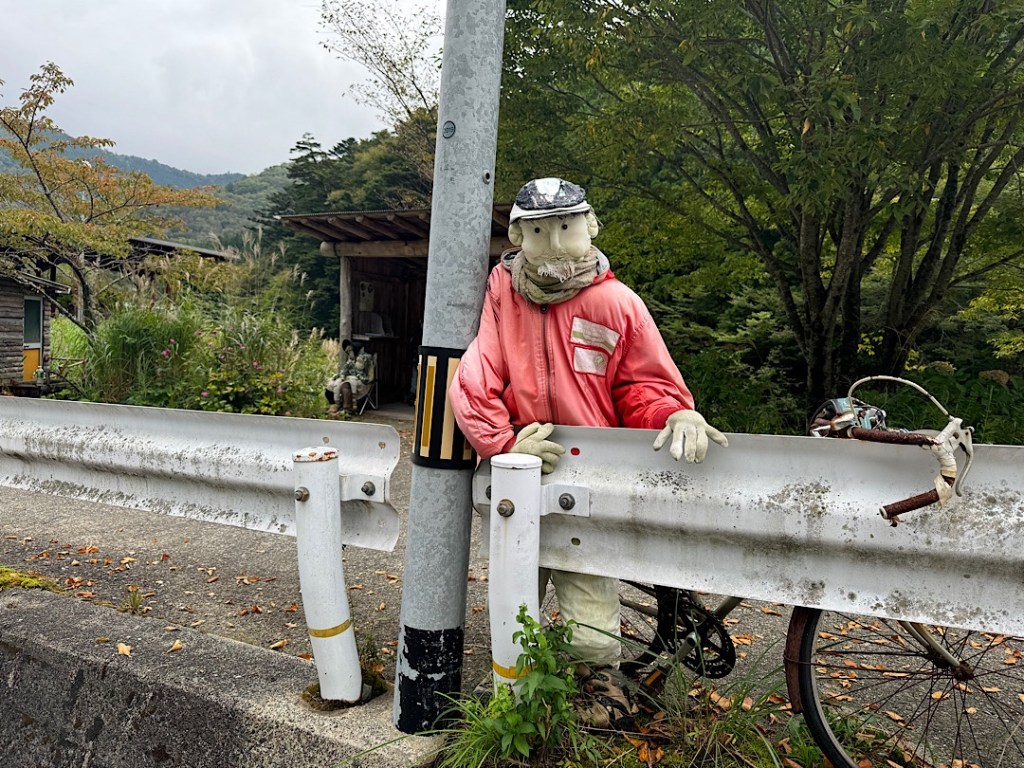
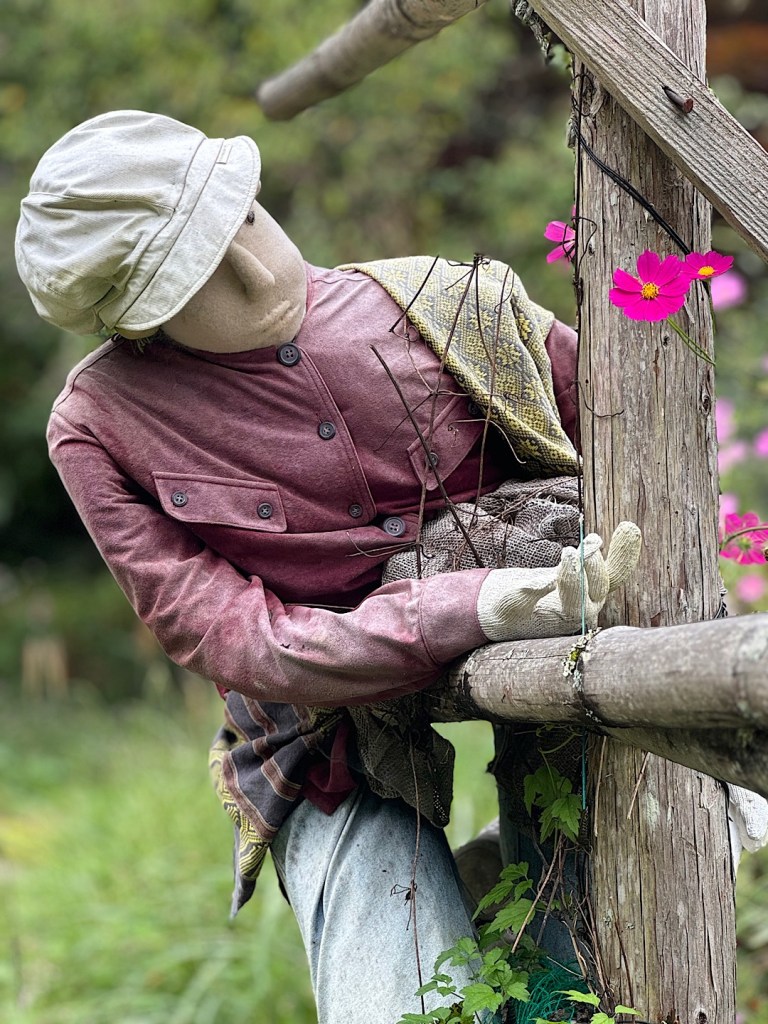
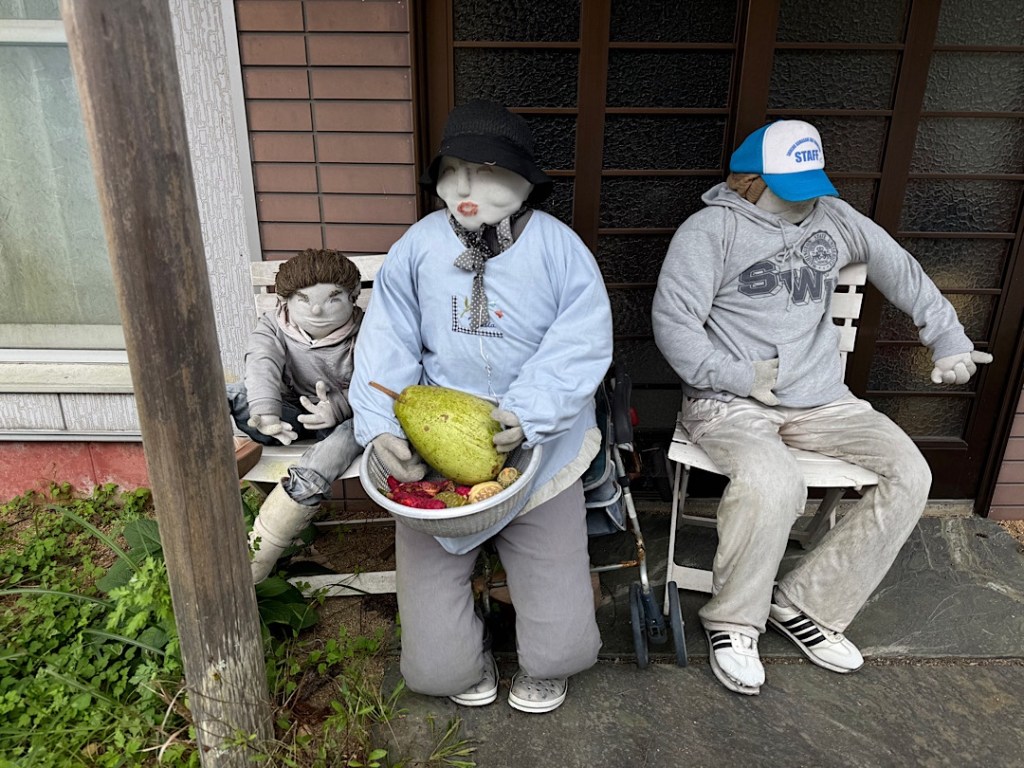
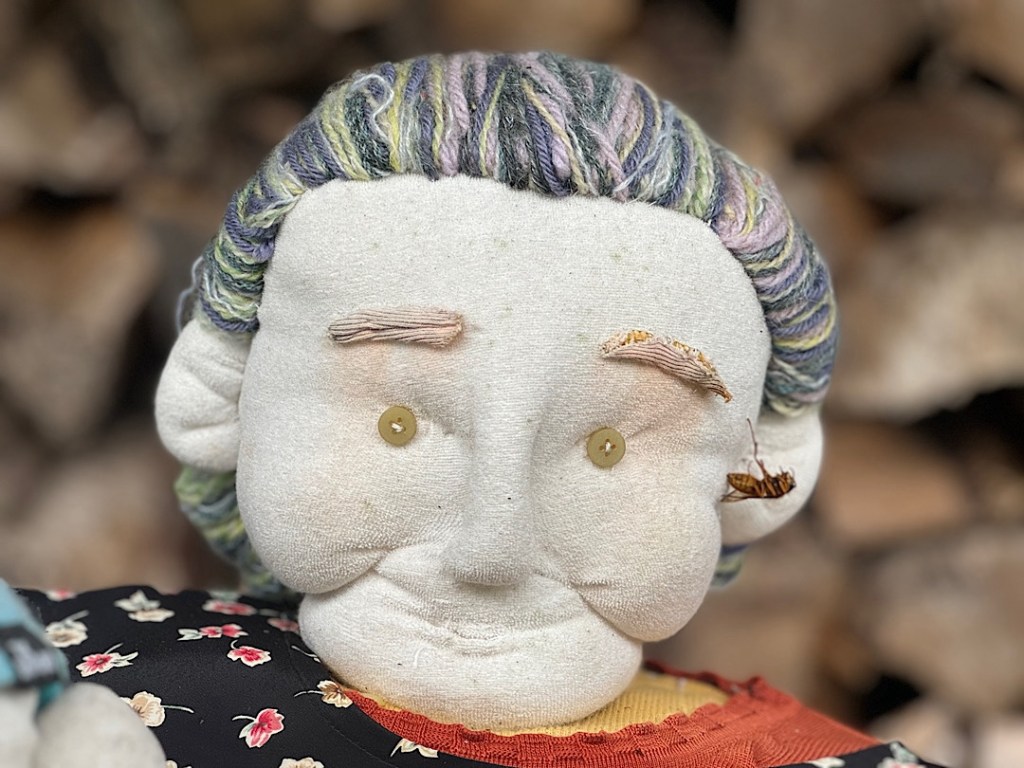
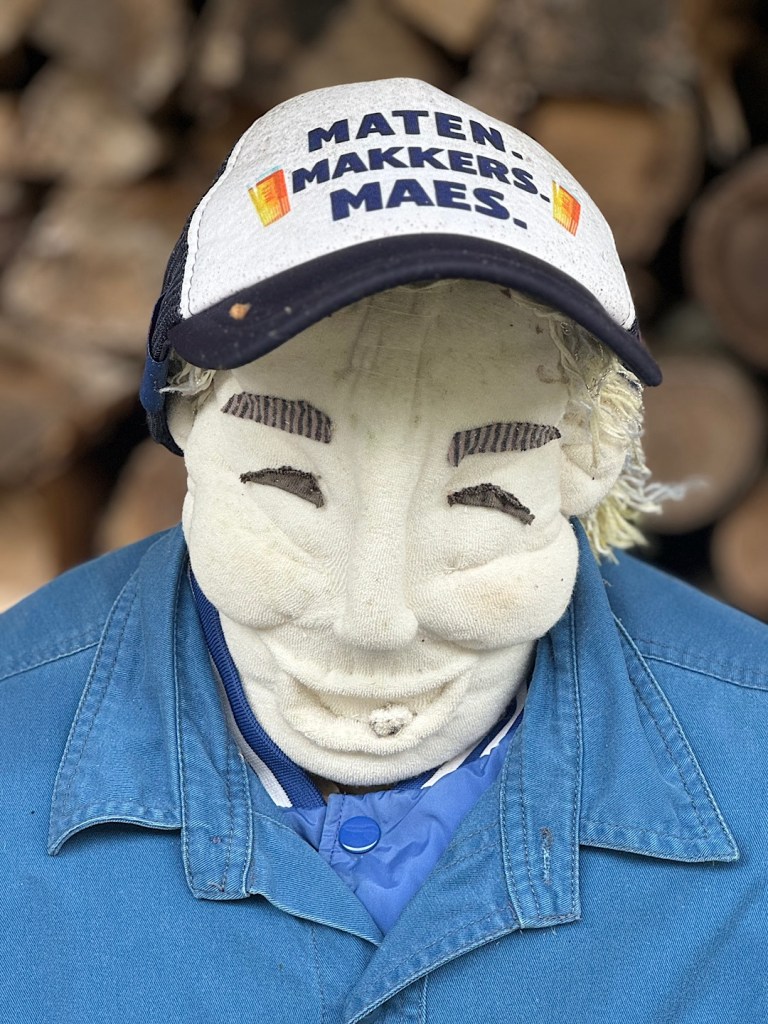
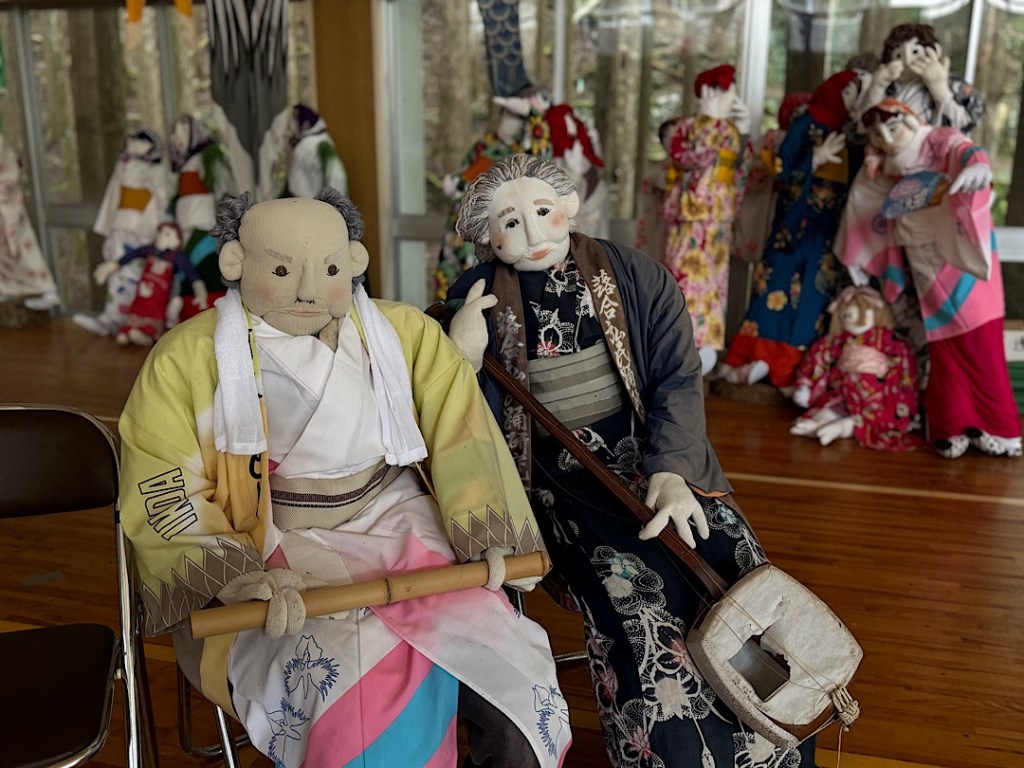
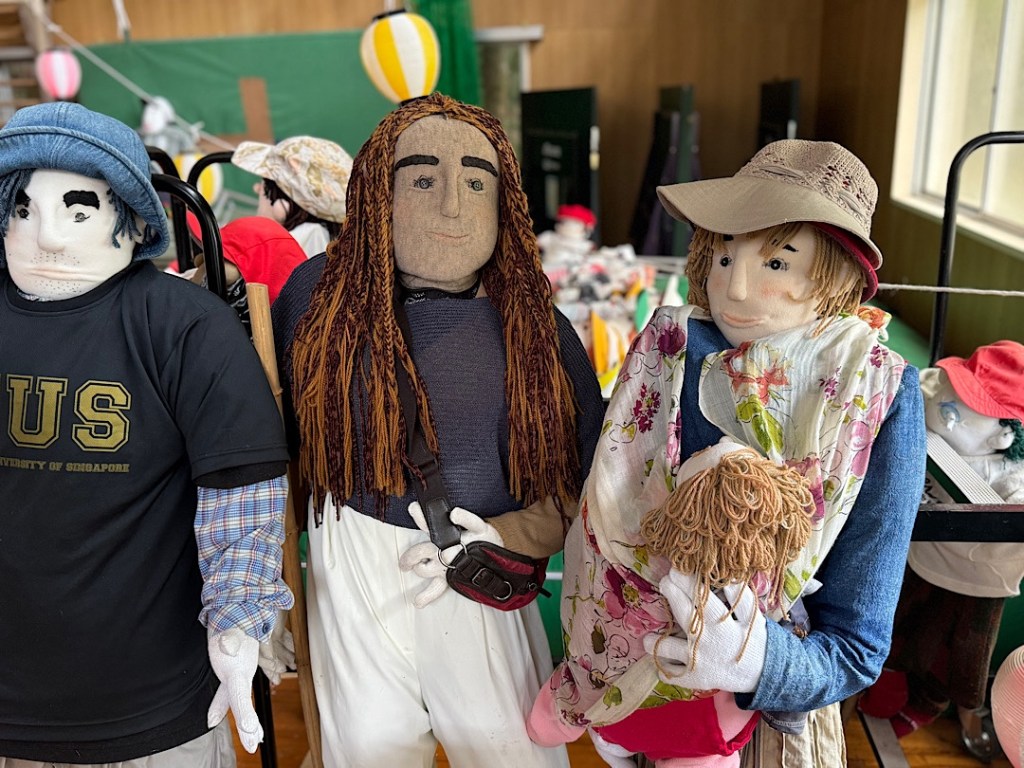
The village of Nagoba, about 45 minutes from Miyoshi, experienced this in dramatic fashion after authorities automated the local dam that had been the town’s biggest employer. From a couple of hundred people, Nagoba’s population plummeted to a few dozen. In 2003 an artist from the village named Tsukiji Ayano returned from living and working in Osaka. Shocked by the change in her home town, she started creating replacement people made of cloth stuffed with newspapers. Since she began, Ayano has made hundreds of the scarecrows (kakashi). She’s brought the village back to life in a manner that’s both charming and eerie, as Steve and I learned when we visited it this morning.
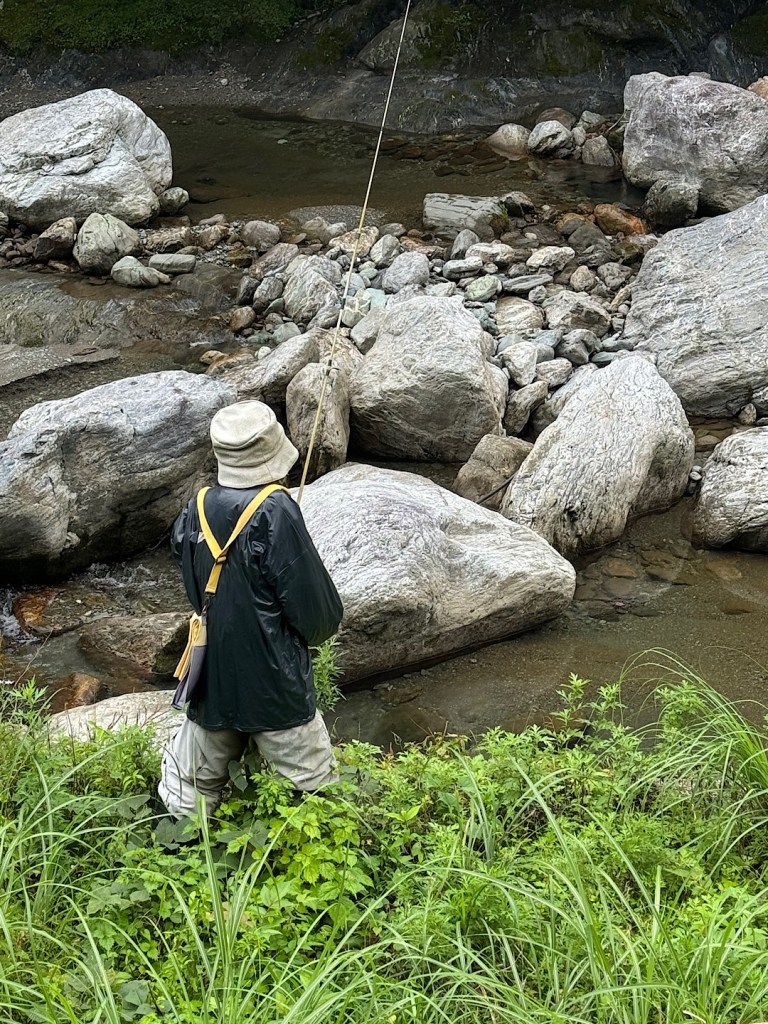
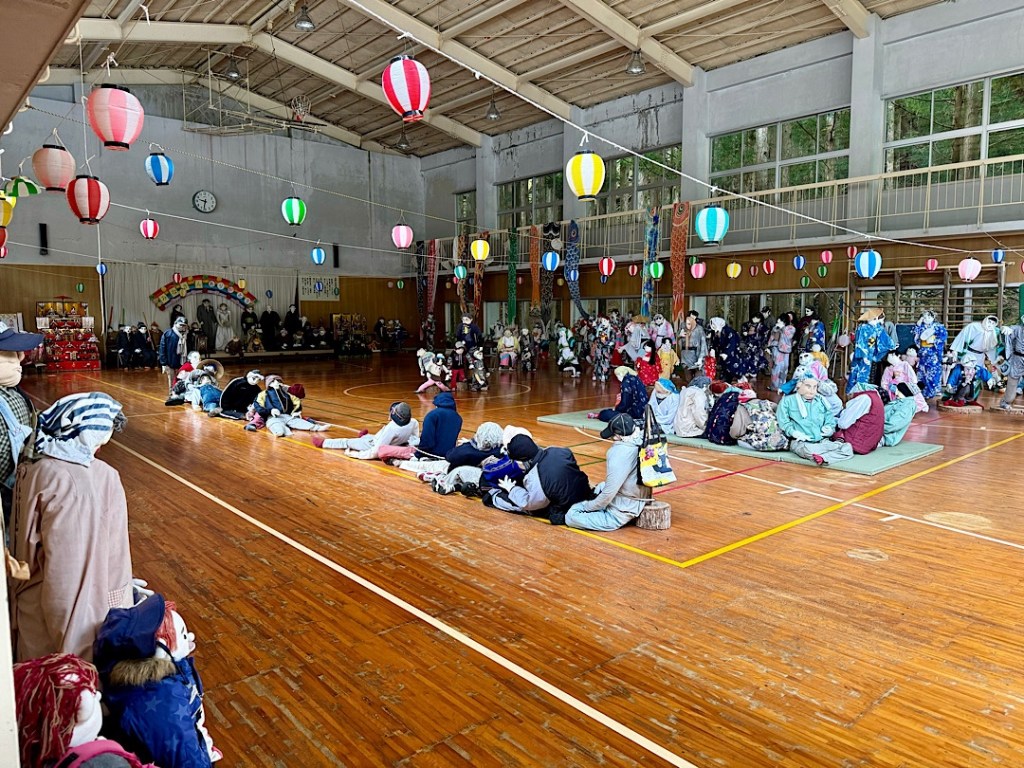
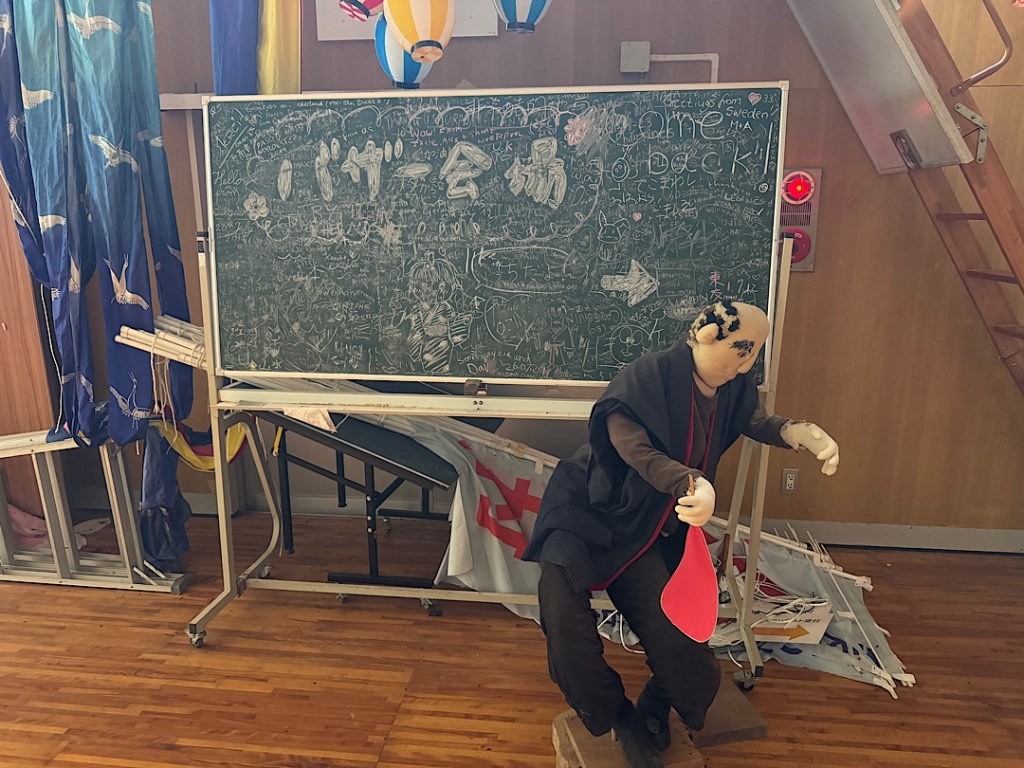
Scarecrow people work at village tasks.A mother and child, long absent in the flesh.I think these folks are waiting at a bus stop. No signs explain what you’re seeing. That would shatter the illusion.We arrived a little after 10 in the morning. For a while, we encountered nobody but the scarecrow people.Scarecrow people sat at the side of the road. Scarecrow people toiled in the front yards.We read online that Ayano has tried to reincarnate everyone who lived in the village of her childhood.Certainly the scarecrow people feel like individuals.I was amazed to note that most of the figures have eyes made from buttons. They feel so lifelike.Some eyes are created differently.The scarecrow people fish…They surprised me, like this guy, hanging out in a tree.Ayano has filled the former kindergarten and elementary school with scarecrow children and their families. She’s packed the school gym with personalities.Grandparents present for a performance?Parents of a future student?
Steve and I wandered around for almost an hour; toward the end of our visit other tourists were trickling in. We never saw any sign of Ayano, however, although we read that she lives in the village and works in her studio there. We were never asked at any point to pay anything; we have no idea how Ayano survives to create her art. It felt like a gift.
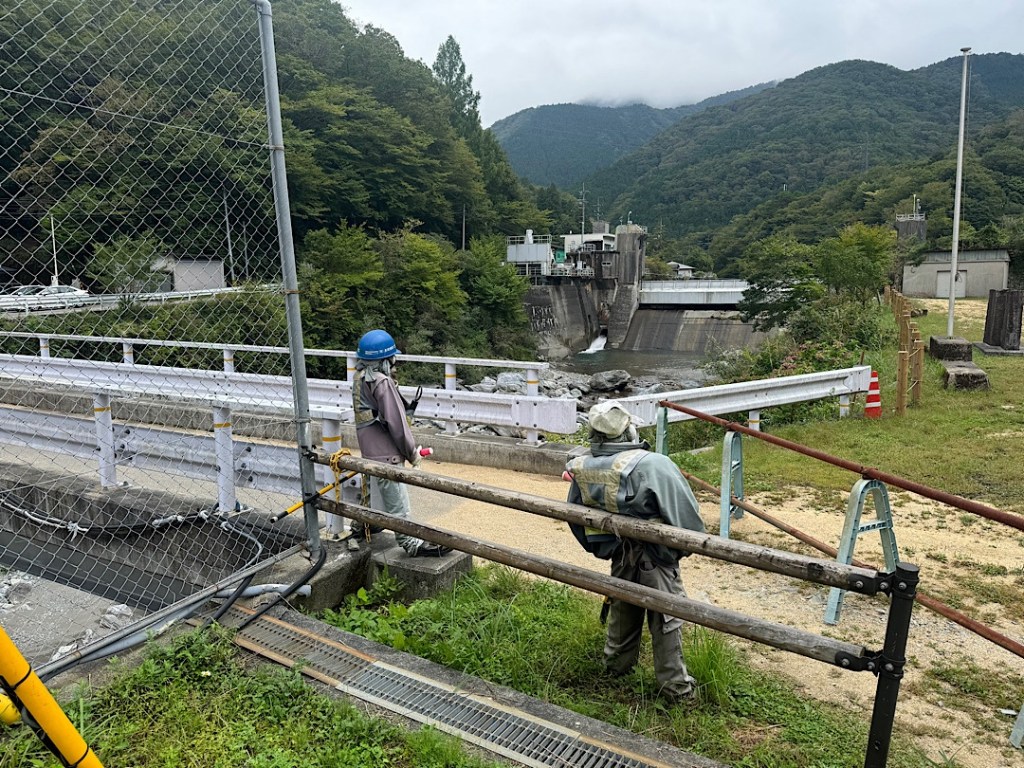
I particularly appreciated these guys. Had they worked at the dam? (You can see it in the photo in the distance.) How had they felt when their jobs disappeared? Where did they go? I’ll never know.
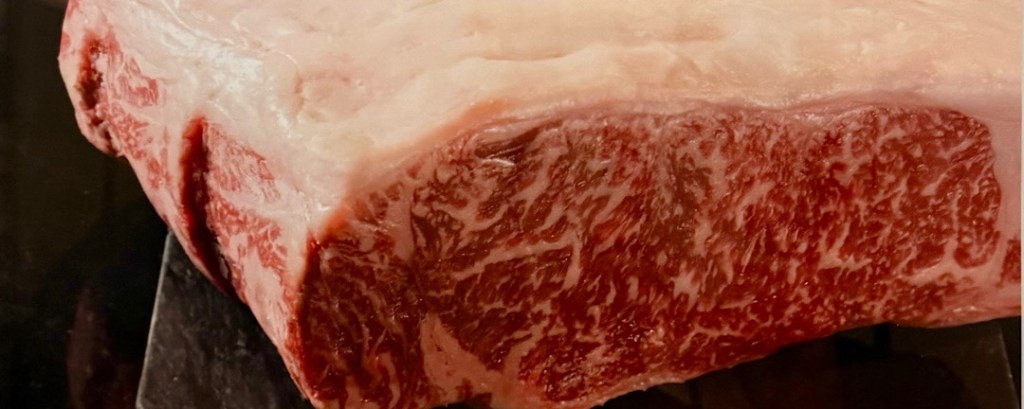
I’d never tasted Kobe beef. So how could we visit Kobe without dining at least once on its eponymous dish? We couldn’t.
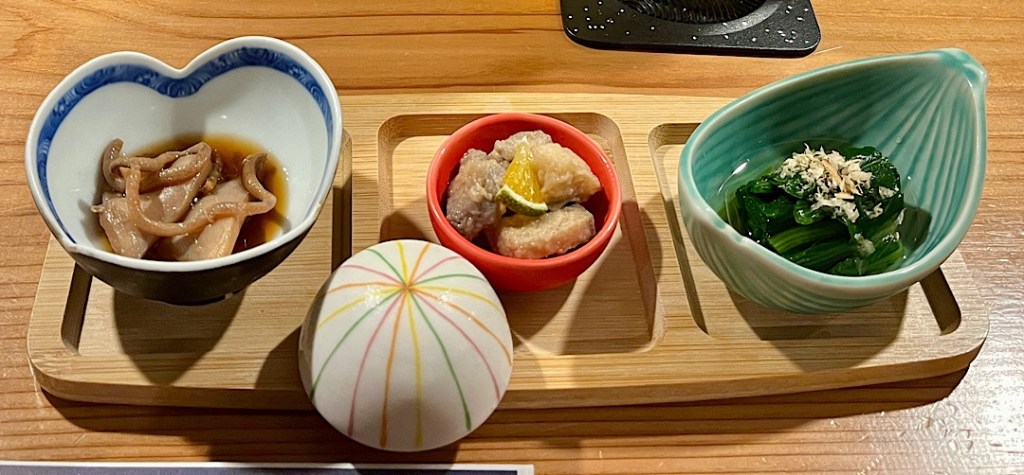
Tuesday morning (9/24) we took a bullet train from Tokyo that whisked us south. We ate bento (box lunches) that we bought in the station.
Here’s what they looked like.
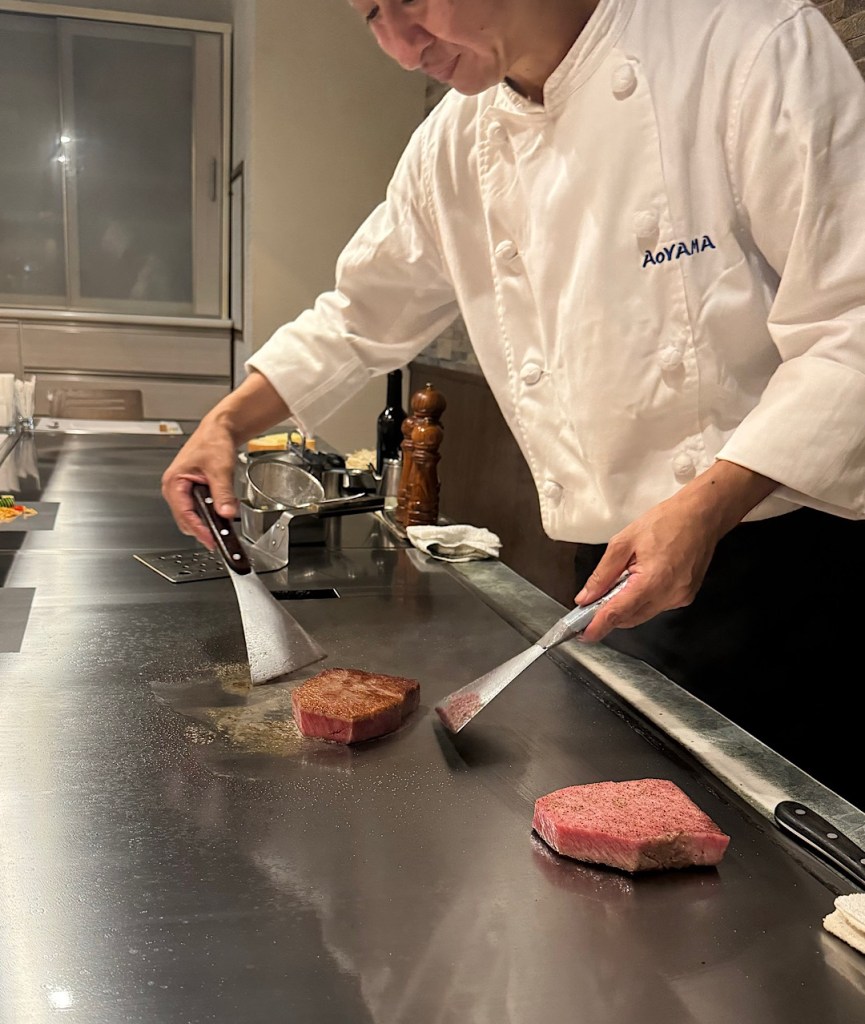
We checked into our hotel, and that evening got to the Tor Road Steak Aoyama promptly at 7. I was hungry. Kobe has countless restaurants serving pieces of the highly marbled Wagyu cows; picking a dining spot is a challenge. I had decided to follow the advice of an online blogger (Tom Bricker of Travel Caffeine) who offers a ton of information about Japan travel. In his itinerary for Kobe, Bricker was effusive about Tor Road Steak House, so back in July I made a reservation through the restaurant’s Facebook page. It was a relief when the staff actually seemed to be expecting us.
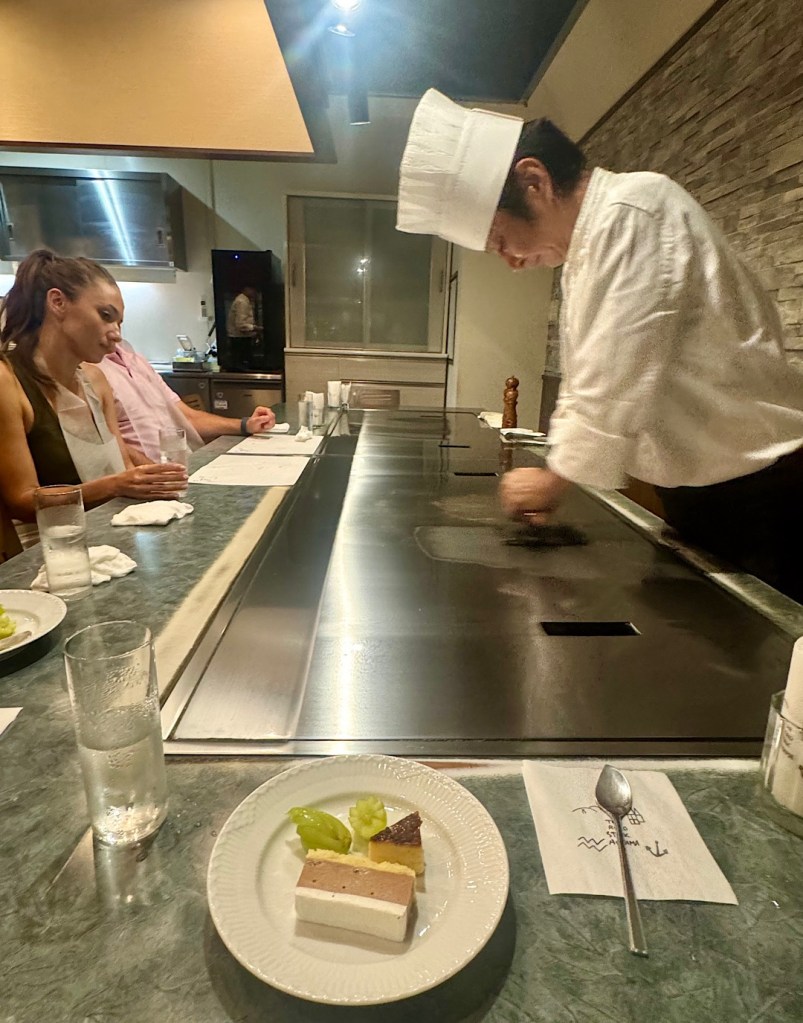
I was startled by the scale of the operation: just a single long gleaming teppanyaki grill (think Benihana) filling the end of a small room. The grill appeared to be set for only eight patrons, and ultimately only four of us were seated: Steve and me and a friendly couple from Prague. We later learned that a bigger group had canceled at the last moment — bad for the restaurant but great for us. The evening wound up feeling like a family meal.
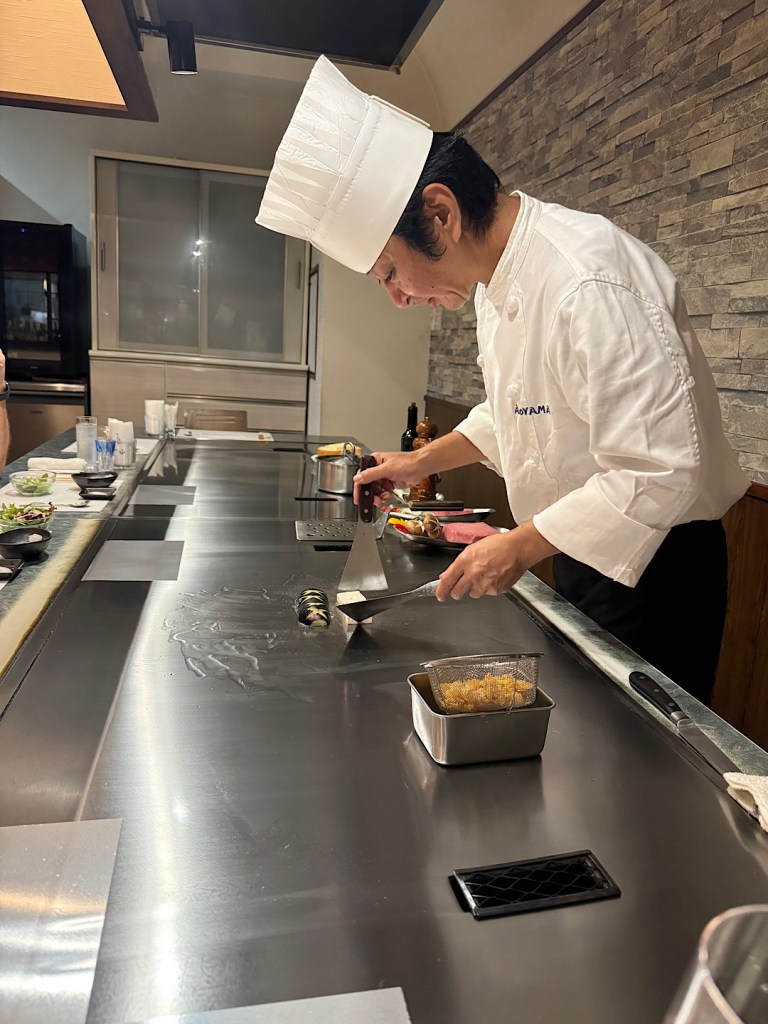
A wiry guy in a white jacket and chef’s toque took his place behind the pristine cooking station. He introduced himself as Shuhai, grandson of the woman who founded Aoyama 61 years ago. Two facts immediately became clear: 1) he was a master with knives and heat and 2) also quite the entertainer. As he cooked — first a round of vegetables, then a 9-ounce chunk of sirloin for Steve and me, he bantered with the four of us nonstop.
He told jokes; answered our questions. It almost distracted me from his moves, which were deft and complex.
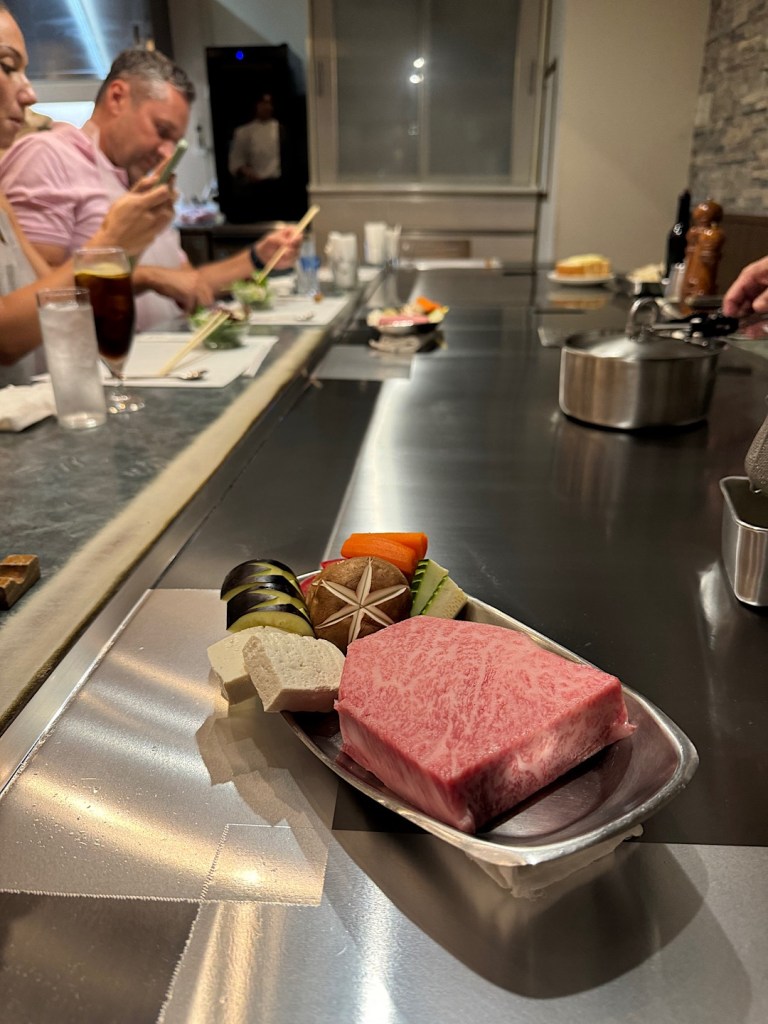
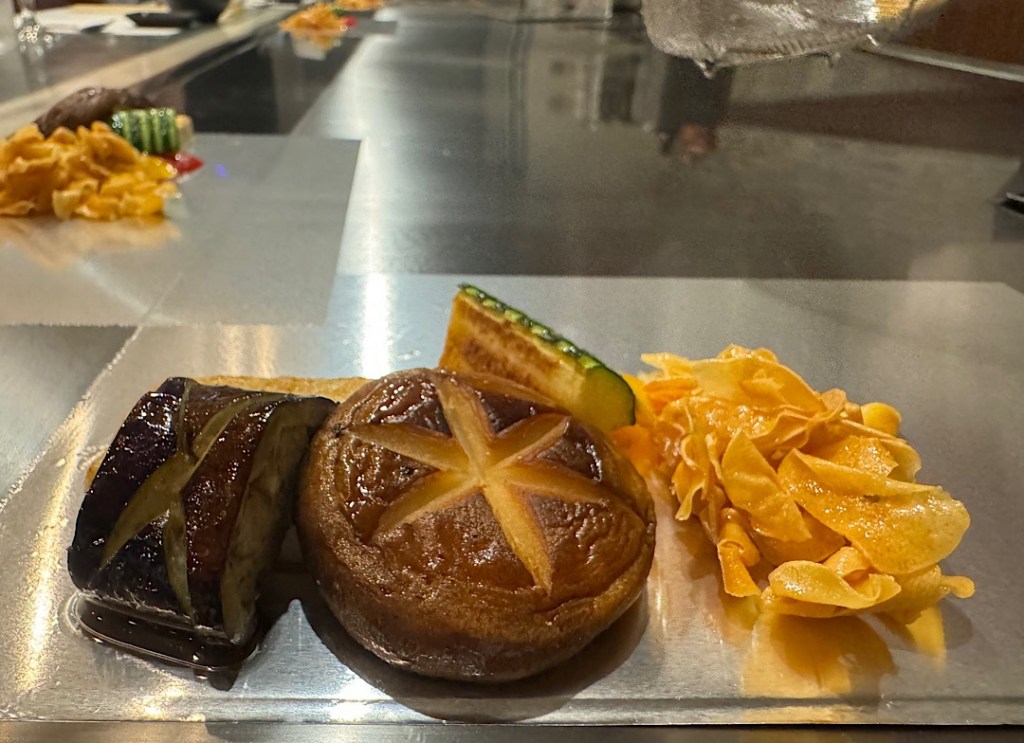
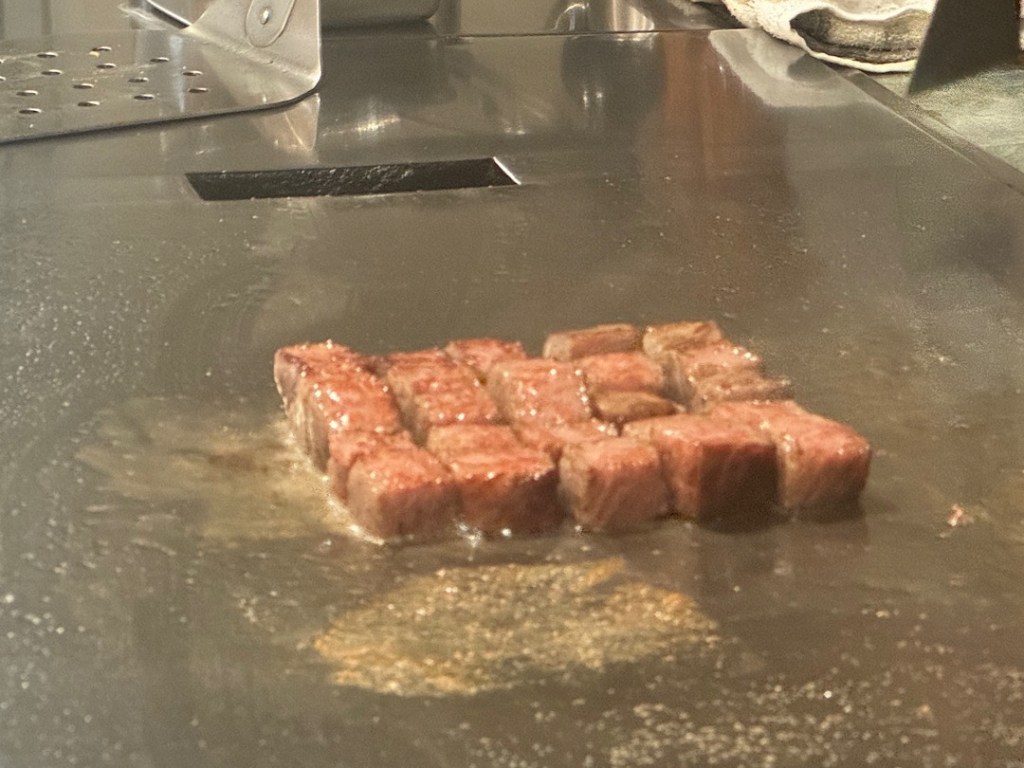
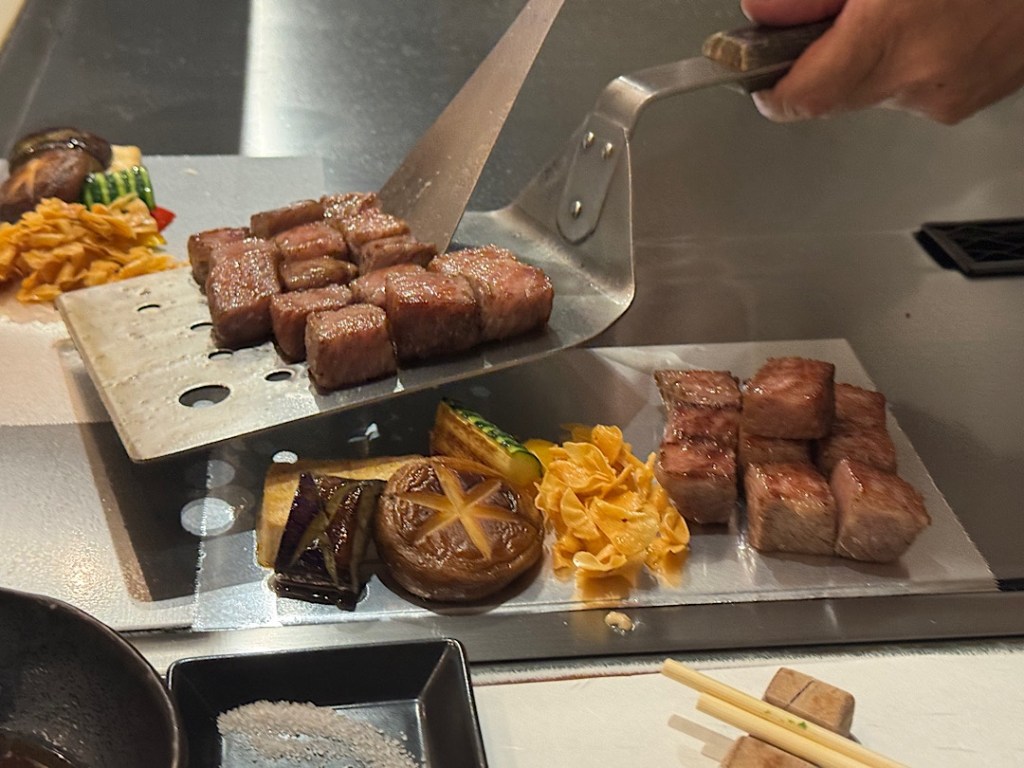
The raw ingredients of our main course and accompaniments, before Shuhai began to work with them.After sautéing very thin slices of garlic, our chef cooked the veggies.He served us each the freshly grilled tofu, eggplant, zucchini, mushroom, and garlic. Then he began searing the beef……and sectioning it into bite-sized morsels. He then divided the Kobe beef cubes between the two of us.We finished off with dessert while the chef buckled down to the demanding work of cleaning the grill.
Everything was delicious, but the beef really was extraordinary — tender and suffused with unctuous savory flavors — not at all like chewing on a piece of beef fat.
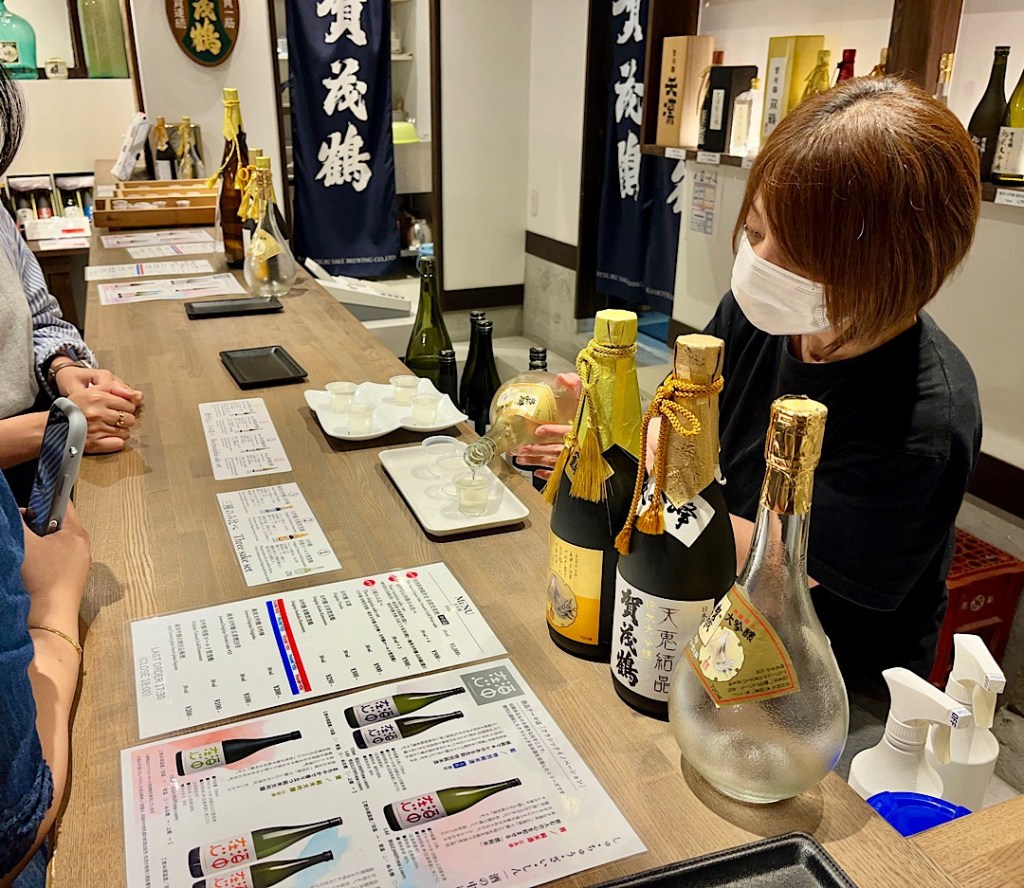
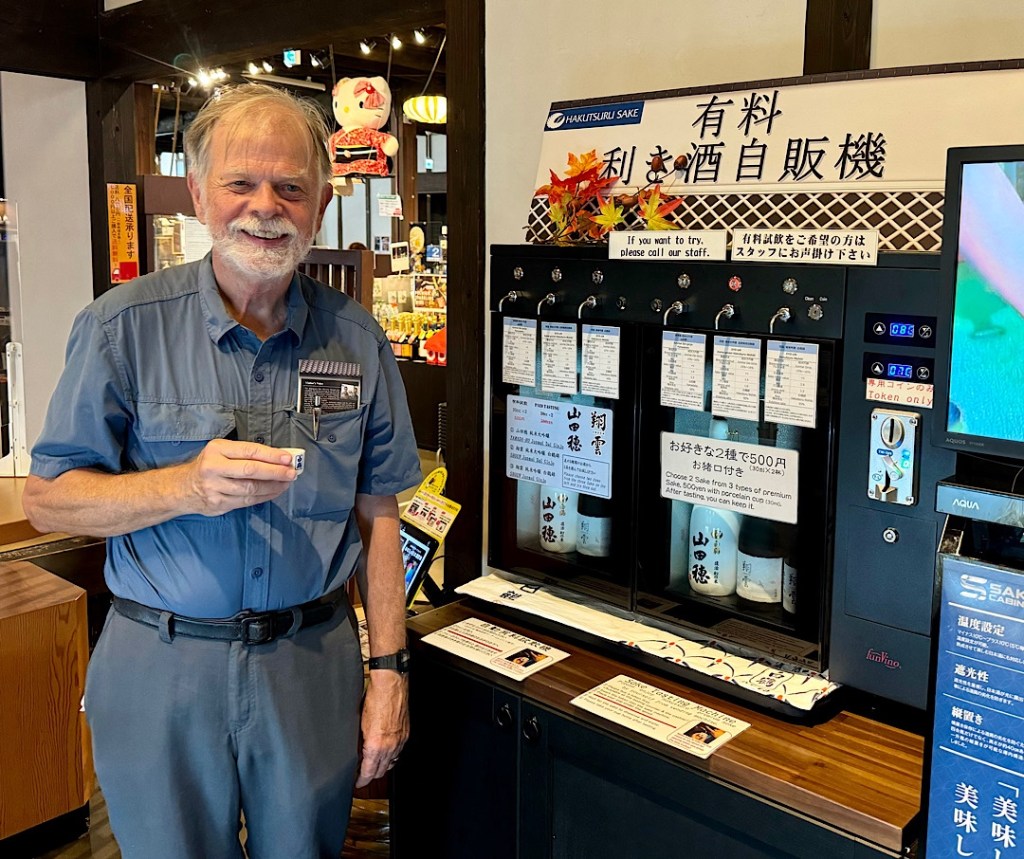
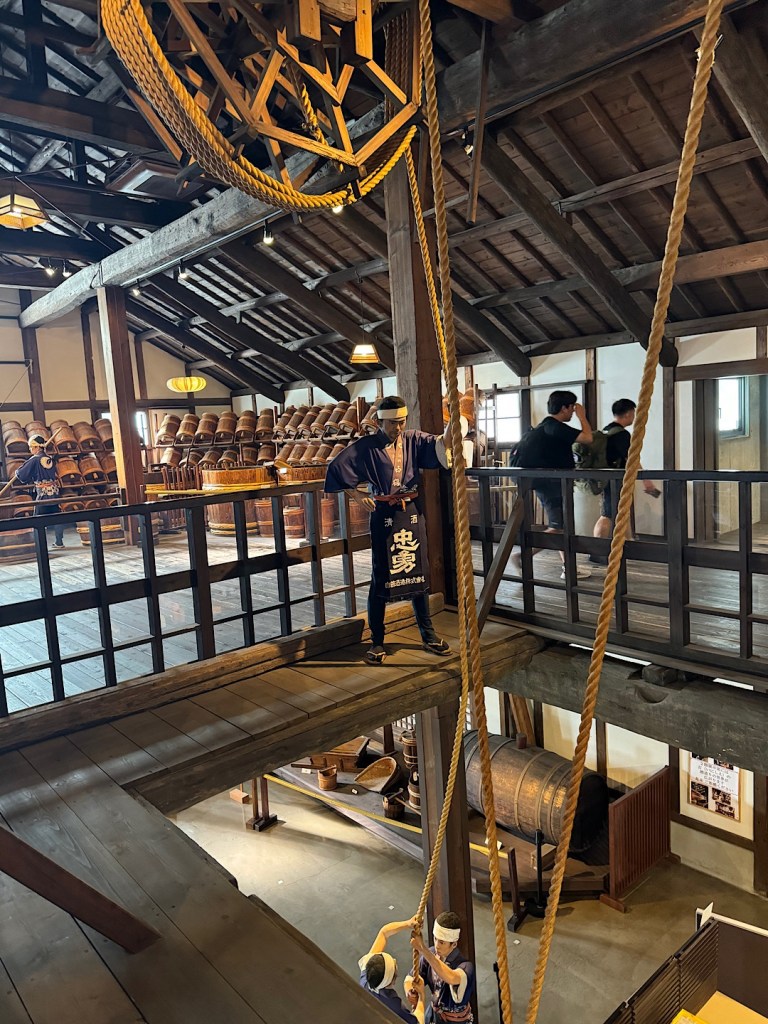
I wouldn’t want anyone reading this to think beef-eating is Kobe’s only attraction. The region is also famous for its sake, so on our first afternoon, Steve and I visited a museum devoted to the art and history of the local rice wine.
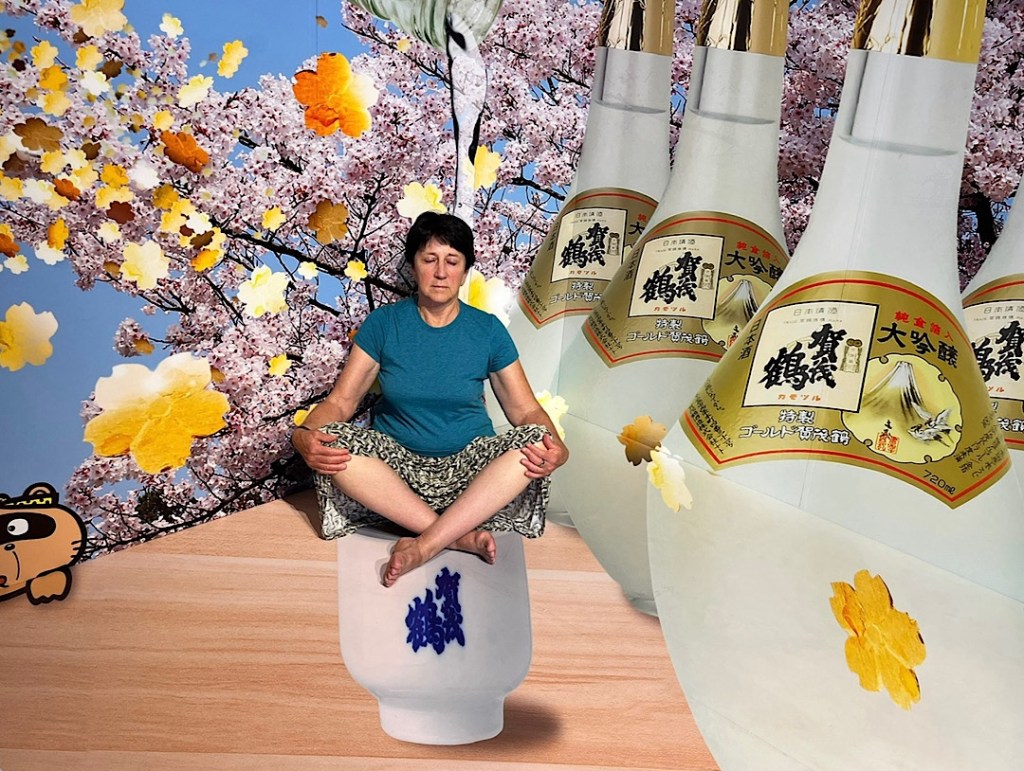
Besides learning about how you make sake, we got to taste three free everyday offerings. For an extra 500 yen (about $3.50) per person, we were able to try three higher-grade versions of the rice wine, dispensed by a machine.The Hakutsuru Sake Brewery Museum also boasted excellent life-size historical figures.
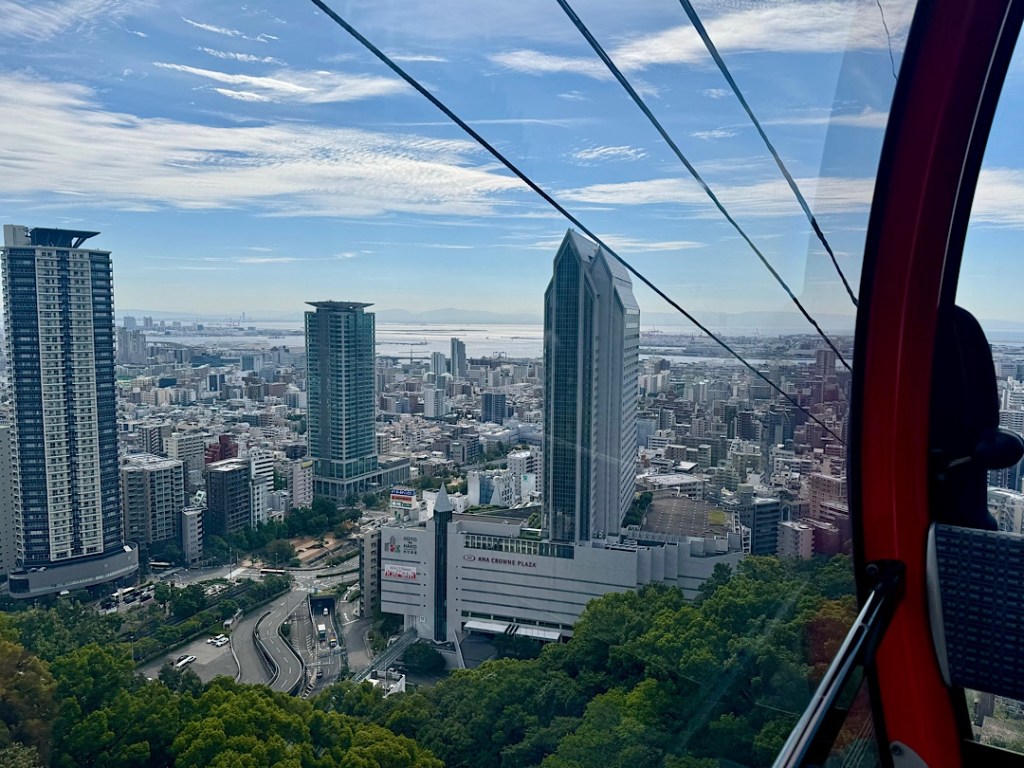
The next day, we took the ropeway up the mountain next to our hotel. It deposited us at the Kobe Nunobiki herb garden, one of the biggest and best herb gardens in all Japan.
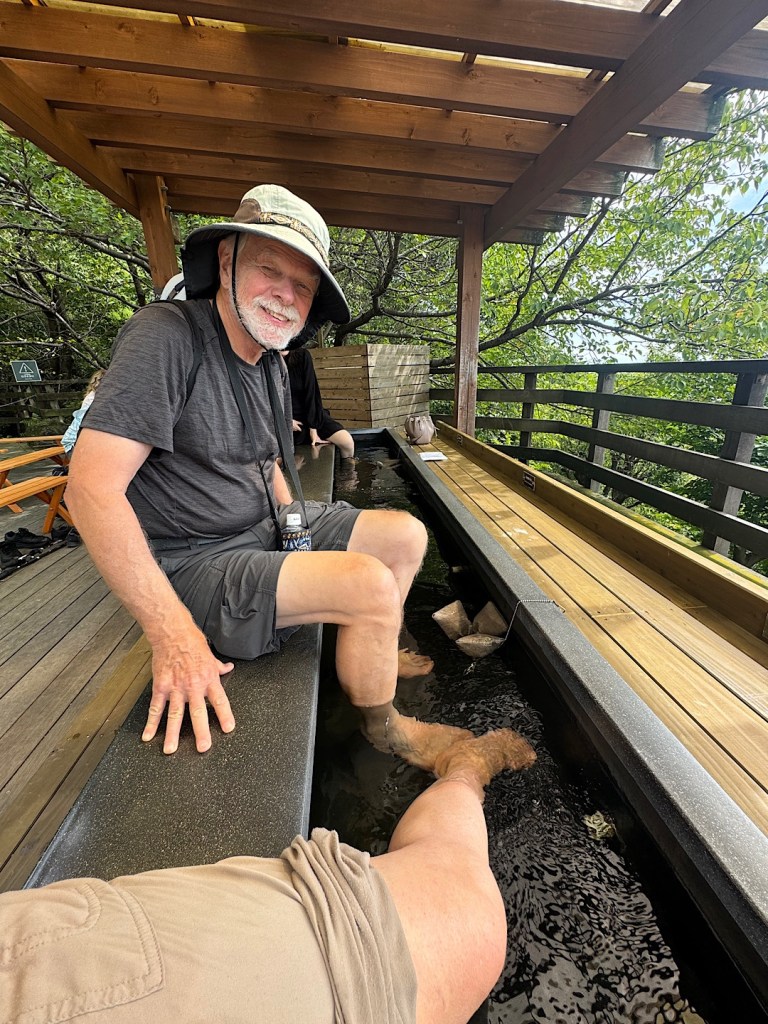
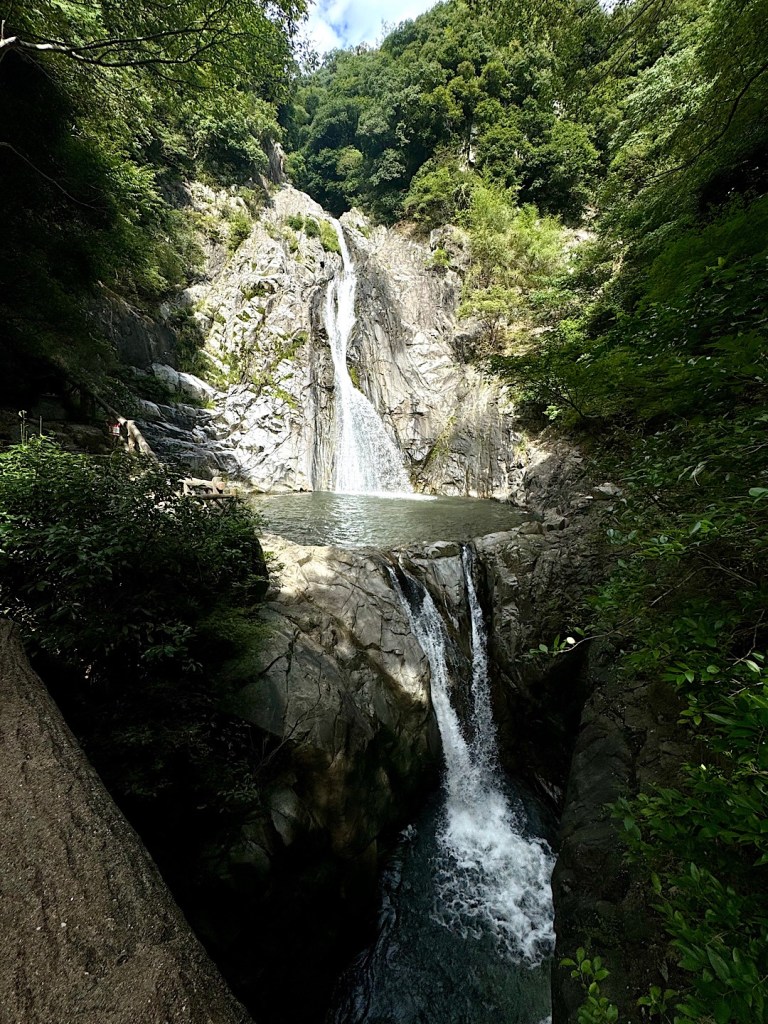
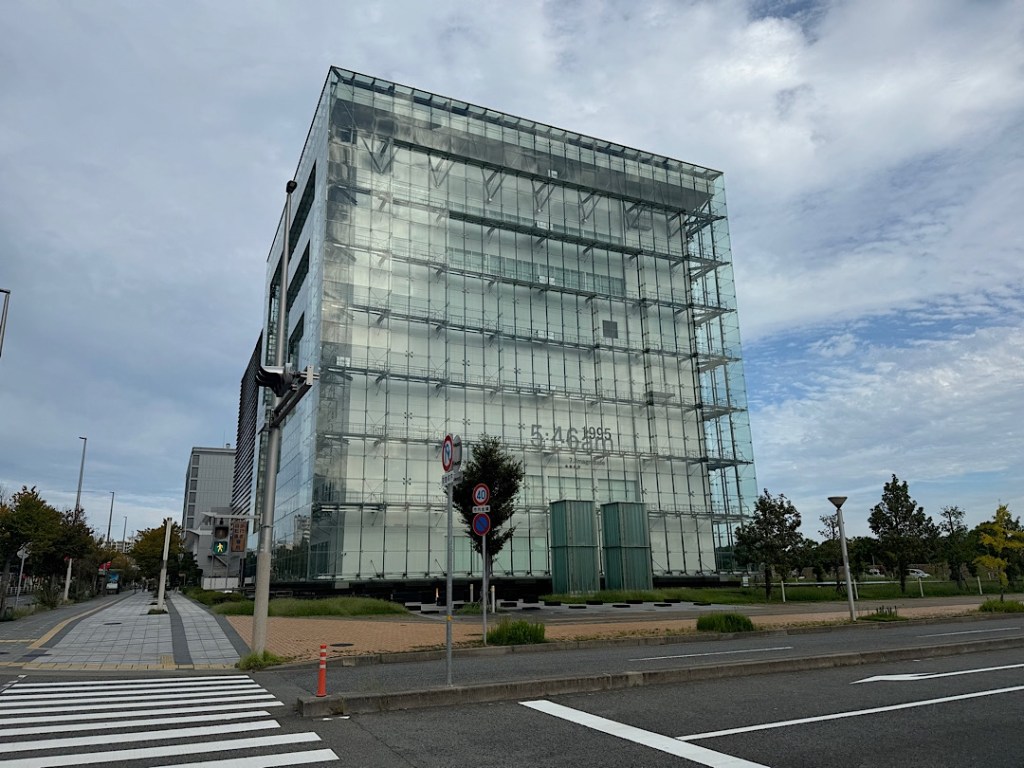
Views of the city and distant sea line were dazzling — as were those of our hotel (the nearest skyscraper to the cable car line.)The garden offered many beautiful plantings, along with some unusual features.We were able to stop for an herbal foot-soaking.And we found some delightful ways to relax. Then we hiked down the mountain, stopping at a 100-year-old tea house for lunch at seats where we could look at the Nunobiki Falls, ranked among the most impressive in Japan. They certainly impressed us.Wednesday afternoon we found our way to this building: the Great Hanshin-Awaji Earthquake Memorial and Disaster Reduction and Human Renovation Institution.
It may sound like a mouthful, but Japan is vulnerable to so many disasters — earthquakes, tsunamis, volcanic eruptions, cyclones, flooding, and mudslides. Kobe suffered a particularly dreadful earthquake back in 1995, and this museum shared what happened then in terrifying detail, along with the efforts to mitigate the impact of such disasters today.
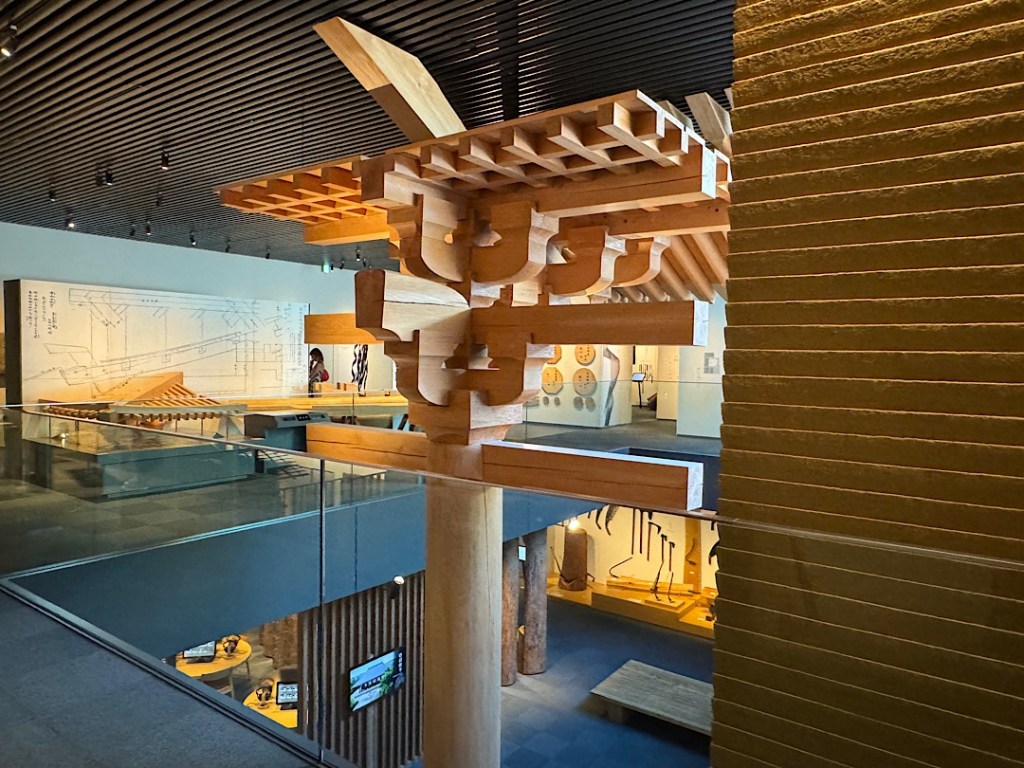
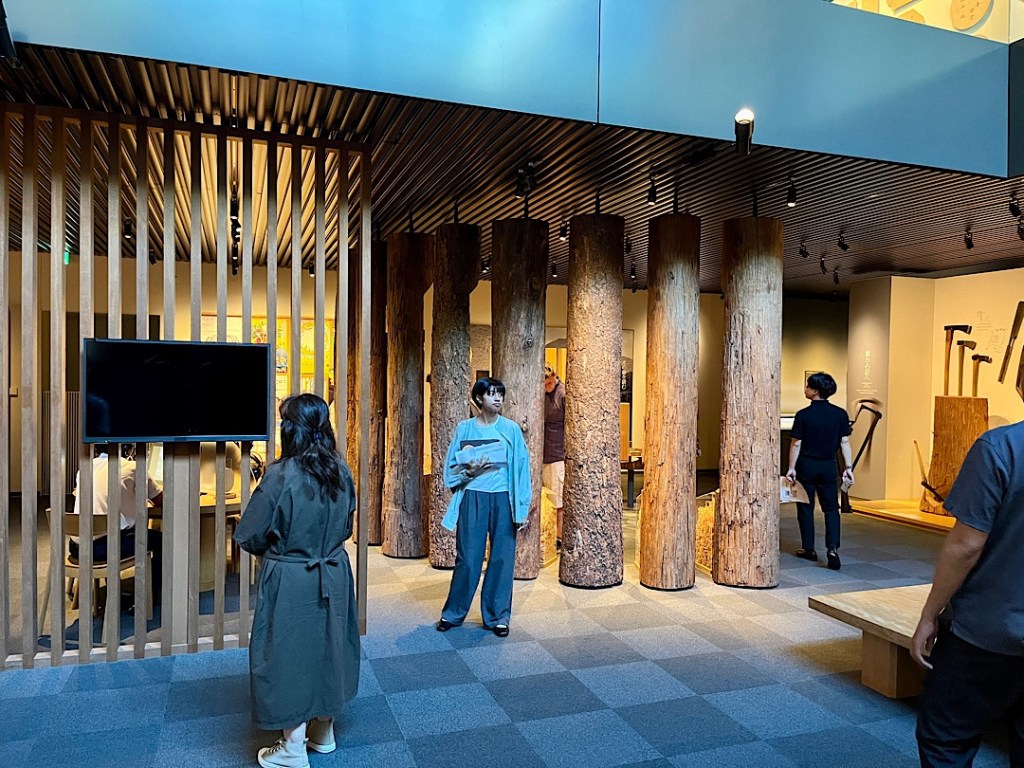
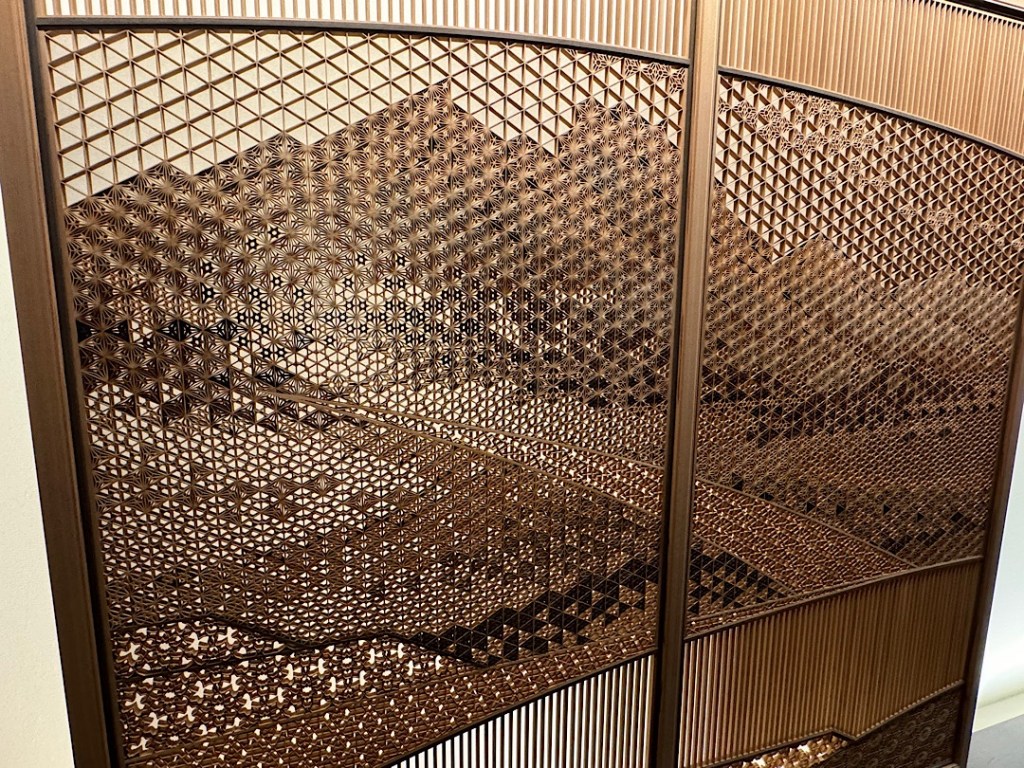
We had a far more peaceful experience Thursday morning at the Takenaka Carpentry Tools Museum, just a short walk from our hotel.
Surprisingly engaging and beautiful, it explained some of the mysteries of traditional Japanese wood construction, covering everything from the tools employed to the raw materials to the gorgeous finished products.
Yesterday we hustled back to the train station to catch more trains for the island of Shikoku, across the Inland Sea from Kobe. We’ll be traveling on Shikoku for 8 days, doing something we once thought would be more terrifying than some of those natural disasters — renting a car and driving ourselves around in it.
I can’t describe all the interesting things we experienced in Tokyo, but for me the biggest highlights were:
1) Checking out the new Toyosu fish market
I had been to the city’s central fish market on two occasions over the years, both seared into my memory. The Tsukiji market was a huge ancient property to which fishermen every morning delivered a staggering quantity of items to feed this country’s appetite for every conceivable product of the sea. Visitors could just stroll in and ramble through it, a thrillingly dangerous pastime as you dodged forklifts careening through the dim, narrow aisles, past fishmongers wielding bloody saws and axes and flashing knives. On offer were massive tuna and every other kind of fish, banal and exotic, along with a vast menagerie of mollusks.
Then the city decided to build something bigger and more modern. The Toyosu fish market replaced Tsukiji in October of 2018, and we were eager to see it. After the long plane rides followed by our monorail and subway journey Thursday night, we didn’t feel like dragging ourselves out of bed at 5 am Friday morning. We only got out the door about 7 am, and it was 8 by the time we reached our destination. That was well after most of the commercial action had concluded, but even if we’d arrived two hours earlier, I’m sure I would have been disappointed.
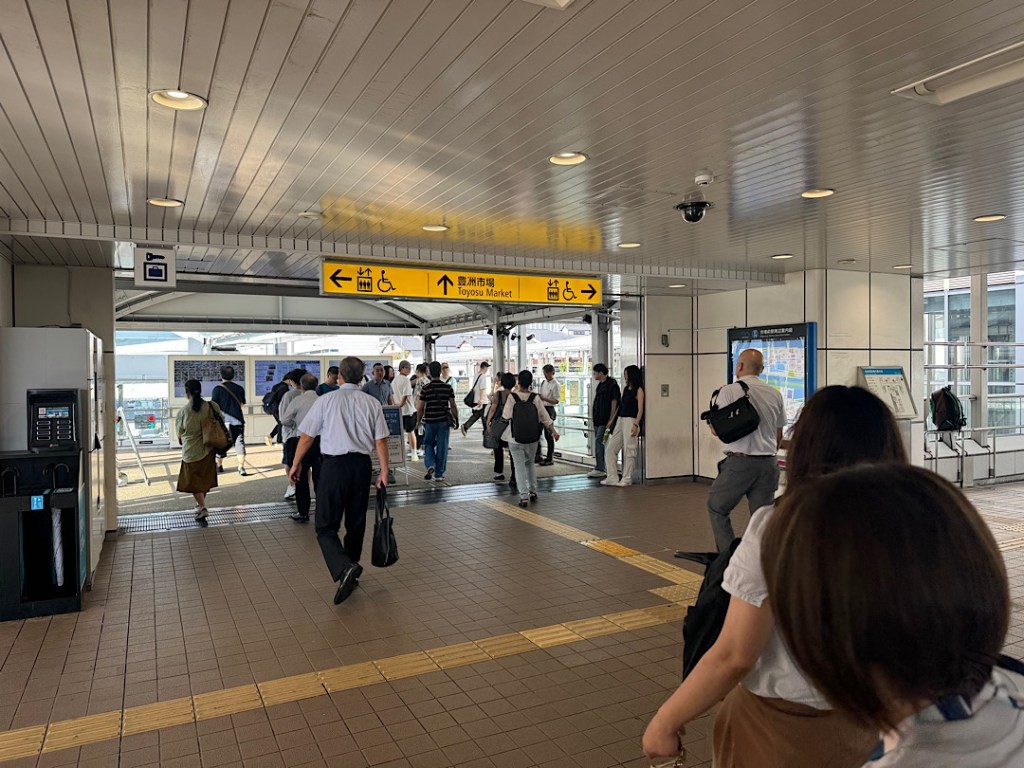
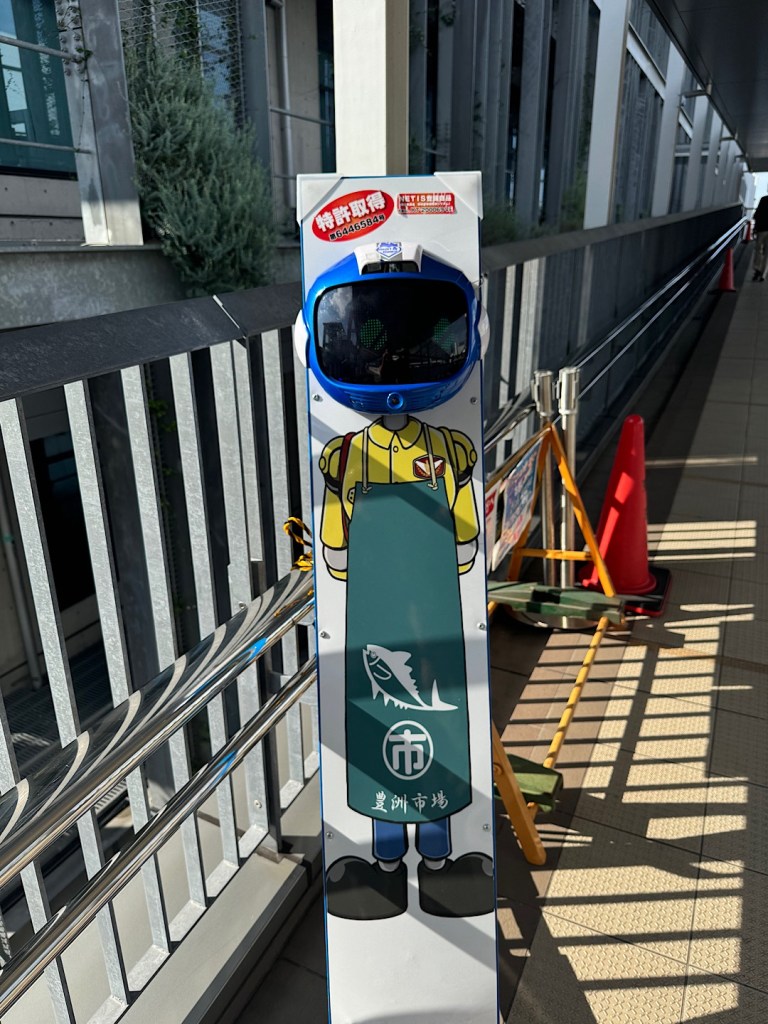
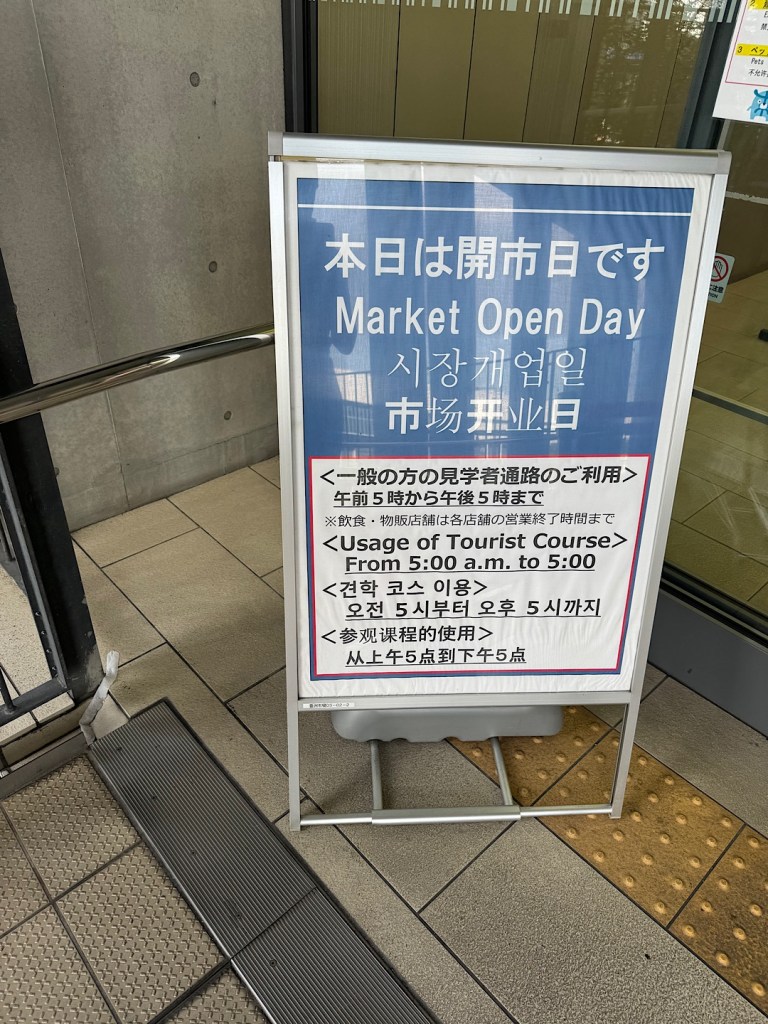
The metro station gleams,A multilingual robot greets visitors, And signage is clear and plentiful.
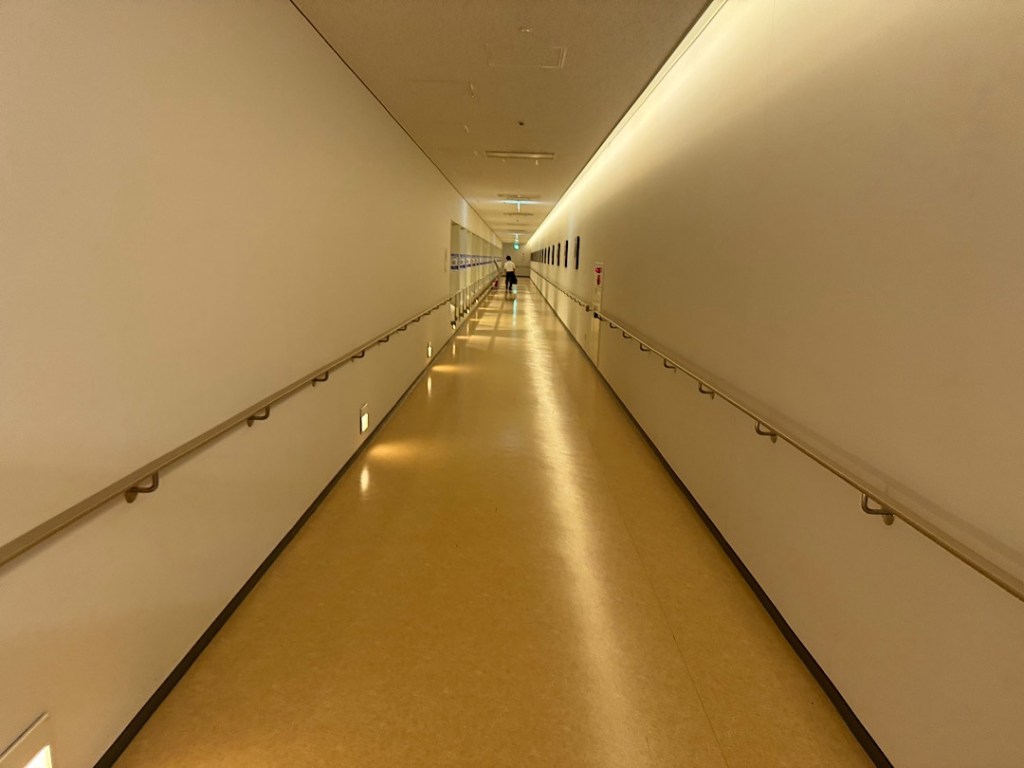
The new market is enormous and welcomes visitors even more clearly than its predecessor did. But now you walk through surgically clean corridors that feel endless.
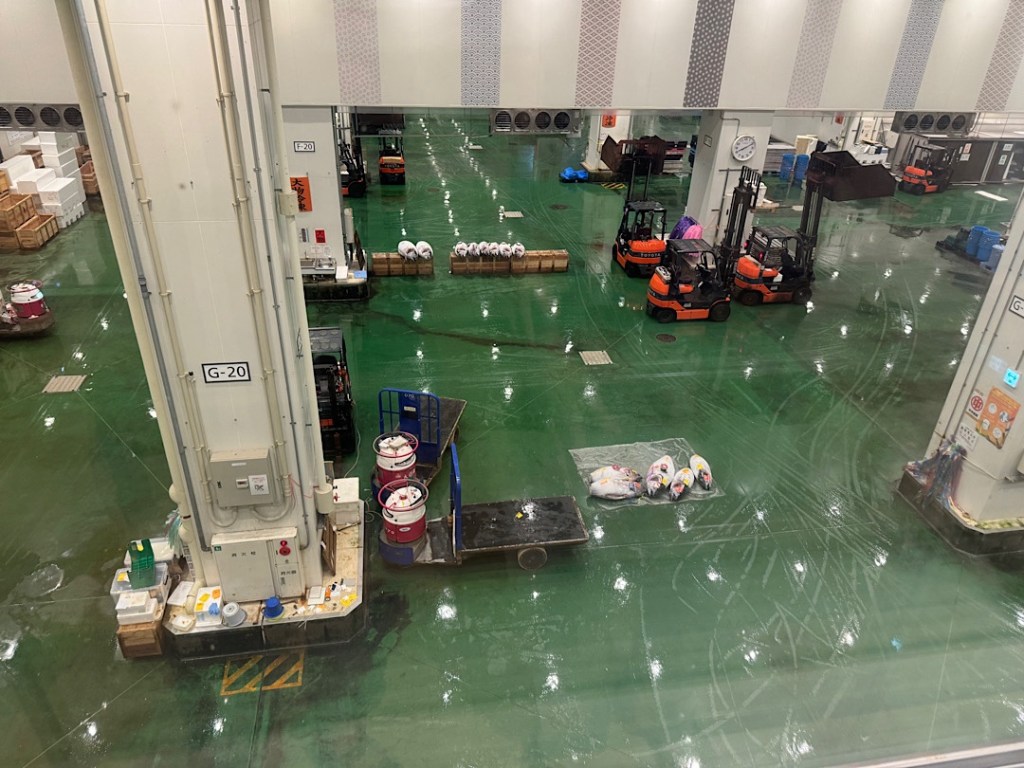
They take you to a gallery overlooking workers far below. No blood or guts were evident; no fishy smells.
This was the view of the wholesale fish floor from the visitor’s gallery. Not yet 8 a.m., all we could see were a few frozen carcasses.Another enormous building houses a wholesale produce market, but it wasn’t any more interesting, as seen from the visitor’s gallery.
I’m sure it’s safer for the tourists and probably the workers too, a Brave New Fishmongering World that I wouldn’t have missed seeing. But I walked away grateful I also had tasted its raw and juicy former incarnation.
2) Having my mind blown at the city’s two teamLab centers
I almost never go to art museums when I’m outside the US. It’s not that I don’t enjoy looking at paintings and sculptures. But for me most museums pale in comparison to walking around and taking in the architecture and shops and street-level glimpses into local life.
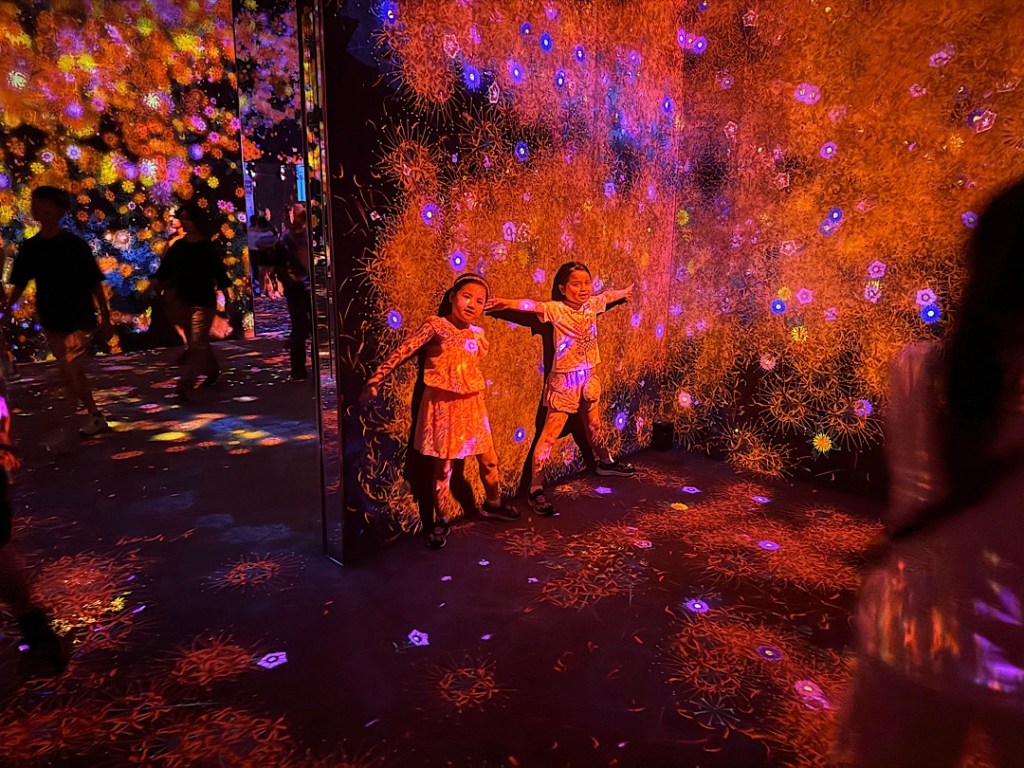
The teamLab art collective doesn’t make ordinary art, however. The collective started more than 20 years ago in Tokyo and has evolved into an eclectic crew of so-called “ultratechnologists” — engineers, artists, animators, architects, and other specialists who create spaces in which participants can lose themselves in fantastic, “borderless” wonderlands. Two are currently open in Tokyo: teamLab Planets (just a short walk from the new fish market) and teamLab Borderless. The latter first opened in 2018 and immediately became the most visited museum in the world (according to the Guinness Book of Records folk.) It then closed and an expanded version opened in February, 2024. Steve and I went to both installations (one Friday morning and the other on Sunday.)
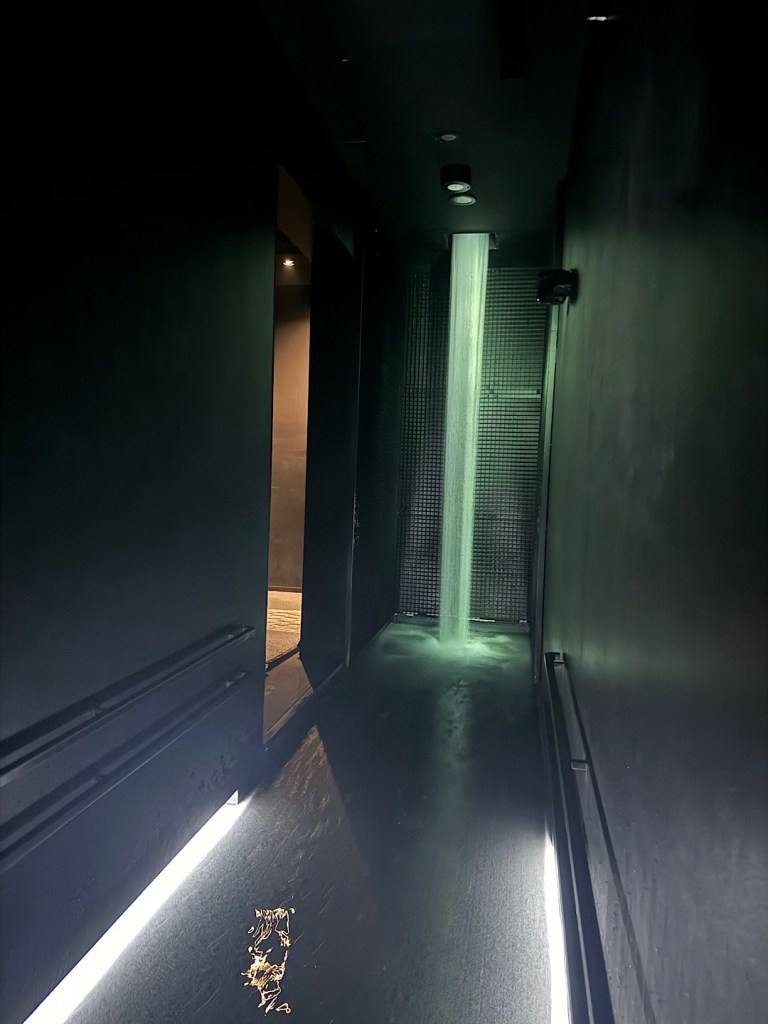
We loved them both but Planets was our favorite. We had to take off our shoes and stow them in lockers, not because this is Japan but because visitors enter by ascending a long, dark ramp down which water streams.
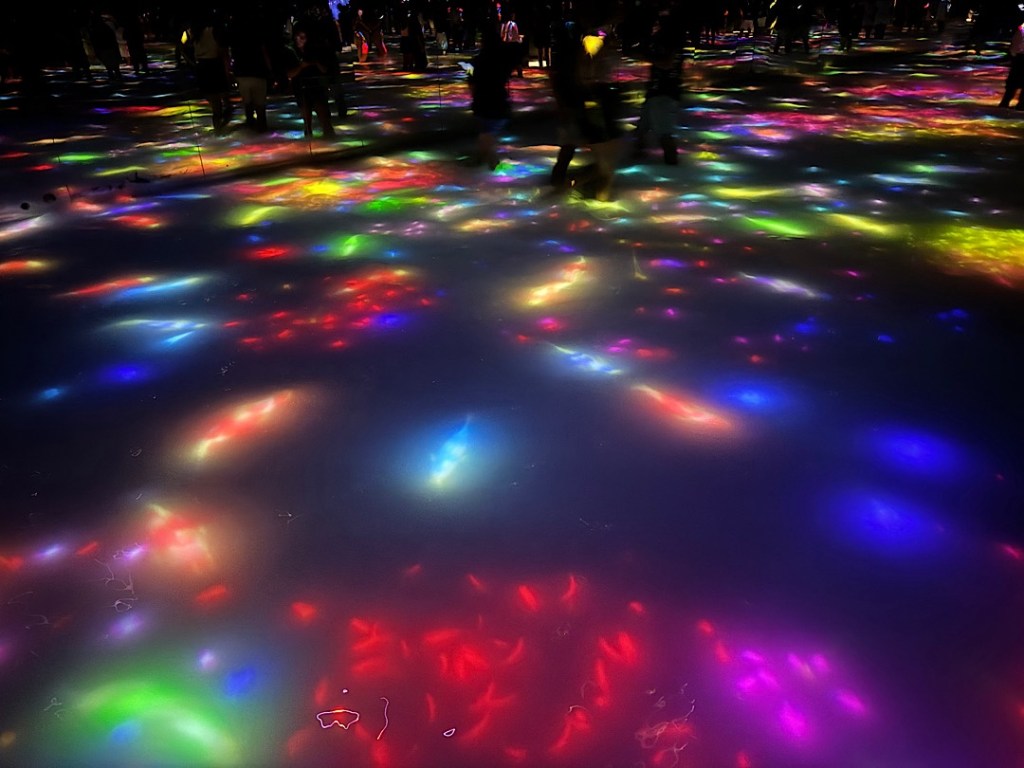
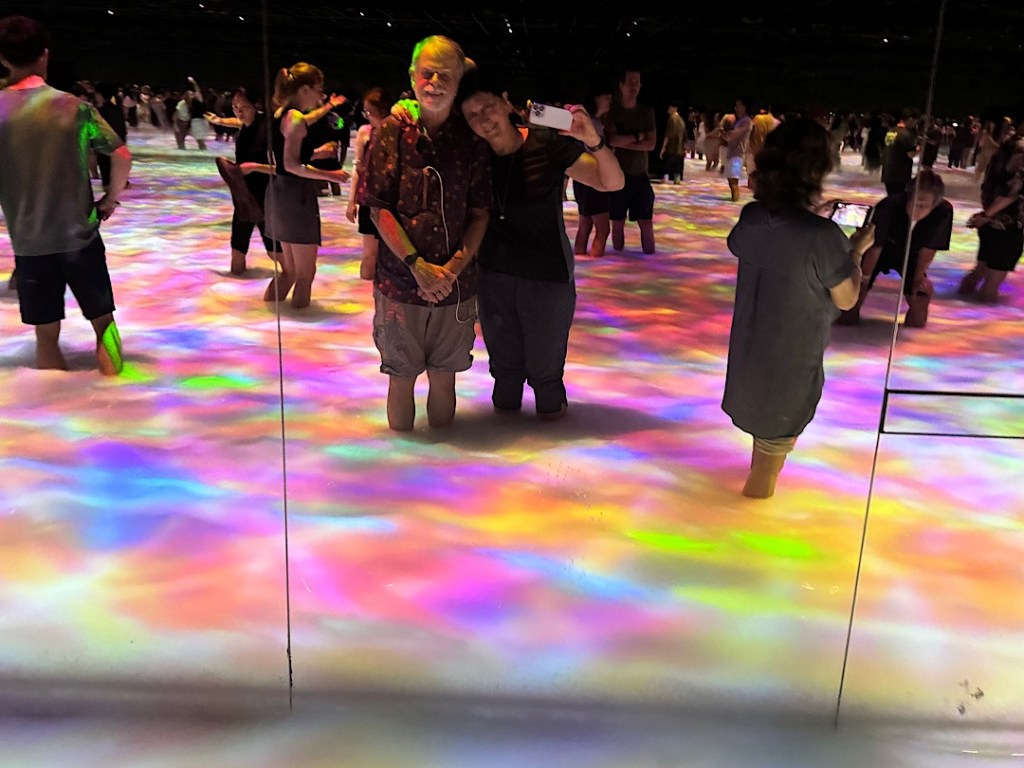
Later we reached an enormous room filled with knee-deep water. Against a mesmerizing musical backdrop, digital fish swam around all us waders, changing course in reaction to our presence. Sometimes the fish transformed into flowers. Petals dropped off and floated through the water and turned back into fish.
I’ve never experienced anything like it — and what we found in the other “galleries.”
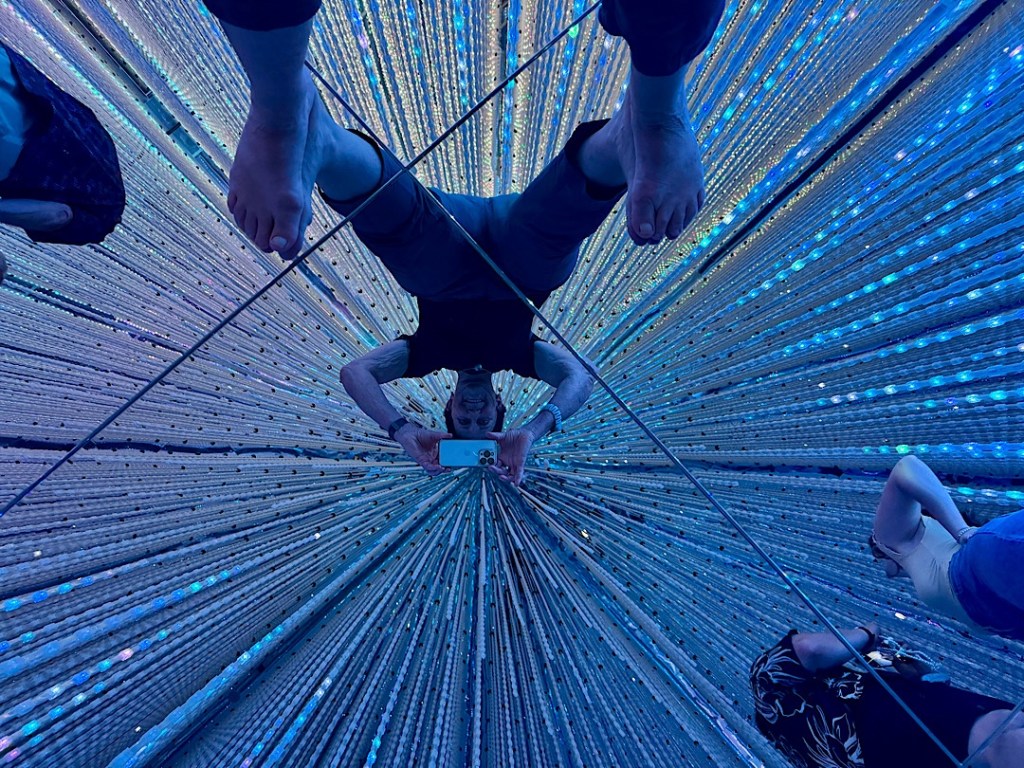
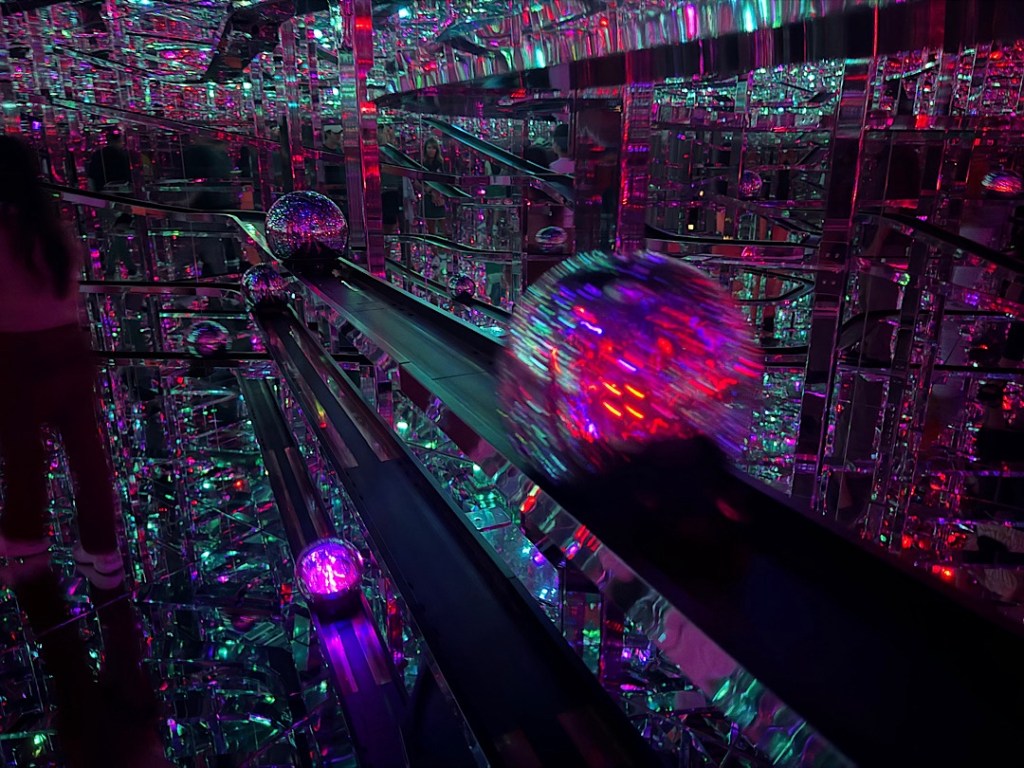
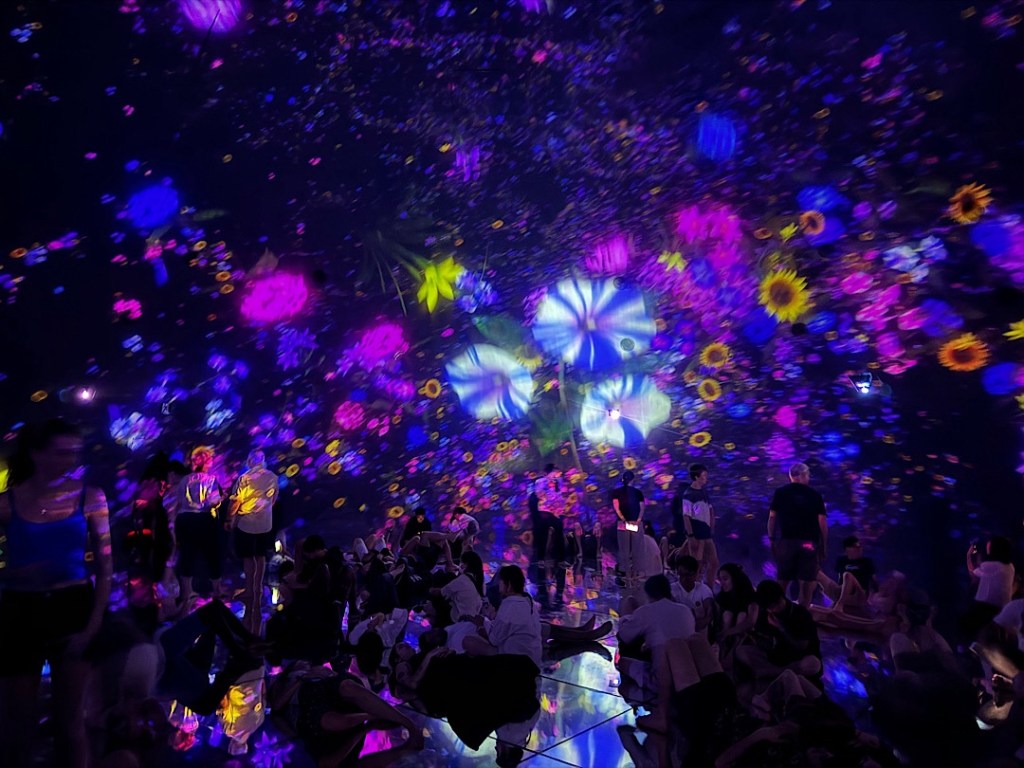
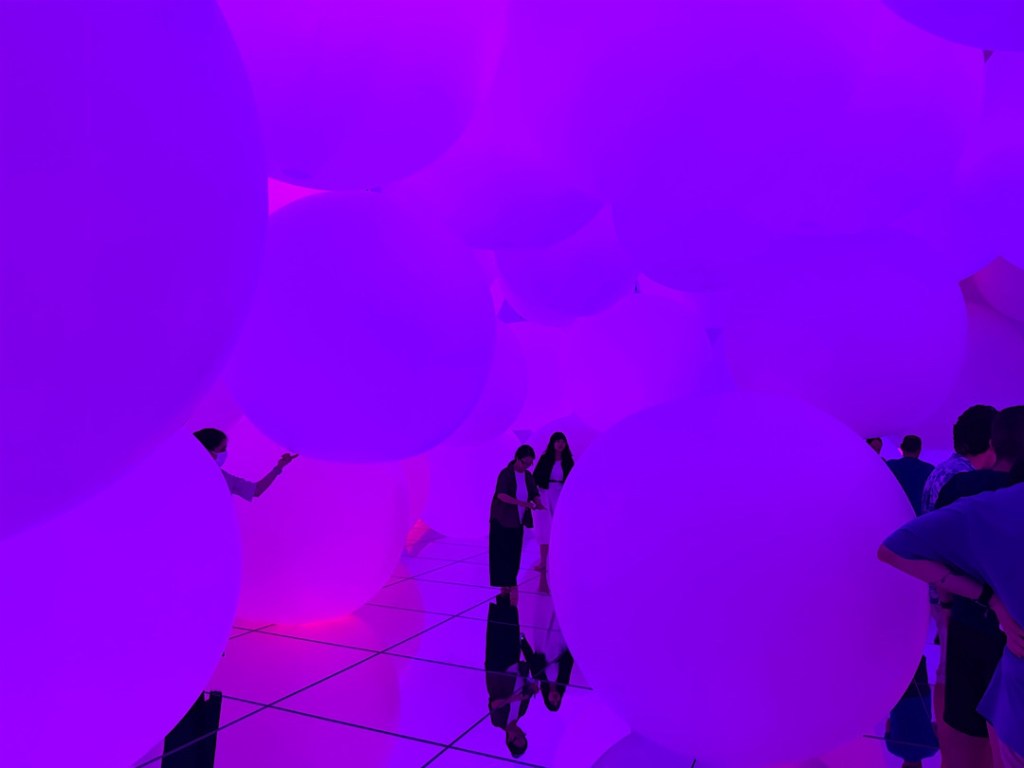
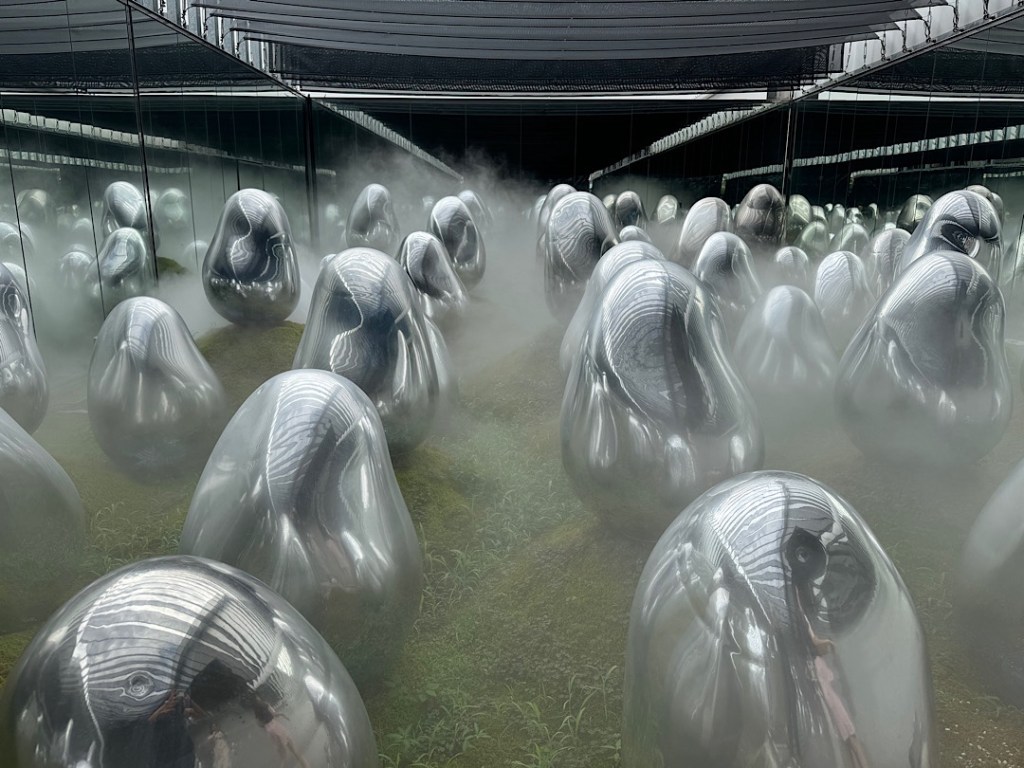
Mirrored walls and ceilings and floors contribute to the sense of infinite wonders.In this gallery, you could lay on the floor and be showered by what felt like all the flowers in the universe.The gigantic balls in this room changed color — in response to the music. And the visitors’ presence?The Planets site includes two beautiful gardens, this one populated by alien shapes nestled in mossy beds.In a second one, we lay among a moving profusion of flowers that appeared to be growing down.
It made me wish I could take every one of my family members and friends to both of these amazing experiences.
3) Attending the sumo tournament
I’m also not big on spectator sports at home or abroad. But sumo is so wildly Japanese it tickles me. The giant wrestlers only compete in six big 15-day-long tournaments a year. Only three of those are held in Tokyo. When I learned that one of the Tokyo tournaments would be wrapping up during our visit, I couldn’t resist getting tickets.
Steve and I went Saturday afternoon, the second to the last day. We watched the action for about two hours, and now that I’ve seen it I can offer a few pointers to anyone thinking of following in our footsteps.
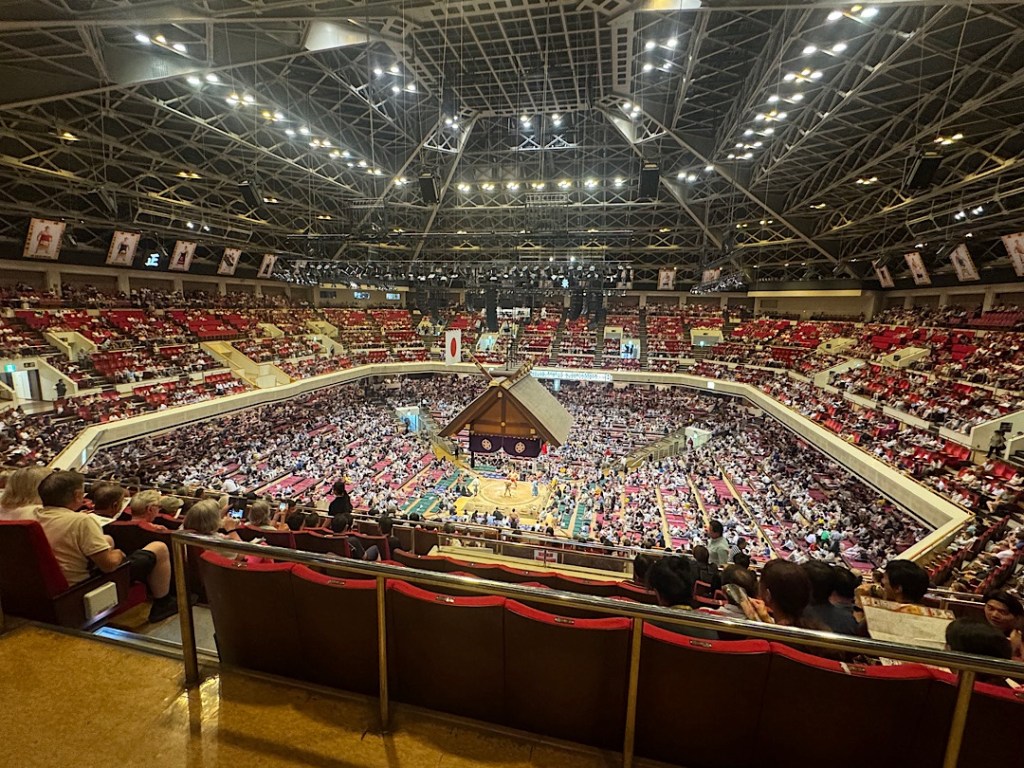
— Because I wasn’t sure how much we would enjoy it, I bought us the cheapest seats (about $65 apiece) Even in the highest sections, we could see all the action clearly.
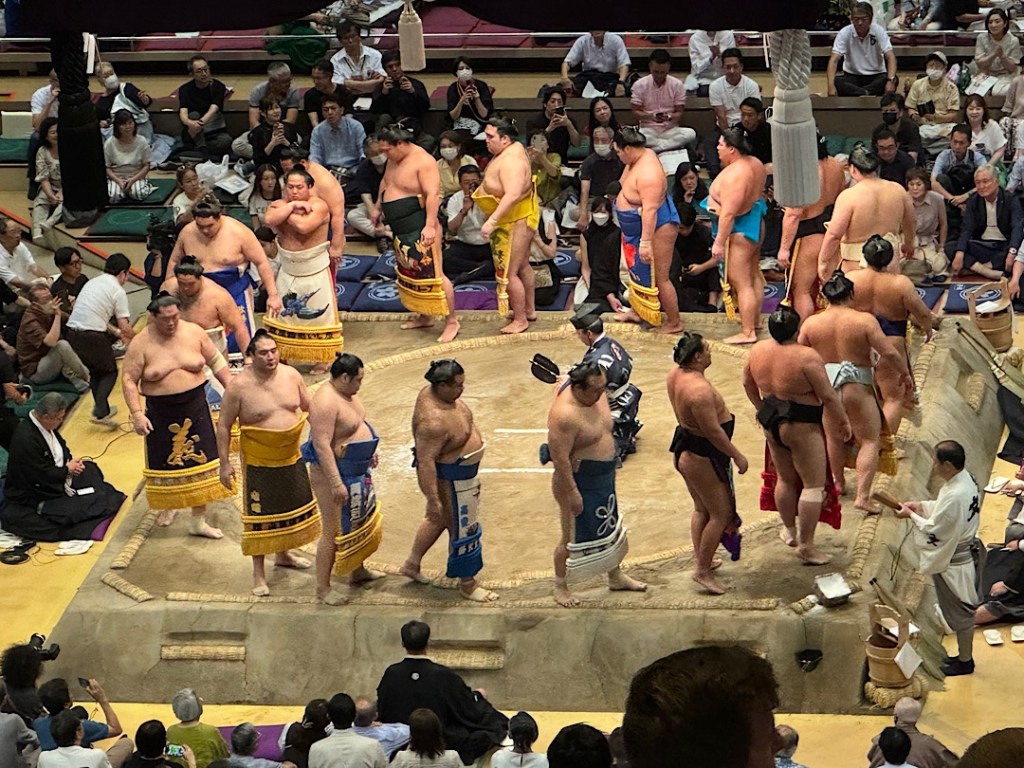
With my camera’s telephoto lens, I saw a lot more. Here are the highest-ranked competitors taking a ceremonial turn around the ring.
Still, it would have been even more fun and exciting to sit closer to the ring. I wouldn’t want one of the best seats because they’re not “seats” at all but mats on the ground. Also, the wrestlers occasionally get thrown into the front rows, and having one land on you looked like it could be painful.
— The wrestlers go through a lot of ceremonial posturing before they start grappling each other. They throw salt into the ring for good luck. They slap their massive bellies to ward off evil spirits. They play chicken games that trigger the fight. But it didn’t take long to puzzle out the basics of what was happening; figuring it out was part of the fun. The action is very brief but often exciting, and the bigger guy by no means always wins (that video above notwithstanding.)
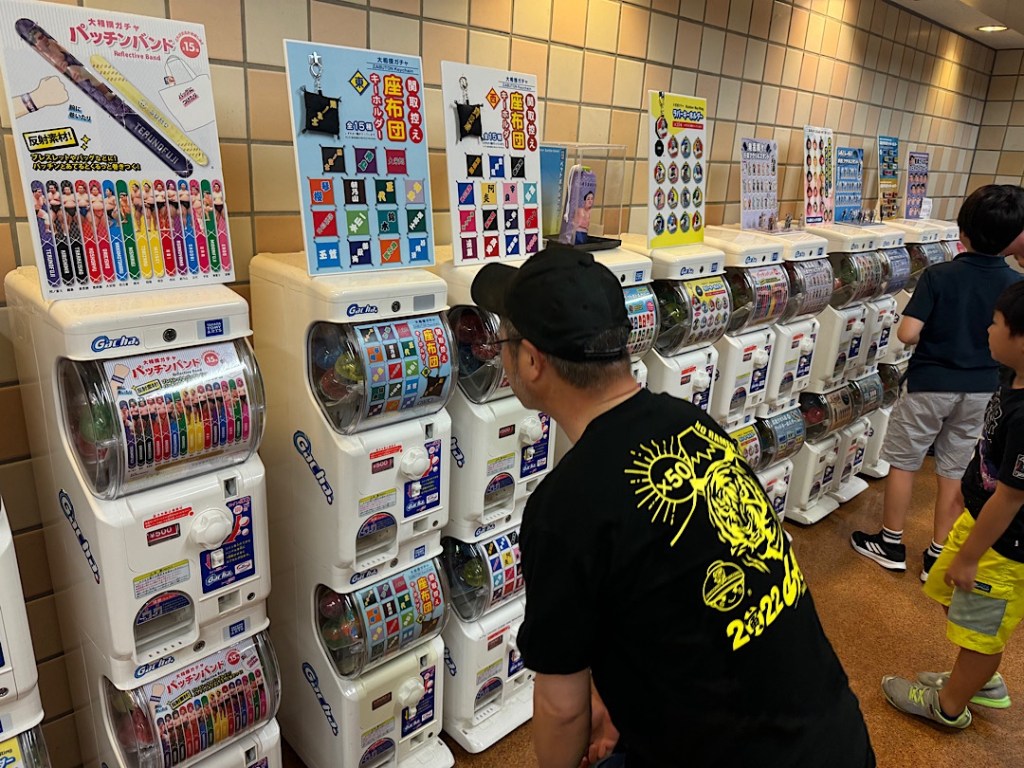
Wristbands? Keychains? Other tokens? You could buy it all.
— Wearing some sumo gear would enhance the fun. There was a lot of it on offer. The crowd was in high spirits and many were clearly devoted to their favorite wrestlers.
Fans waiting outside in the hope of getting an autograph.
4) Strolling through the neighborhood shrine festival
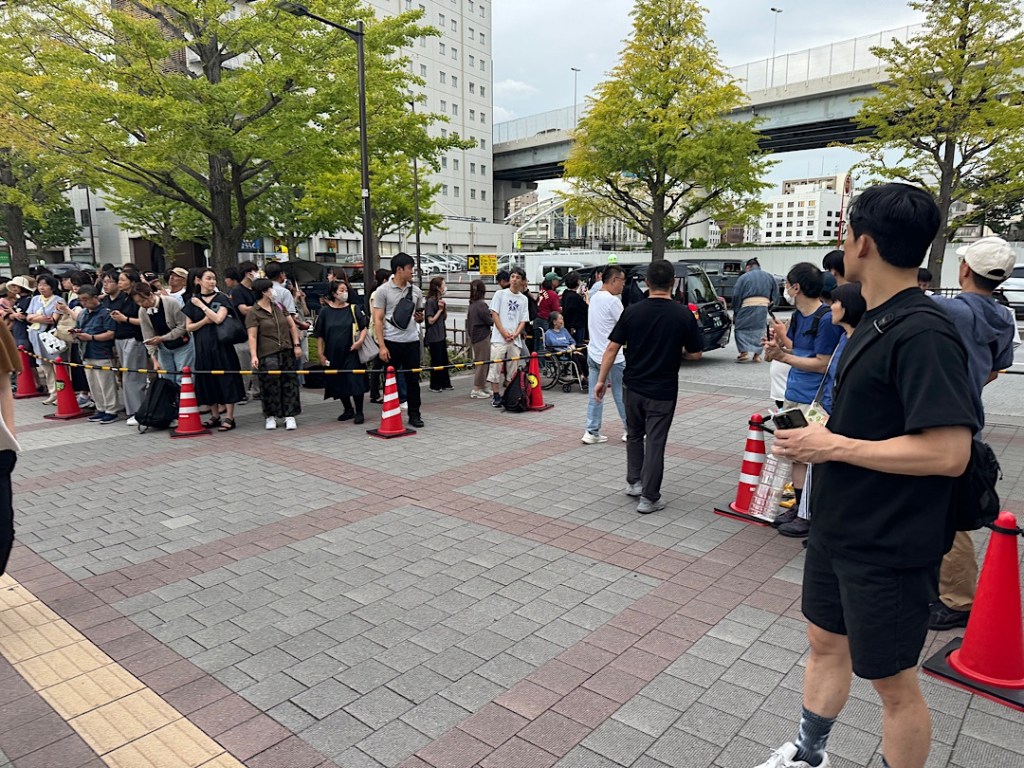
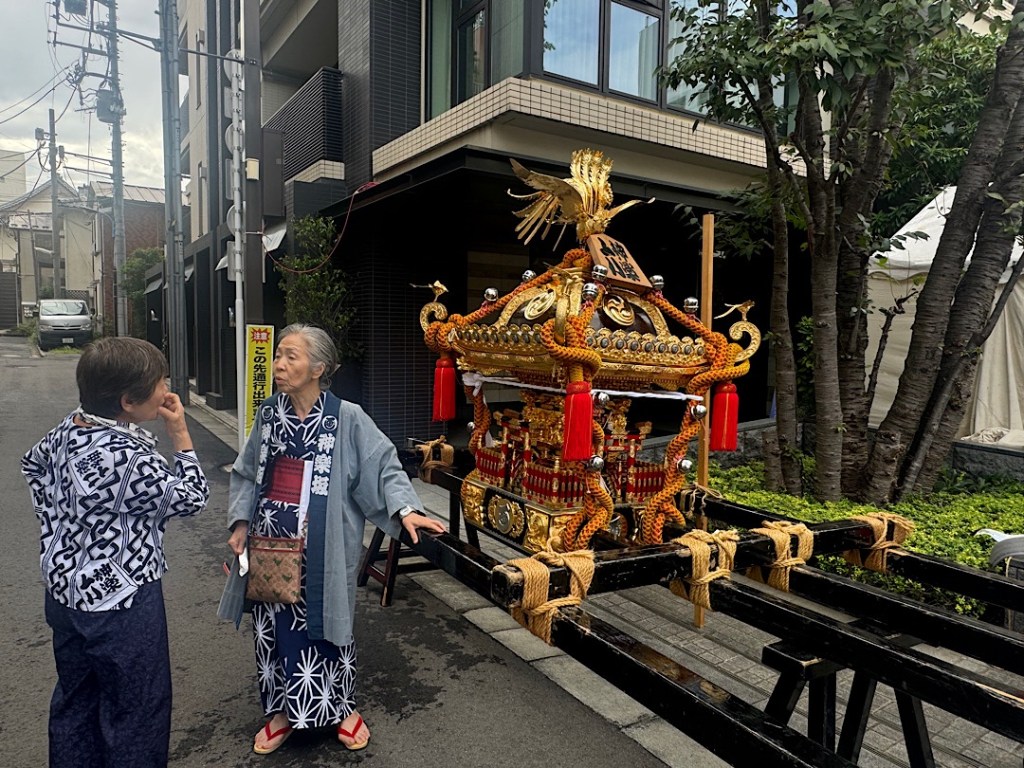
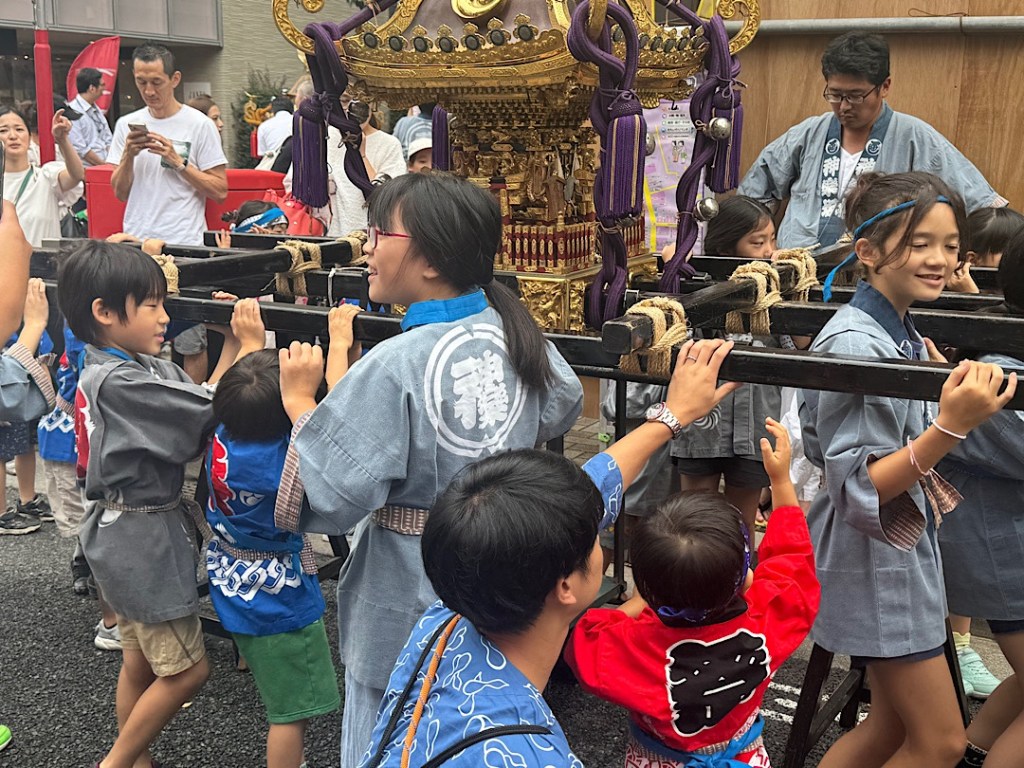
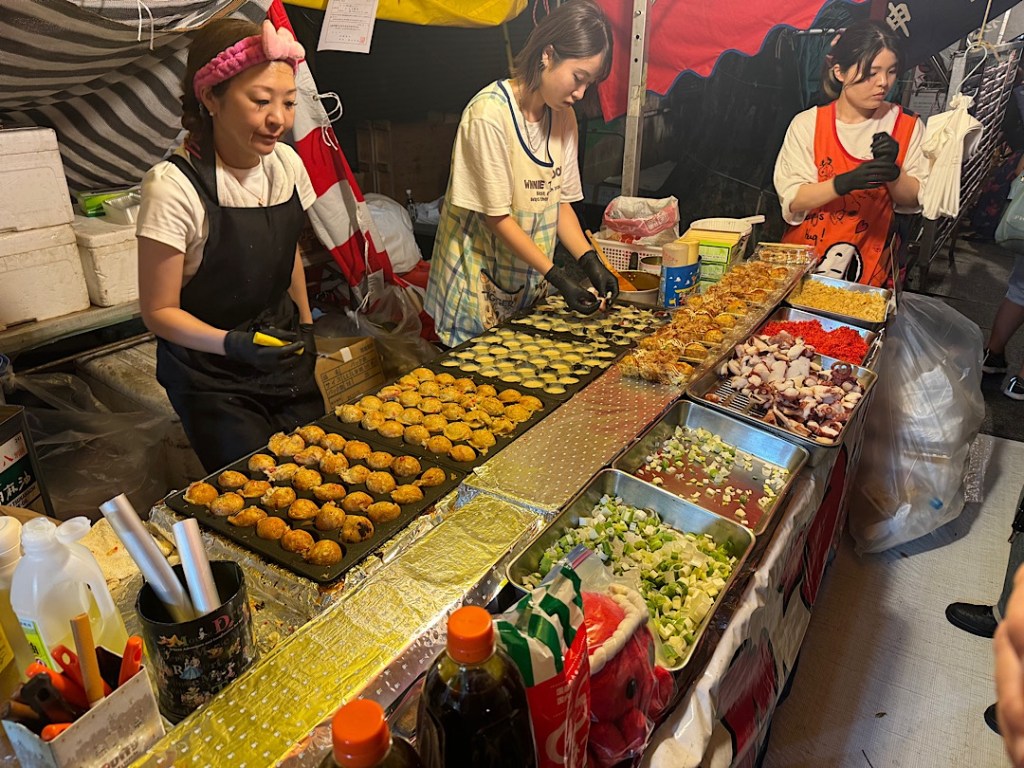
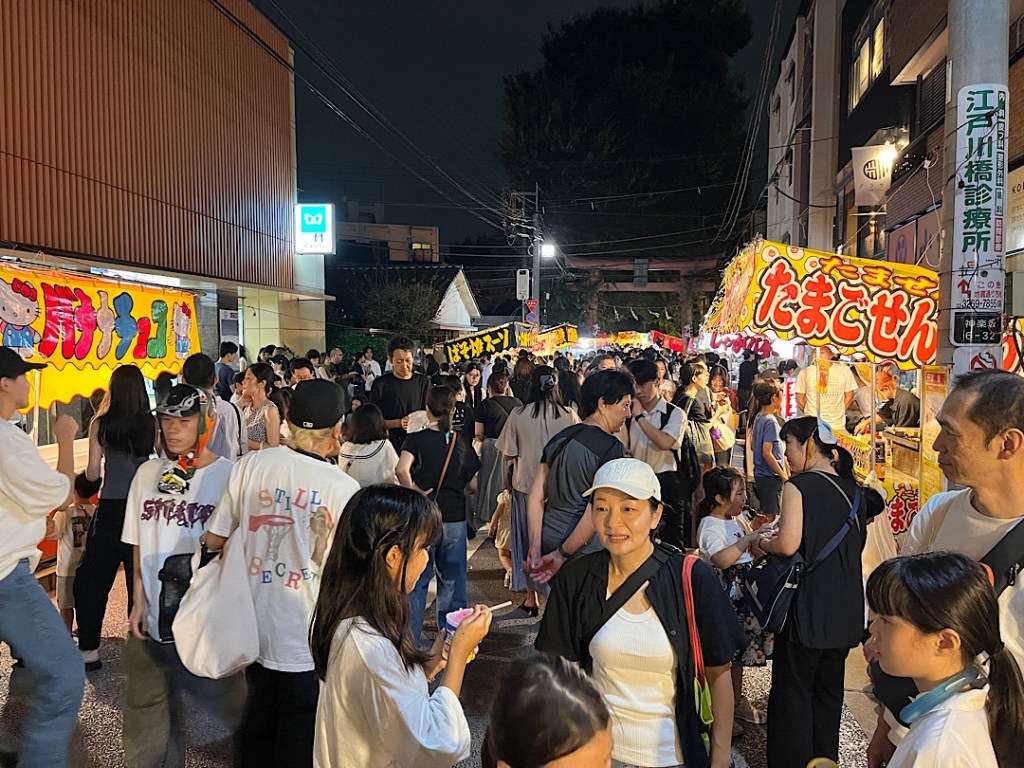
Most Japanese will tell you they’re not religious. But they sure do love a good shrine festival. Both Saturday and Sunday afternoon and evenings, the streets leading to Akagi Shrine (just a five-minute walk from our hotel) were jammed with folks of all ages; their good mood was contagious.
Portable shrines like this one are part of the action.Adults carry them through the street.Even little kids get to take part.But it’s also a chance to drink and eat delicious things like these takomaki — octopus pieces deep fried in delicious batter.Children play street games.The area around the temple was jammed.
5) Dining on Memory Lane and walking home
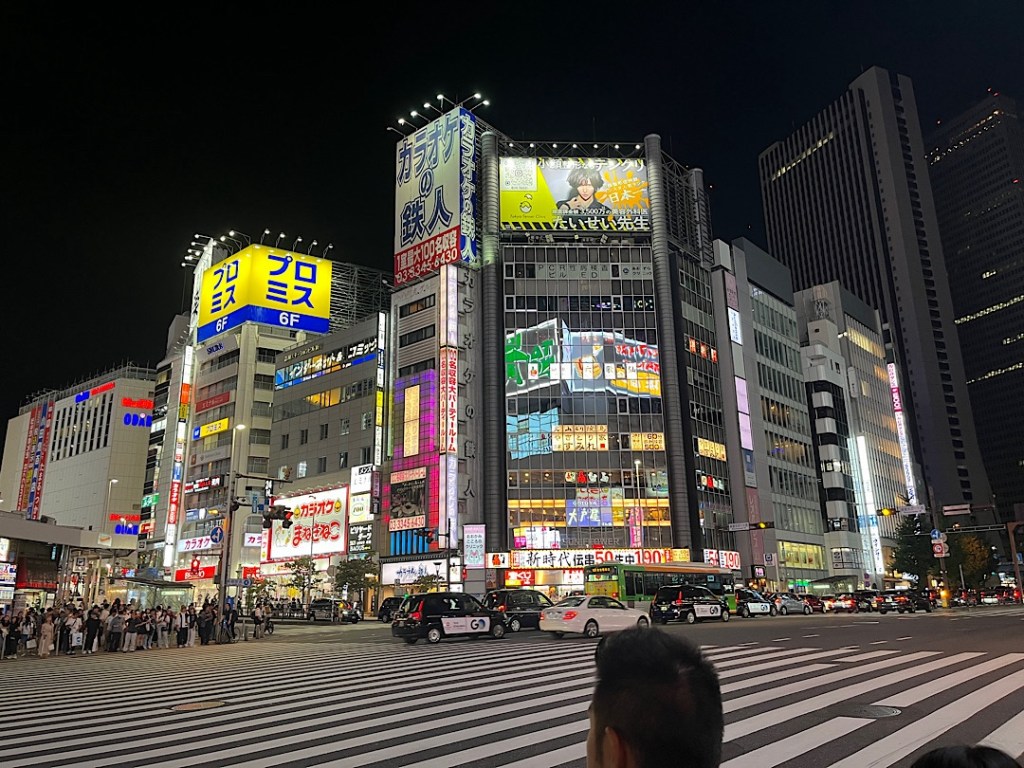
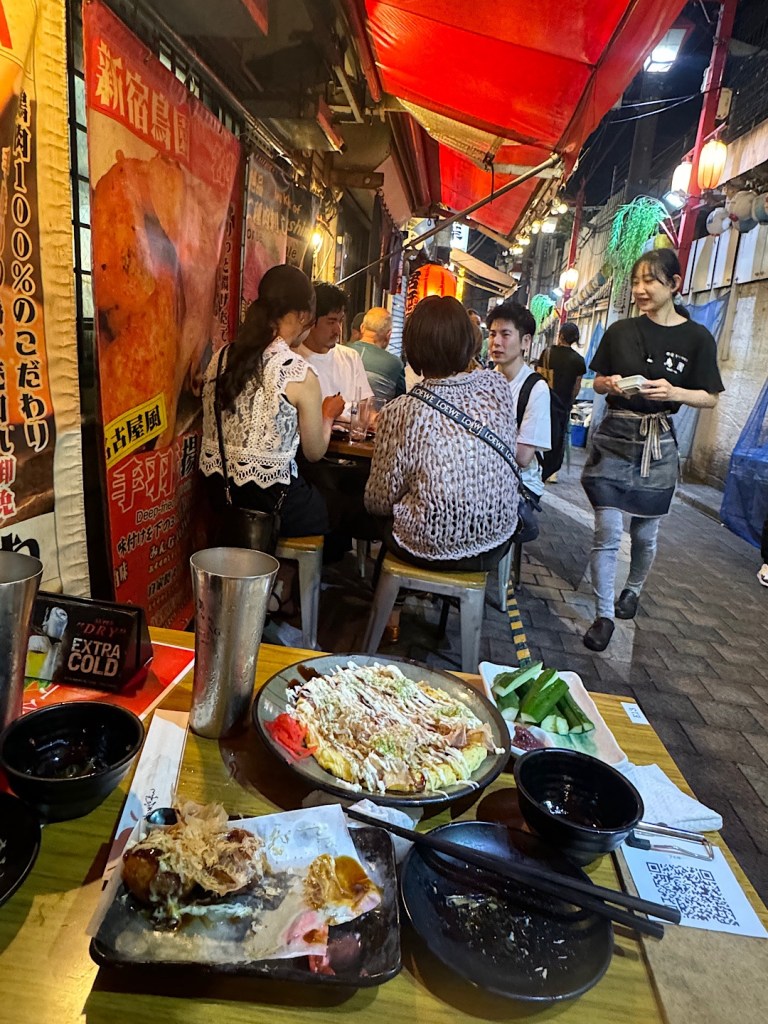
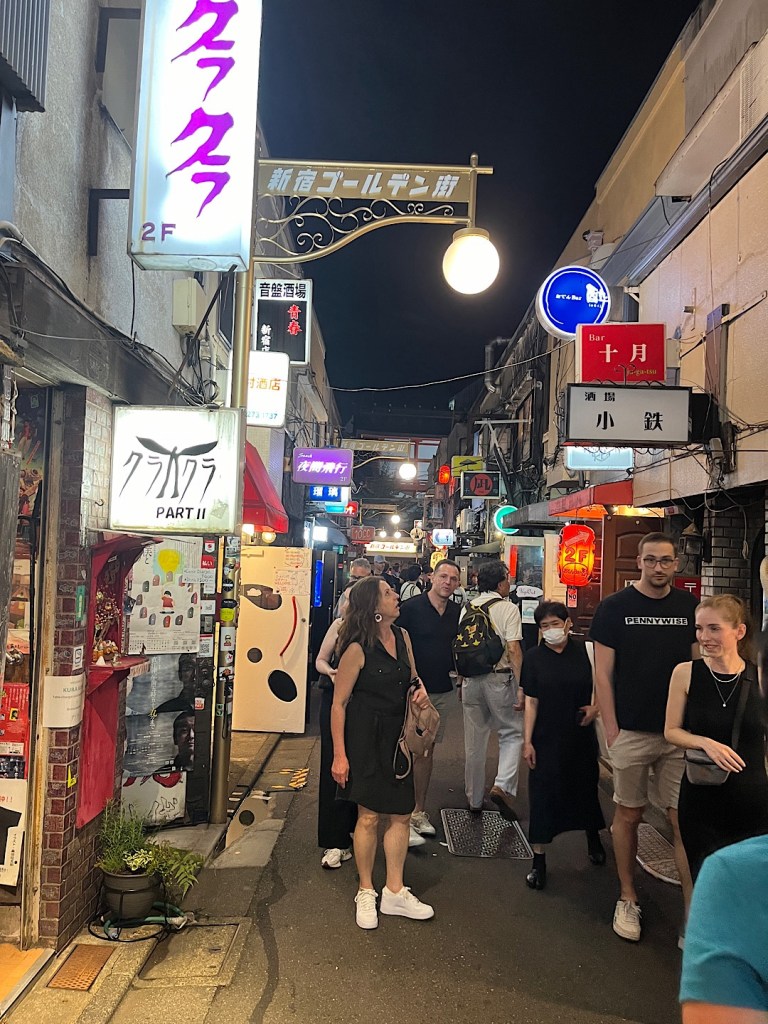
I was so in love with the Kagurazaka neighborhood where we were staying it was hard to leave it to go eat dinner somewhere else. But Steve and I also were huge fans of the “Midnight Diner” Japanese television series, and we wanted to see the neighborhood in which it was set. That would be central Shinjuku, just a few subway stops away from our hotel. It’s so densely crazy you almost expect to see air cars zipping among the skyscrapers.
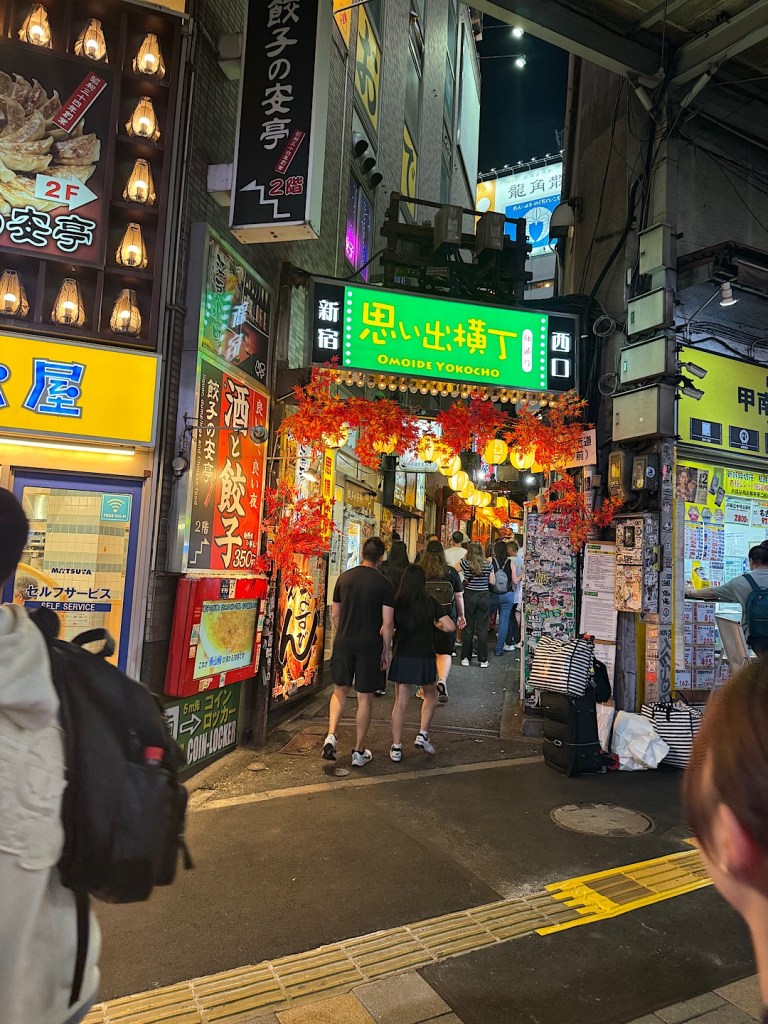
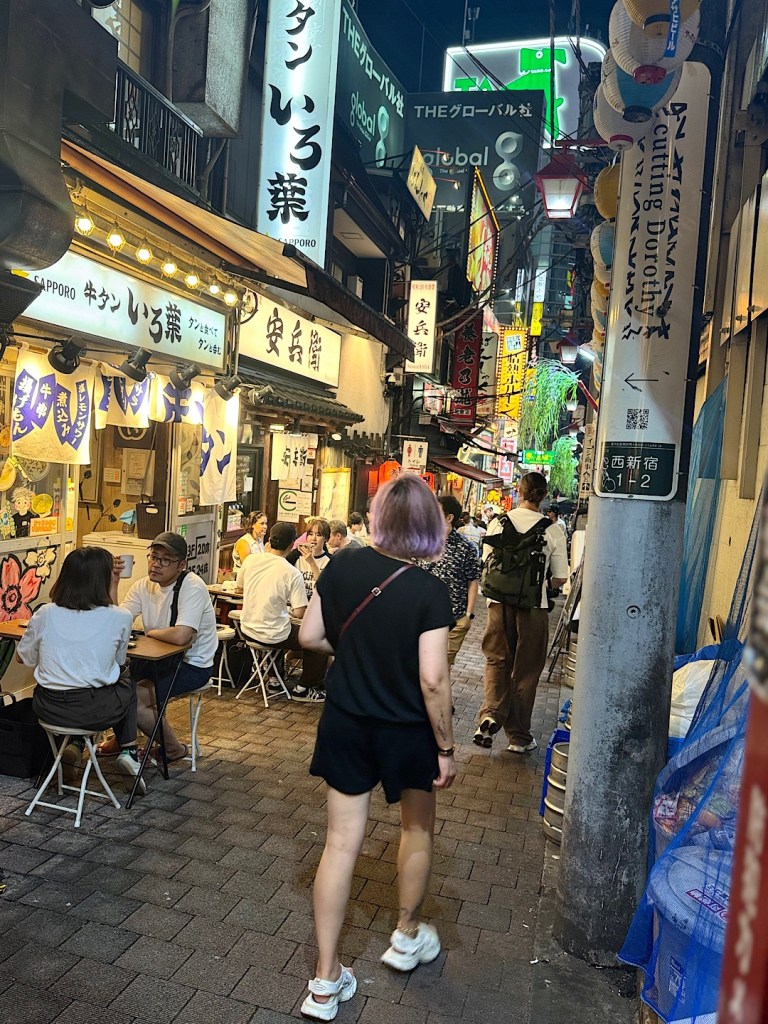
It felt like a miracle when we found the entrance to Omoide Kotocho (Memory Lane), a jolly throwback to 1980s-era Tokyo.
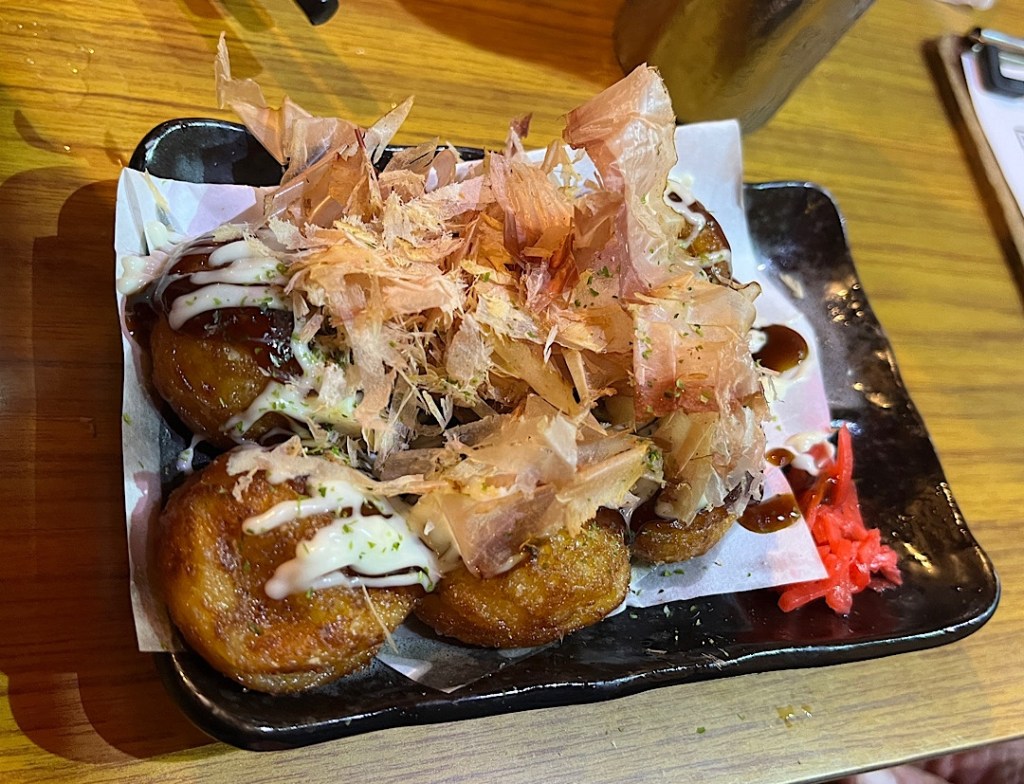
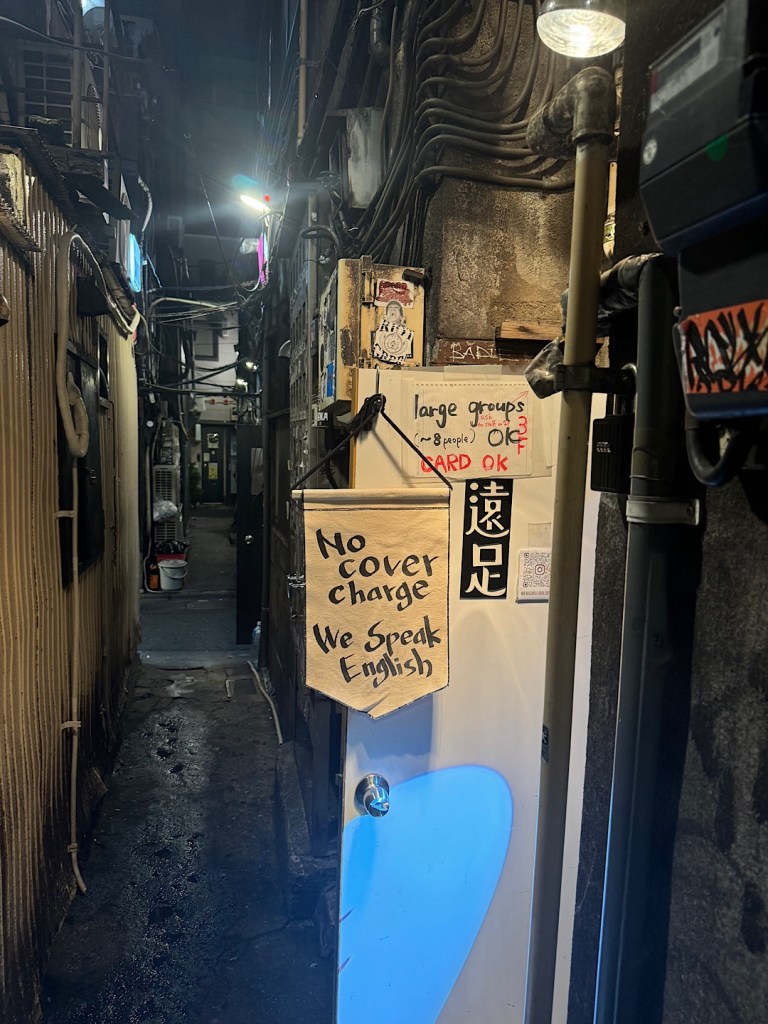
Steve and I quickly found a seat at a table on the sidewalk.We couldn’t resist ordering some of those octopus balls. They were stunningly delicious.We wandered some more after dinner. The “Golden Gai” area is as close as you can get to the world of the Midnight Diner and its master chef.
When we were ready to head home, I checked Google Maps and found it was just a 45-minute walk back to our hotel. We opted to do that and were surprised to find that within 15 or 20 minutes, we were moving once again through peaceful residential streets.
6) Shopping for new tatami mats with Yoshi
Steve met Yoshio Fukushima through work 45 years ago, give or take, and the friendship that developed between them is stronger than ever today. (They e-mail a lot.) Seeing Yoshi on this trip was a huge pleasure. He’s now 85 (but could pass for 60.) He has a wonderful sense of humor.
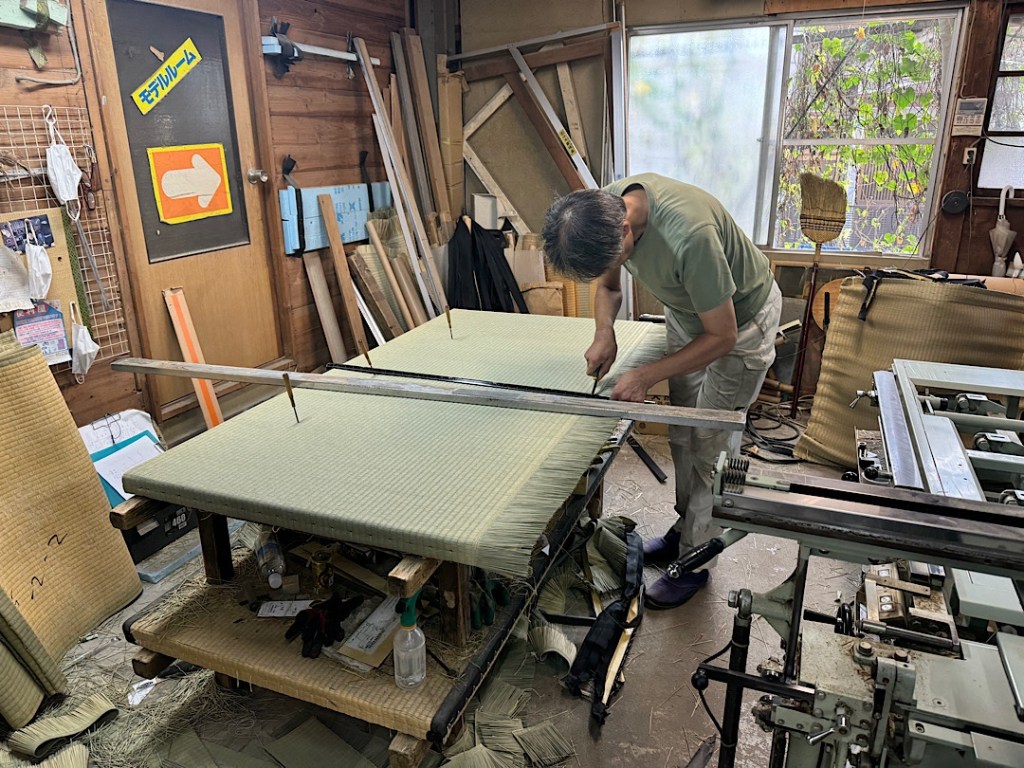
When we alerted him that we wanted to replace the 40-year-old tatami mats we sleep on at our home in San Diego, he kindly looked into where we could buy some. He found a well-reputed shop that makes them just a block or two from our hotel.
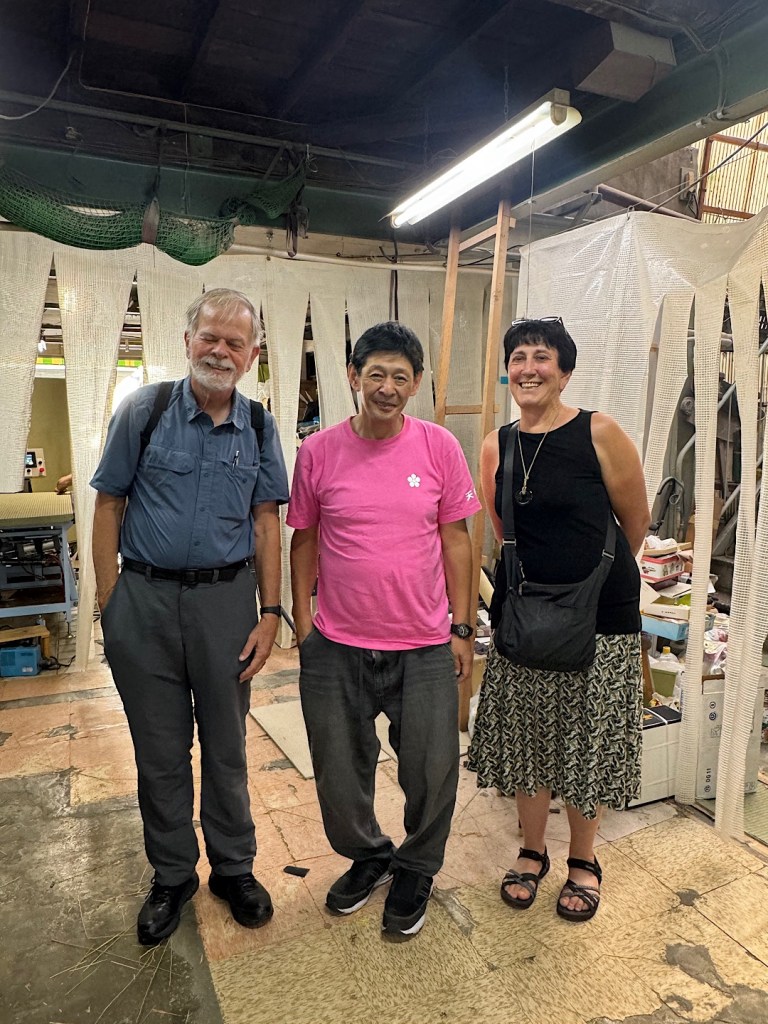
With Kagaharu San, who has worked in the shop for almost 50 years, we discussed details ranging from the mat dimensions to the quality of the straw covering to the mat interior and trim color. Then Yoshi took us to lunch while the owner worked up a price for us. (It turned out to be about $122 per custom-made mat.)
Steve and me with the owner of the shop.
So we’ve paid for three of them. After we return to San Diego and triple-check the dimensions, the artisans will fabricate them. We’ll still have to get them across the Pacific Ocean, but we’re confident we can work it out.
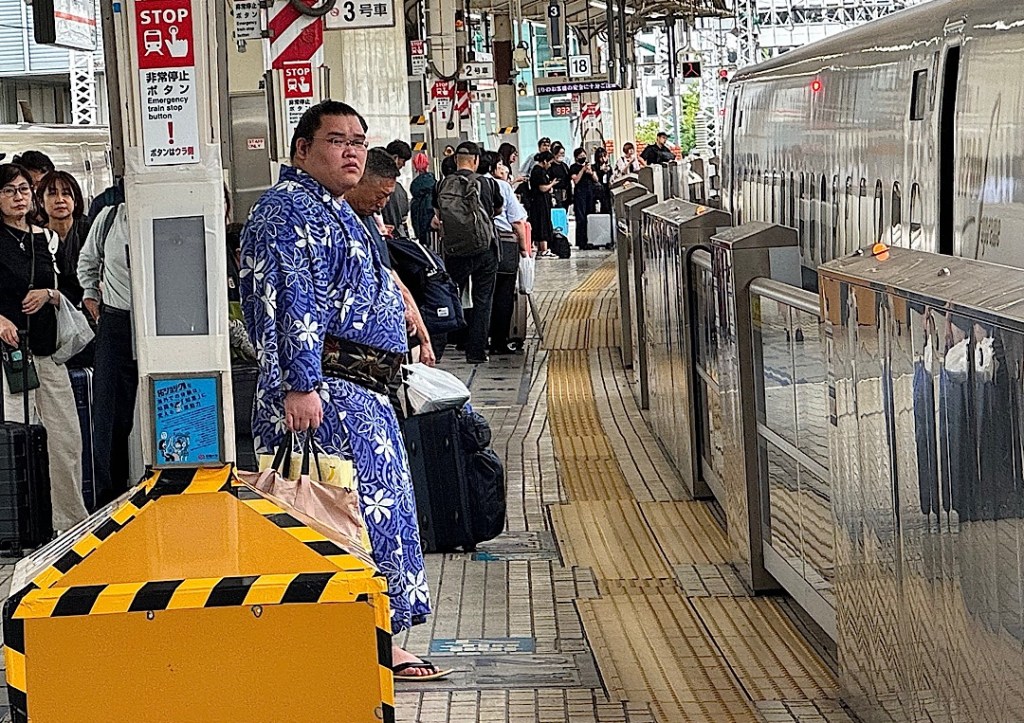
We had to leave Tokyo this morning (Tuesday, September 24). From Tokyo Station we boarded a bullet train bound for Kobe — the start of the part of this trip when we’ll be visiting places we’ve never seen before. Also leaving town on the same train was one of the sumo wrestlers. Somehow that felt lucky.
Near the end of our recent Caribbean travels, I realized I had left my iPad on the Arajet flight from the Dominican Republic to Jamaica. I never got it back; had to buy a new one. So this morning when we climbed into our Lyft to the airport, the first words out of my mouth, after checking its spot in my backpack were, “I have my iPad.” It wasn’t until we had reached the airport that Steve realized he had forgotten his.
It was 7:25 a.m., an hour and 45 minutes before our scheduled departure for Honolulu. What to do?!? We made a split-second decision to pay the Lyft driver (Moe) cash to drive us back to retrieve it. On the way to the airport, we had chatted up Moe and learned that he grew up in Istanbul. Although he’d lived in San Diego for 24 years, we assumed he would still know a thing or two about hauling ass behind the wheel of a vehicle. Indeed he got us home in under 30 minutes (only running one red light) and back in about the same amount of time (pushing his Corolla up to 75 mph on I5 South).
One thing I learned from this experience is that, IF the gods are smiling, it’s still possible to arrive at the San Diego Airport just 5 minutes before one’s plane is scheduled to board and get to the gate with time enough to buy two cups of Peet’s coffee. (It’s helpful to be traveling only with carry-on luggage and to have TSA Pre-check status.)
Another insight is that if one of us verbally confirms that she or he has their iPad, it would probably be a good idea for the other one to follow suit.
Hopefully we can remember this lesson in the weeks ahead.
Could Steve survive a month-long trip without his iPad? It’s pretty unimaginable.
I’ve loved many of the 90 or so countries to which I’ve traveled, but Japan is my favorite. That’s why Steve and I have broken our cardinal rule for it; we go back. Steve first traveled there when he was 8 years old, and he accompanied me in 1979 for my introduction to the land of the rising sun. Since then we’ve returned five times. The last two were brief stopovers on the way home from elsewhere in Asia, but the other visits were substantial, including a month-long home-exchange in Tokyo in 2001.
I also traveled back to Japan in my mind in 2020 and 2021, when I had two big trips arranged. For each I secured real tickets. Figured out the itineraries. Reserved all the accommodations. But Japan closed its borders in an attempt to keep out Covid, and that clobbered the first trip. I figured the country wouldn’t be locked down for long but I was wrong about that and had to cancel the second trip too. Now, however, it looks like we’re really about to return.
We’re scheduled to depart Tuesday (September 17) on an itinerary that will take us to Tokyo, Kobe, the island of Shikoku, Hiroshima, Kyoto, and Osaka. More than half the time, we’ll be in places that are new to us.
This also will be the first time I’ve ever blogged about Japan; I didn’t start this site until 2010, and all our big visits were before then.
I don’t expect to lack material. So stayed tuned.
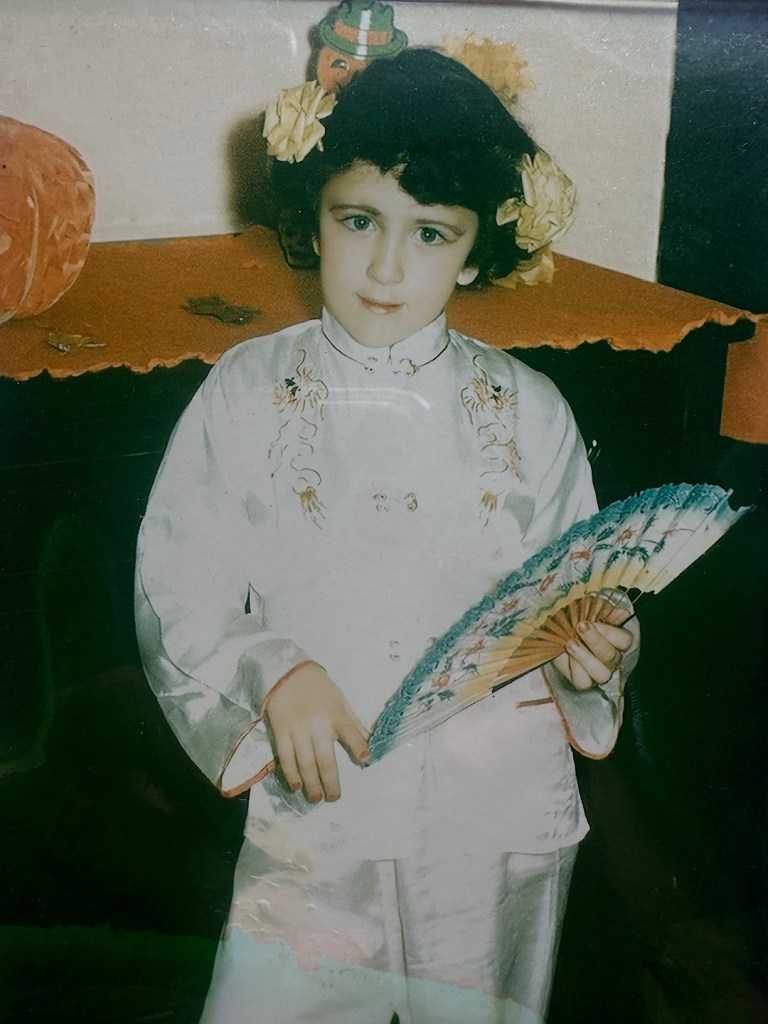
One of my earliest Halloween costumes. Was it a harbinger of enthusiasms to come?
I have given up on ever recovering from Arajet the iPad I left on my flight from Santo Domingo to Kingston, Jamaica. A few days ago, I bought a new iPad and electronically erased the old one. Then miraculously, when I checked the Pages app on my new device, I found most of the blog post I had drafted about our travels in the Dominican Republic!
Don’t ask me how this happened. I don’t know why I couldn’t see that draft in iCloud until after I had acquired the new Pad. I just want to put it all behind me — except for the lesson of NEVER slipping another iPad in any airplane seatback pocket ever again.
In the sake of completeness, however, here’s that post, belatedly.
**********
“Hey, Columbus thought he was sailing to Asia. Sometimes you don’t always get to where you think you’re going.” Steve reminded me of this as we stood (Sunday, June 2) in the soggy ruins of San Francisco Monastery in the old colonial heart of Santo Domingo (capital of the Dominican Republic). Months ago, when I started planning our travels in the Caribbean, I had read about the free concerts given there every Sunday night by a beloved local ensemble, Grupo Bonyé. I’d seen photos and videos of the boisterous crowds dancing to merengue and bachata; I’d absorbed the advice of one blogger who declared, “If you’re visiting Santo Domingo, schedule your trip around being there on a Sunday just to attend this free, open-air concert.”
So I did. I set up all the dominoes to put us in this spot on a Sunday evening. Now it was raining. We saw the stage where plastic sheets covered musical gear that had been set up. But no musicians; no fans. Just some stagehands who were starting to reload it all into a truck.
That’s the would-be stage on the left and the truck on the right.
I felt disappointed — not the only time I would feel that way during our 9-day visit to the country that shares the island of Hispaniola with Haiti. Like Columbus, I couldn’t complain, though. Unexpected pleasures compensated for the downsides.
The worst nightmare was the way people drive. Compared with the little islands where Steve and I started our Caribbean travels, the DR is not just way bigger but much more prosperous. For more than 50 years, it’s grown on average faster than any other country in Latin America. This had led me to expect better roads and drivers. Instead I learned the Dominican Republic ranks as the deadliest country in the world in terms of road deaths – almost 65 fatalities per 100,000 people in one recent survey (compared to just under 13 in the US. Or 41 in Zimbabwe, the second deadliest.) I looked up the numbers because we were so appalled by what we saw after picking up our little Suzuki Dzire — drivers routinely ignoring not just stop signs but traffic lights. Speeding and passing and zooming down the wrong side of the road to avoid potholes. No highway on-ramps. Astonishingly overloaded vehicles.
Having the car did enable us to see more of the DR’s many facets. We started by driving to the beautiful, relatively undeveloped Samaná peninsula, which forms the island’s northeast corner. There we stayed for three nights in a charming French-owned B&B.
We spent a day enjoying the beach town of Las Terrenas.
We dined at local restaurants on the sand.
Our second full day we joined a group that was bused to the regional capital and loaded on a catamaran for a day trip to Los Haitises National Park.
The day was so overcast, I didn’t need a straw hat. But they looked cool.At the park we motored through tall mangrove forest.We disembarked and hiked into some of the caves. Parts are covered with paintings that are 1,600 years old.
The next day we drove to the second largest city, Santiago de los Caballeros, and climbed the impressive monument that honors Dominican heroes from the country’s insanely complicated history.
The morning after that, on Friday, May 31, we headed for the mountain towns of Jarabacoa and Constanza, where the higher altitudes bring the temperatures down from “hellishly hot” to pleasant.
The sign says “High-altitude Paradise is still for sale!”
I’d wanted to do some hiking in the so-called Dominican Alps, so Saturday morning we told our phones we wanted to go to the Parque National Valle Nuevo, and we followed Google Maps’ directions up this road…
…to a dead end, where we could find no hint of any park of any sort.
Undeterred, we plotted a new course to a well-recommended waterfall (Salto Aguas Blancas). We failed to reach it too but got close. And the road leading up to it took us through one of the most striking landscapes I’ve seen anywhere.
An incredible variety of crops blanketed the hills.We marveled at the thought of tractors cutting such tidy furrows on the rugged hillsides.Then we realized, the furrows weren’t being created by machines.On our hike, we came upon this fellow, harvesting his carrots.
It’s hard to describe how relieved I felt when we reached the airport Saturday afternoon and returned the car without incident. From there an Uber transported us to our 4th home-exchange of the trip, a spotless two-bedroom flat owned by a Parisian couple who apparently use it to escape dreary Northern European winters.
The view from the apartment to the city gate down the block.Steve approaching the gate on foot
The flat had two spacious, air-conditioned bedrooms, but it lacked potable water. We were supposed to get that from the 5-gallon jug sitting on a plastic bench in the kitchen.
It was empty when we arrived, but Yisel, the owner, had written we could buy more water from the colmado across the street. I’ve patronized a lot of bodegas throughout Latin America, but the colmados of Santo Domingo are something else, places where you have to walk up to the counter and ask for every item you want.
When I inquired about breakfast cereal at the one across the street from our building, for example, one of the shopkeepers pointed out the choice in two big industrial jars: heavily frosty corn flakes or something that looked like Cocoa Puffs. I picked the flakes and he scooped some into a little plastic bag and weighed them. (I forgot what they cost, but it wasn’t much.)
I do recall the price for the 5-gallon water jug: just 70 pesos (about $1.20). Mercifully, that included having it lugged across the street and up the steep sets of stairs to our flat.
The most disconcerting thing about Yisel and Phillippe’s place was all the security: deadbolt locks and heavy iron barriers and padlocks to secure the barriers. Yisel also recommended never walking anywhere after dark. (Happily, Uber drivers were ubiquitous.)
We were worried less about crime than we were about museums being closed on Sunday. Google assured us, however, that Santo Domingo’s anthropology museum was open. We called an Uber to take us to the city’s Plaza de la Cultura. The driver deposited us inside the gates of a huge complex containing the national theater, a museum of modern art, and several other imposing buildings. It all would have been impressive, were it not for the fact that almost no other visitors were in sight. When we found our target, the Museum of Man, its front doors were locked; nothing so much as hinted at when they might re-open.
It looked like it might have been good. If it had been open.Imagination appeared to be in short supply at the Salon of Imagination.
We took another Uber back to our flat and chilled out, hoping the rain would stop and the Sunday night concert could go on. When that didn’t happen, we ate an excellent dinner in a building that originally housed the city’s oldest restaurant and one of its earliest brothels.
Eduardo
We heard that last tidbit from Eduardo, our guide on the walking tour we took Monday morning, another rainy day.
These poor students were gamely posing for school photos.
That two-hour ramble reinforced my impression of what an influential place Santo Domingo once was. Columbus lived here for a couple of years; his son built a palace overlooking the Ozama river.
Some of the world’s most notorious conquistadors — including Hernán Cortés, Ponce de Leon, and Vasco Núñez de Balboa — lived in the Calle de las Damas, which claims to be the oldest paved street in the Americas.
Sadly, because it was Monday, most of the historic buildings were closed. The Cathedral was open, but it’s pretty run of the mill. I thought the coolest thing about it was that back in 1877 some workers in the church found a lead box filled with bones and inscribed with the declaration that they were the remains of Christopher Columbus.
Those bones are definitely not in Santo Domingo’s Cathedral today. What’s left of the Admiral hasn’t exactly disappeared. But a mystery surrounds the question of where he is.
What’s clear, as I understand it, is that he died in Valladolid, Spain in 1506, but he had asked to be buried in the New World. In 1537, the widow of his son Diego sent the bones of Diego and his legendary father from Spain to Santo Domingo’s new cathedral. They lay there for more than 250 years. But when Spain gave Hispaniola to the French in 1795, the Spanish reportedly didn’t want Columbus’s bones to fall into foreign hands, so they shipped them first to Havana and then to Seville.
Today the Sevillanos say they have the Admiral. They say they did DNA testing 20 years ago that confirmed this. But in 1992, 500 years after Columbus first set foot on an island in what’s now the Bahamas, the Dominicans inaugurated a colossal mausoleum/monument in Santo Domingo. Built in the shape of an enormous cross to celebrate the “Christianization” of the Americas, the so-called “Columbus Lighthouse” contains what’s left of the Admiral, according to the Dominicans. They say those bones show signs of advanced arthritis (from which Columbus suffered). But authorities so far have refused to allow any DNA testing.
The mausoleum was closed on Mondays, so we missed it too. I’m not a big fan of the Admiral, so I was only a little disappointed.
Steve says when we hit the road, it’s not a vacation, it’s a trip. For us, the best trips blow our minds; expand our consciousness. We don’t come back rested, as many vacationers do. But if we’ve filled in some of the blank sections of our mental maps of the world, we’re happy.
Despite our rough start in Jamaica, I was more than happy with the 6 days we spent there. The morning after we settled into our beachfront digs in Negril, Captain Jace Allen drove his glass-bottom boat right up on the sand in front of our hotel, then he motored north along the coastline, cluing us in about the various resorts we were passing. Most titillating was the notorious Hedonism II, where guests sunbathe naked and sex is a more important group activity than beach volleyball. Then we headed for the local reef, donned our fins and snorkels, and swam through the teaming aquatic life, guided by the watchful captain.
I didn’t have an underwater camera with me, and we weren’t allowed to photograph the naked hedonists, but walking along that beach later in the day, Steve and I took in many sights we don’t see on our local sands back home.
Because we’d abandoned our three nights at the Negril home-exchange, we decided on impulse to spend only two nights at the beach, then drive to Black River, a town on Jamaica’s southern coast about half the way back to Kingston. This allowed us to visit the most important rum distillery on the island, Appleton Estates (established in 1749, and still Jamaica’s toniest brand.)
After more than two hours of driving on terrible roads, I was braced to find it closed. Or no longer giving tours. But it was not only open. It proved to be a slick, commercial operation. Ironically, we pulled into the parking lot on the heels of a busload of Illinois parents on the island to see their soccer-playing kids face off against some Jamaican players.
The tour was okay. We watched a donkey driving a press that squeezed juice out of the cane…
…and it was fun to taste the impact of aging on rum.
Somewhat short shrift was given to the suffering endured by all those folks who were kidnapped in Africa and brought here to cultivate cane sugar on these grounds.
This sculpture was the only reminder of the hideous things that happened in the cane fields.
I also was disappointed that we learned nothing about how sugar cane is grown and harvested today. We only glimpsed the fields.
Still the rum stop was moderately entertaining, and even better was our next stop: YS Falls, one of the world’s more impressive displays of water cascading downhill.
If we’d been channeling our inner Jamaicans, we would have spent several hours swimming and drinking and “liming” the hours away. But we needed to find the place we’d booked for the night: a two-bedroom house in a gated community called Brompton Manor.
When I hear the phrase “gated community,” I think of neighborhoods in La Jolla. This wasn’t like them; the entrance looked more like it was guarding a work camp.
But the house was fine, albeit a bit isolated. We’d seen nothing like a restaurant or market as we’d approached it. We finally figured out that a fishery with great scores on Tripadvisor was less than a 15-minute drive away, just beyond the town of Black River. At Cloggy’s, a friendly lady named Joann emerged from the kitchen to explain what they could offer us. She opened up her freezer and showed us our choices for the fish. We picked a snapper, to be cooked in brown sauce and accompanied by “bammy” (fried cassava bread). We took the hot bags of food back to the house where, washed down with Red Stripe lager, it was delicious.
It felt like a victory to turn in the rental car, unscathed, at Kingston’s airport Saturday afternoon (June 8). We Ubered from there to a good hotel in “New Kingston” for our last two days, and online reserved spots on a three-hour walking tour of the city Sunday morning.
I was relieved to learn we wouldn’t be walking for much of it. At 9 in the morning, the day was already sweltering. Instead our guide, a bright, articulate guy named Everton, took us on a sweeping odyssey through the city where he’d lived for more than 20 of his 36 years. We passed a large squatter community that reminded me of places I’d seen in India. Then we drove into one of the most dangerous neighborhoods in the city, the deceptively named Tivoli Gardens. It surprised me that all our windows were down. I asked Everton is that was that safe. He said what would be dangerous was having them up. The tough young men we saw everywhere acting as informal sentries might assume we were drive-by shooters, with unfortunately consequences possible. Instead Everton seemed to allay their wary looks with chatting with them briefly; alerting them we were just tourists.
In the heart of the city, we parked and strolled through streets that normally crackle with commercial activity but were quiet because it was Sunday morning.
A few folks were open for business, selling essentials like cooking pots and fresh fruit.Everton said this was a quintessentially Kingston sight: someone helping himself to free electricity.
We finished by driving through Trench Town, the neighborhood once home to Bob Marley and other reggae legends. By then I’d decided to move to Kingston and open a combination bar and boutique, where I could get my portrait painted on the facade to draw in customers.
Just joking.
The truth is I doubt I’ll ever go back to any of the six islands we visited. Aside from losing my iPad, however, this trip could hardly have gone better. Now I feel like I could use a vacation, but I won’t get one of those for a while. Steve and I will head to Carlsbad Airport tomorrow (Wednesday, June 12) to pick up Vanessa, the 12th Canine Companions puppy we’ll be raising. That’s a different kind of trip altogether.
After losing my iPad, our luck did not improve. In short order, we got caught in a flash flood, fell victim to a wily Jamaican scammer, and discovered we had booked ourselves into the first truly unacceptable lodging of our long home-exchanging lives.
Ironically, if I had not forgotten my iPad in the Arajet seat pocket, we would not have gotten caught in the flood. The sun was still peeking through clouds when we started inspecting our Yaris out in the parking lot. But then I spent at least an hour trying to retrieve the iPad (unsuccessfully) in the terminal, and when we finally got rolling, the sky had turned an evil shade of black. The downpour started almost immediately after I programmed our destination into Google Maps: Ocho Rios, on the northern side of the island.
A good thing about the rain is that it partially distracted me from the mean streets our course took us through. Jamaica is the only country on this trip that the US State Department warns against visiting, and that’s because of the high crime — principally in Kingston. The narrow streets of Spanish Town have been decaying for what looks like centuries. The folks on the street who eyed our shiny touristic faces did not look friendly.
But I wasn’t paying much attention to them. The intensifying rain commanded everyone’s focus. Traffic slowed to a crawl; Google Maps announced a 20-minute slowdown. We assumed someone up ahead had crashed, but later we concluded it was just because the low, ancient byways were filling up with swirling brown water.
That’s a bus next to us, fording the impromptu river.
The thought occurred to me that another panicky driver could simply plow into us. We’d been instructed that if we got involved in any crash, we had to wait for the police to arrive and take a report, otherwise none of our insurance would cover anything. But waiting for a police report here and now was unimaginable.
I pushed that thought away, as the water covered the road. Lightning slashed the near skies, and bone-rocking thunder came a few seconds later. Steve was grimly intent on maintaining control of our vehicle, and long minutes crawled by before we finally made it to the tollway — a wide, well-engineered road leading through beautiful country.
The scammer
We met him the next day when we were driving from Ocho Rios to Negril, site of the home-exchange house we’d arranged to stay in for three nights. Our route took us through Montego Bay, and we wanted to get at least a glimpse of it. We set course for a pork restaurant with great reviews, but when we pulled into its parking lot, the diner looked closed.
A guy in another car in the lot rolled down his window and told us it wouldn’t open until noon. Then he exclaimed, “I know you guys! I saw you in the car-rental lot at the airport!” Steve recognized him in turn. It seemed an almost comically cool coincidence to bump into him on the other side of the island. He suggested another lunch spot with good food and prices, not far away, and when he offered to lead us there we couldn’t refuse.
I’ll condense. “Steve Smith” (as he called himself) drove ahead of us to a mini souvenir mall and then took us to the restaurant deep within it. Then he plopped down at a table beside us and ordered himself a bottle of Guinness. As we ate (decent but hardly inexpensive lunch plates), he regaled us with stories about Jamaica and Montego Bay, then insisted we follow him on foot on a brief walk through the city center.
Scammer Steve and Good Steve
To be honest, both my Steve and I were delighted to have someone lead us on a lightning tour of the heart of the town. But the stroll went on and on, and I finally made it clear we needed to get back on the road. “Steve” didn’t resist, but back at our car, he was adamant about wanting to send us off in the right direction on the main road. He jumped in the back seat, directed us for a block or two, then said we should pay him 18,000 Jamaican dollars for all his help — about $115 US.
This was so clearly ridiculous, we laughed at him. My Steve pulled out a 2000 Jamaican-dollar bill ($12.85). I’m embarrassed to admit I eventually gave Scammer Steve 12,000 (about $77). What galled me most is that this was essentially the very same scam we fell for in Bombay back in 2018!!! (That guy claimed to be a worker at our hotel out on his day off.) I now think $20 and the Guinness would have felt right for Scammer Steve’s “services”. As we drove on, we consoled ourselves that at least were were saving money on our lodging for the next three nights.
The home exchange
Negril is a big resort town on Jamaica’s far western end. Hotels line its famed Seven-Mile Beach, starting at the north end with all-inclusive resorts charging up to $2K US per day then giving way to more middle-income hotels whose clientele become darker-skinned as you approach the center of town.
Our home-exchange place was located beyond that, where the beach disappears and turns into cliffs. I knew it wasn’t on the cliff and that it would be a bit rustic. But its British owner assured me it had great access to a welcoming Jamaican community.
My heart sank when Valerie’s directions took us off the crummy paved main road and onto a jumble of dirt and rocks. Maybe a mile uphill from the “highway,” we turned into “our” even rougher driveway.
That’s Valerie’s place behind the dead car.
On hand to greet us was Valerie’s caretaker, John. Handsome and quiet, John showed us around the spacious two-bedroom house. He went off to buy a 5-gallon jug of drinking water for us, and as soon as he went out the door, Steve and I agreed: we didn’t want to stay there.
I look at that photo and think, gosh, it doesn’t look bad. And seen up close, it WAS immaculate. The AC seemed to work. But it was spartan, furnished minimally and lighted with only a dim fluorescent bulb per room. Hanging out in it would have been grim. More than anything, we couldn’t face the thought of jolting down that hill in search of dinners and returning in the dark, maybe through driving rain.
So when John got back we broke the news that the place was just too rustic for us. Valerie could keep all the Guest Points I had given her, but we wouldn’t be paying the $100 cleaning fee she had asked for. John looked crestfallen. He tried to assure us we would be completely safe, and I told him in complete sincerity that I believed him.
We drove off and within an hour or two we’d found a pleasant room right on the border of Seven-Mile Beach’s racial divide.
Sunset from one of our windows there.
I felt bad about John. I didn’t reflect on this on the spot, but we later speculated that $100 cleaning fee might have fed him and his family for some time. Bad luck for him too, mon.
Steve and I are still alive; still in the Caribbean, but one reason I haven’t posted to the blog is that… I lost my iPad on the Arajet flight Tuesday from Santo Domingo to Kingston! At least as agonizing as not having my iPad is the fact that I had spent several hours writing a detailed report about our 8 days in the Dominican Republic. On the plane, I had copied that into WordPress (my blogging software) and inserted at least 30 photos into it. I hit “Save as a Draft” and WordPress informed me it would do that as soon as I was connected to the Internet again. But because my ipad is STILL sitting in the pocket of seat #30D of that particular 787 Max, it’s still not connected to the Internet.
Worse still, it looks like it never will be! I first got a message from Apple that my iPad was no longer with me when Steve and I were at the Island Car Rentals desk, getting our last set of wheels for the trip. I glanced at the message and silently chuckled. Oh, the dear little phone doesn’t realize the iPad is in its pocket in my backpack, just a few feet away. Then I returned my attention to the car-rental process.
I got another message when we were out in the parking lot, checking out the Yaris. Only then did it occur to me to look in my backpack, at which point full-on panic set in. I left Steve and raced into the terminal, desperately searching for any Arajet employee. I finally found a single harassed young woman, who was disappearing into the bowels of the terminal. To condense a long and tedious sequence of events, she eventually checked and reported that no one had removed the iPad from the plane, and the plane was on its way back to the Dominican Republic.
Arajet has a laggy, slow website that contains no phone number that works to reach an actual human. I tried. By the next morning, I was able to have an extended online chat with a “customer service” representative, who reprimanded me for not taking better care of my “personal belongings.” IF anyone ever removes that iPad from the pocket and turns it in to Arajet, I might be able to recover it by coming in to the airport and showing proper identification. (If I can’t do that: tough luck.)
Most maddening is the fact that my Find My app continues showing me updated images of my iPad at the airport in Santo Domingo!!! It’s there, containing all the work I put into that post. But I probably will never be able to get it back.
Meanwhile, I’m writing this using a portable keyboard connected to my phone. NOT the easiest way to compose. With this rig, I’ll try to report on some of our adventures in Jamaica. They’ve kept the adrenaline flowing, and I’m not talking zip lines.