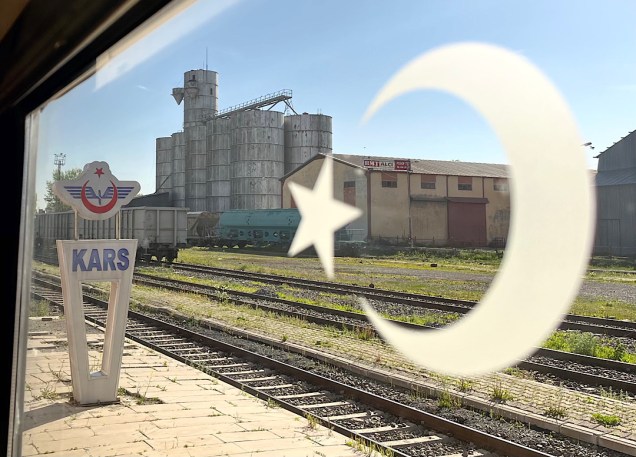
 I’m starting this post aboard the Eastern Express, the Turkish train that runs all the way from Turkey’s capital to Kars, near the Armenian border in the east. Travel constraints forced us to take the train westward. We flew from Ankara to Kars Friday morning (5/27) and had a couple of hours that afternoon to explore the town and its citadel on our own.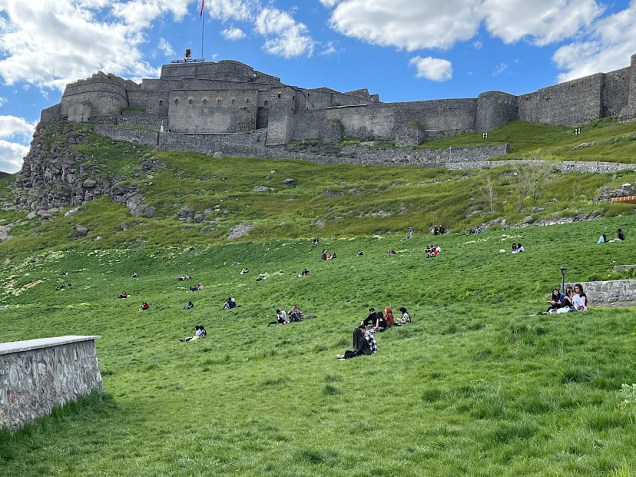
All day Saturday we were driven around the surrounding area by a masterful guide, Celil Ersözoglu. The whole side trip reminded me it isn’t always true, as the adage claims, that the point of travel is “not the destination but the journey.”
Kars became one of our destinations in Turkey in part because Fodor’s Essential Turkey lists “Exploring Ancient Ani” as #4 on its list of 25 “Ultimate [Turkish] Experiences,” A thousand years ago Ani, 26 miles east of Kars, ranked along with Istanbul, Baghdad, and Horasan (between Afghanistan and Iran) as the most important stops along the Silk Road. Some 150,000 people lived there, and over the centuries they built beautiful places of worship and a massive palace, all encircled by a double set of thick stone walls. Earthquakes and invasions destroyed the place long ago, but what remains has an eerie beauty.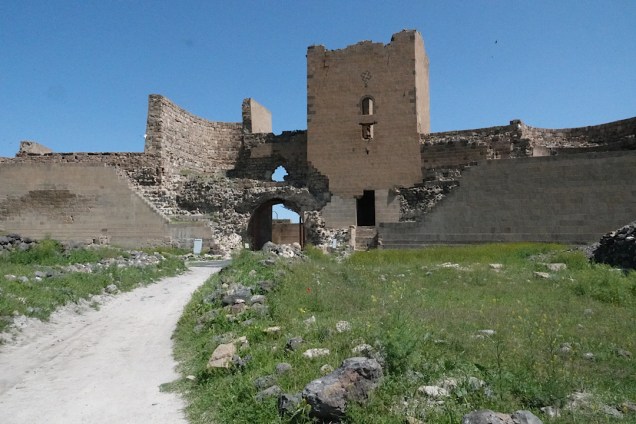
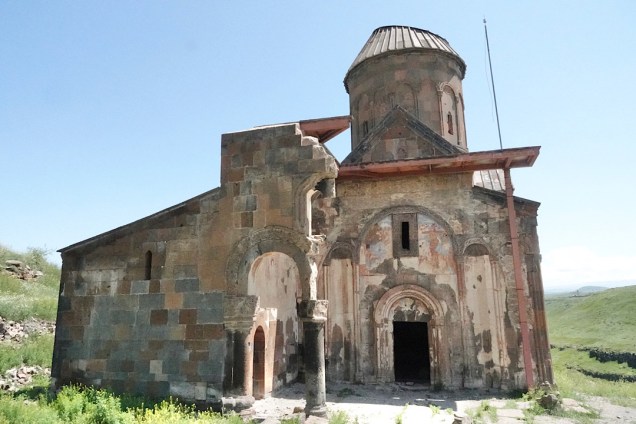
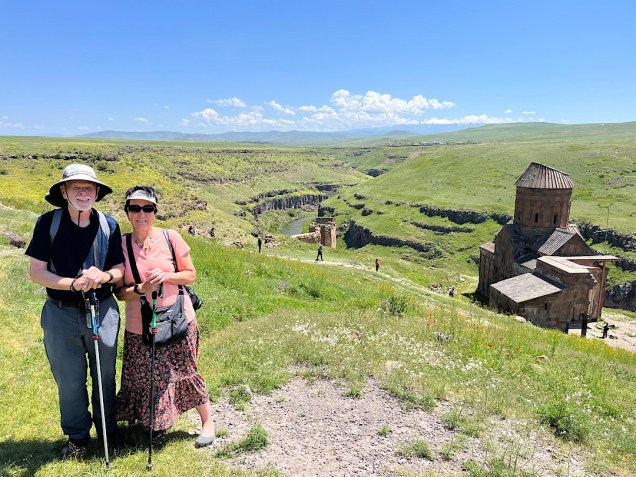
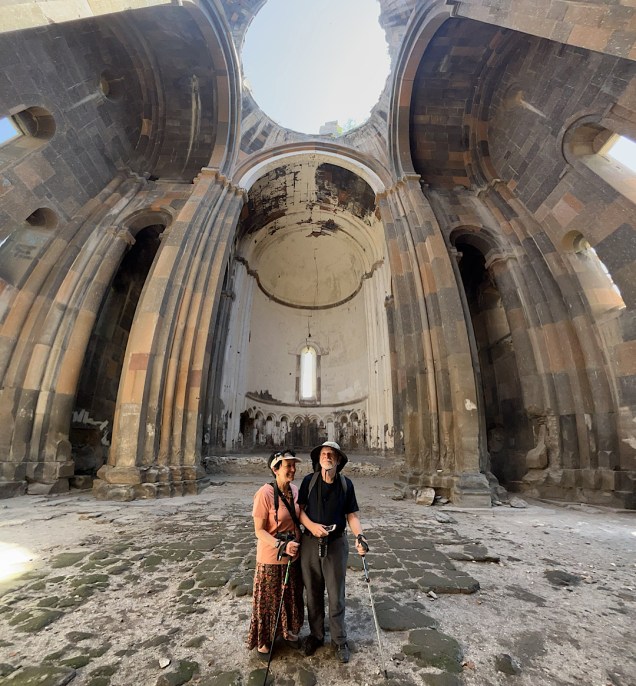

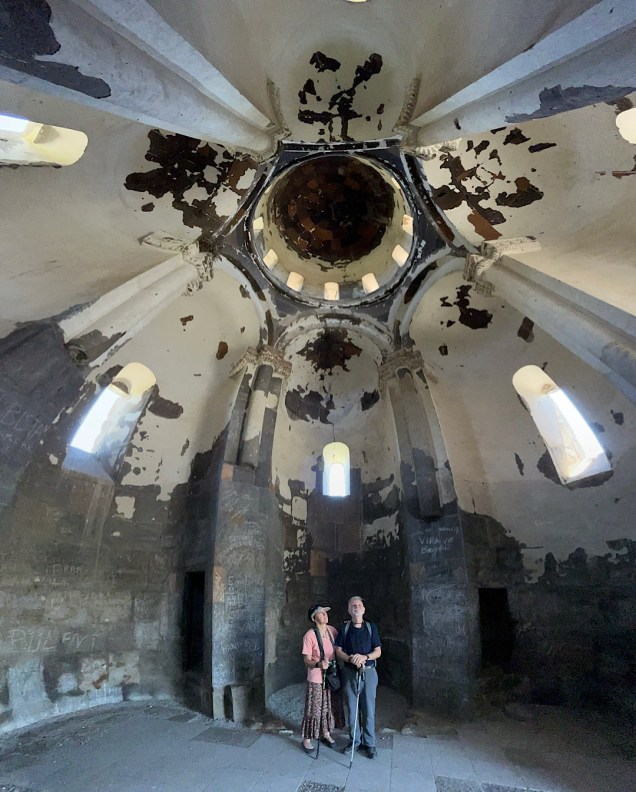
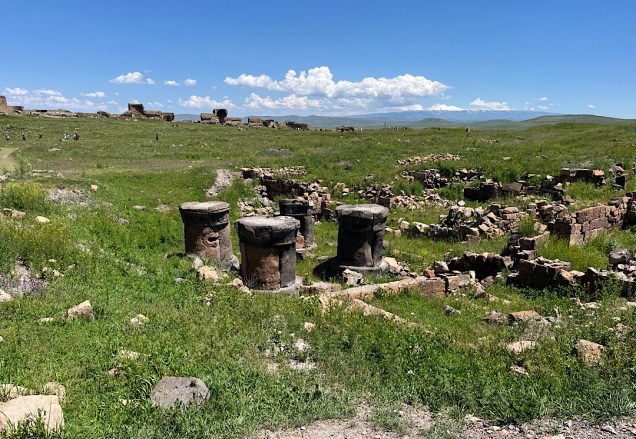
Celil made a valiant effort to explain all the history to us, but it was hopeless. I’ve retained almost nothing of the head-spinning chronicle of sieges and occupations and battles, though I can tell you geopolitical tensions still simmer here today. Celil pointed out the Russian barracks and guard towers glowering in the near distance, in Armenia.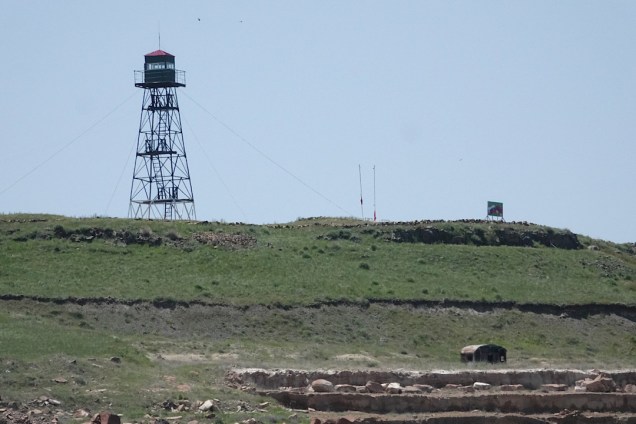
The bloody politics should have been depressing. But I was too elated by the weather. Just days before, fierce winds and snow had pummeled the area. Yet we strolled the site in t-shirts under sunny skies. Far in the distance, clouds partially obscured the volcanic Mt. Ararat, the site where Noah’s Ark came aground, according to the book of Genesis. At 16,850 feet it towers over the other nearby snow-covered mountains — part of a range known as the Trans-Caucasus. The Greater Caucasus mountains in Georgia are even higher.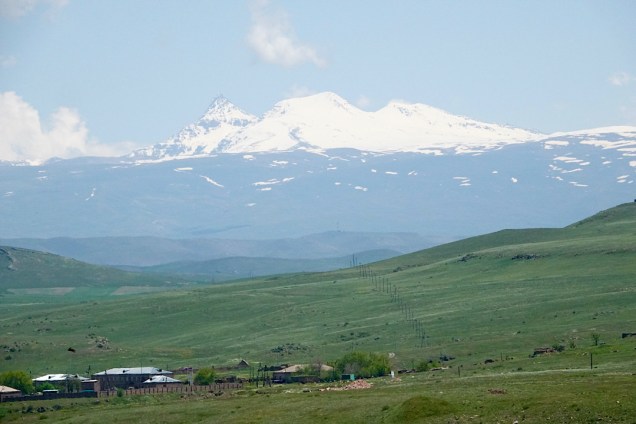
It was hard to believe folks call this part of Turkey “Little Siberia” because of its winters in which temperatures plunge to 40 degrees below zero. Summers are broiling. With wildflowers swaying in the gentle breeze, to me it felt like a paradise.
I also was thrilled to find myself on a section of the map I’ve rarely looked at and don’t well understand. Armenia was close enough to hit with a pebble tossed across the river. In the photo above, Turkey’s neighbor lies on the other side of that gorge.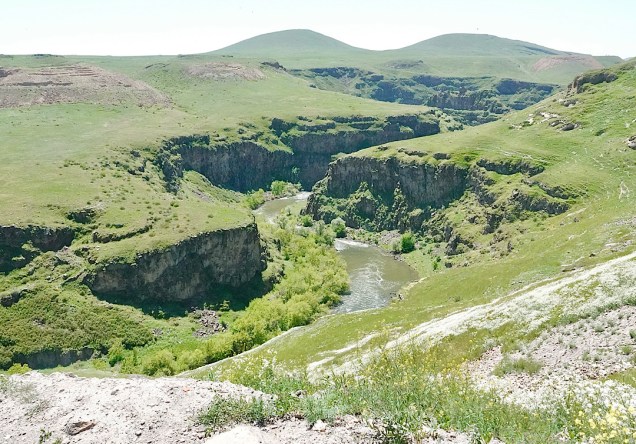
The former Soviet state of Georgia lay maybe 50 miles to the north, with Iran not much farther to the southeast. Hillsides in every direction were green but barren; invaders and armies and freezing settlers long ago chopped down every single tree. Now it’s good pastureland, if you know how to deal with the packs of ravenous wolves who routinely prey on the livestock (and sometimes humans). But Celil said local shepherds, armed with their stout sticks and massive Caucasian herding dogs, shrug off the danger.
After surveying Ani’s ruins, we drove back toward Kars, but then Celil headed for a cobalt body of water about an hour to the north. Lake Cildir has become increasingly popular with tourists from the western part of Turkey, he explained. To my astonishment, he said 3,000 such visitors had flooded into Kars every day this past winter, eager to sample the frosty diversions. The lake freezes so solidly you can drive on it. Visitors ice-fish; they zoom around in cozy sledges.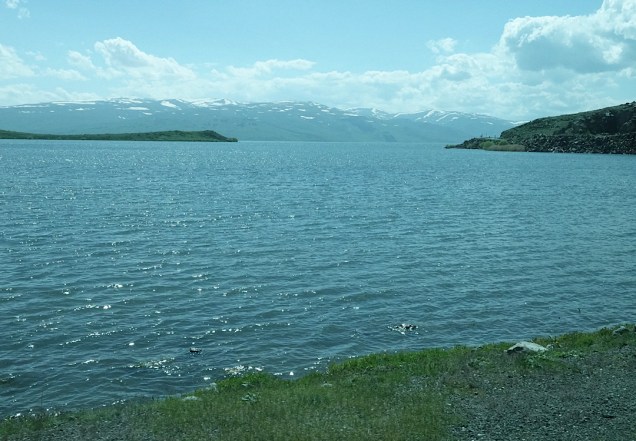
We saw barely a soul on our visit Saturday, except at the roadside restaurant where we stopped for a late lunch. After that, Steve and I hiked for a bit in a beautiful canyon harboring a lonely castle, then Celil chauffeured us back to town.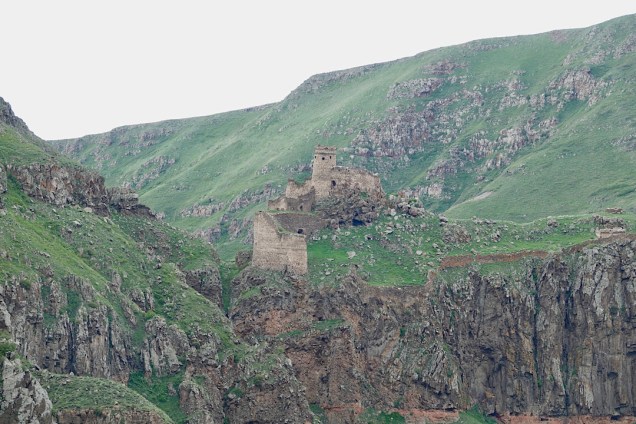
We had to be on the train for an 8 am departure Sunday morning. A special tourist train also makes the same journey over these rails but it only runs a few times a week, and the schedules didn’t work for us. If they had, that choice might have been more comfortable than our ordinary passenger train. The tourist train’s WiFi might have been working, unlike ours. It might have had a real dining car, unlike the club car on ours, which offered little more than candy bars, stale-looking sandwiches, Nescafé and tea.
 We had brought our own bread and cheese, so this was lunch. And dinner.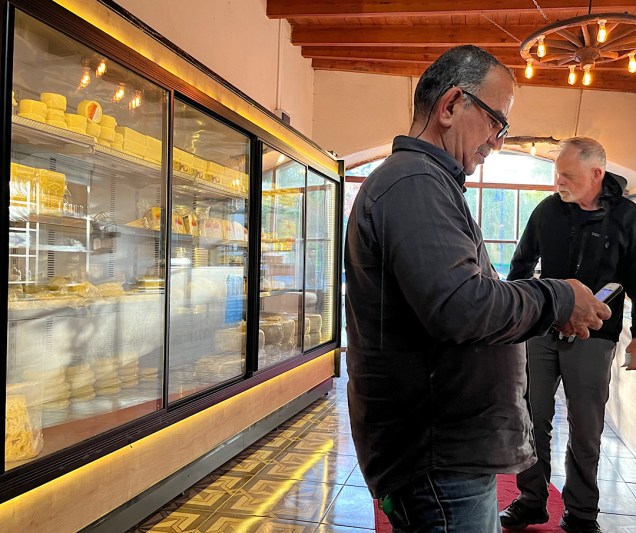
For about $65, I was able to book all four seats in a sleeping compartment on the non-touristic train. It was reasonably clean. As always, I enjoyed being able to lie in my berth and take in the lush panorama rolling by. Because we rode on this train, I now know that a huge stretch of eastern Turkey consists of rolling wooded hills intercut with swift-running rivers. 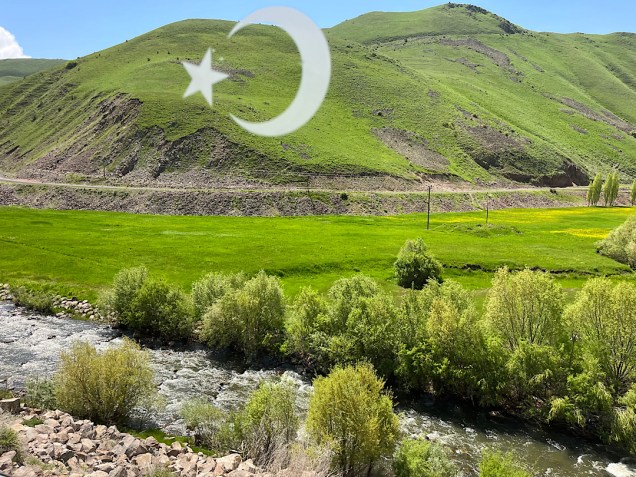
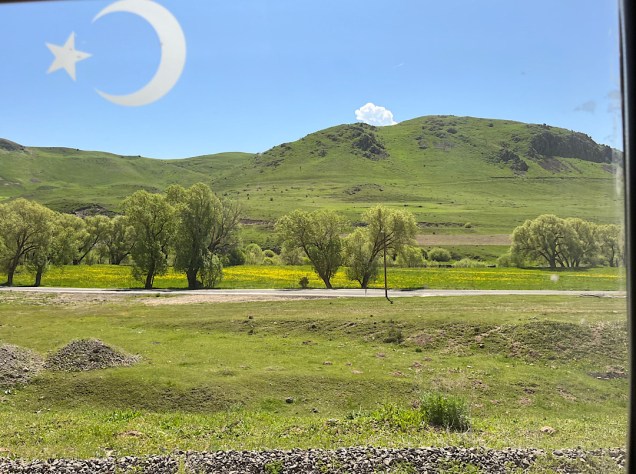
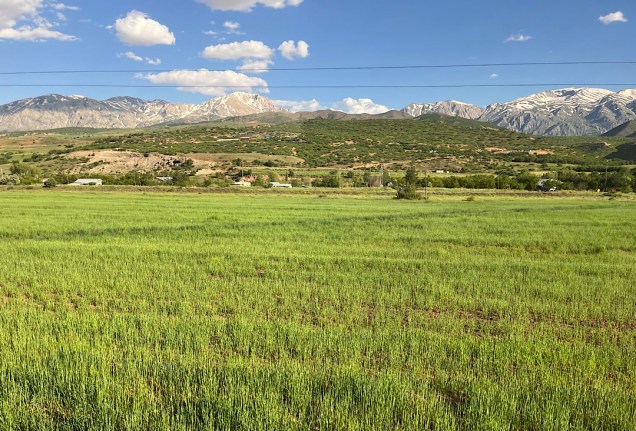 Most of what we saw from our window seemed as devoid of people as the American West.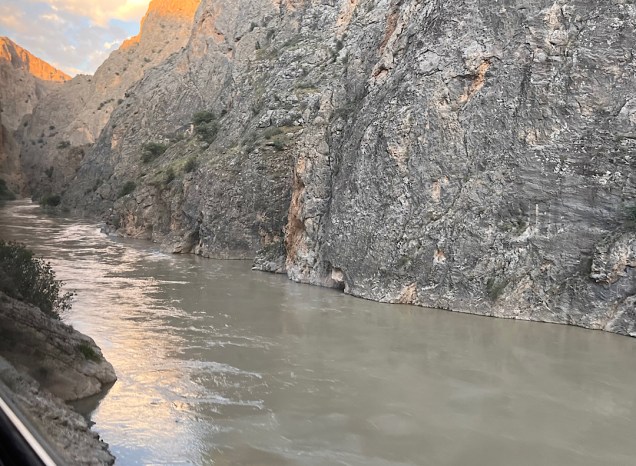
I would have been thoroughly satisfied if the train operators had just told us up front we would reach Kayseri (the gateway to Cappadocia, our next destination) at 5 am, and that the conductor would alert us a few minutes before arrival. The motion and long stops probably would have occasionally jolted me awake. But with my eyeshades on and perhaps a sleeping pill sedating me, I would have gotten a decent amount of sleep.
Alas, the timetable said the train gets to Kayseri at 2:37 am. Celil had warned us it never makes it that early. But who knew when it would arrive? Since I’d arranged for a taxi to meet us upon arrival, this all resulted in a fretful, fractured night. Around 9:30 pm we found a conductor, and with the aid of Google Translate, asked him to predict our arrival time. He consulted some electronic device and said it would between 3 and 4, then amended that to indicate probably closer to 4. We set our alarms for 3:30 — but didn’t actually reach the station until a few minutes after 5.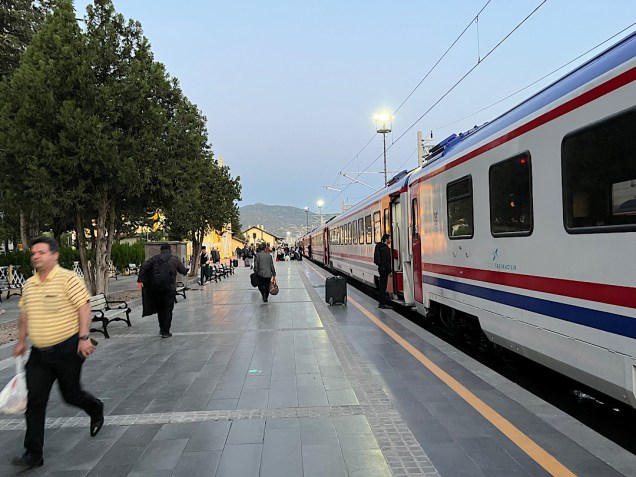
Still we connected with our taxi driver and got to Cappadocia about an hour later — in time to see all the hot air balloons hovering over the magical landscape. A good omen.
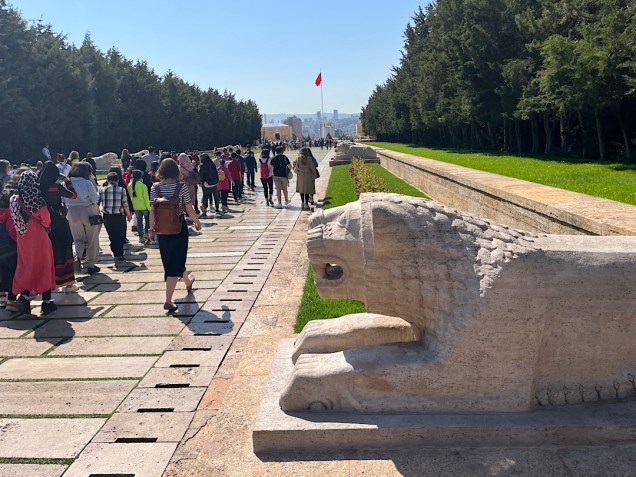 The view from the bottom…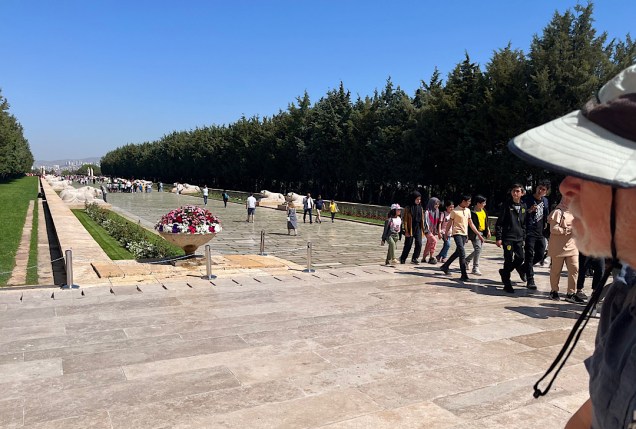
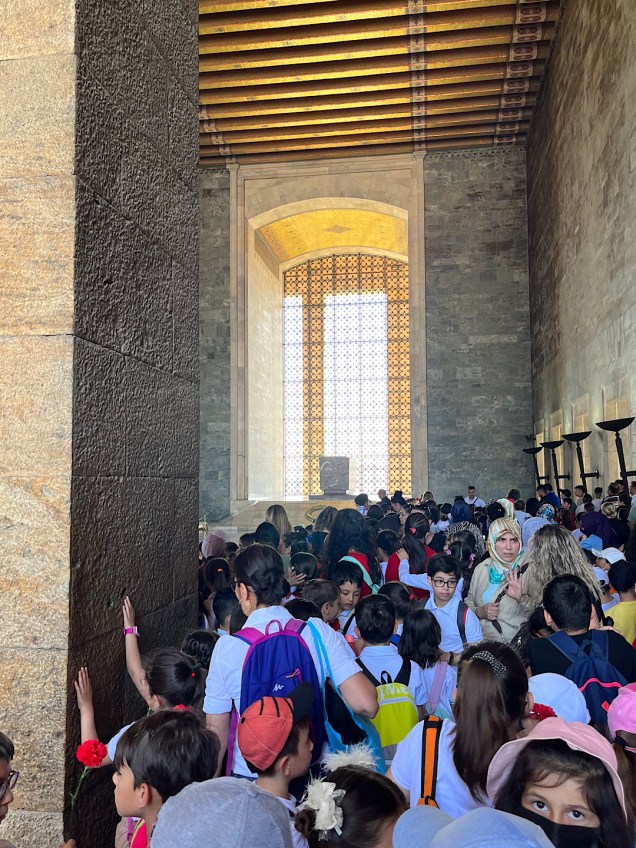
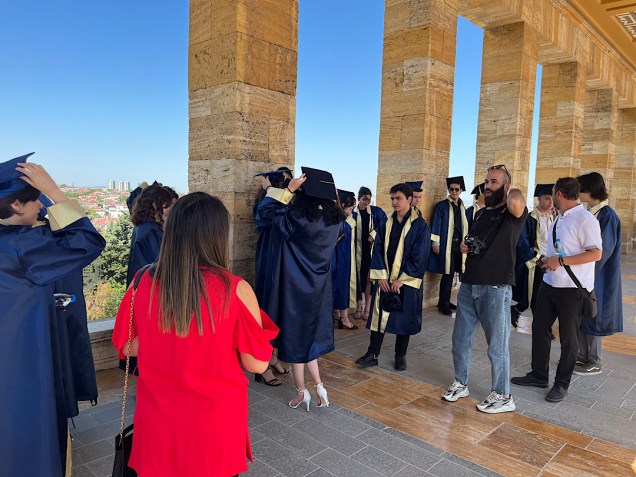
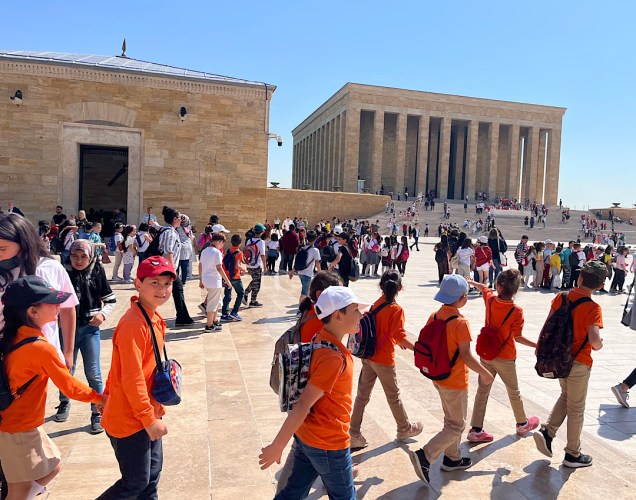
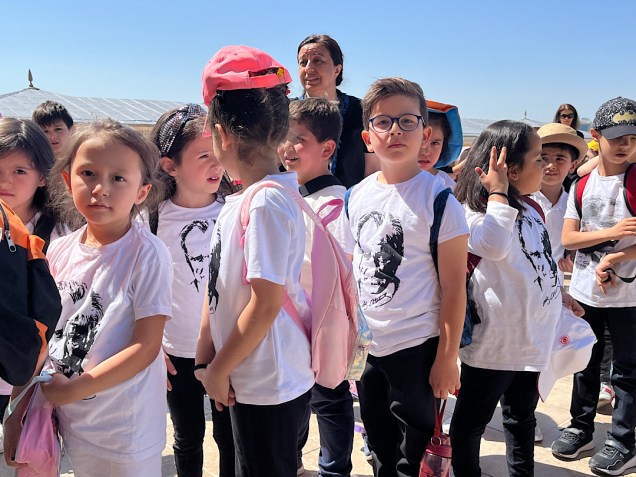
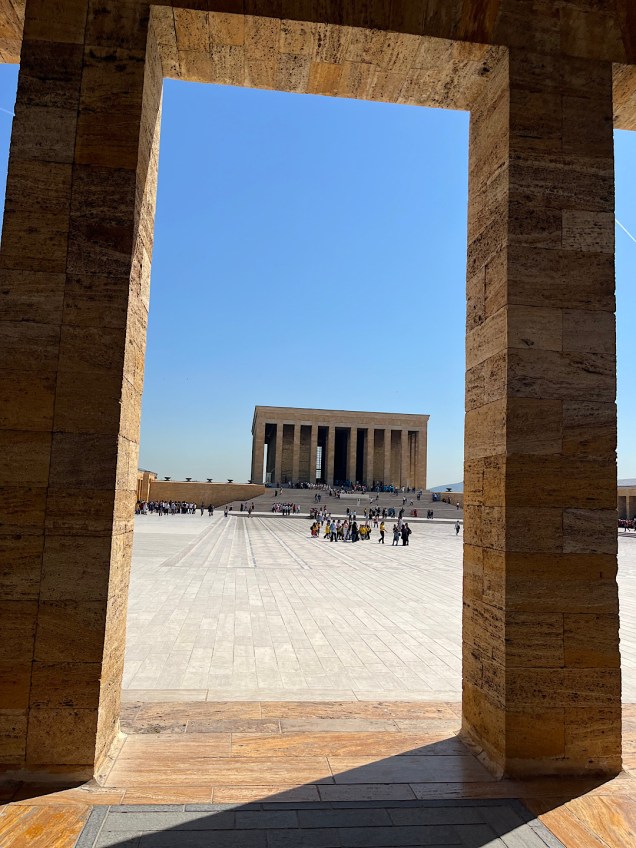
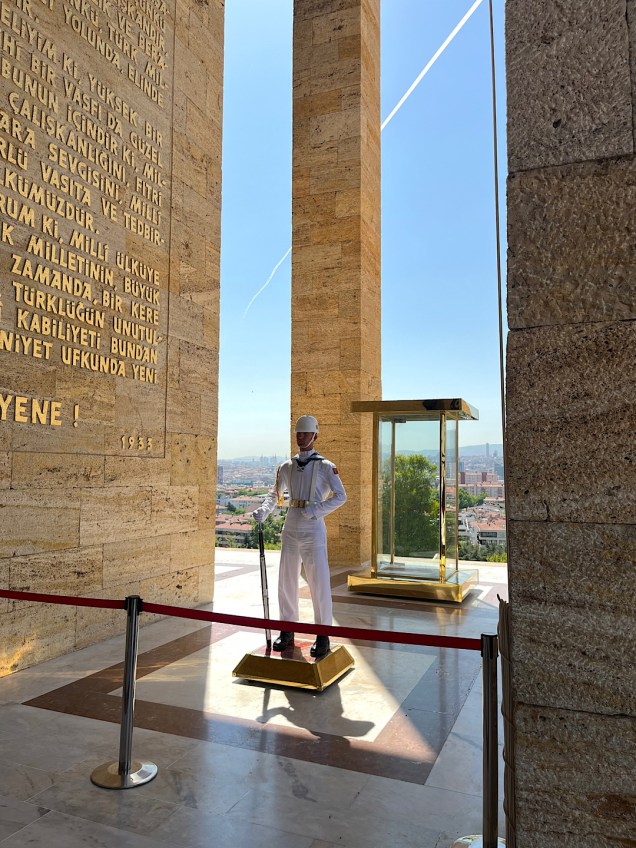
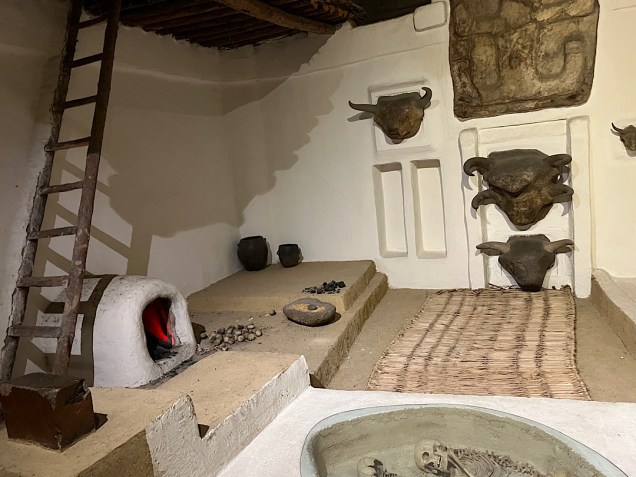
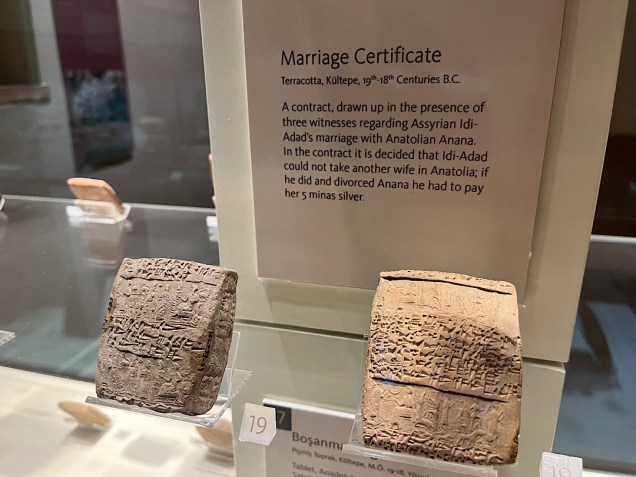
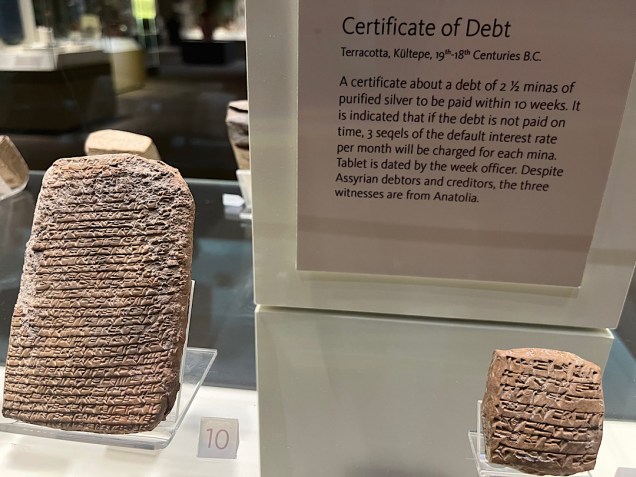
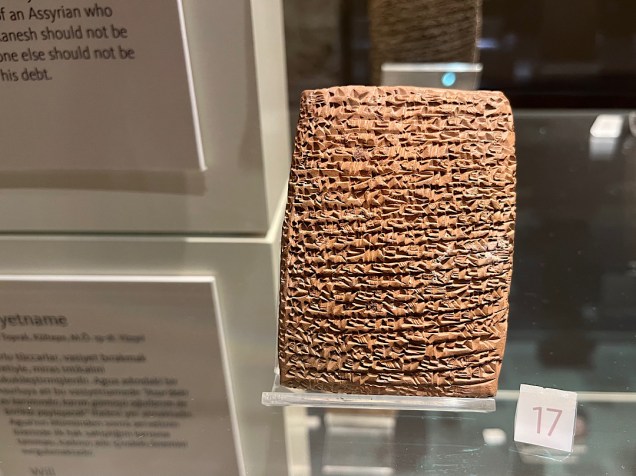
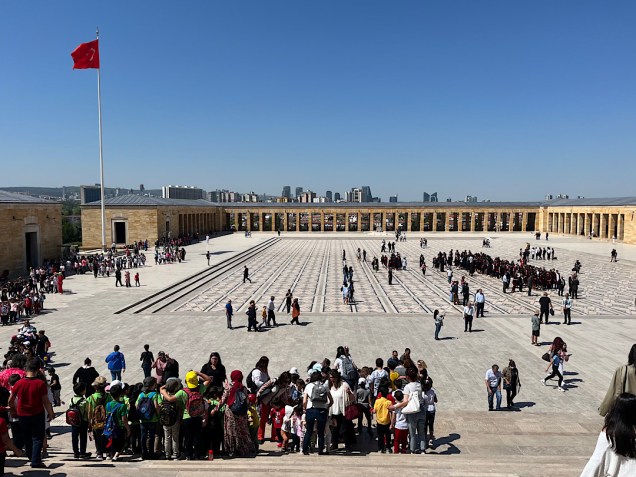 We took in the scene for about an hour, then caught another taxi to the Museum of Anatolian Civilizations. (Taxis everywhere in Turkey have been easy to hail and are stunningly cheap. Many rides around town cost only a dollar or two.) I had read that this particular museum (another project of Ataturk’s) ranked among the best in the world for antiquities.
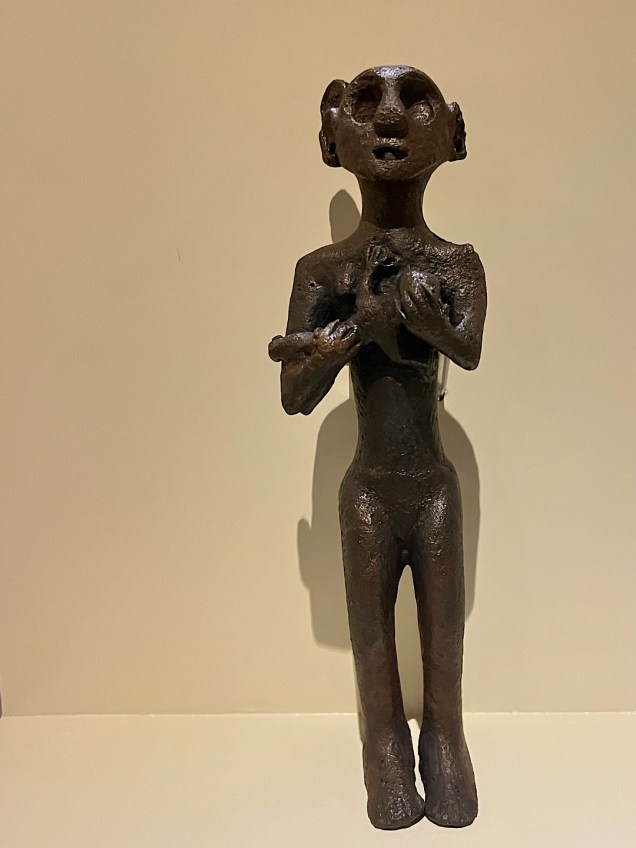
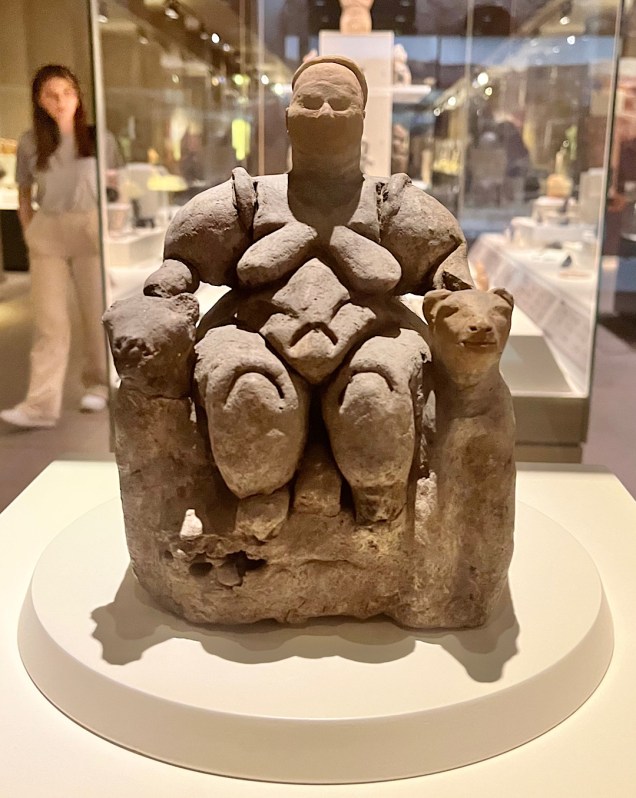 …and there were any number of other charming goddesses…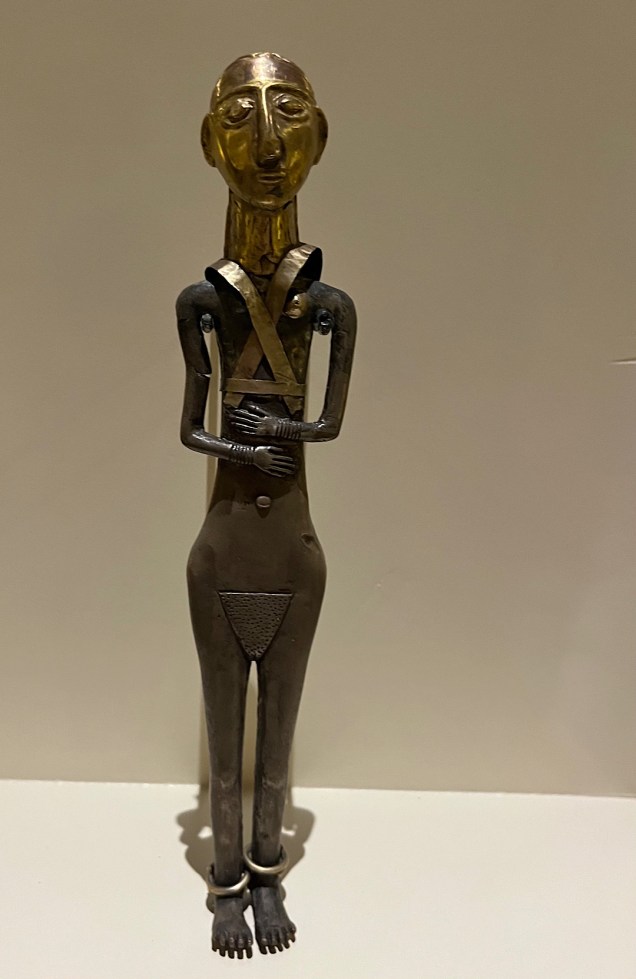
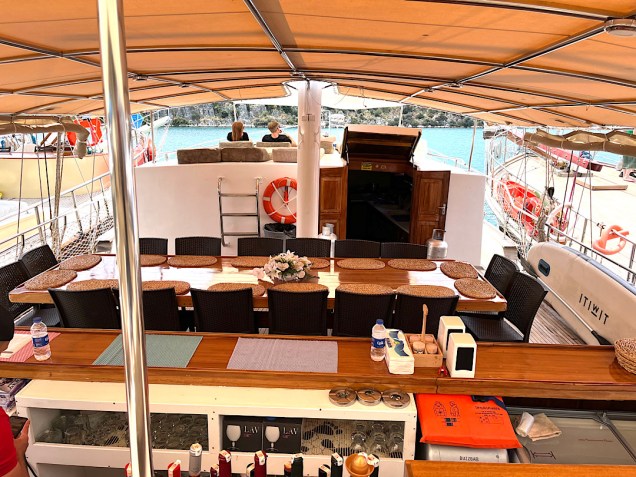
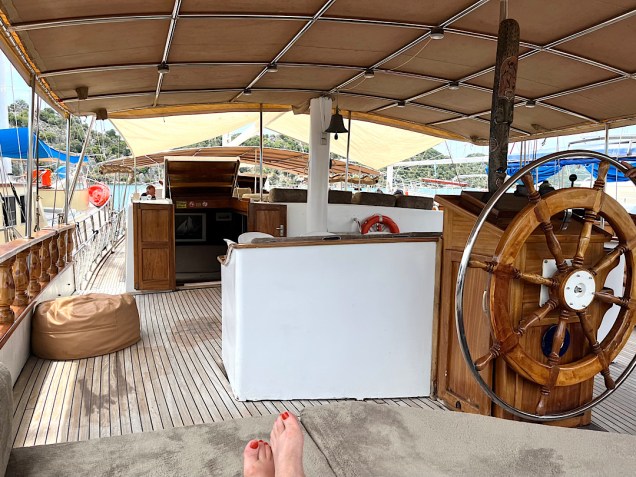
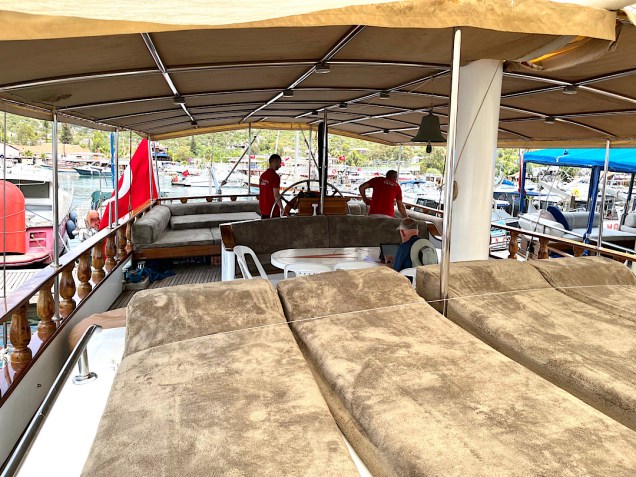
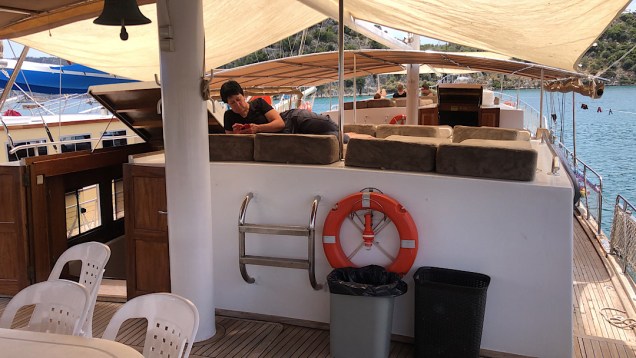
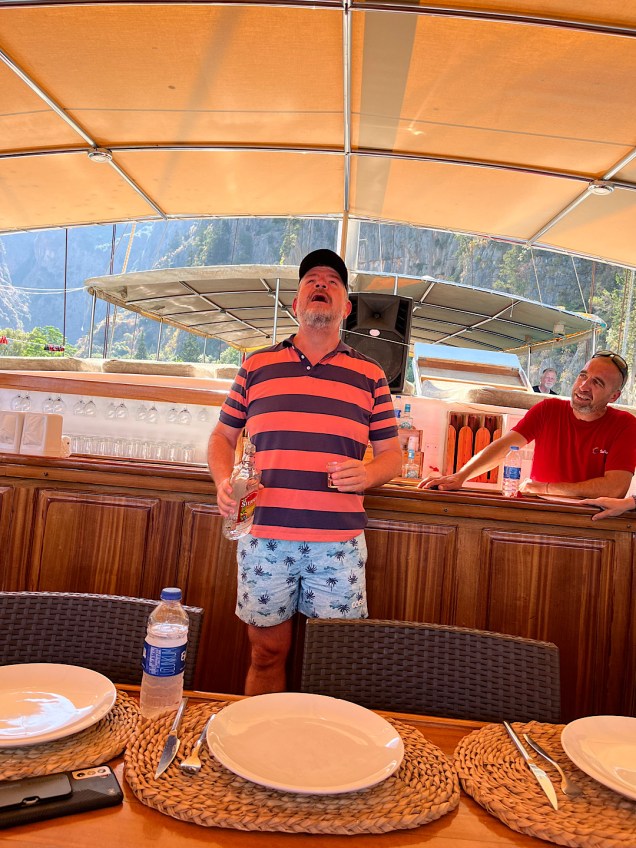
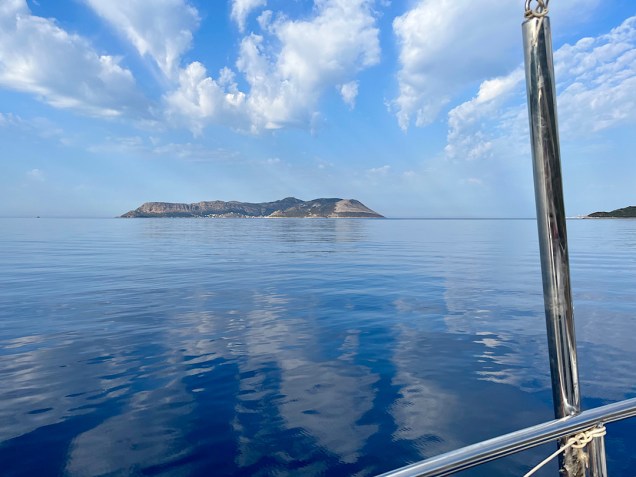
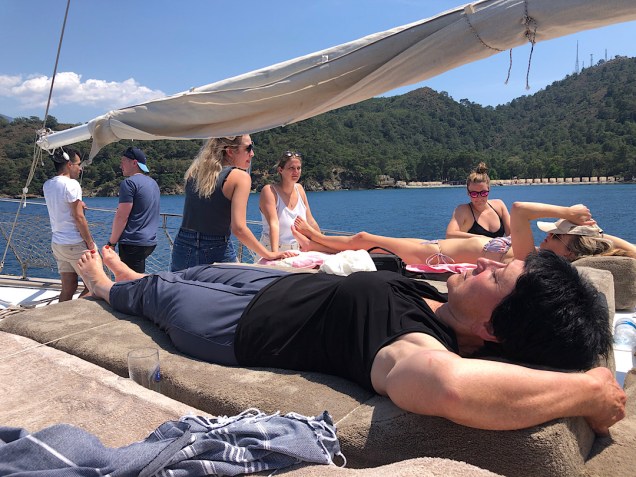
 Less than 24 hours have passed since we were cruising the Mediterranean on a 90-foot-long wooden sailing ship. Yet somehow I can’t quite remember what I did between the time I woke up yesterday and our disembarkation 7 or 8 hours later. I know we ate breakfast. Later came a light lunch. I know I spent time laying on the velour-covered foam mattresses laid out on the rooftops over the main salon and the fo’c’sle. Rocked gently by the boat’s forward motion through the swells, I didn’t sleep. It felt more like a dream, an existence untethered from time.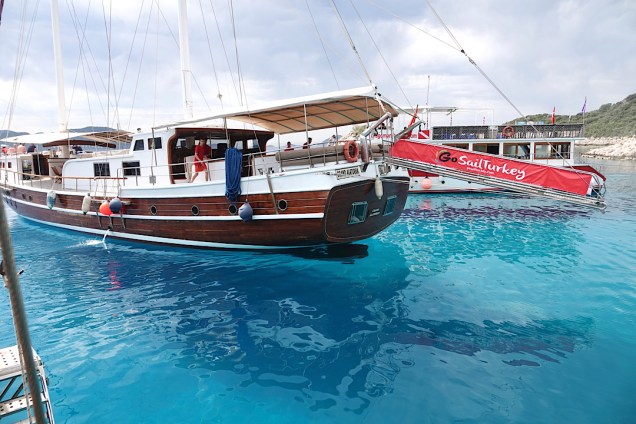
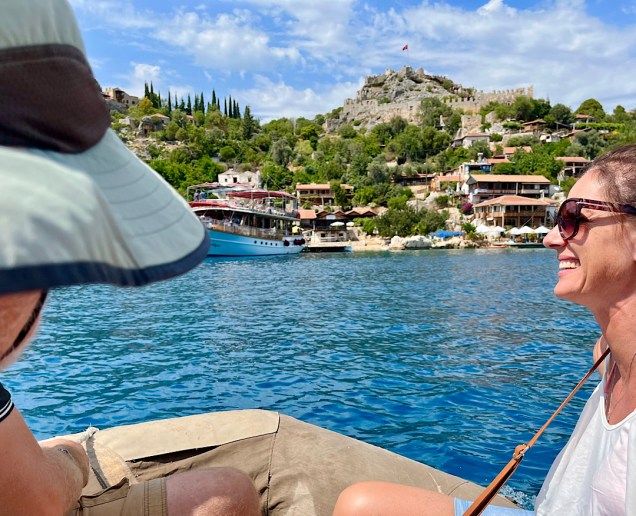
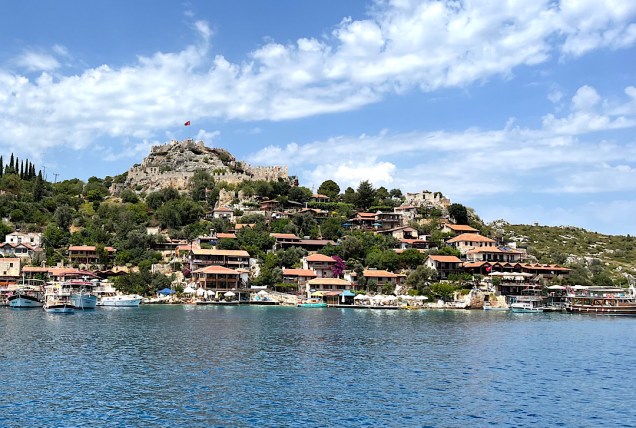
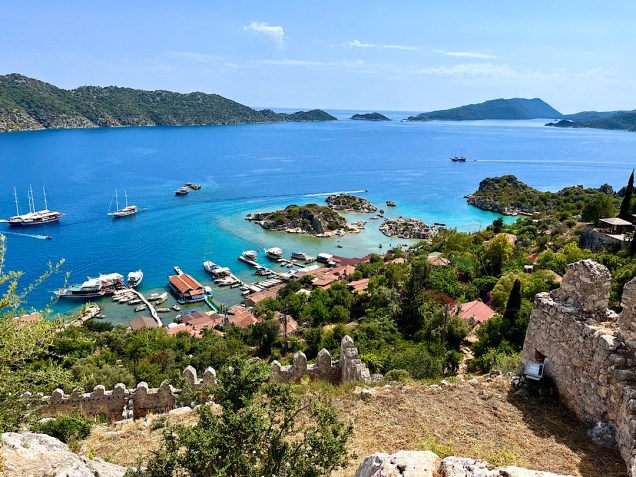
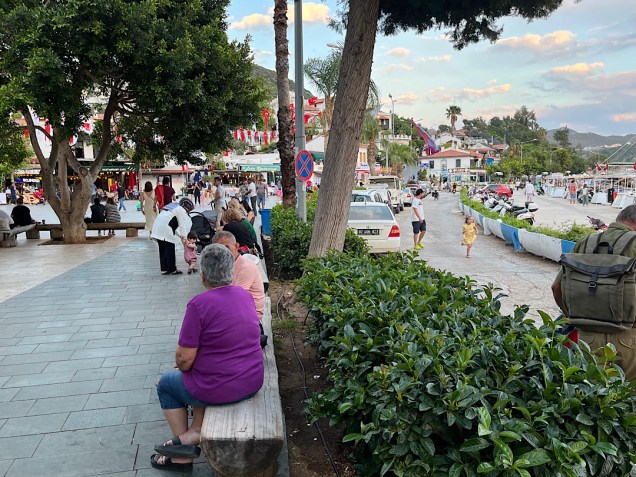
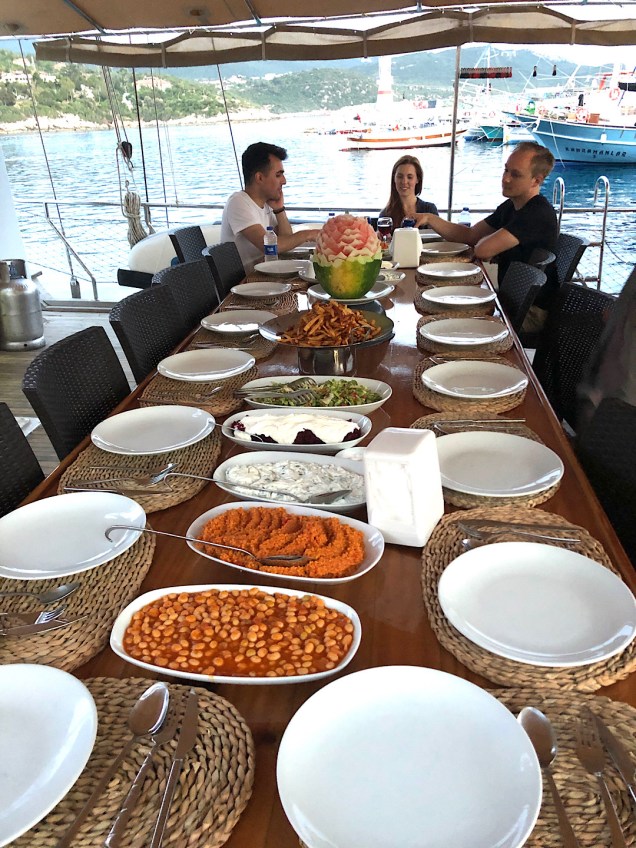
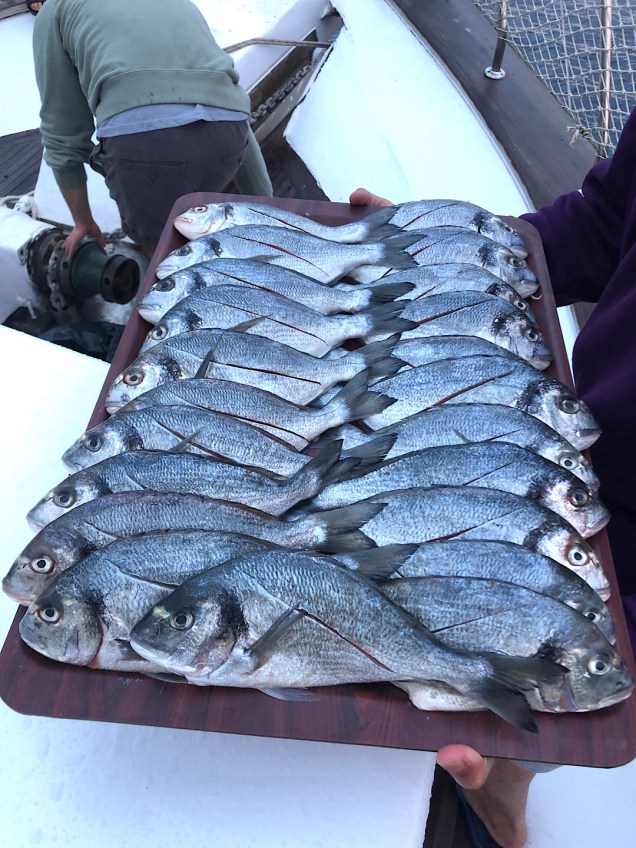
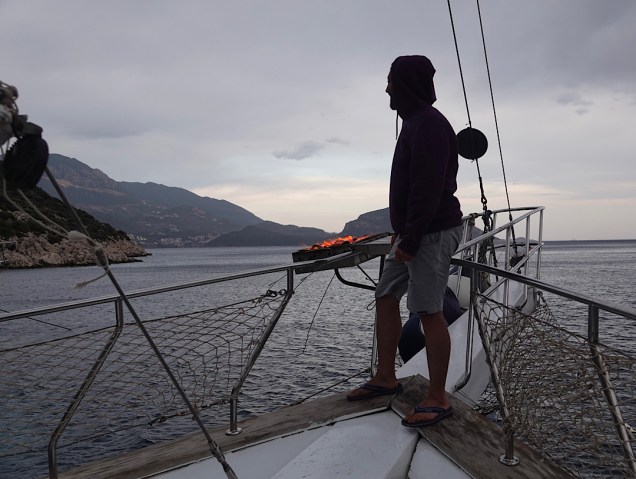
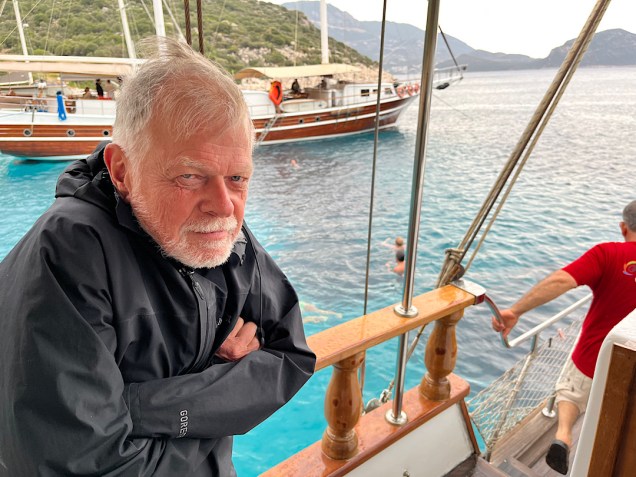
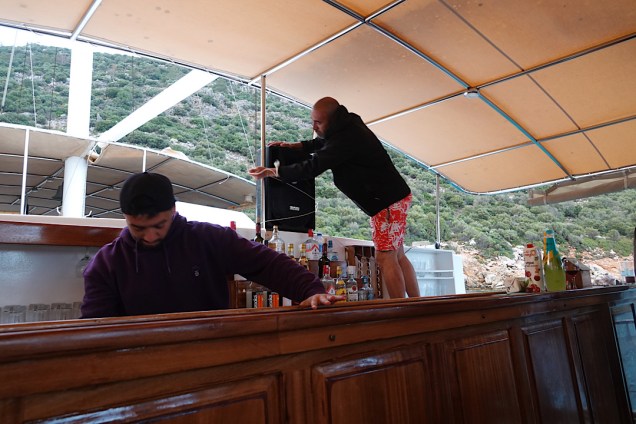

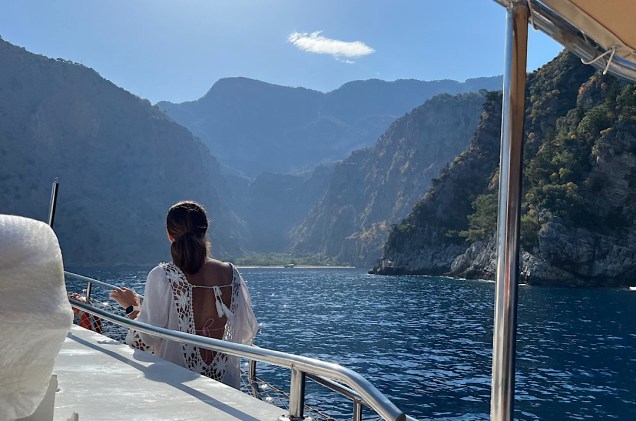 We once again motored to a deserted beach and were ferried onshore to Butterfly Valley.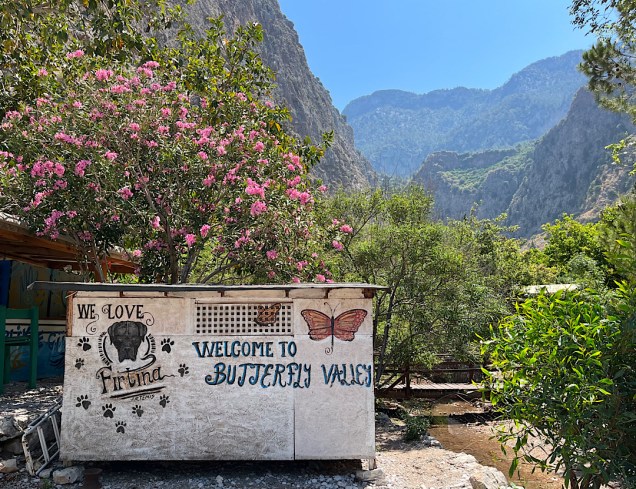
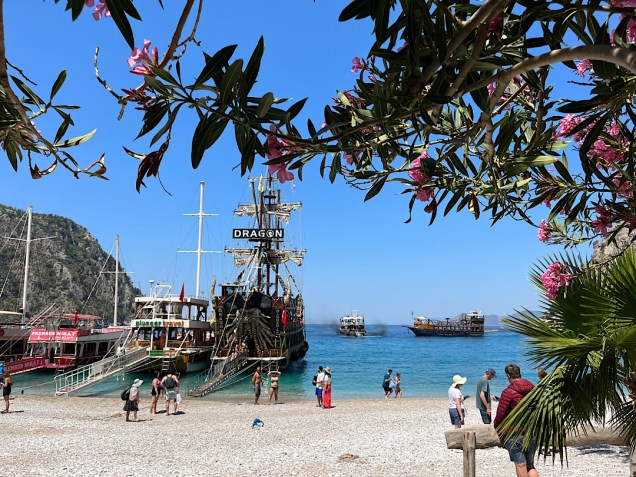


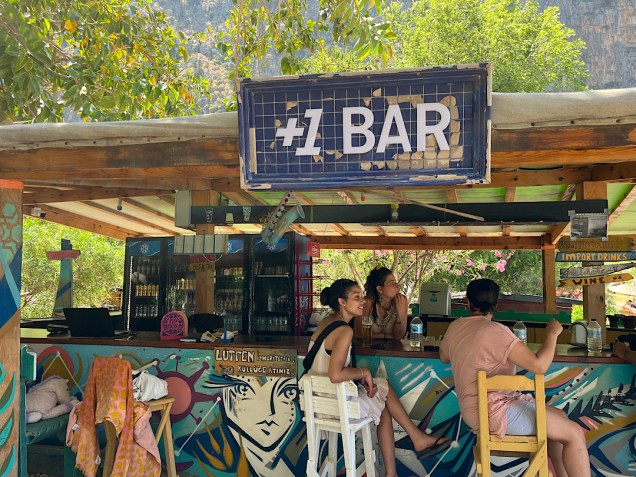
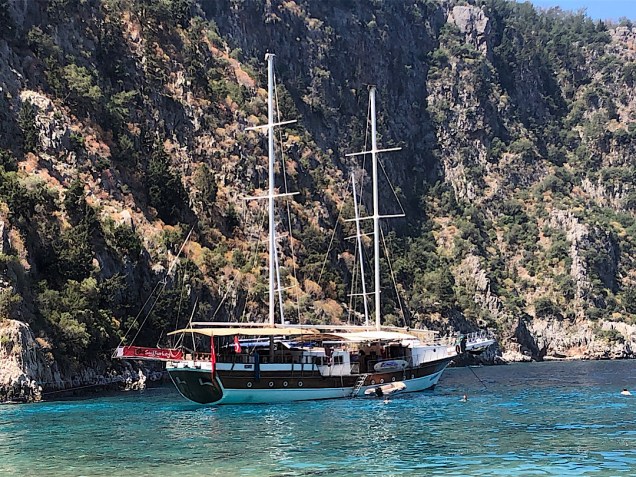
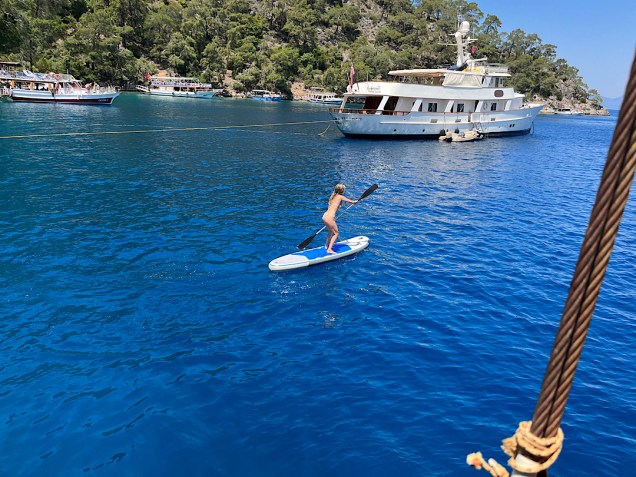
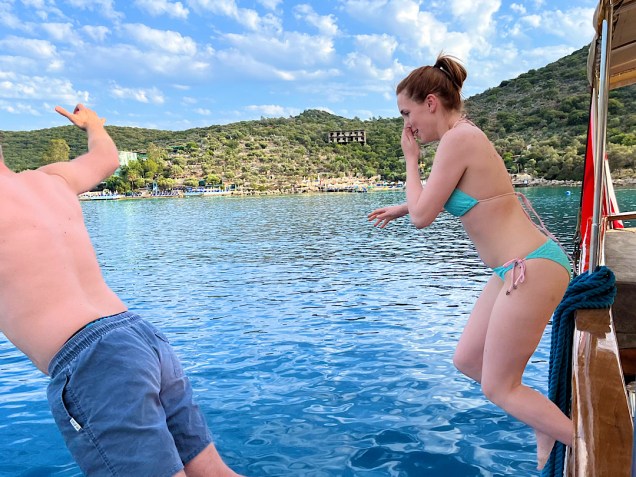
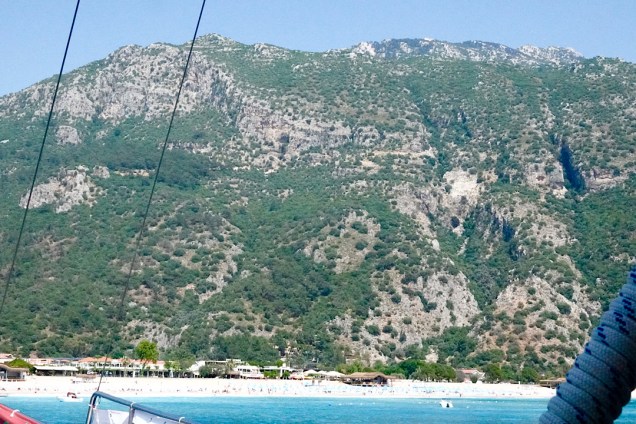
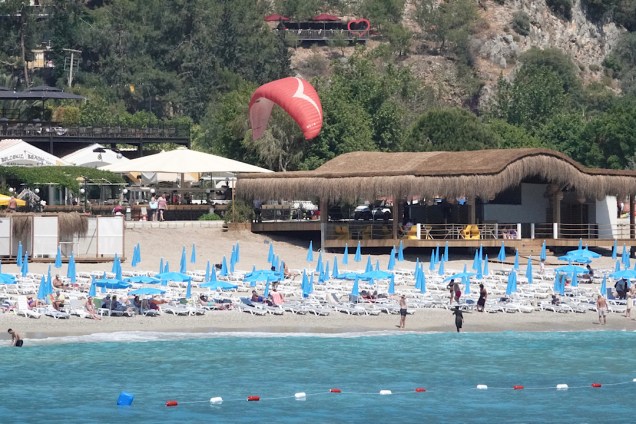 Steve and I did join in on the final excursion of our trip. Late Monday afternoon we anchored off St. Nicholas island…
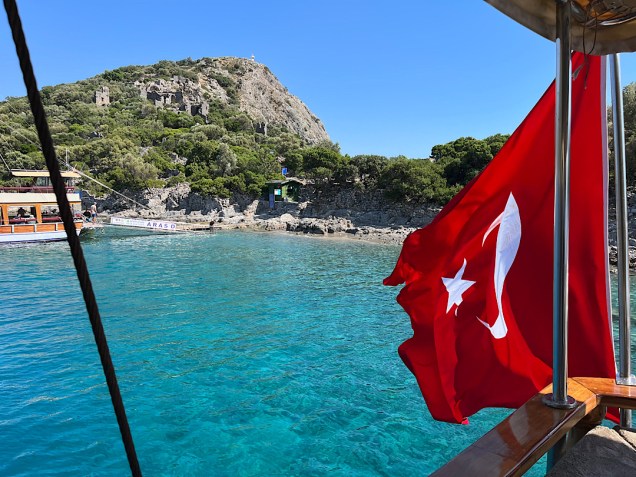 …where a short dinghy ride took us to a trailhead leading to some Byzantine ruins built in the 7th century.
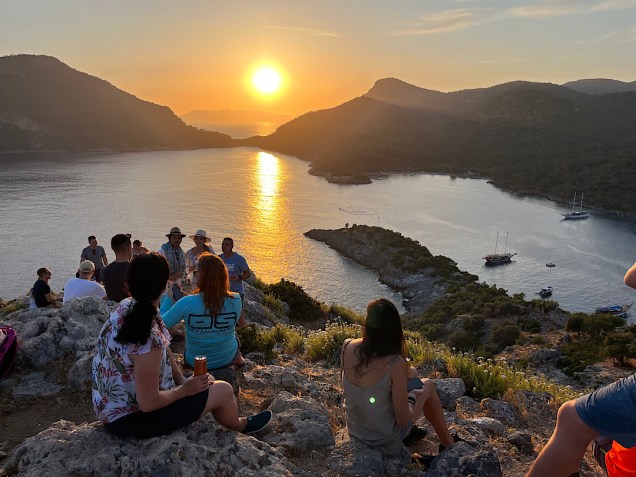 The landscape alone was pretty intoxicating, though, and we took some pleasure in being sober as we scrambled down over the rocks and scree in the deepening gloom.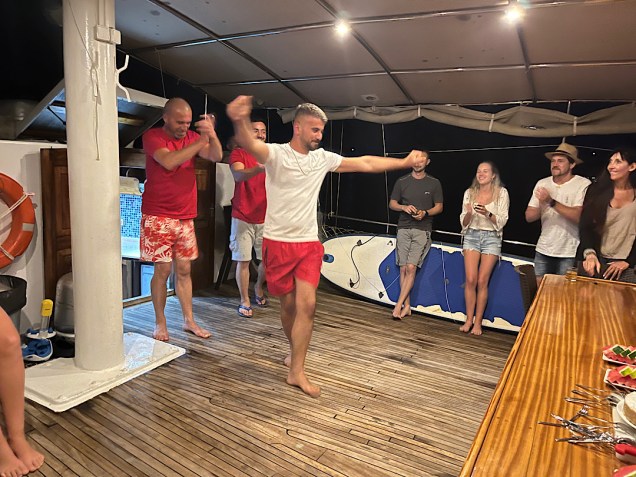
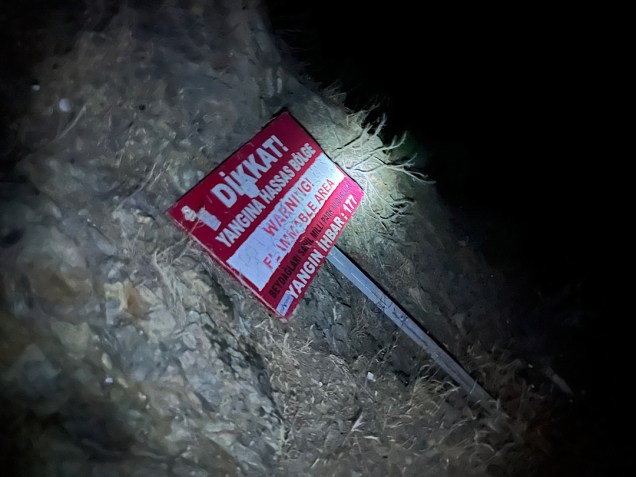 If YOU heard about a place where a Greek god had battled with and slain a female monster and, commemorating this victory, the mountain spouted flames — and they had continued burning for more than 2000 years… would you be able to resist going to see it? I couldn’t. The burning mountain is Mt. Chimaera; it’s near the towns people stay in before embarking on an sailing trip along Turkey’s Turquoise Coast.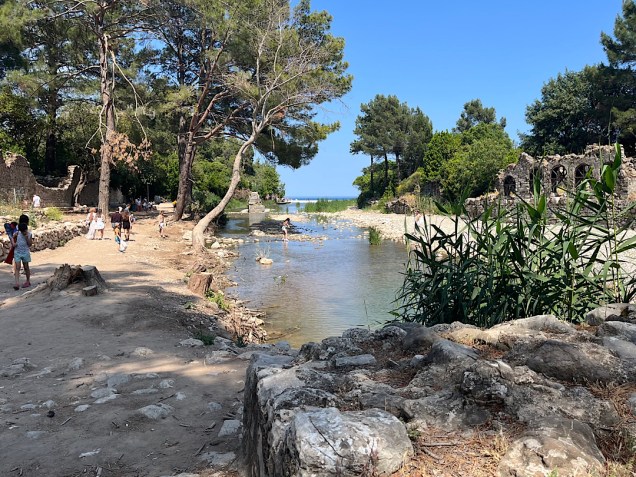
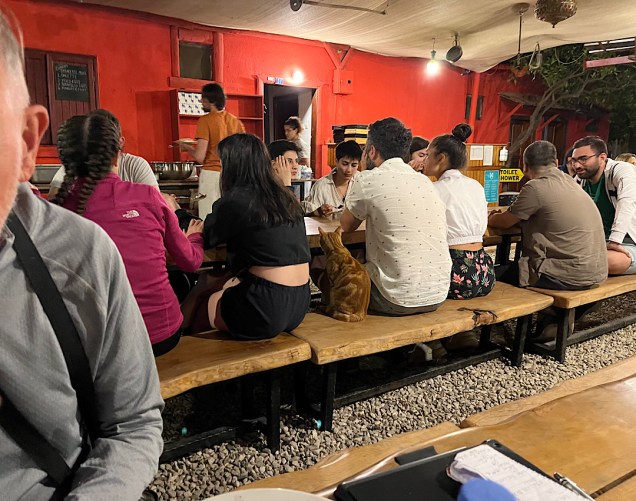 I’d given up, but Steve wanted to double check. He was all but panting when he came back with the news that a van would be leaving in just 15 minutes, promptly at 9 pm. We threw our walking sticks and sweaters and flashlights into the daypack, then piled on the vehicle, happy to find another couple already aboard. We picked up two more couples at a nearby hotel, then barreled into the darkness.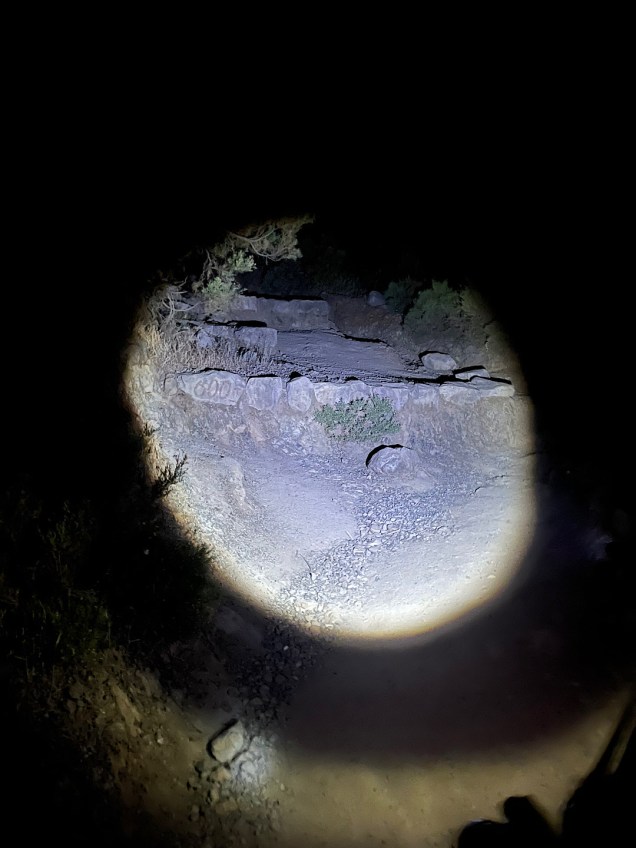

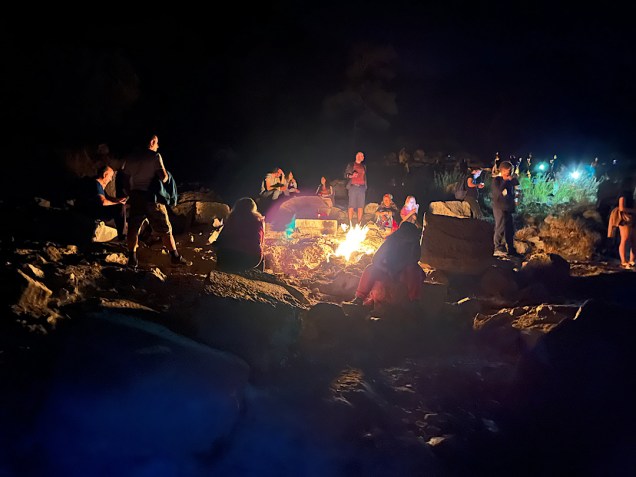
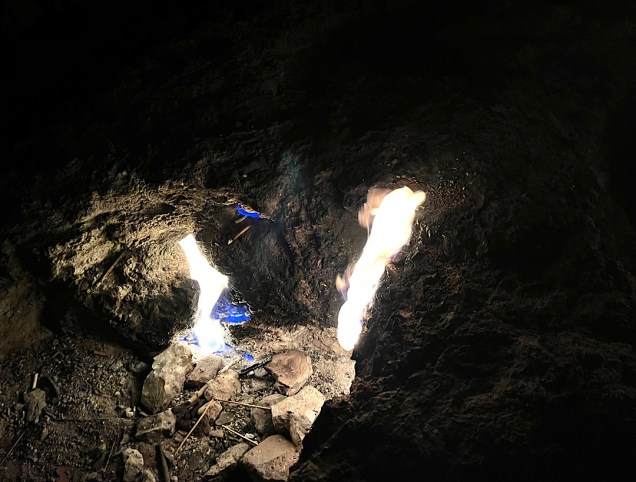
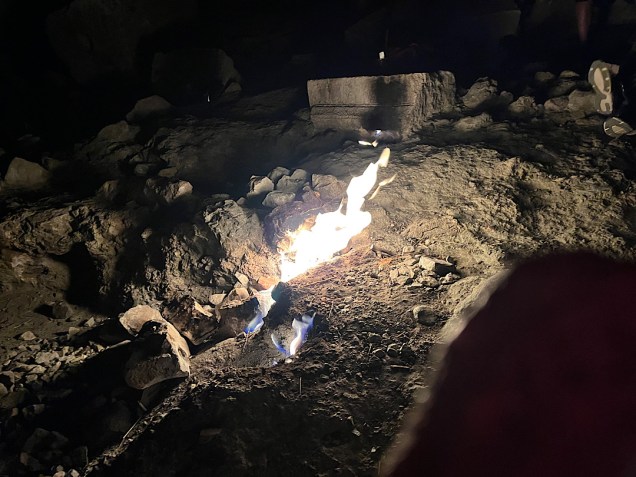 The guidebooks say they can be extinguished by covering them, but they will pop up again nearby. Steve judged it to be a natural gas seep, mostly methane. The Greek myth is a lot more romantic, however. According to it, the lady monster had the head of a lion, the body of a goat, and the tail of a dragon. Mounted on the winged horse Pegasus, the hero Bellerophon killed the Chimaera by pouring molten lead into her mouth.
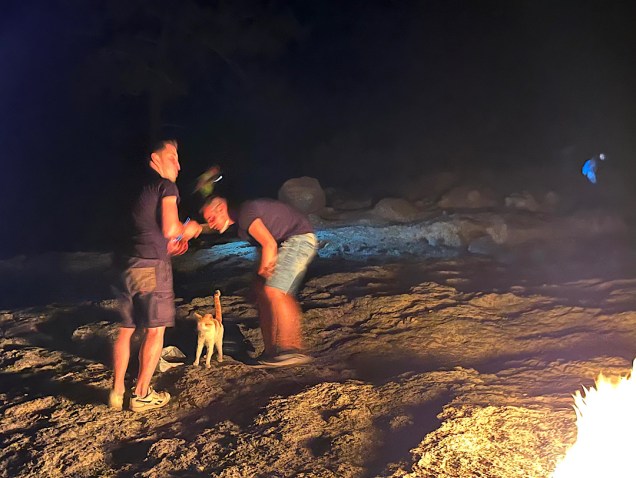 I particularly admired the forethought of the guys who’d brought sticks and marshmallows, for toasting.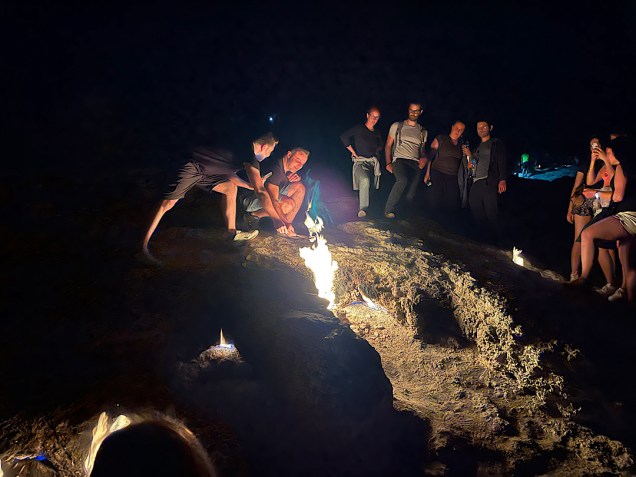
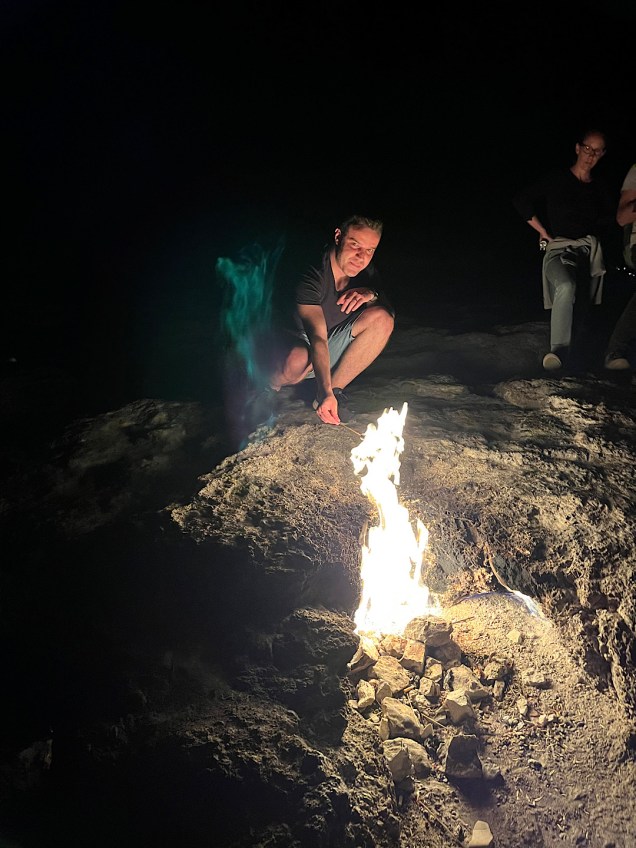 Fires seemed to stretch up the mountain into the distance. We sat down for a moment to drink in the scene. Cats have an uncanny ability to detect my cat allergies; sure enough, the ginger made a beeline for me and climbed into my lap.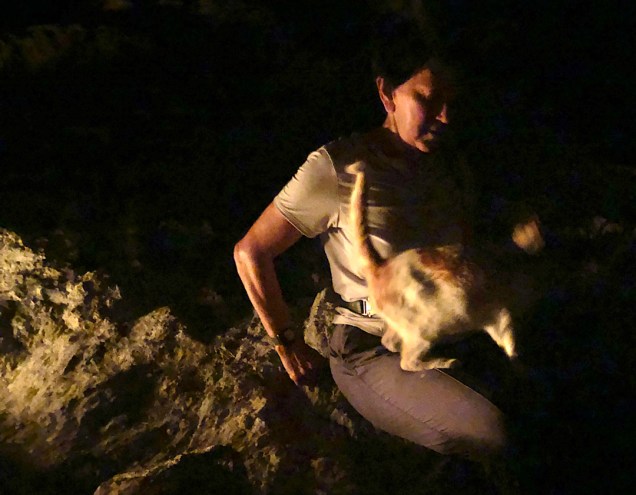

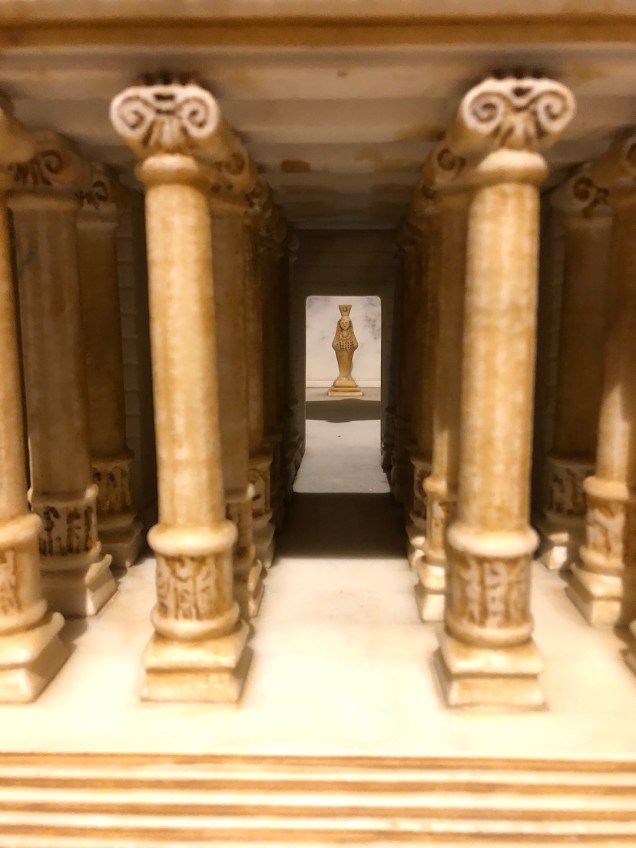
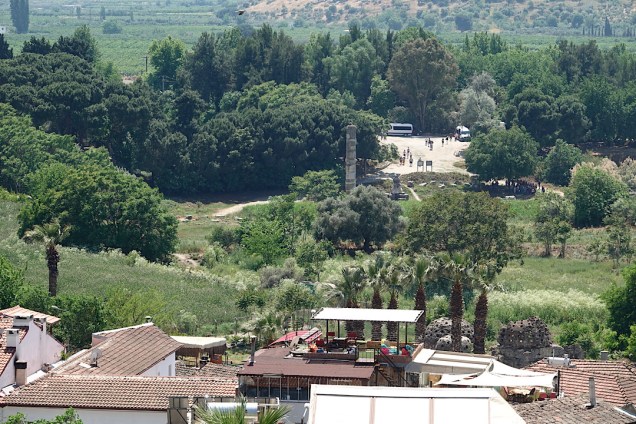
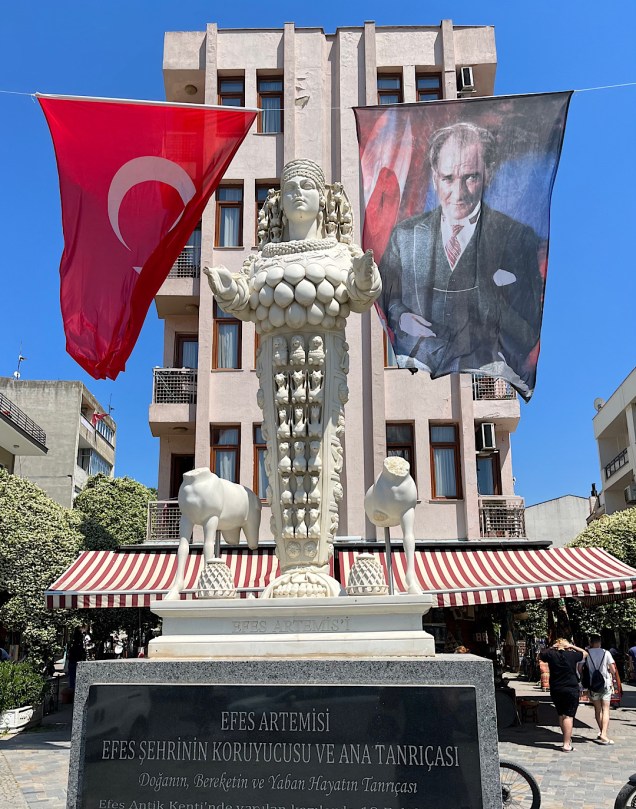 Tuesday afternoon, Steve and I flew to Izmir (once known as Smyrna). It’s the third largest city in Turkey, but we didn’t pause to tour it. Instead we caught a taxi at the airport and rode south for about an hour to the town of Selcuk, the ancient site of a once great city known as Ephesus. We spent all of Wednesday in and around it. Following the example of St. Paul, I have a few observations to offer the locals: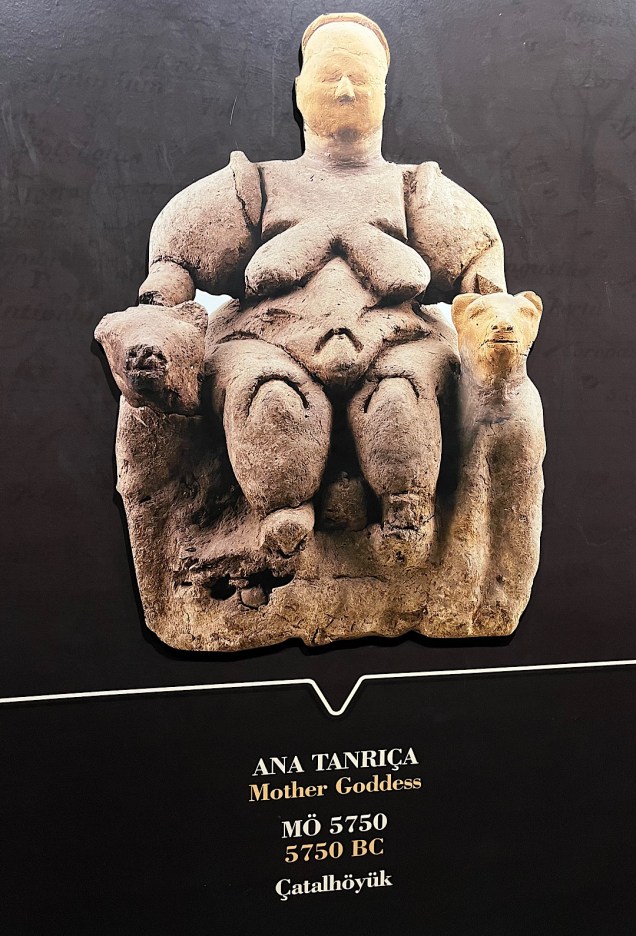
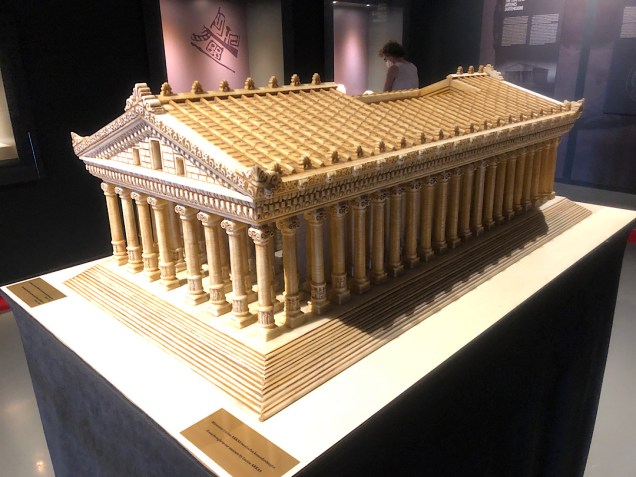

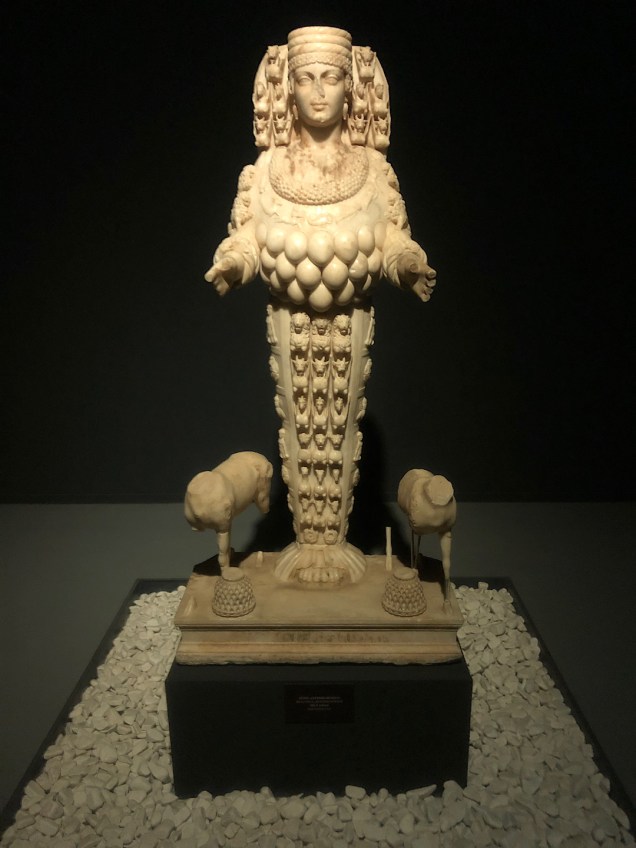
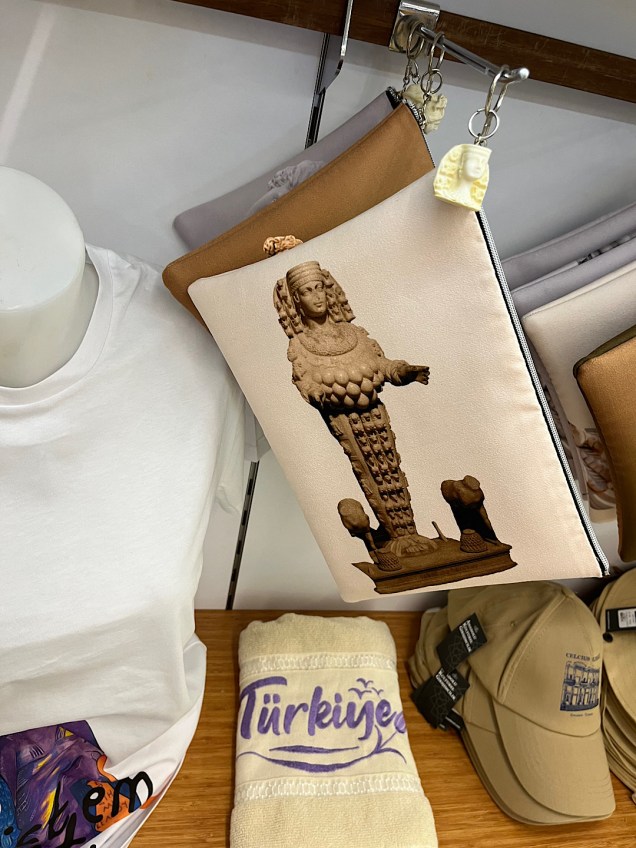 I would have jumped on a nice t-shirt bearing that image, but this is all there was: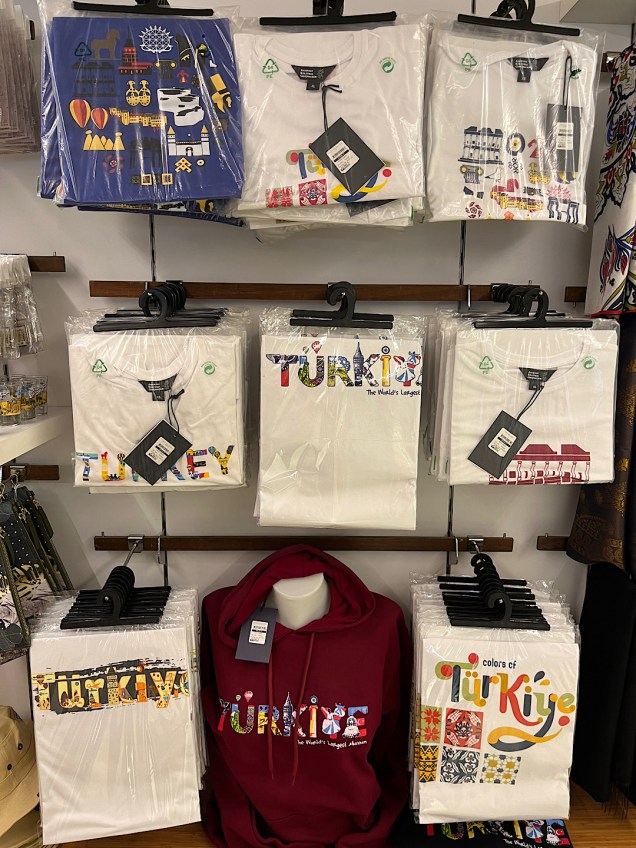
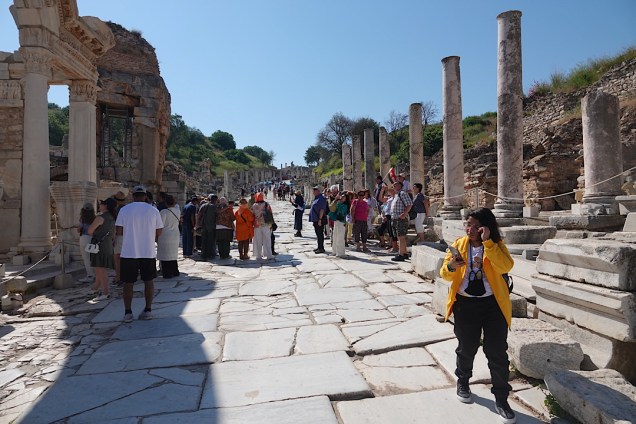
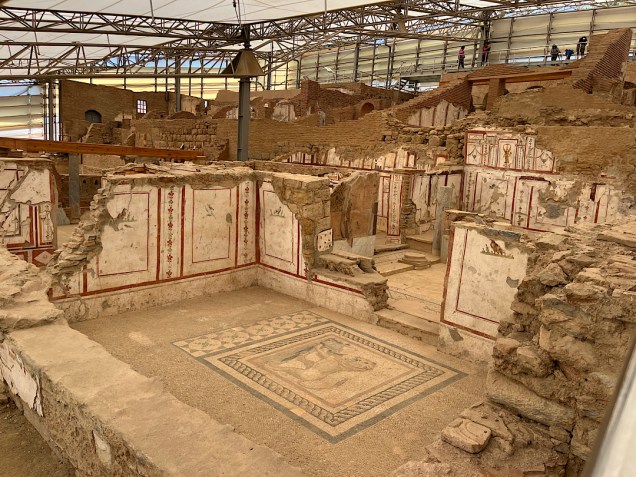
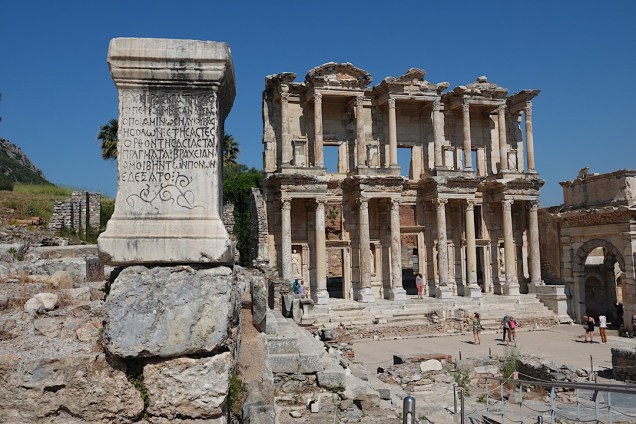
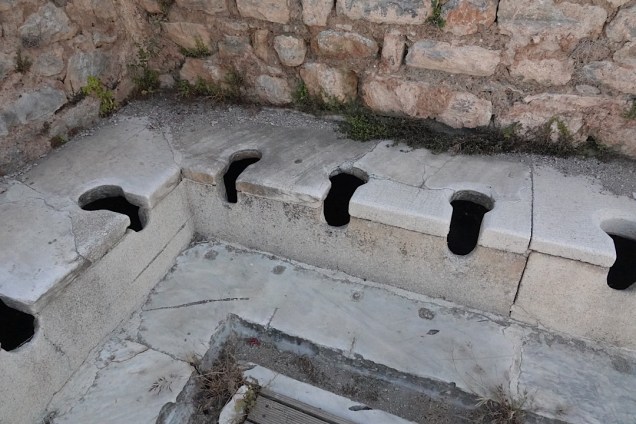

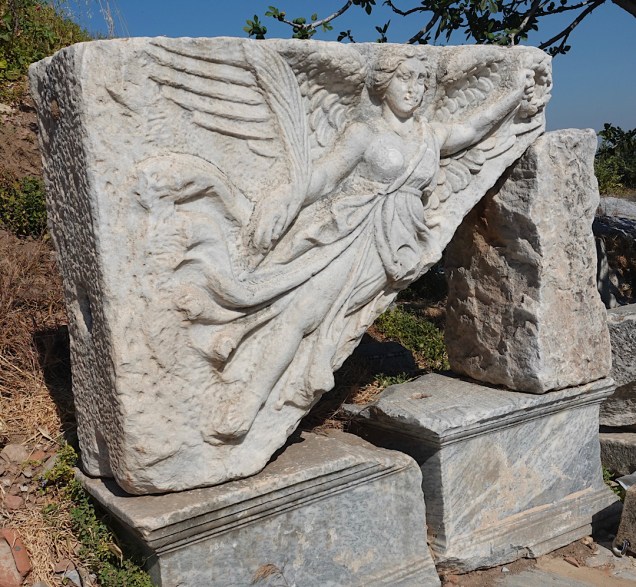
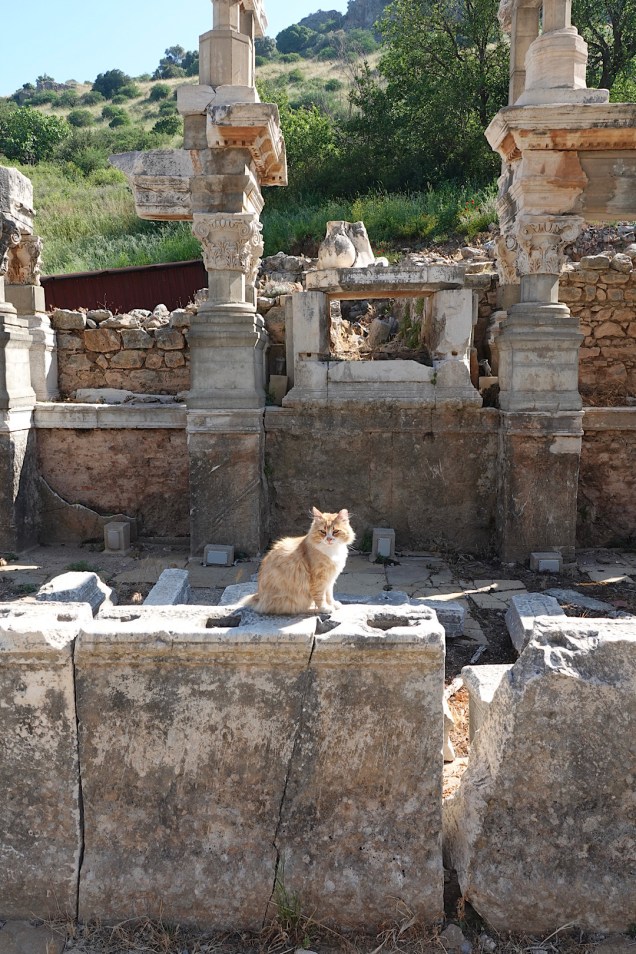
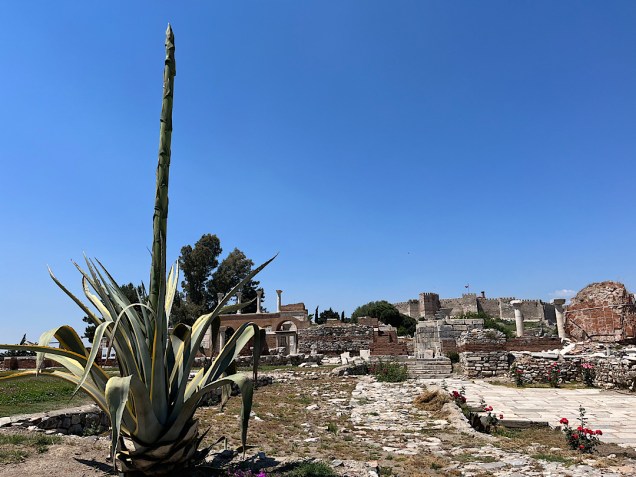
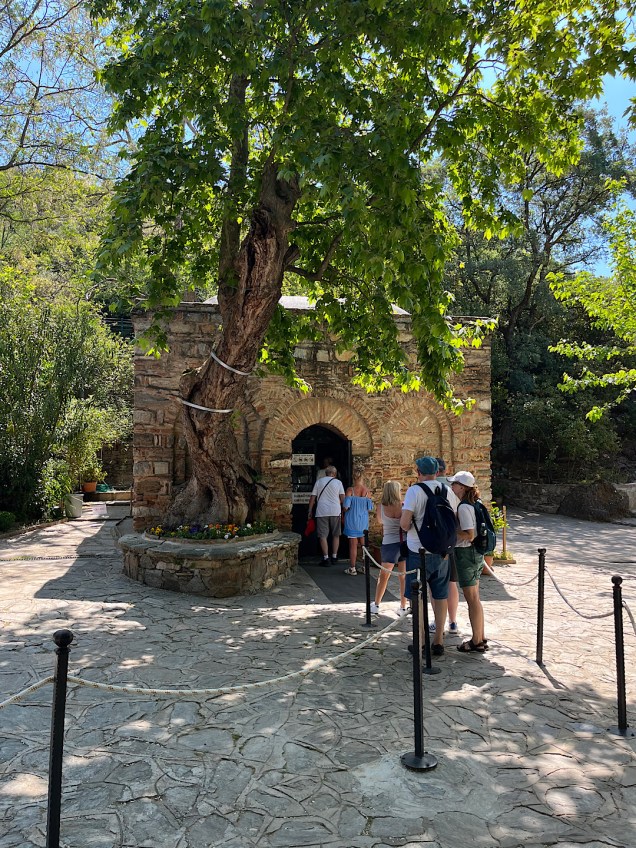 The Catholic Church says it was somewhere near the house that the body of the elderly Virgin was lifted off the ground and physically assumed into heaven. Catholics all over the world celebrate this event every August 15. But we found not a single plaque on the site mentioning it.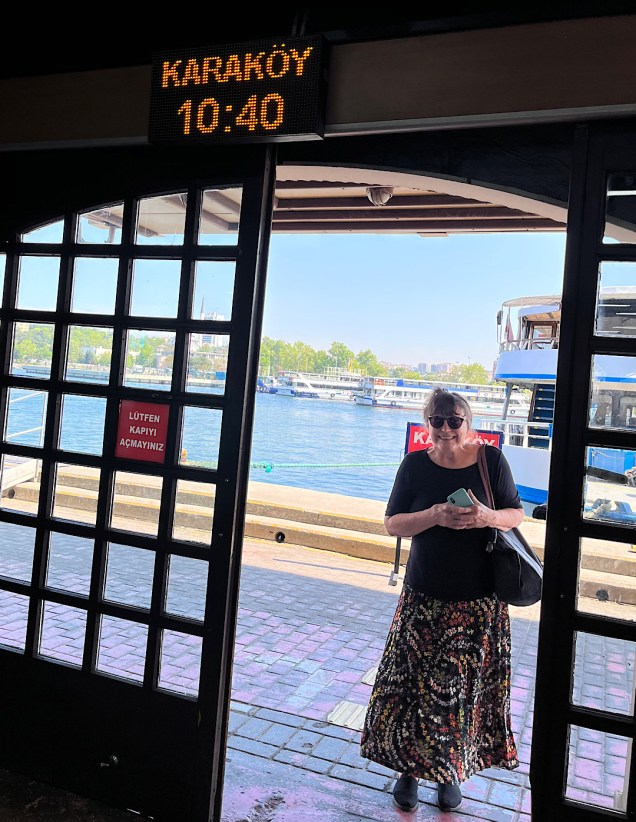
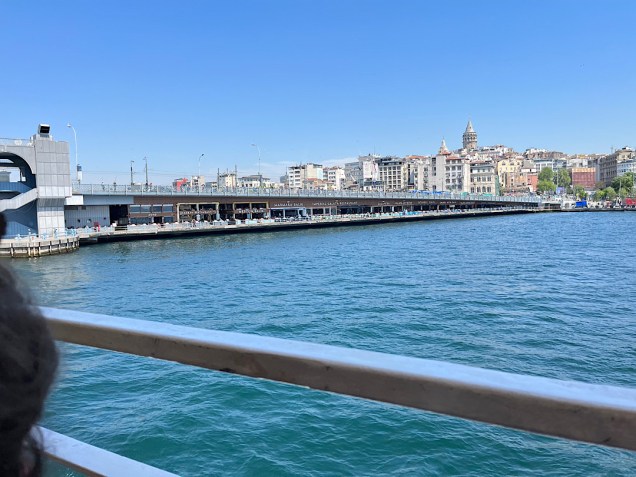
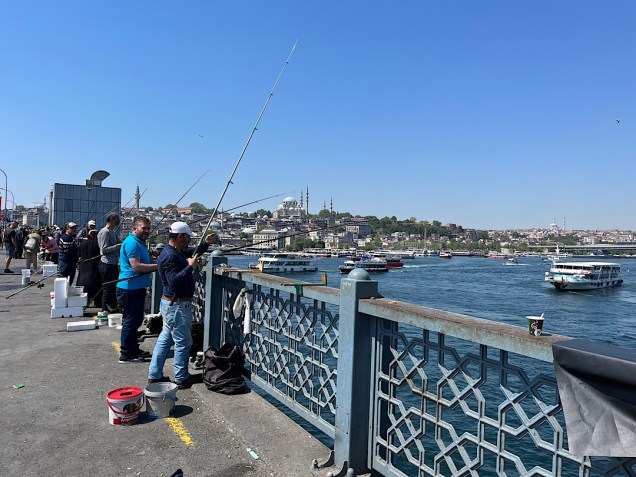
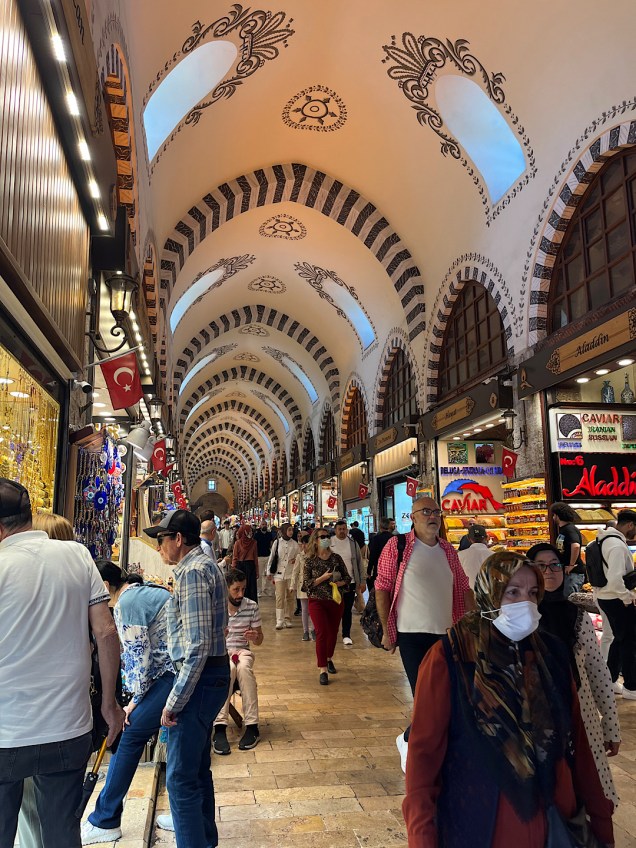 But we pressed on and eventually reached Sultanahmet Square, the beautiful plaza that once was the site of the Roman emperors’ palace and today is flanked by two of the world’s most spectacular religious structures (Hagia Sophia and the Blue Mosque.) We grabbed a casual lunch, then Virginia and I checked in for our cleaning extravaganza.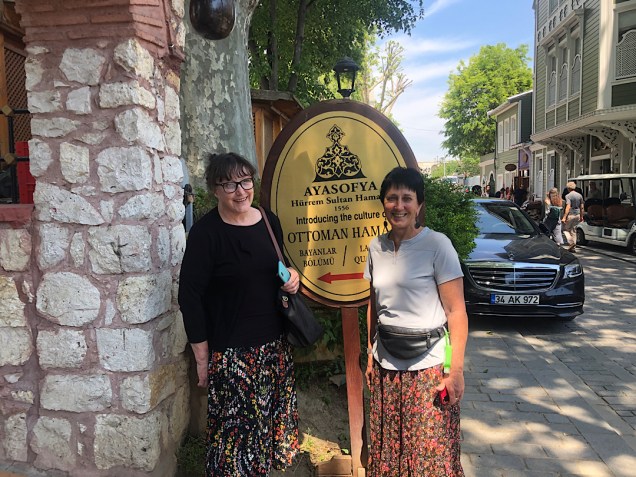
 We had signed up for The Works, and the process started with our being led to beautiful wood-paneled dressing roomswhere we shed all our clothes and donned tiny string thongs, shower slippers, and bathrobes.
 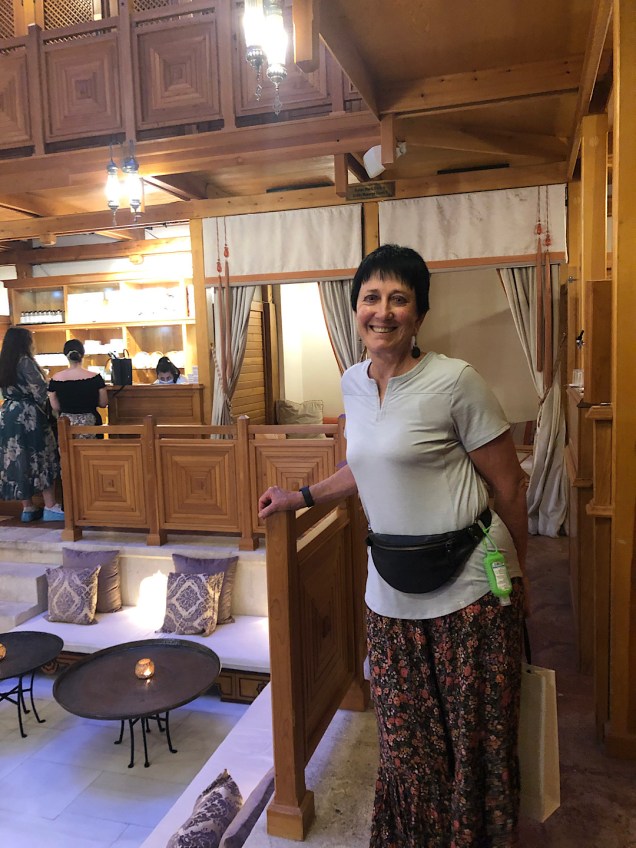 We each had our own personal attendant who led us to an inner sanctum under a graceful, light-filled dome. Directly under it was a six- or eight-sided marble platform. I can’t be specific in part because I couldn’t take a camera or notebook into that hot, steamy enclave filled with naked women of all ages, sizes, shapes, and colors. Even the attendants wear nothing but towels wrapped around them and tucked in over their breasts and at their upper thighs.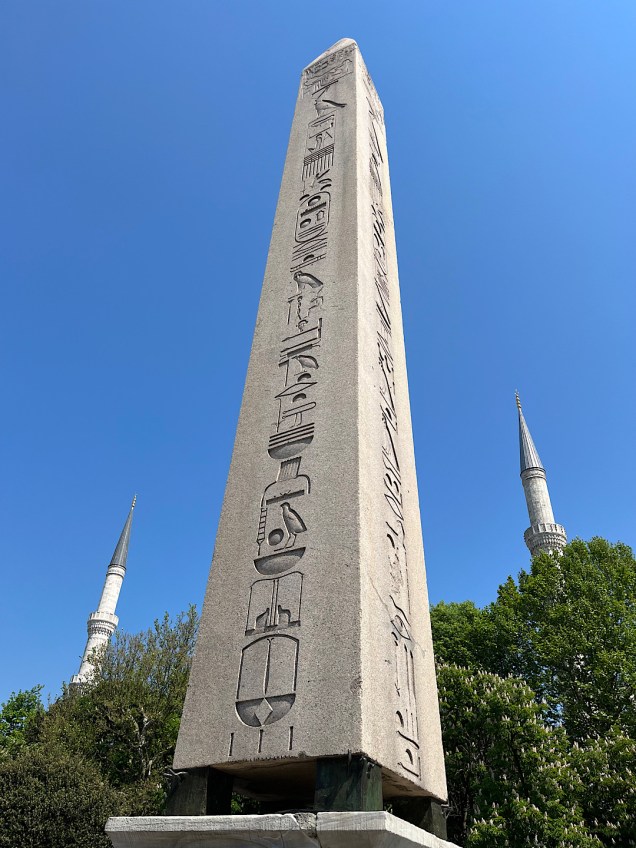
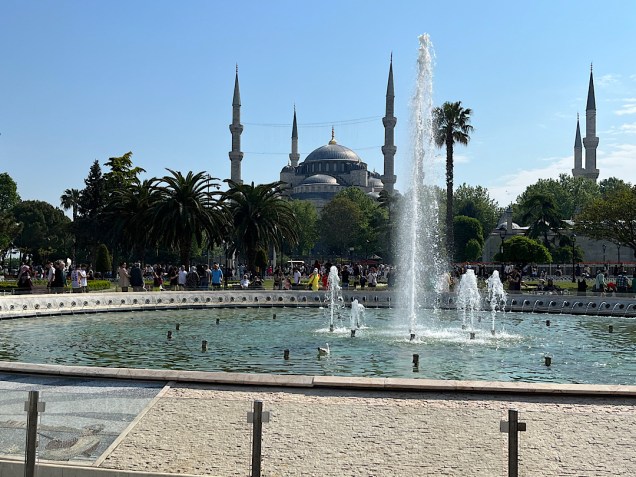
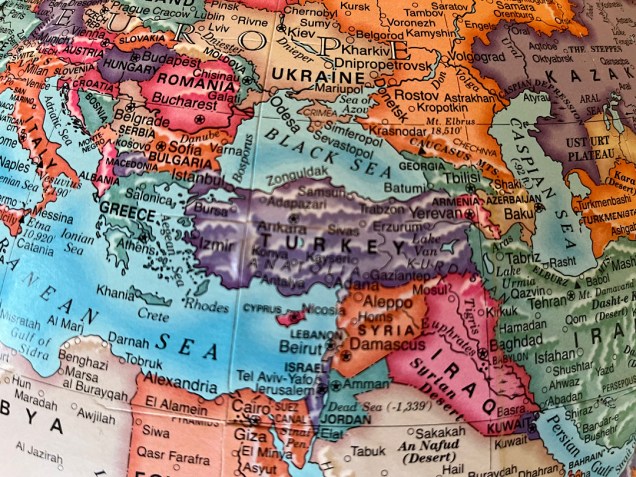 Tomorrow we take off for Istanbul. It’s about as centrally located as any place on our globe, and if it isn’t the actual center of the world (what is?) was the most important city of the most politically dominant land mass (Eurasia) for longer than any other city I can think of (like… 2000 years?) I’ve never been outside the airport there, so for me this visit will make Turkey the 76th entry on my list of Countries Visited. Steve spent some time there once before, though, when on a round-the-world odyssey with his parents. He celebrated his 9th birthday in a hotel overlooking the Bosporus. Though young, he was deeply impressed by the city and always said he wanted to go back. For the life of me, I don’t know why I also didn’t long ago yearn to get there.
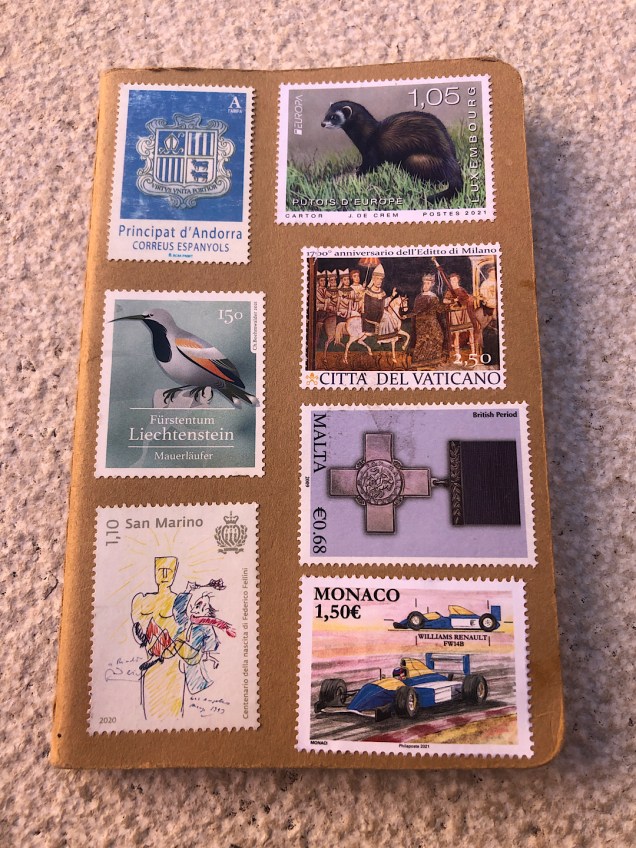
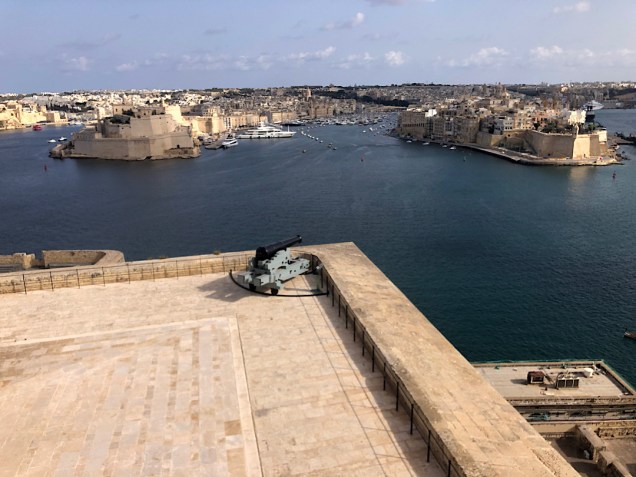
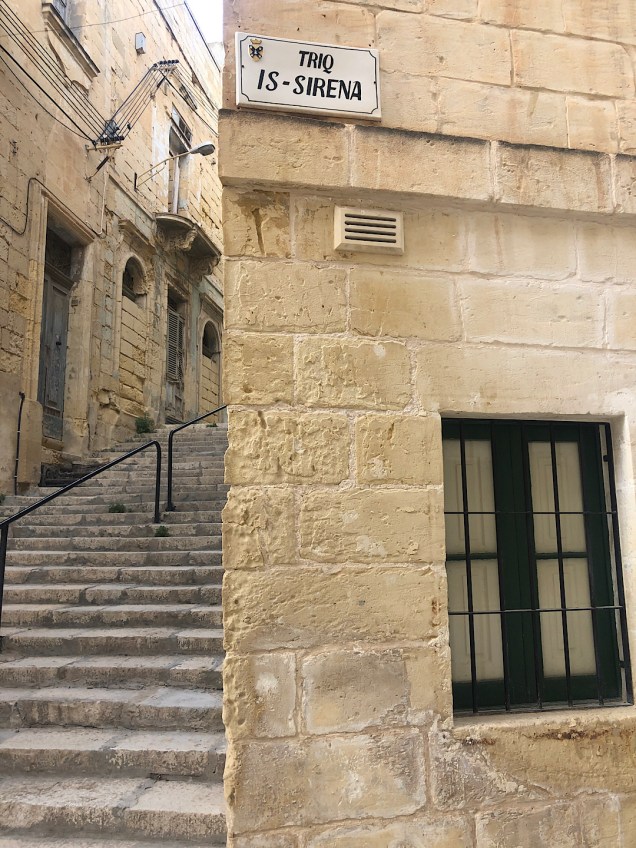
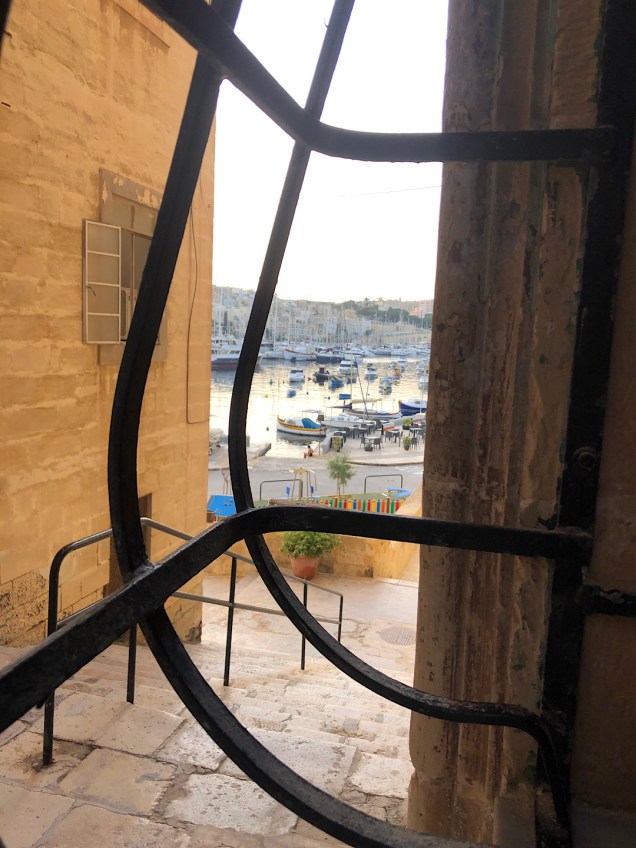
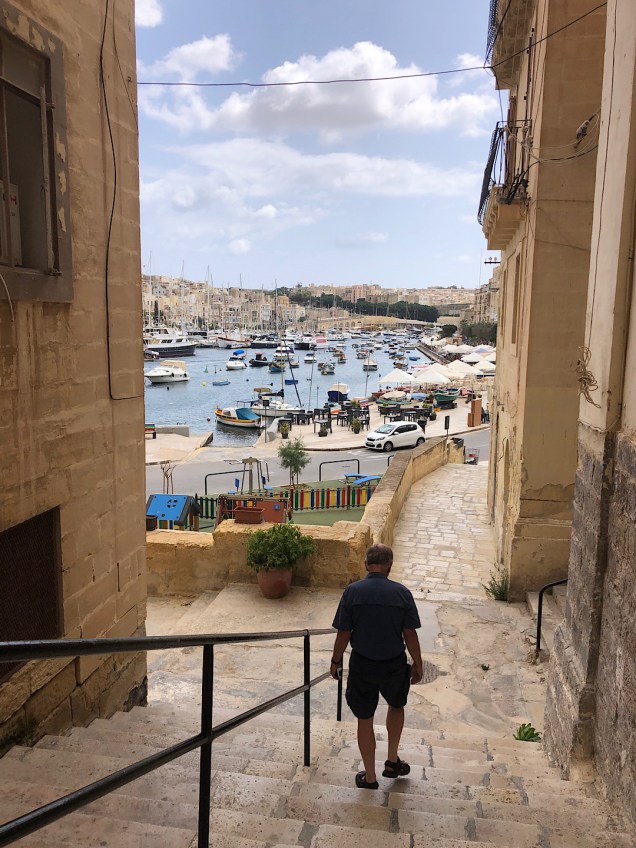
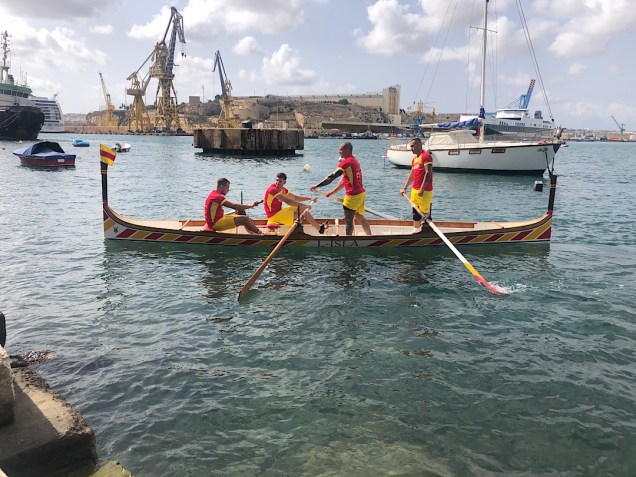
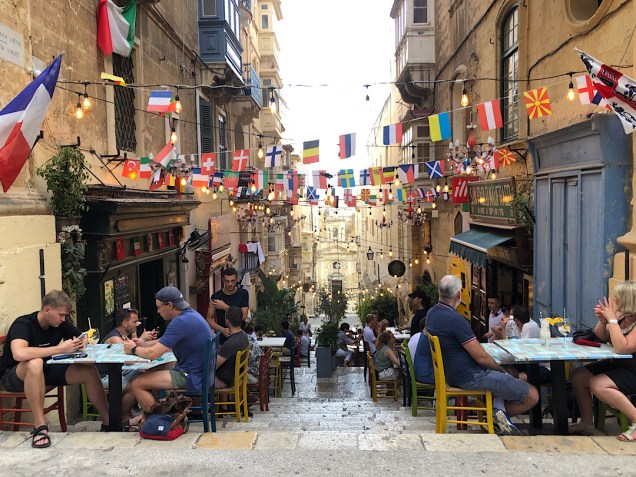
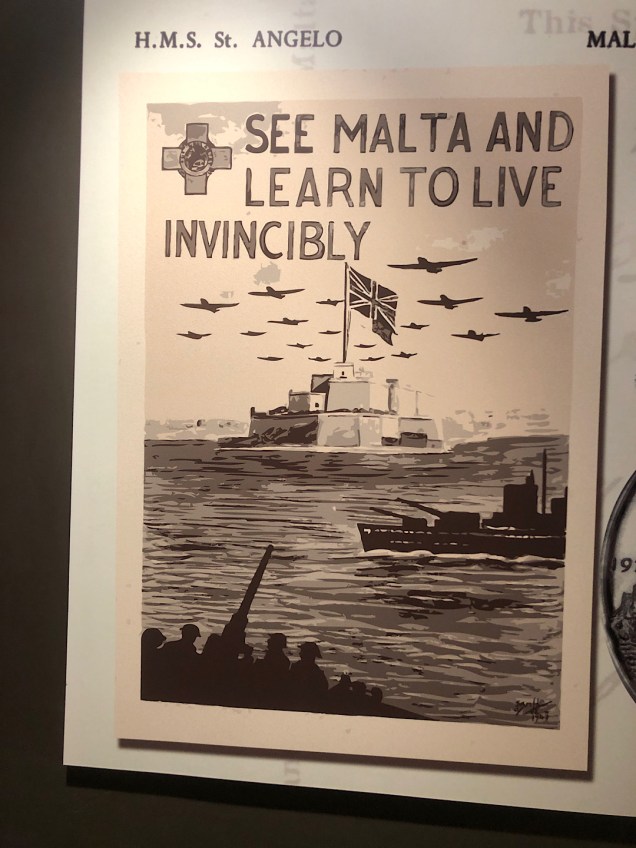 Ironically, Malta is the one microstate I didn’t blog about. We had barely 72 hours there and then went on to Sicily, where we met our friend Michael and blasted around the Italian island like Amazing Race contestants. On Sicily I barely had a moment to sit down, let alone write. And then we raced on to Monaco.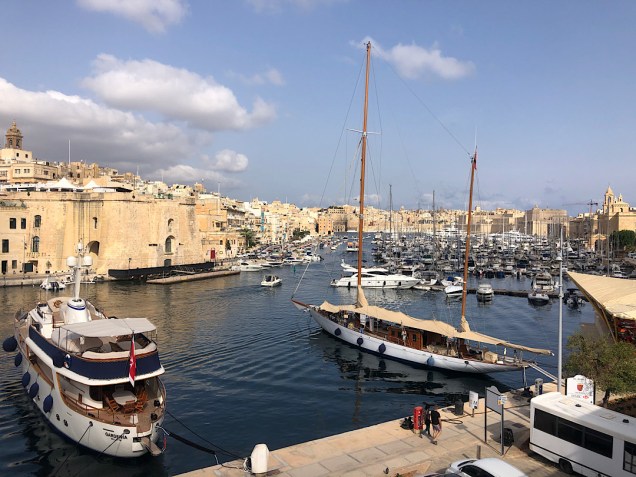


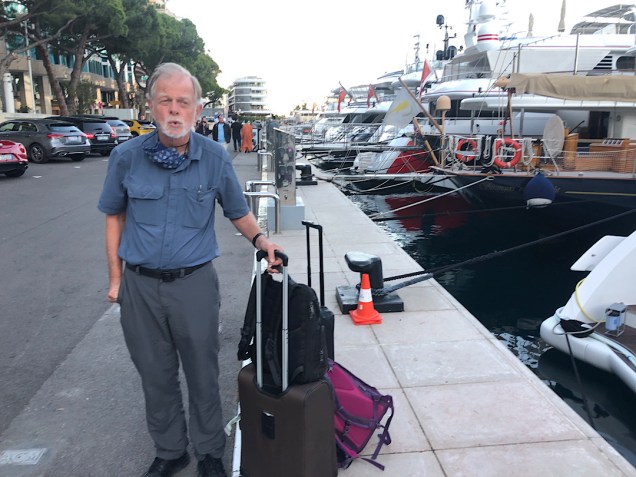
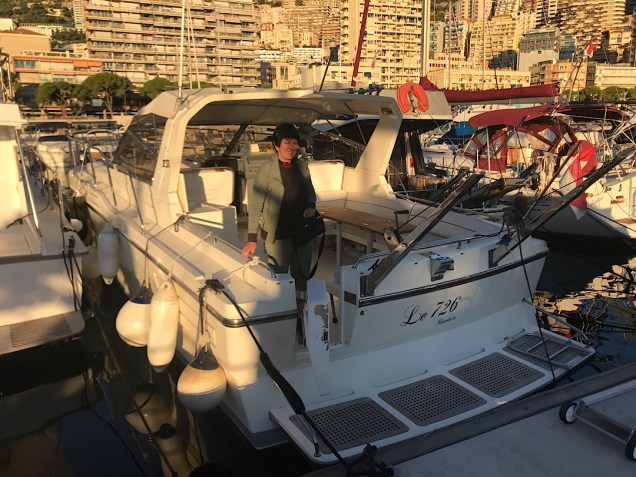
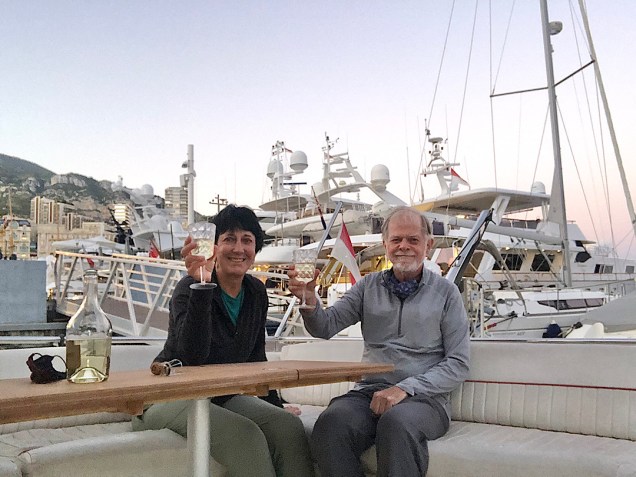 After Olivier left, Steve and I enjoyed a glass of the Prosecco which Olivier had kindly left for us and reminded each other that we never, ever want to live on a boat — unless it was one of the megayachts like the kind that re crammed cheek by jowl into the docks of the Monaco port.
 Those whoppers costs hundreds of millions of dollars, however, so a future residency on one is highly unlikely.
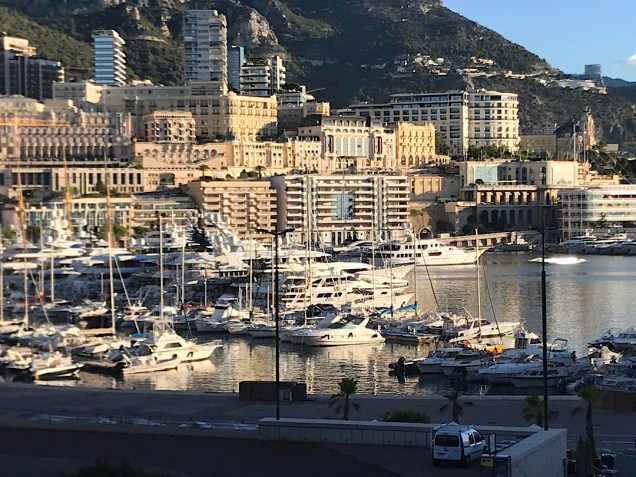 In another, we could see the royal palace.
 The flag was flying so we knew that the current prince (Albert II, only son of the late Prince Rainier and Princess Grace) was home with his family.
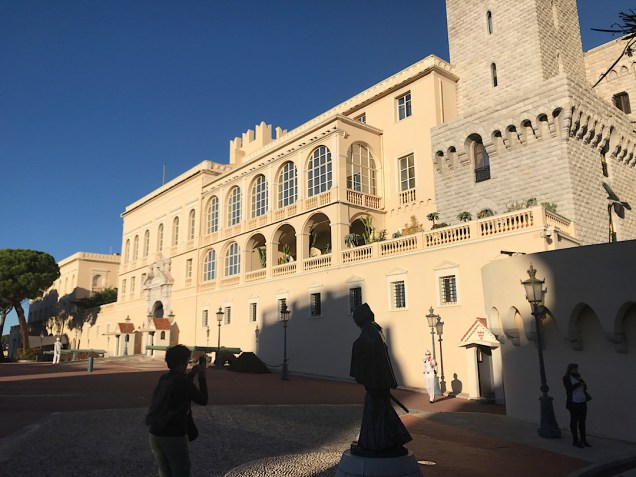 It has a cozy air (as palaces go). Then we ambled through the narrow streets, as charming as any in Europe. Beyond the center of the old city, a cliffside park and plaza reminded me of the best viewpoints in La Jolla, except for the public restrooms. Steve reported the Monegasque ones to be the cleanest and nicest he’s ever seen anywhere. A bit later, we wandered into the austere but elegant cathedral where the one-time movie star, Grace Kelly, married the prince.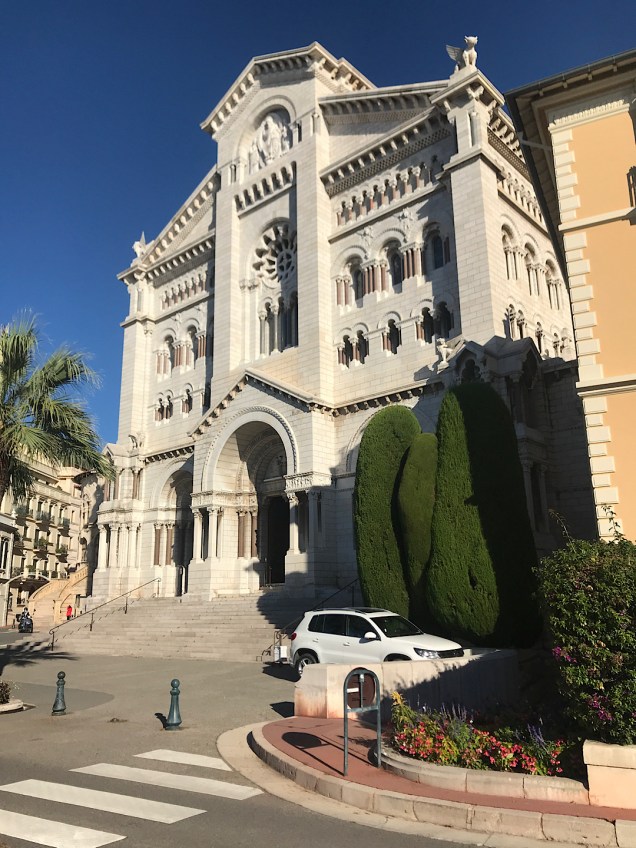
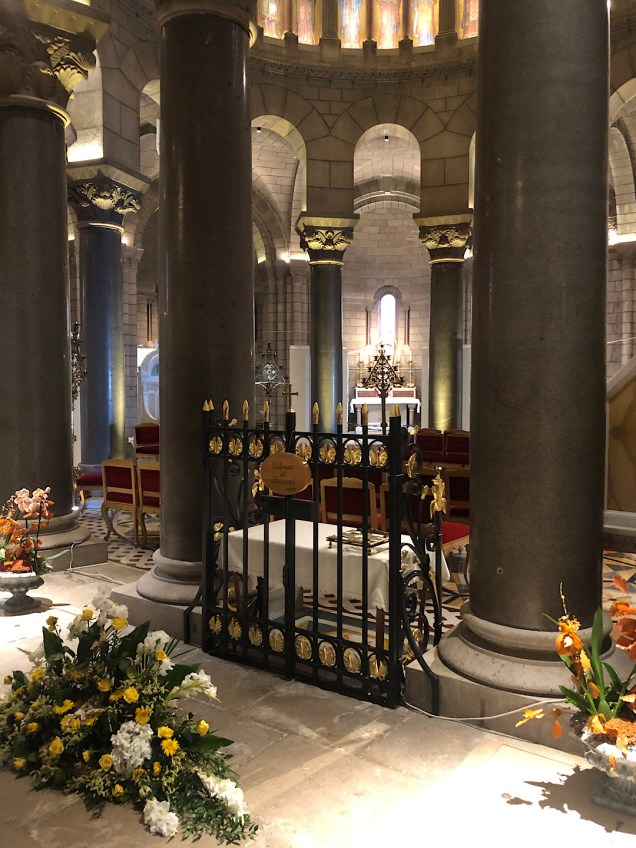
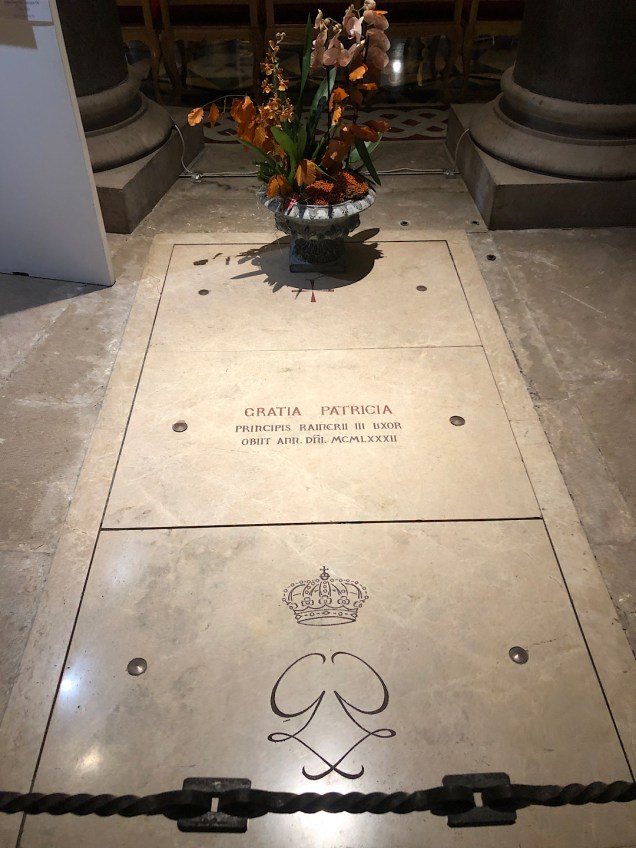 To one side of the alter we found the site she was buried after dying in a 1982 car accident. Her husband lived for 23 more years, but now he reposes next to her.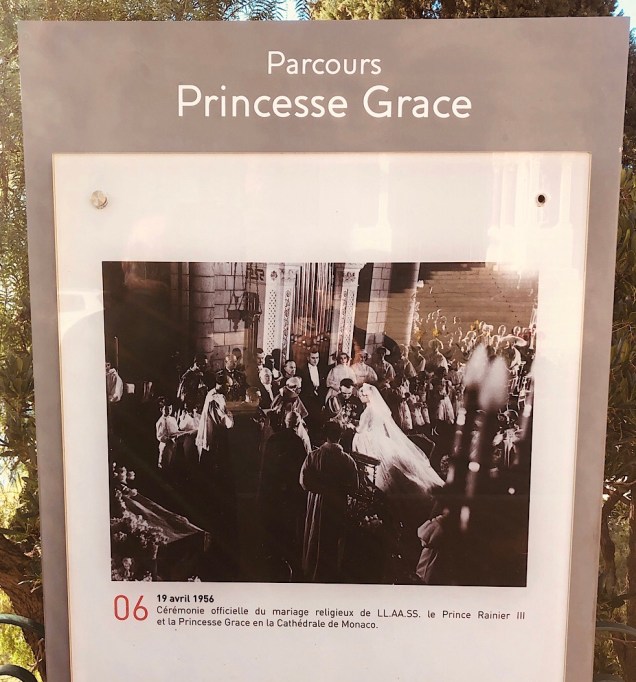
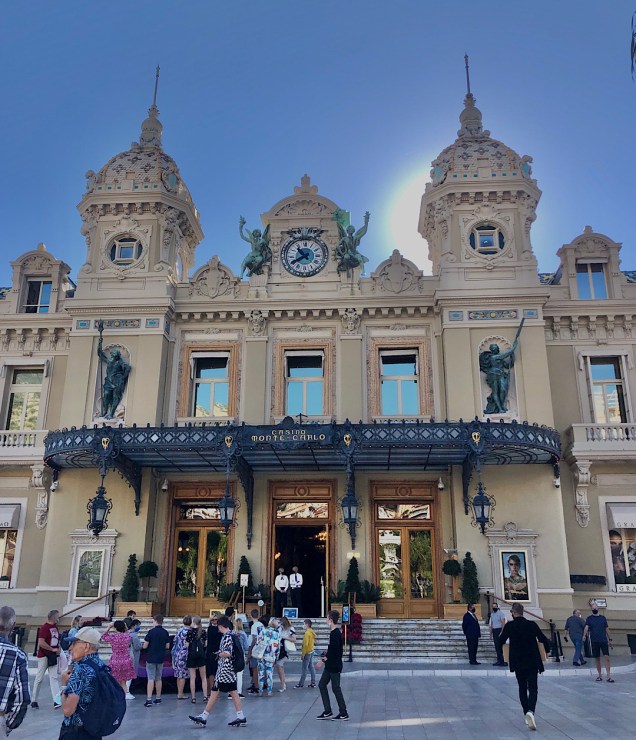
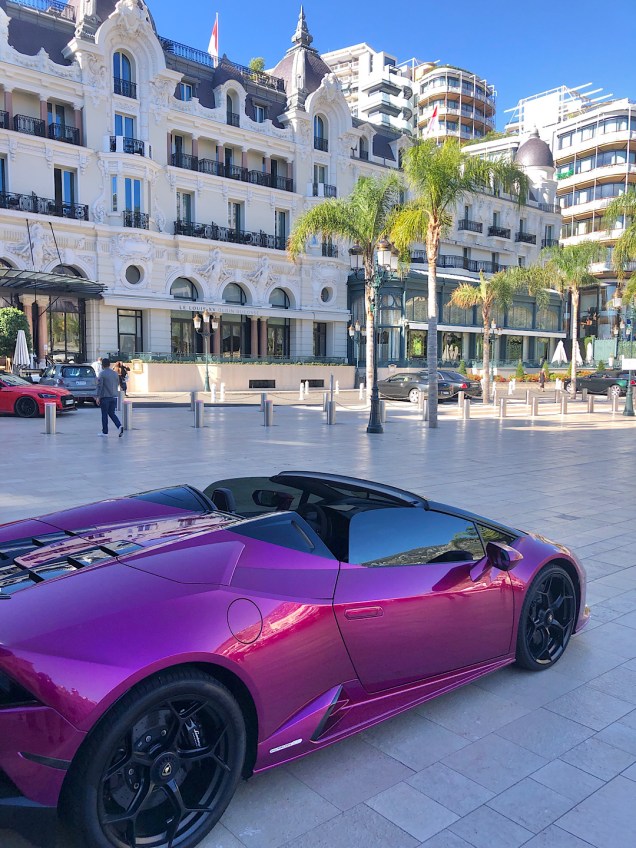 But the streets around the place are filled with shops and businesses and markets, some mundane…
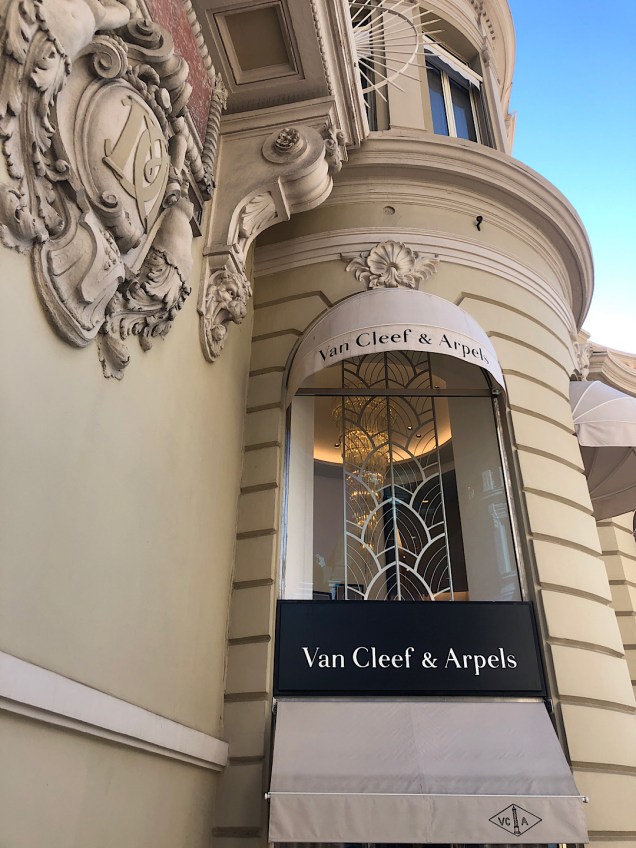
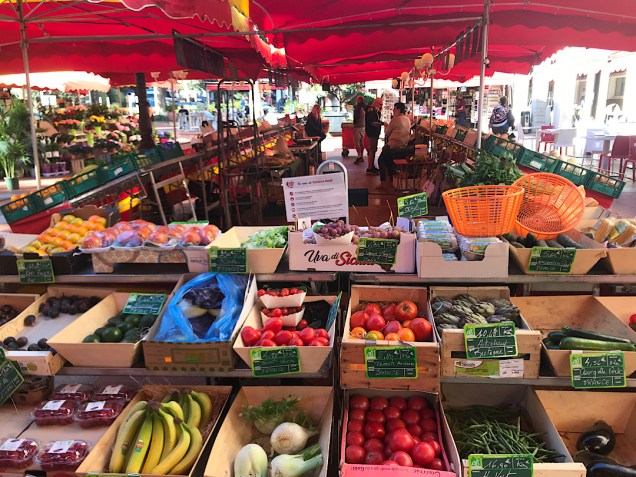 some not.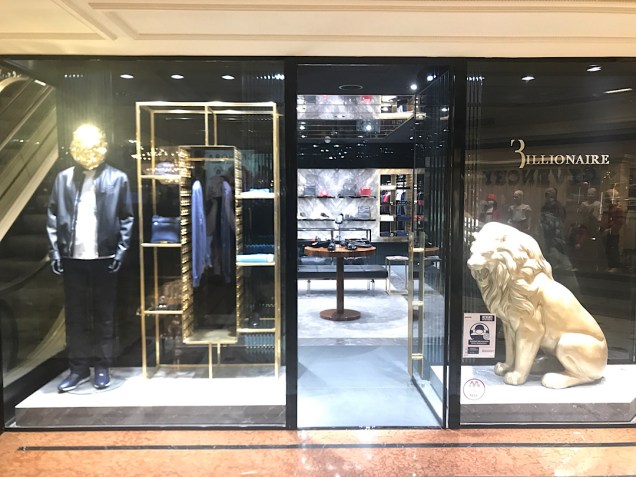
 At home and abroad