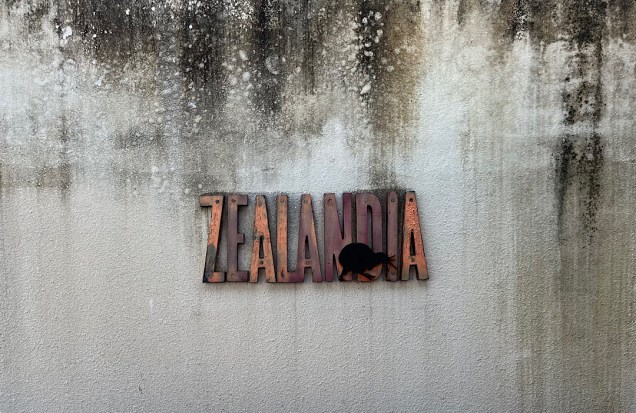
 For our week in Bali, I used Guest Points we’ve acquired on HomeExchange.com to stay in a private villa. I thought this would have a couple of advantages beyond the obvious one (free lodging). The villa’s owners would be on the property, and I hoped they would share some insider knowledge. We’d also get a sustained peek into ex-pat life on this most famous and glamorous of Indonesia’s islands.
Of our two hosts, Steven was the real ex-pat. Born and raised in New Zealand, he was working as a commodities trader in Hong Kong about 10 years ago when he met Christina, an Indonesian who grew up in Malaysia. With Covid and its lockdowns, the pair decided to work out of a home base on Bali. They bought a piece of property surrounded by rice fields north of Bali’s capital, Denpasar. The morning after our long journey there from Surabaya, my Steve and I toured the beautiful compound they have built — four separate structures arranged around a series of ponds filled with plants and fish, more open to the elements than any other dwelling I’ve ever personally experienced.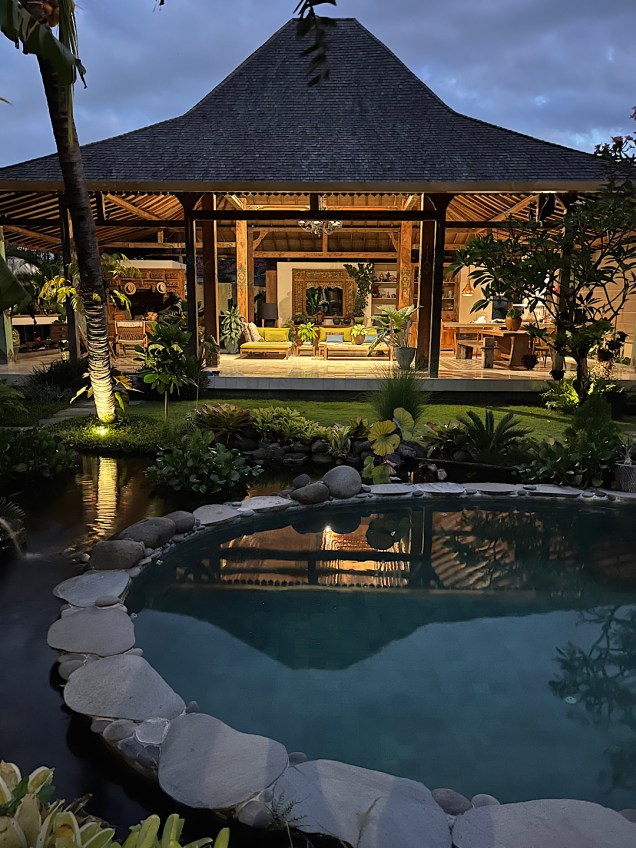
The structure housing their living room, dining area, kitchen, and sitting room was open on three sides.
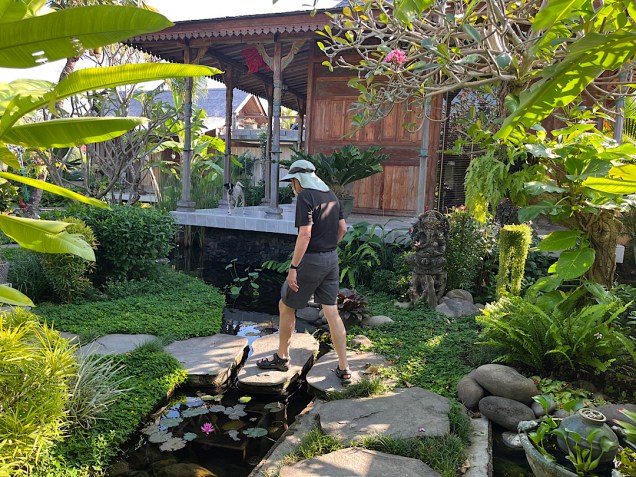
We traversed part of the property on stepping stones across the ponds.
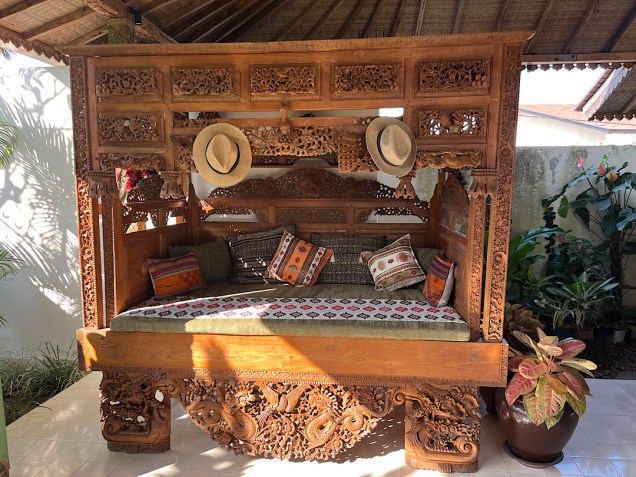
This was one lovely sitting nook in the common space.
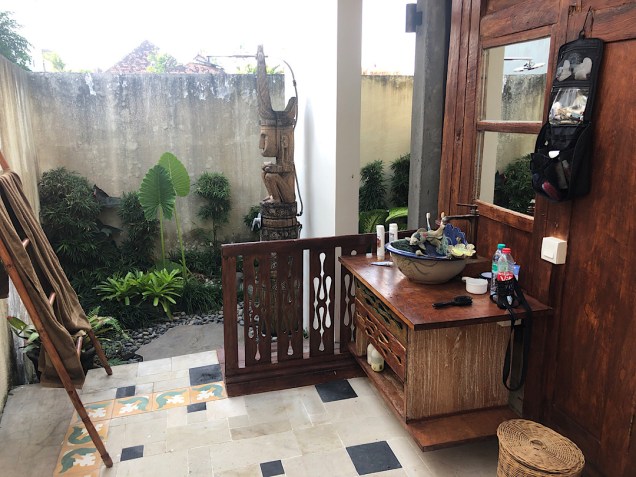 The bathroom attached to our bedroom also was open to the elements. That’s the shower next to the plants against the wall, with the sink inside the little gate. The toilet was behind me to my right.
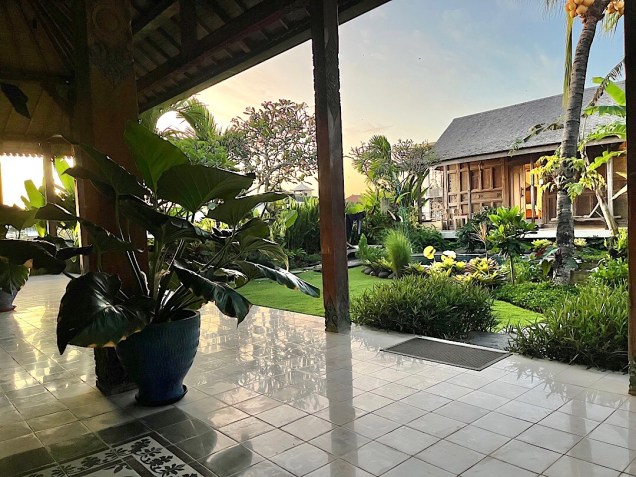 Here’s the view from the living area of the building containing Steven and Christina’s bedroom.
Staying at Steven and Christina’s place had one significant drawback. I’ve learned over the years that house trades work best when we can use them as a base and range out to do a variety of activities. Judging from what I saw on Google Maps, it looked like it should be easy to get from our digs at Villa Zealandia to a myriad of temples and natural wonders, beaches, and shopping opportunities. But I hadn’t factored in the traffic, which makes even relatively short trips feel like long journeys.
When it sunk in that we couldn’t actually visit the town of Ubud, an important center for visitors, as a day trip, I booked us one night in a hotel there. We hired a local driver and hit the road Thursday morning, heading north.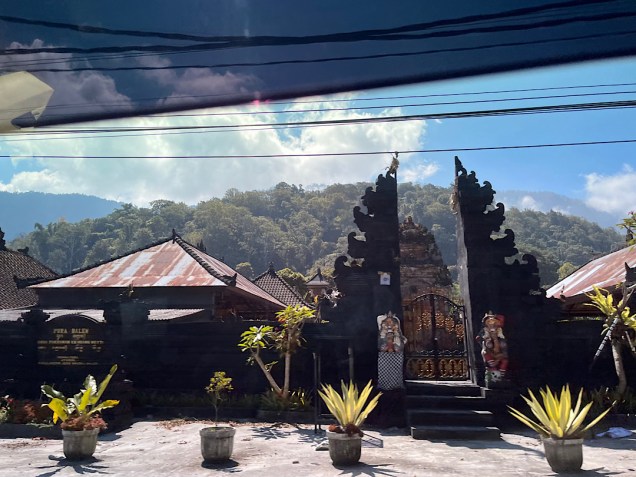
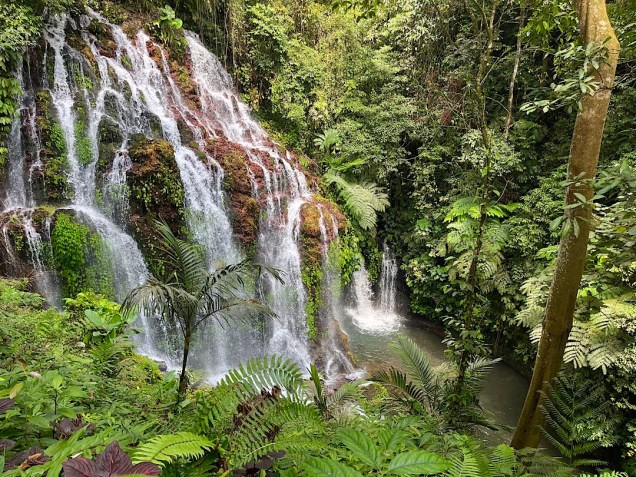
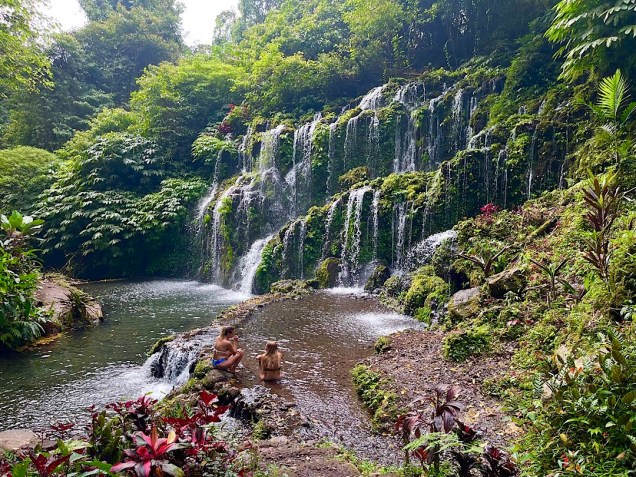
The landscape soon changed dramatically, becoming mountainous and blessed with cool breezes, lakes and volcanoes, and a panoply of waterfalls. We hiked to a couple, and I wished we had more time to bathe in their pools and discover other spots.
The next day we took in several other important sites. Bali’s fantastically terraced rice fields, a World Heritage Site, are scattered throughout this region, and our driver dropped us off at one of the most commercialized viewing areas. No amount of kitschy trappings could detract from the beauty of the fields. And almost equally entertaining were all the photogenic perches and swings where young ladies can rent dresses with glorious trains to wear while soaring before the camera.
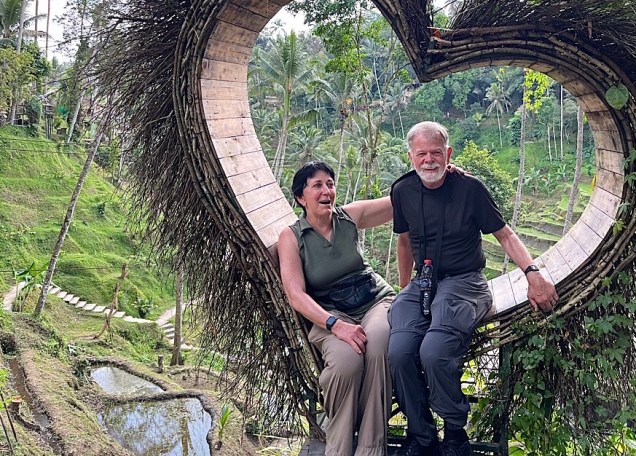 This was one of the free photo opp sites.
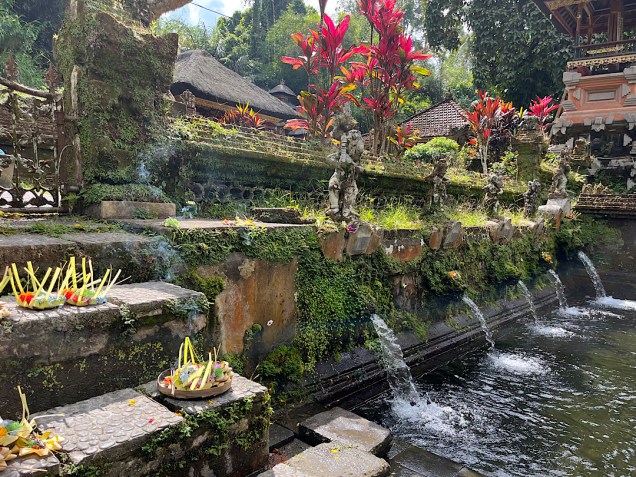
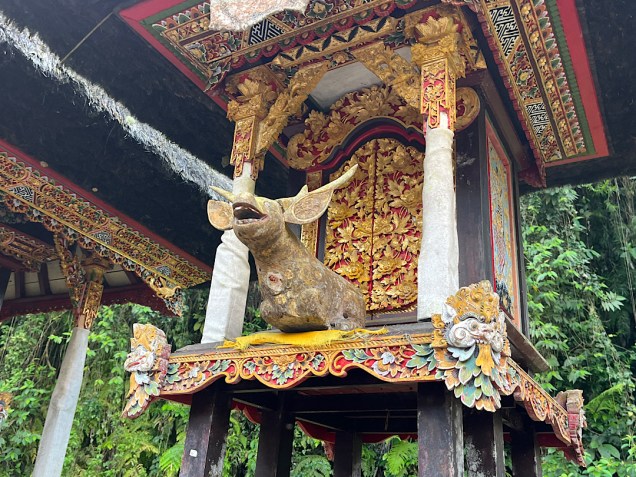
Not far from the rice fields, we wondered why more tourists weren’t visiting Gunung Kawi Sebatu, a Hindu temple complex dating back more than 1000 years.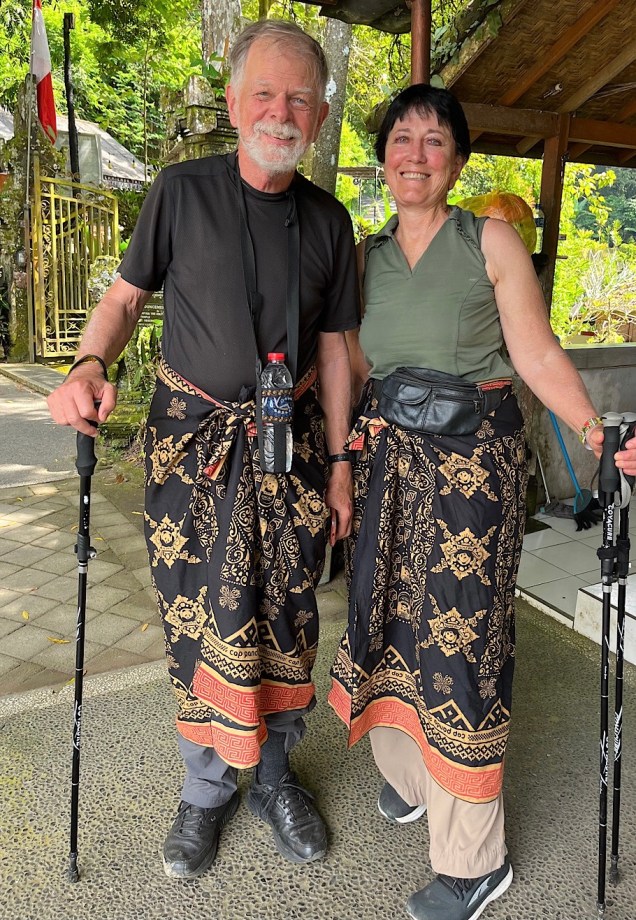 To get in, we had to don proper Balinese garb, i.e sarongs (which we borrowed for free from the temple.)
The gardens and pools and temple structures looked amazingly well-maintained, testimony to the continuing commitment of local devotees.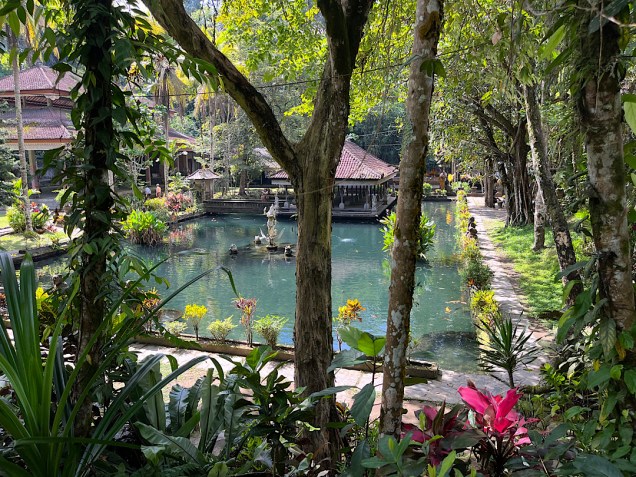

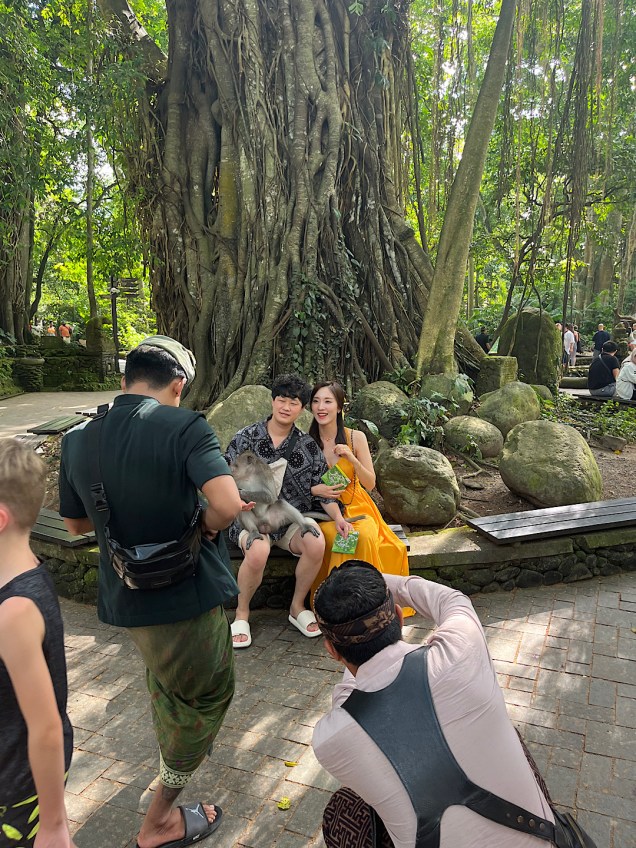
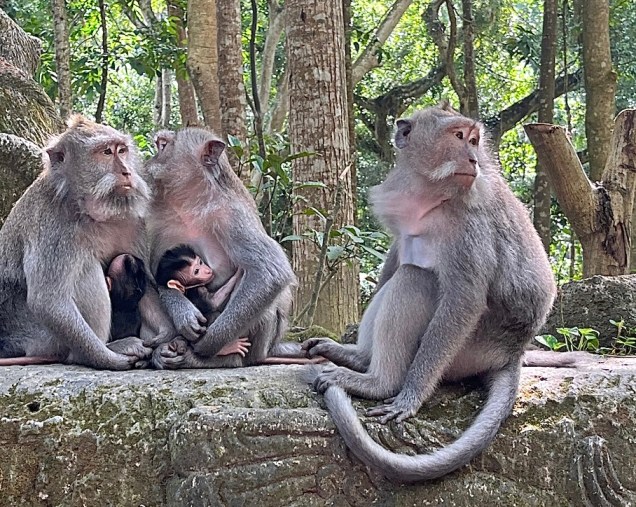
On our way back to the villa, I didn’t want to miss the infamous Ubud Monkey Forest, a heavily wooded park inhabited by hundreds of Balinese macaques. The property also contains a temple used daily by Hindu worshippers, and the monkeys are believed to have some religious or spiritual significance. At least I think so. As usual for Indonesia, educational and explanatory material was non-existent. Many signs warned visitors not to get close to the monkeys, who could be aggressive and malicious, according to the warnings, stealing glasses and cell phones and the like. 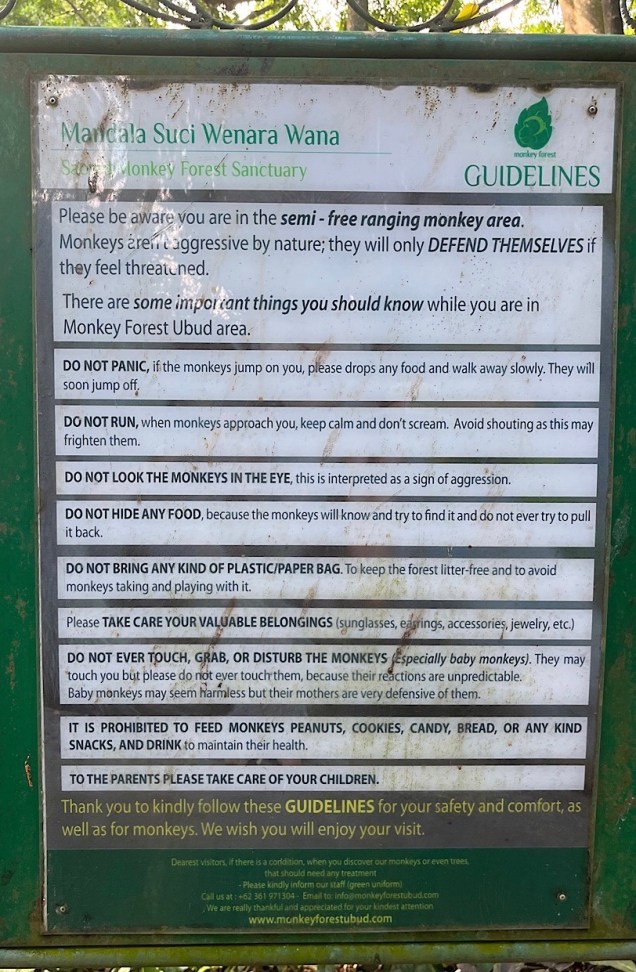 So it cracked us up to see that for the equivalent of about $3.50, you could pay to have a park employee entice one of the monkeys onto your lap and photograph you.
 We resisted, but managed to capture a few images of the adorable baby macaques without making their moms mad (as the signs claimed could happen.)
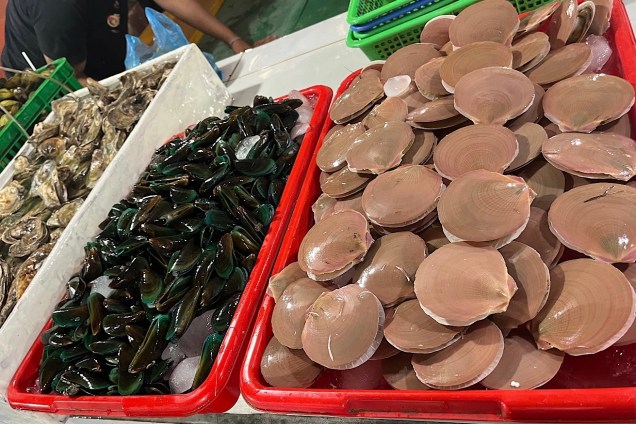
 Despite being tethered to the villa, we packed in a lot throughout the rest of our stay. Most fun was the morning we spent with Chef Mudana, who offers popular classes in Indonesian and Balinese cooking. We met him and our only fellow student (a network security expert named Sanjay from Sydney) last Saturday morning at the Jimbaran fish market, a wonderfully chaotic, stinky warren of fishermen unloading their wares and vendors selling the staggering variety of protein from the sea.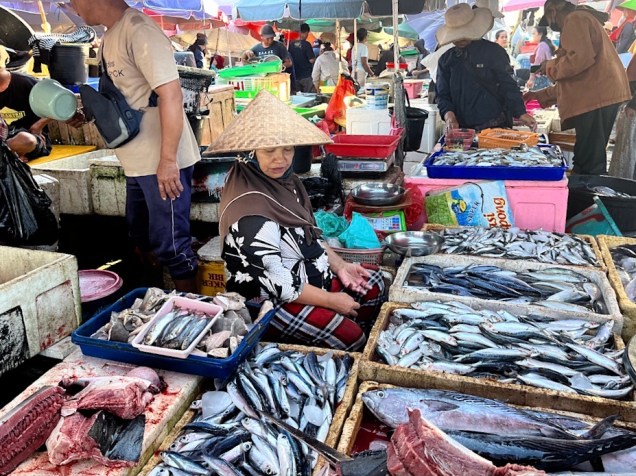
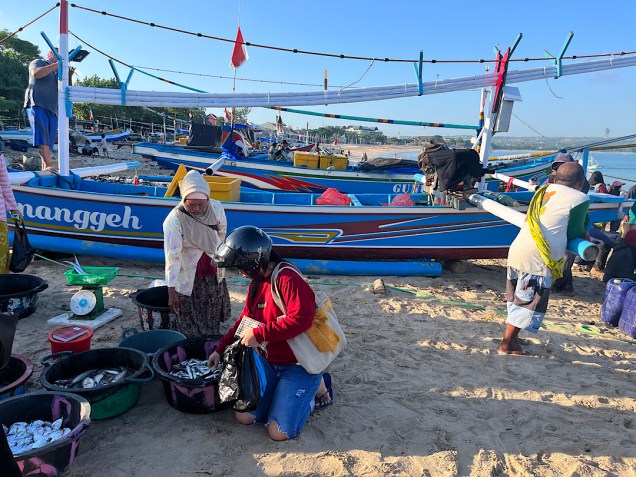 No doubt about the freshness of this stuff. We watched it coming off the boats.
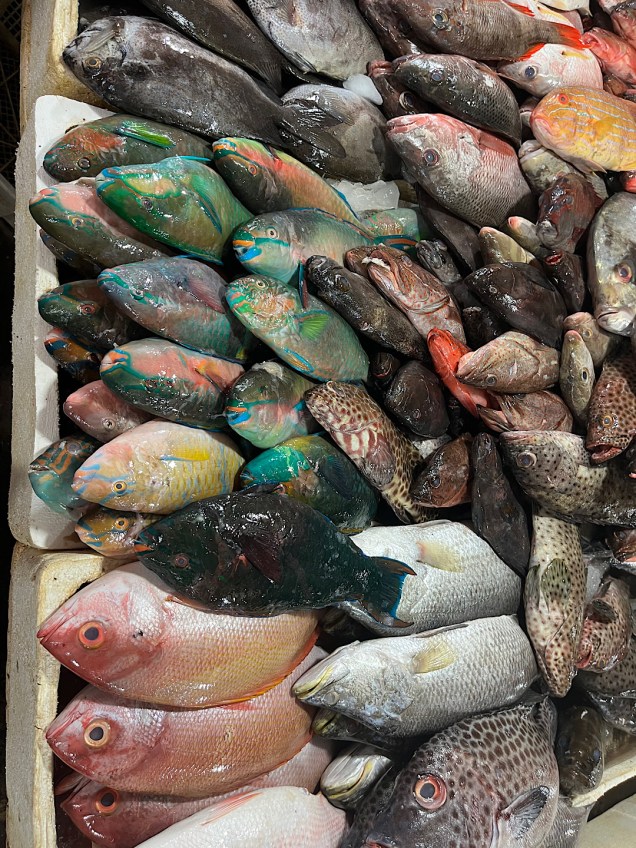 Some of it looked too beautiful to eat.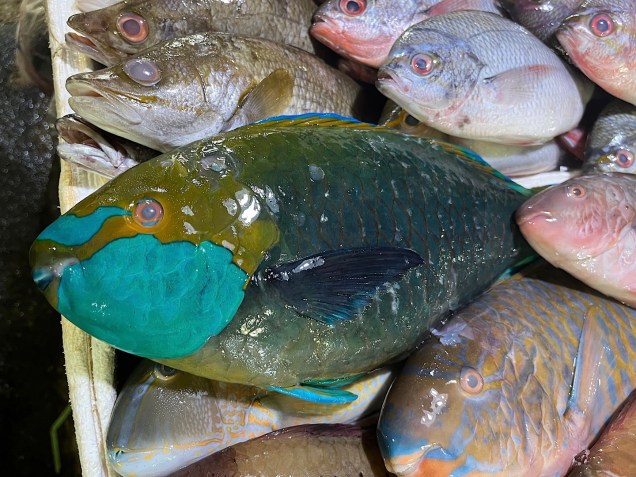
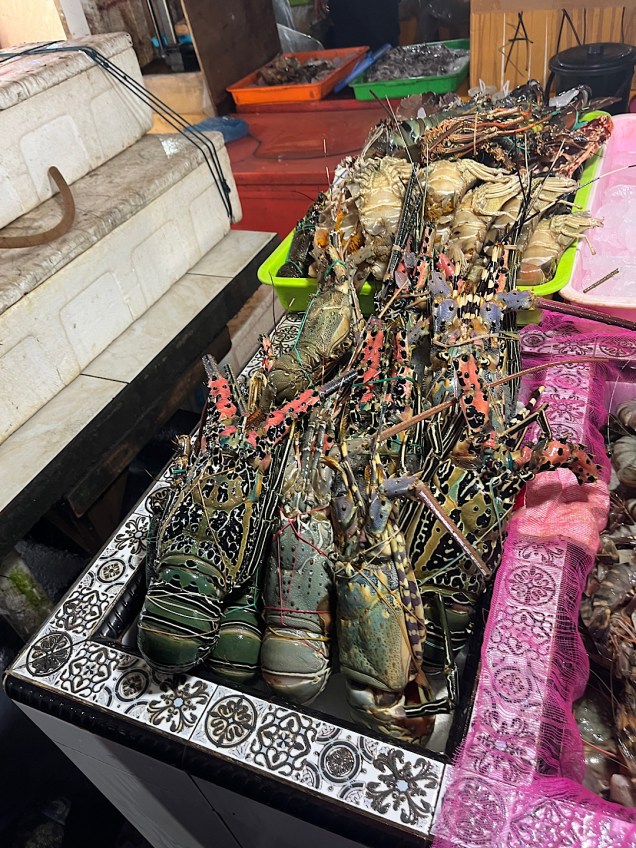
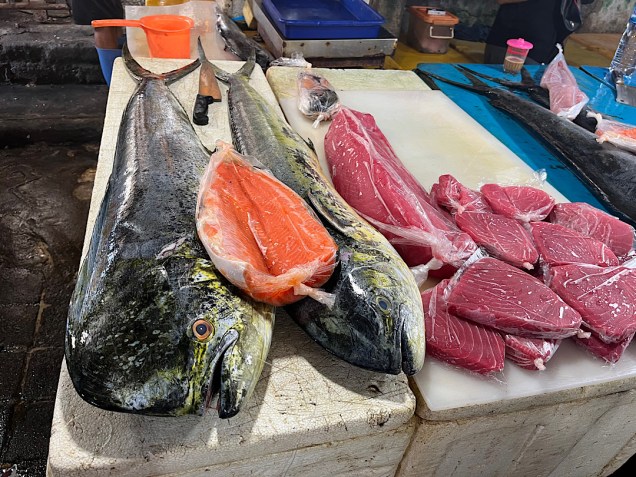
 Mudana purchased a beautiful piece of mahi-mahi, and we made a quick run through the adjoining produce market to pick up what we needed for the class.
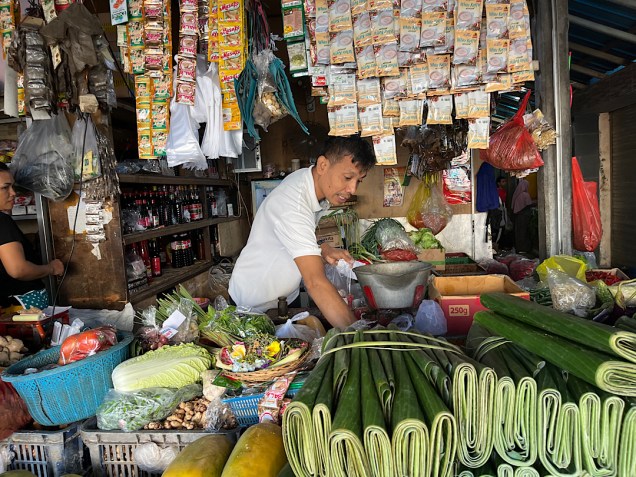 Then we drove to his base in the community of Sanur, a combination of family home, restaurant, and the classroom in which Mudana teaches foreigners how to cook like a Balinese. Here’s the street front: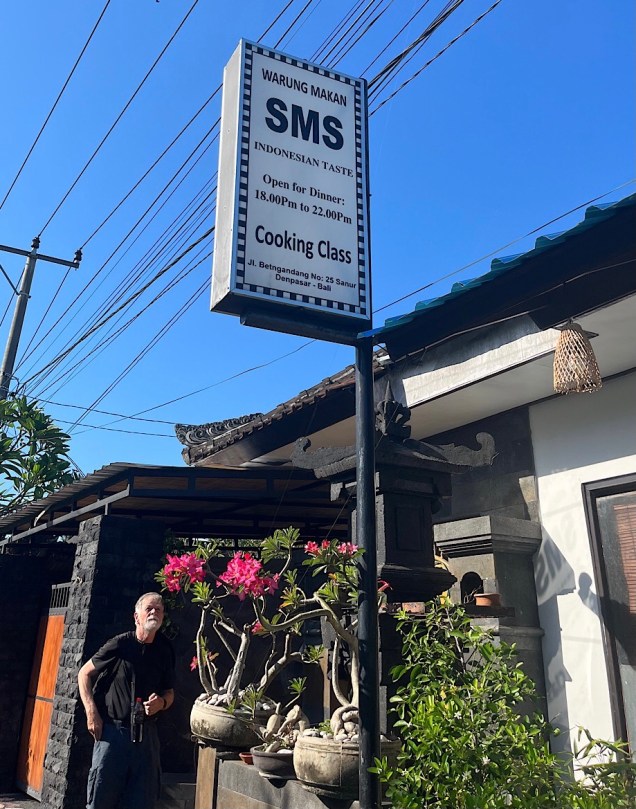
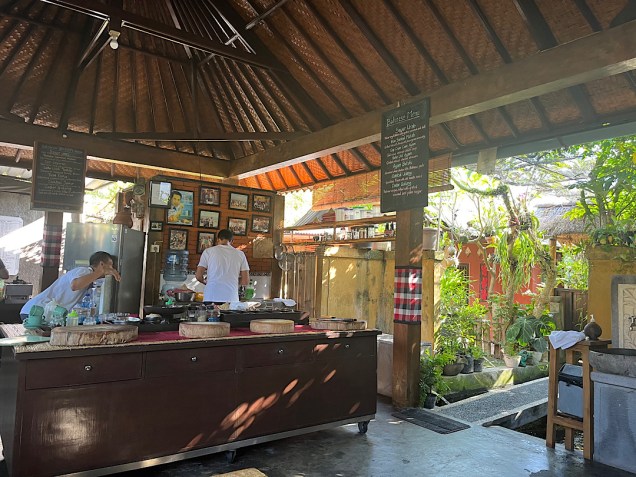 And the room where we had our class.
It felt like magic. In about three hours, we enjoyed a traditional Balinese breakfast, then learned to transform a host of raw ingredients…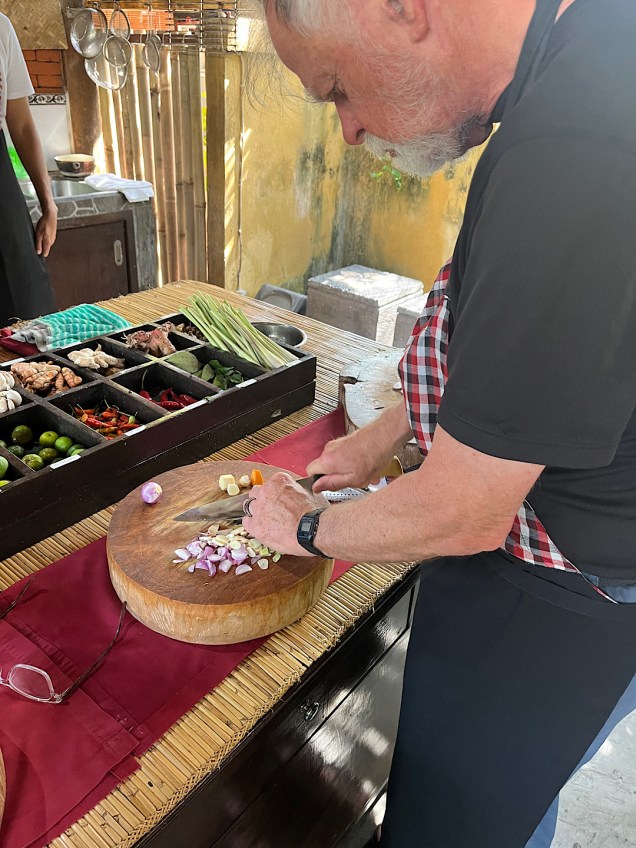 …into a delicious seven-course meal. I plan to try to do this at home in San Diego.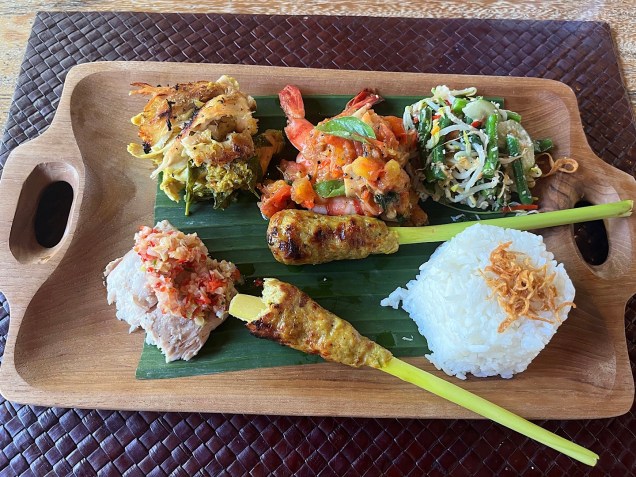

I’ve thought about whether I made a mistake in basing us in the Bali villa. Certainly it would have been less stressful to spend 2-3 nights serially in communities like Ubud, Sanur, Ulu Watu, and Seminyak. On the other hand, had we done that, I doubt we ever would have noticed the objects far above Villa Zealandia. We saw them every night, and Steven explained they were kites, a Balinese passion. They fly super high and sometimes folks attach lights to them.
From the villa, we learned the way to a charming cafe where we ate breakfast almost daily and had good dinners twice. We walked to the tiny laundry where the sweet proprietress works every day of the week and charges a pittance to wash, dry, iron, and fold your grubbiest clothes. Christina told me about the spa where she gets great hour-long massages for less than $7. I wanted to try it out but we were so busy I never squeezed it in.
We also noted with some alarm the huge construction projects taking shape on two sides of Steven and Christina’s villa.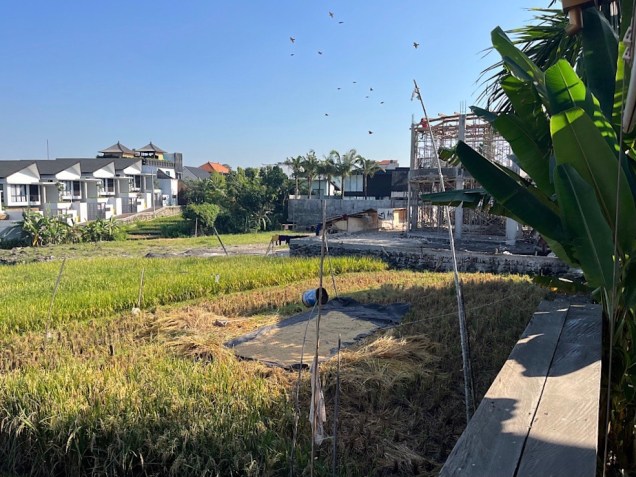 One small patch of rice field still meets up with their property, but in just the last two years a stunning amount of development has gobbled up the rest of their bucolic surroundings. This has occurred despite the lack of such basic infrastructure as sidewalks and water services.
It was impossible not to wonder how it will all play out. Will folks fill in the things that are missing, as they have done in so many places over the last 100 years? Will the wild building spree continue and then implode when the rice fields have all disappeared and the fish all been hauled out from the sea and people face the choice (as they have throughout human history) to leave or starve?
I probably won’t return. But when I hear news about Bali — or Indonesia — in the years to come, I’ll be paying closer attention, thanks to our Balinese home away from home.
 Sometimes I’m thrilled to find the footprint of American culture far from home. Sometimes I love when it isn’t where I’d expect it. We’ve already experienced both in Bali.
 and a driver in a clean, air-conditioned vehicle materializes, usually within five minutes. We never have to worry about finding a taxi, a constant source of stress in the bad old days. The rides typically cost $2-$3 for a 15-minute trip; maybe $10 for one that lasts an hour or more.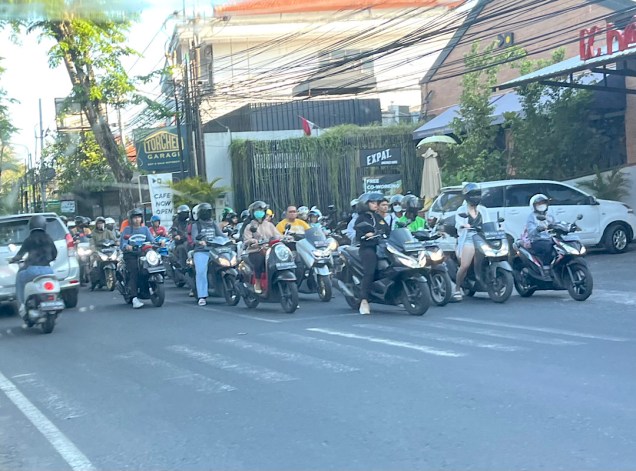

 We paid about $8.50 each for all-day tickets, then spent the next four hours exploring what turned out to be more weirdly, wackily different from the Anaheim and Orlando institutions than even Walt could have imagined. What we figured out by the end of our stay is that you go to GWK for two main reasons.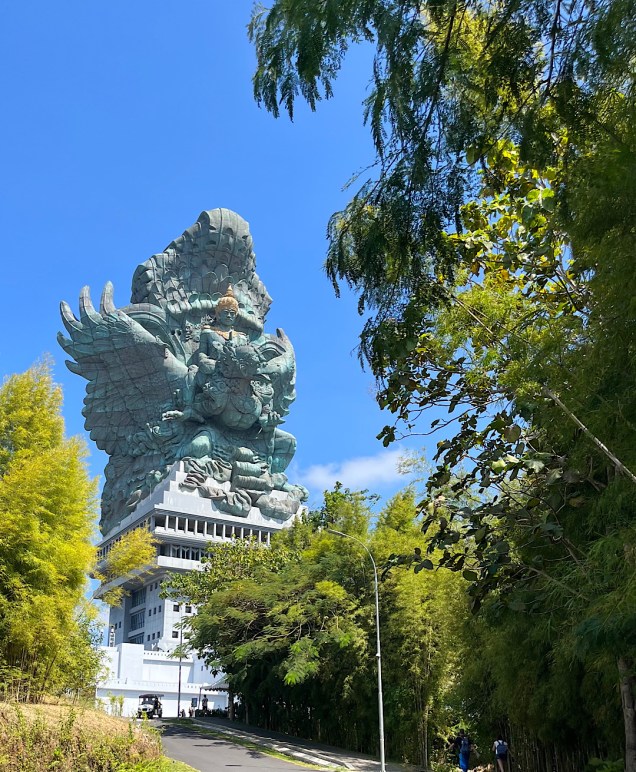


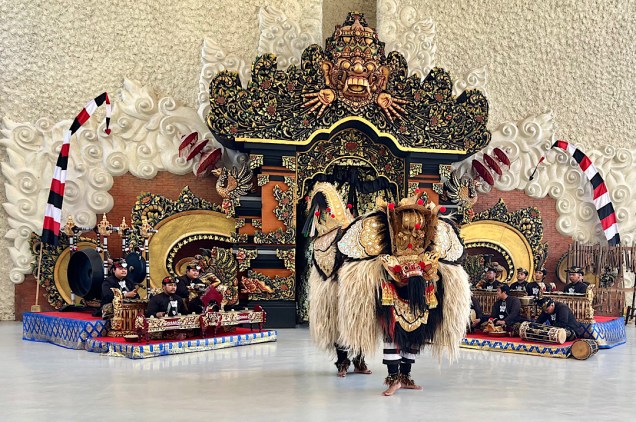
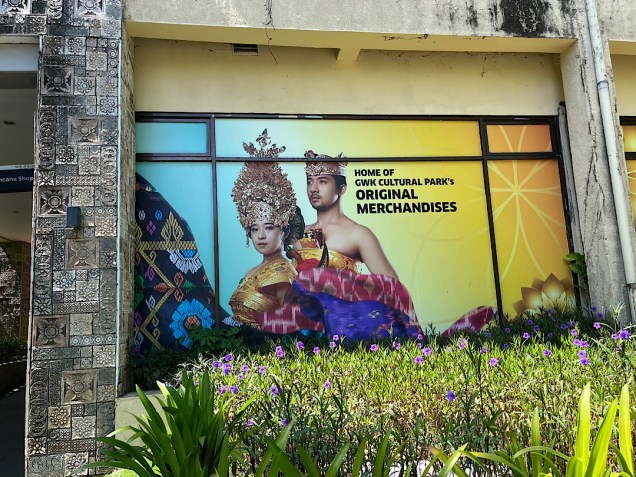 …and ate a basic lunch on a pleasant terrace overlooking the city. We were very excited about catching a 35-minute film that screened every hour in a little movie theater; surely it would fill in some of the blanks in our understanding of Bali and its history, I thought. But the film instead was an animated drama that depicted how Arjuna came to be Vishnu’s airborne chauffeur.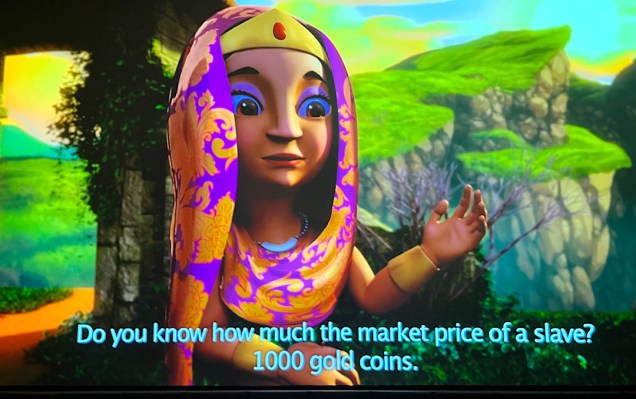
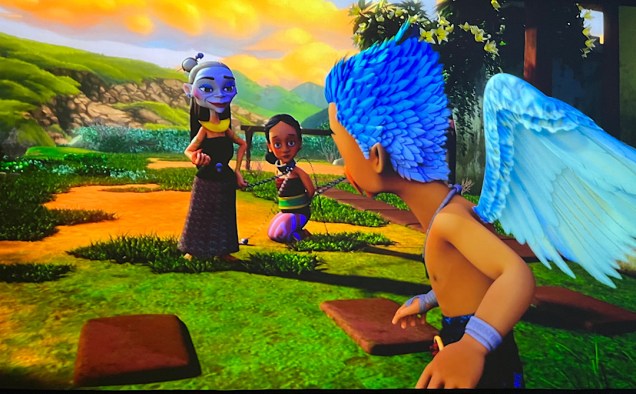 The drama centered around young Garuda’s having to free his mom who was tricked into being enslaved by the evil witch, Kadru. It was cute and fun but about as educational as a Saturday morning cartoon.
 Why were THEY here? What were they? Our 2021 edition of Lonely Planet Indonesia, incredibly, didn’t even mention the GWK cultural park. In the first-floor lobby that underlies the gigantic statue of Vishnu riding on Arjuna, we found some historical photos that hinted at why. The center apparently was only inaugurated in the fall of 2018, and we imagine the guidebook went to press before that. After our visit, we found a bit more information on Wikipedia, which explained that the park began as a government project, then construction shut down when the Asian financial crisis hit in the late 90s. A Balinese real-estate developer finally stepped in to take over the project and finish it. But nowhere in the park or online could we find an explanation for those monoliths. (Our theory is that the land originally was a rock quarry, and the monoliths were remnants of the original stone. But we don’t know if that’s right.)
 by reporting on train travel in the UK and Europe — time tables for the major routes, how the system worked in each country, how to buy tickets, and so on. Pretty soon you had expanded to cover the whole world (as far as I can tell). Thanks to you, I’ve been able to plan train trips that took Steve and me from Singapore up the Malay peninsula (2016); from
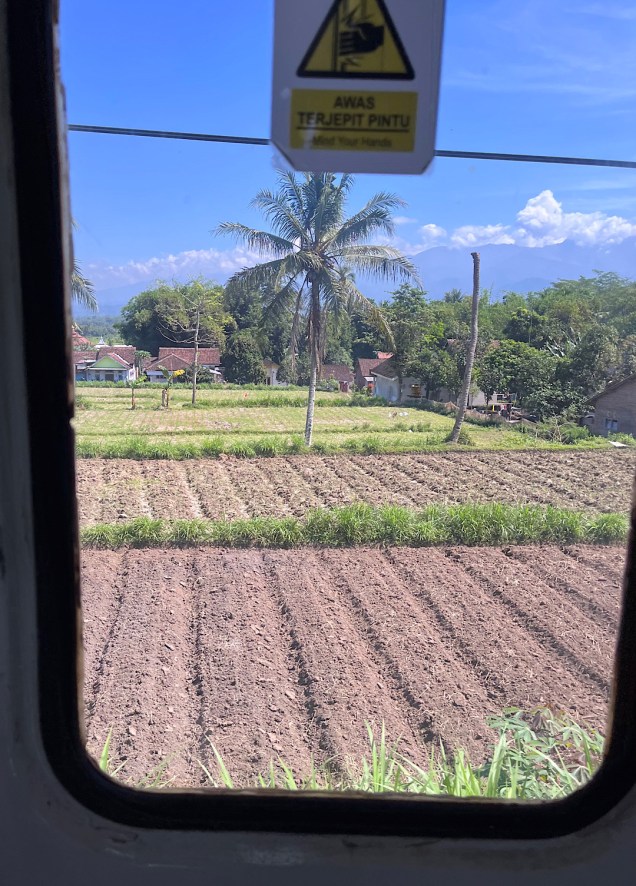
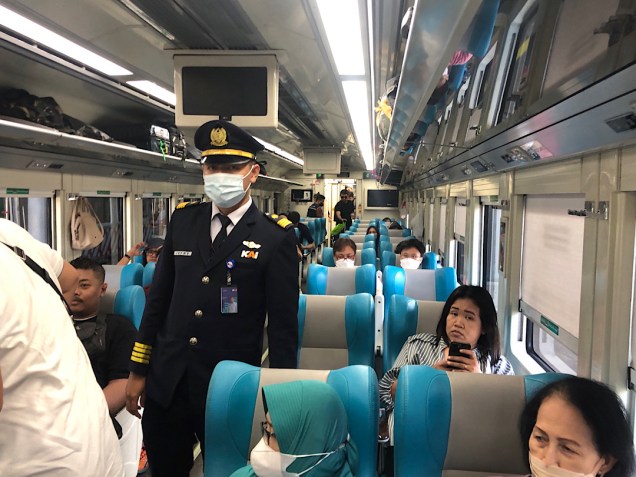 Its comfortable reclining seats, clean toilets, and functioning power made that ride a pleasure. I knew that to continue on from Surabaya to Ketapang on Java’s eastern tip our only option was an “Ekonomi-class” line but those trains were “perfectly safe and comfortable,” you assured us readers.
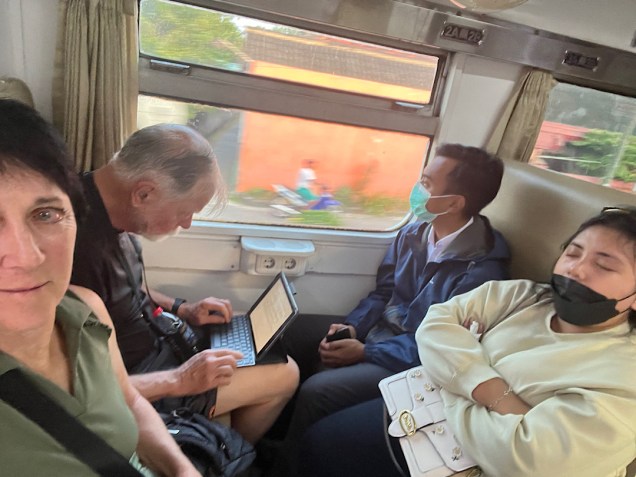 The bench seats on the one we took were plain, and it was all but impossible to avoid playing kneesies with the plump young woman who faced me for the first four and a half hours of the ride. But any train that posts a photo of its conductor has to make you feel you’re in competent hands.
 We left Surabaya just three seconds after 5:30 a.m. and pulled into Ketapang six hours and 59 minutes later — a minute ahead of schedule.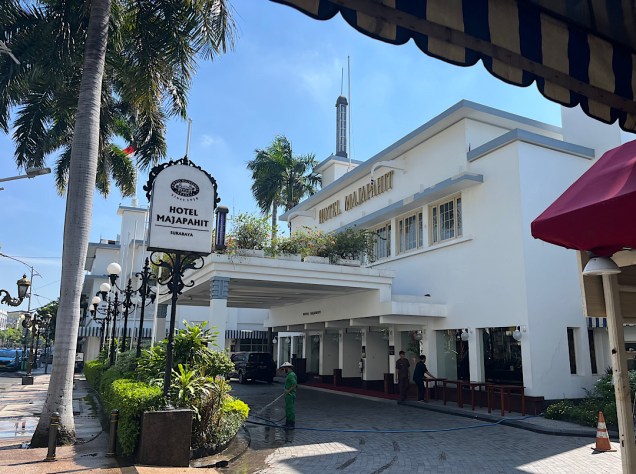
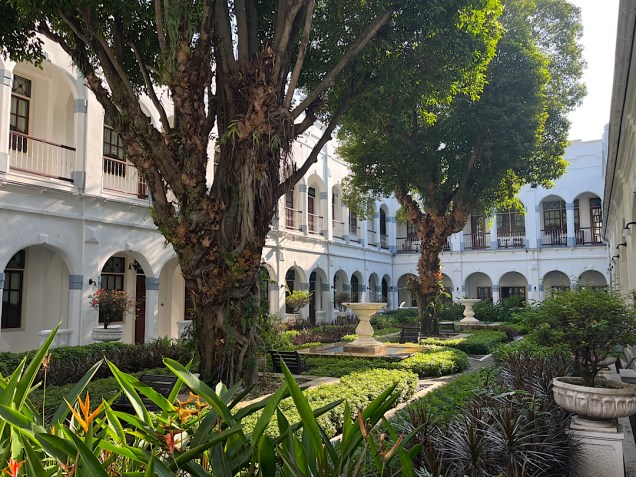
 In 1945 it also was the setting for a key event in the birth of Indonesia as an independent country. So when you declared, “Even if you’re on a budget, splurge here,” I complied. What a bargain splurge it turned out to be: $89 a day for a lovely suite in a setting that enticed us to abandon our normal hyper-driven sightseeing and spend a whole day chilling out.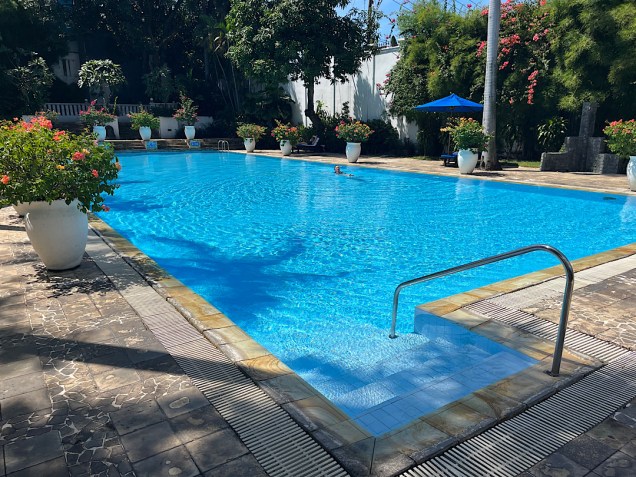
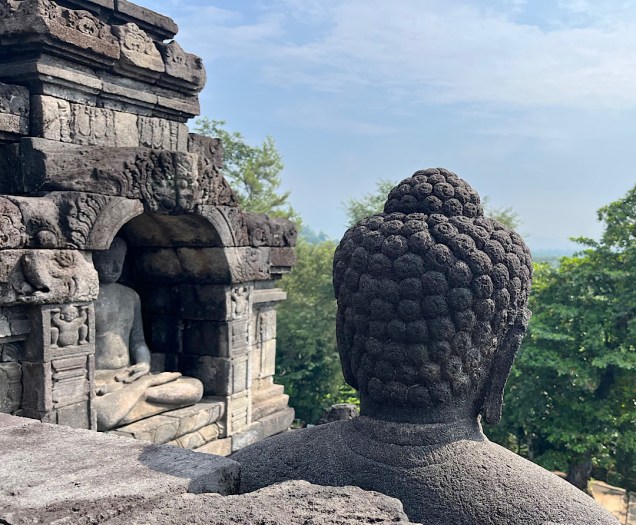
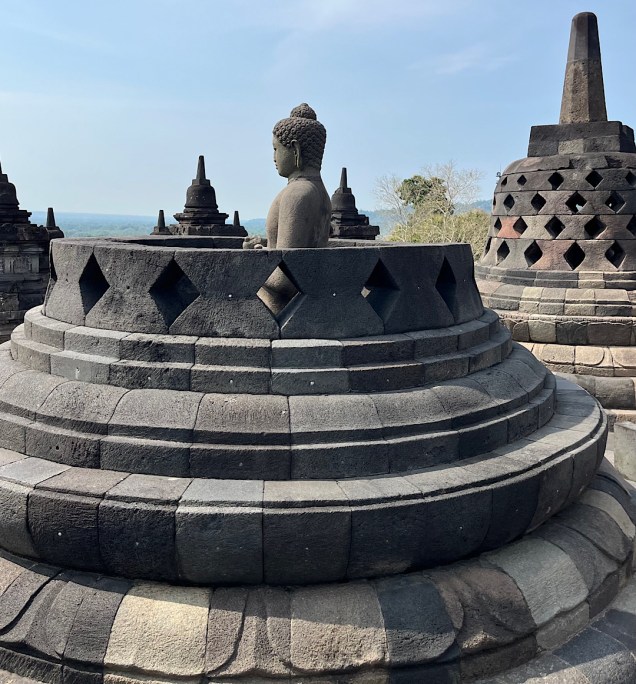 I feel bad about shortchanging the magnificent temples we visited Friday; I mentioned them so briefly in my last post. Steve says the one at Borobudur was the most impressive religious structure he has seen anywhere. I’m not sure I’d go that far, but I’d put it at least in the top five. To make up, here are a few postcards from the day.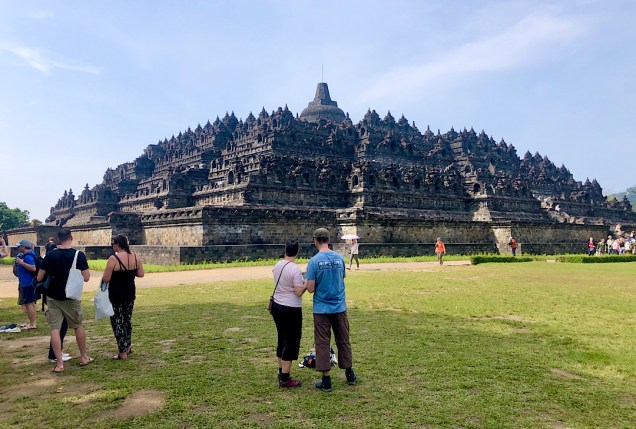
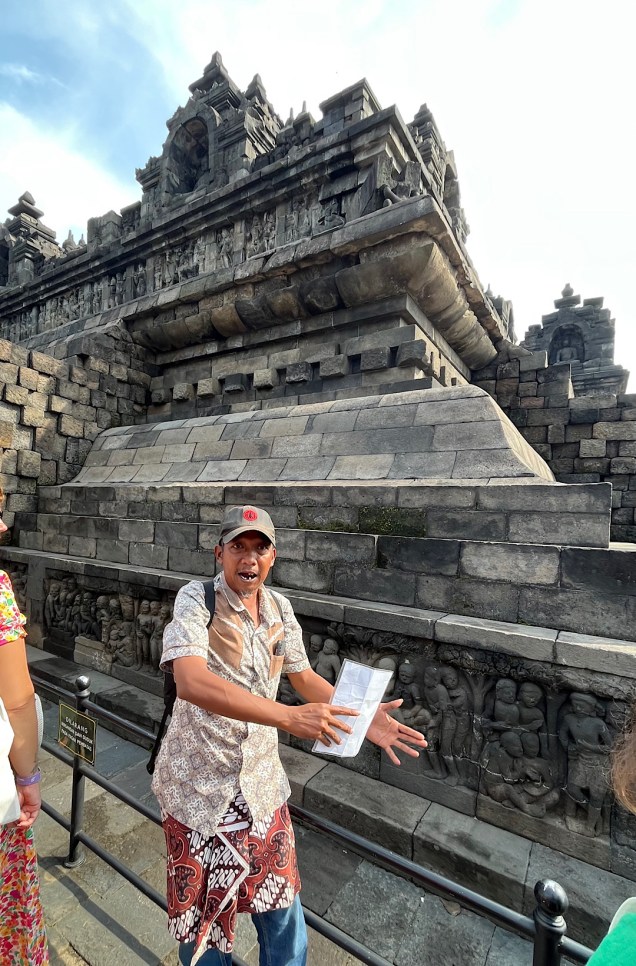
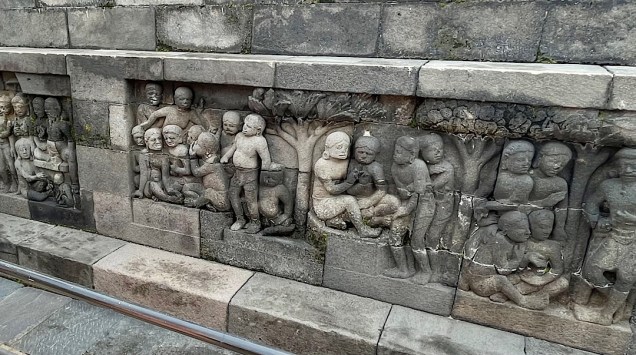
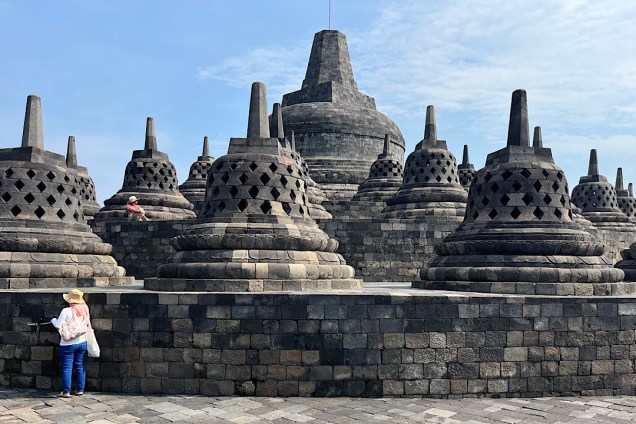
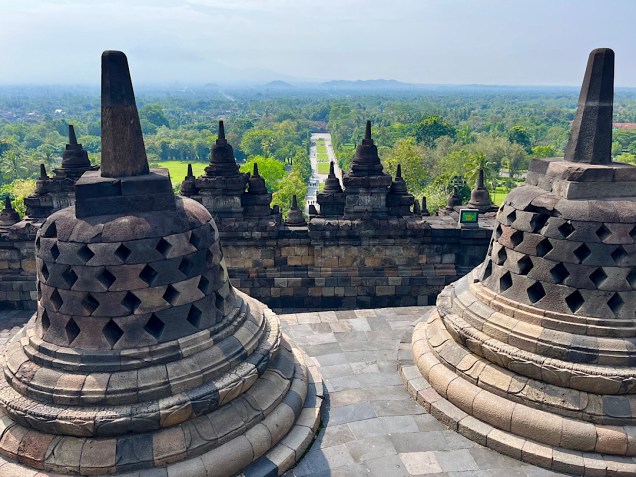
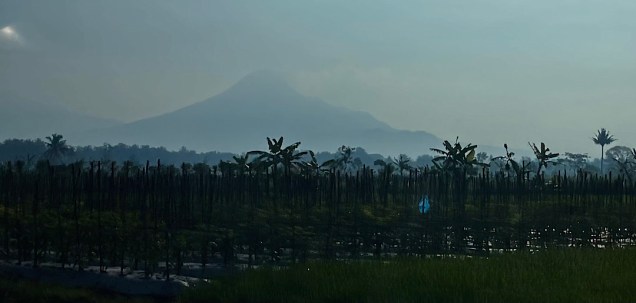
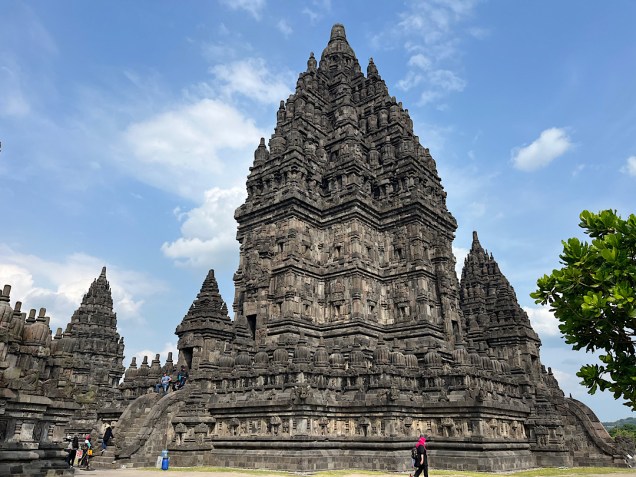
 Yogyakarta is the cultural and religious heart of Indonesia, the ancient power base from which Javanese overlords long dominated much of the archipelago. Rich temple complexes and brooding volcanoes surround the city, and a sultan still lives behind palace walls fronted by sacred banyan trees. We couldn’t miss all that, so I built a two-and-a-half-day visit to Yogya into our Indonesian itinerary.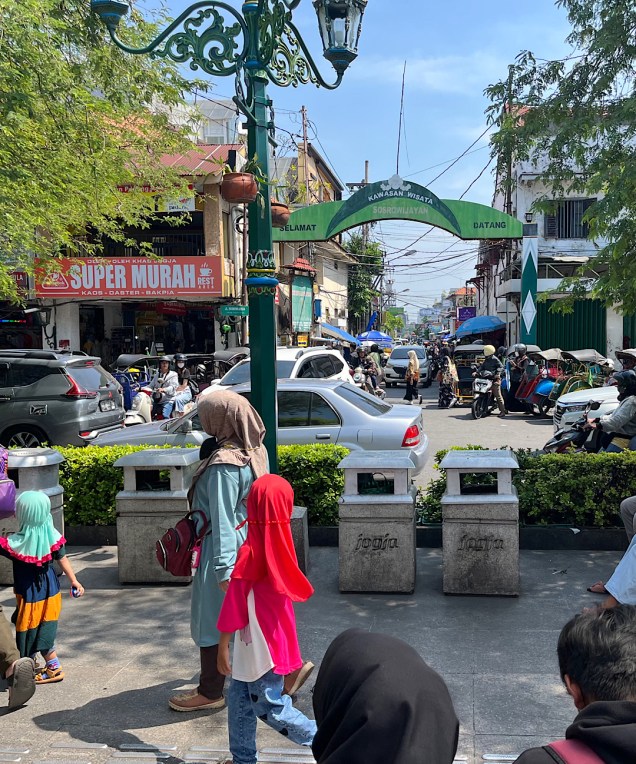
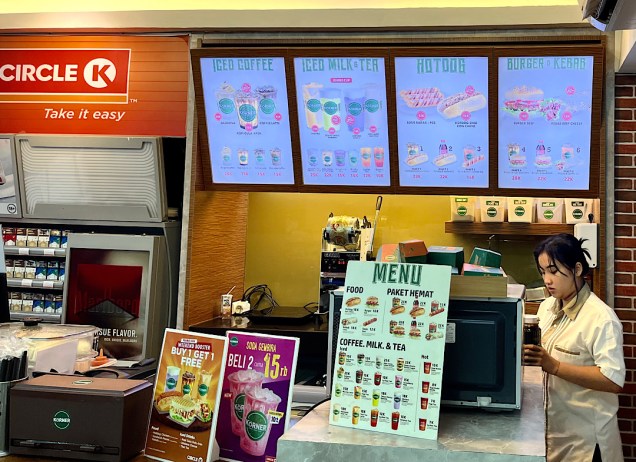 We ordered two, watched the uniformed Indonesian teenage checker warm them in her countertop microwave. Back in the room we wolfed them down with some chips — the lowest culinary point to which we’ve sunk in years.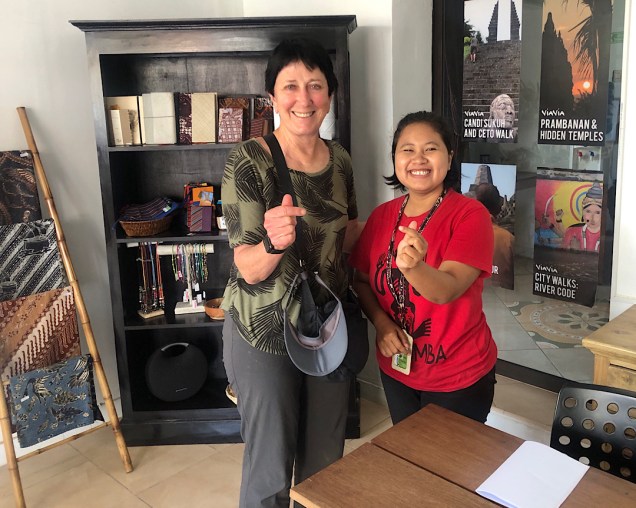
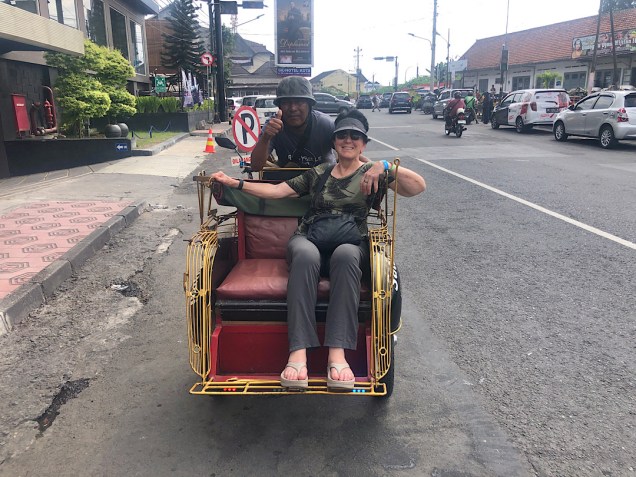
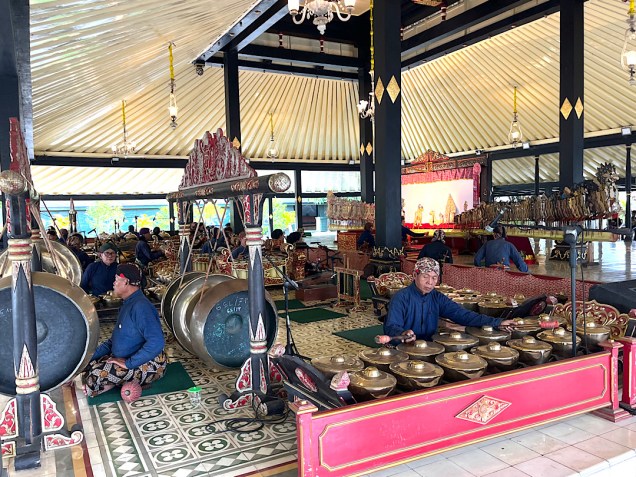 The stage was arranged in such a way that you could watch the shadowy action on one side of the screen…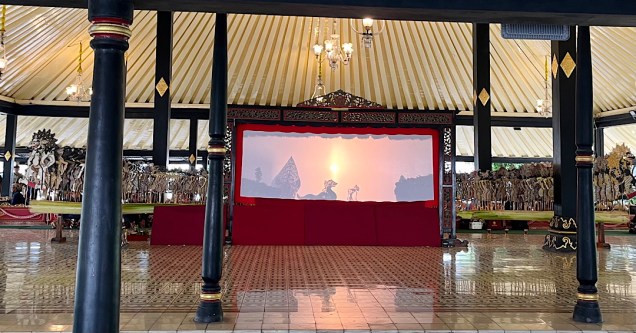
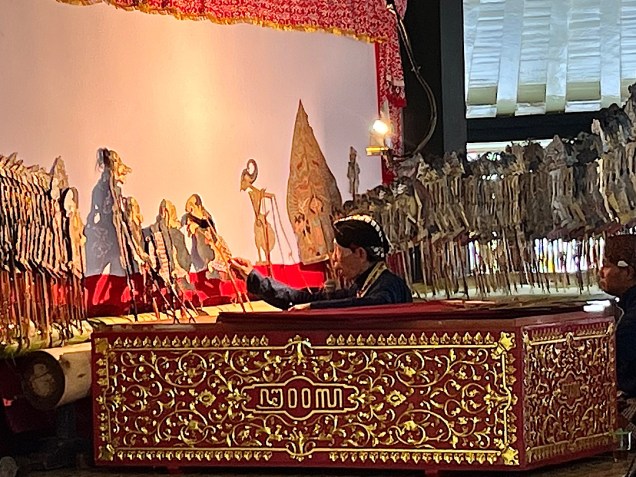 I’m not sure we’ll see another such show while we’re here, so I was grateful for this glimpse of Indonesia’s iconic art form.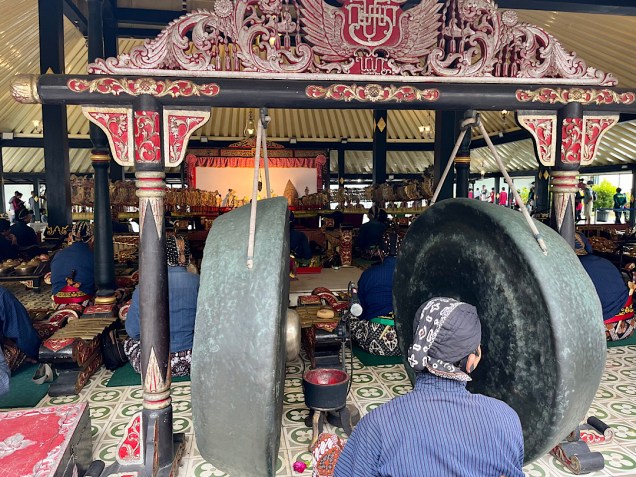
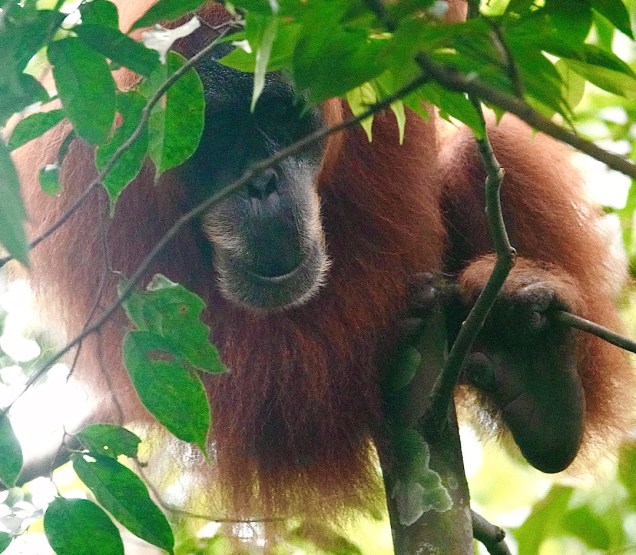 Monday night over satay chicken and fried tofu and a bottle of Bintang beer, Steve and I talked about the orangutans of San Diego. The zoo has a big colony of them, located not far from the entrance plaza. Over the years I’ve probably passed their enclosure dozens of times; I know what they look like. But I had only the vaguest notion of where they came from. Now that I’ve been there, I can tell you: orangutans in the wild are much more beautiful than I could imagine; of all the great apes, they look the most like movie stars.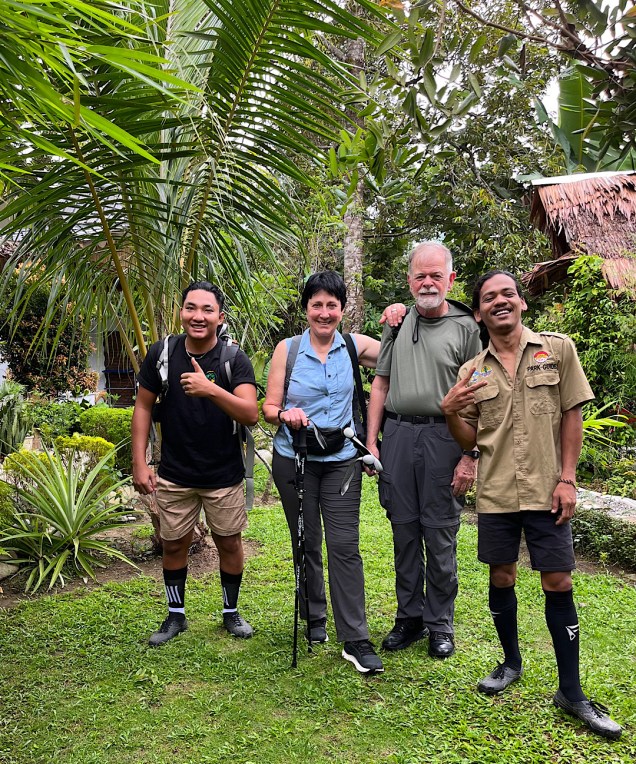
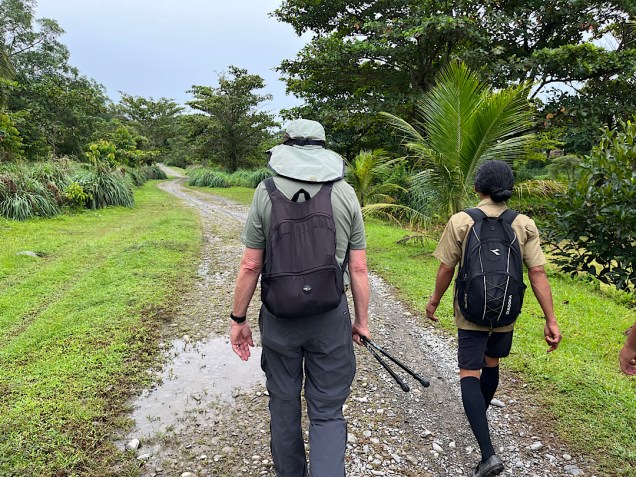
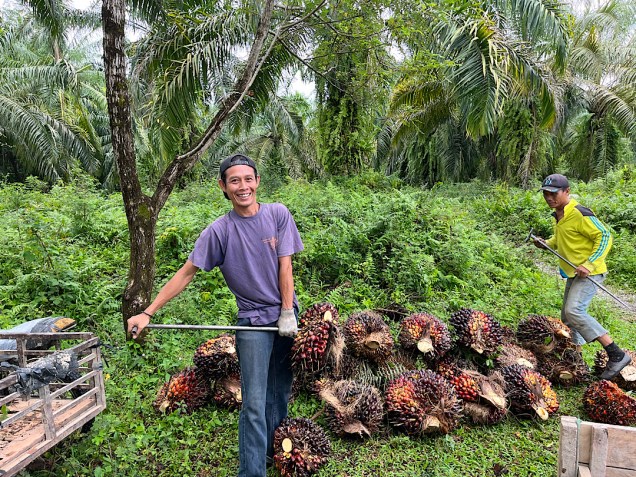
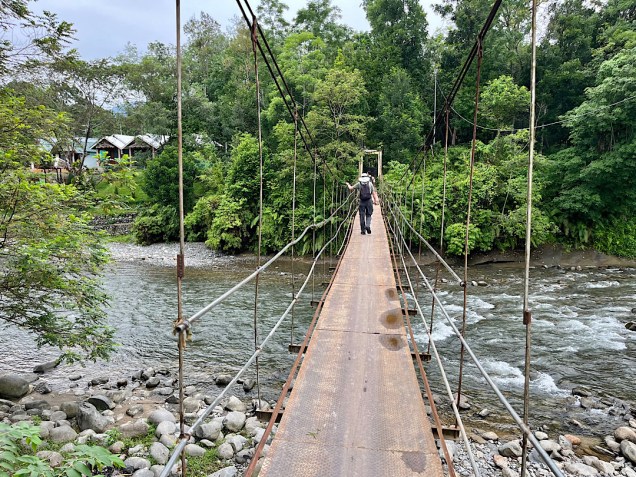 We crossed one of the many bridges spanning the Sungai Bohorok River,and Dani explained how the infamous fruit of the durian tree (wildly popular throughout Asia) is grown and marketed.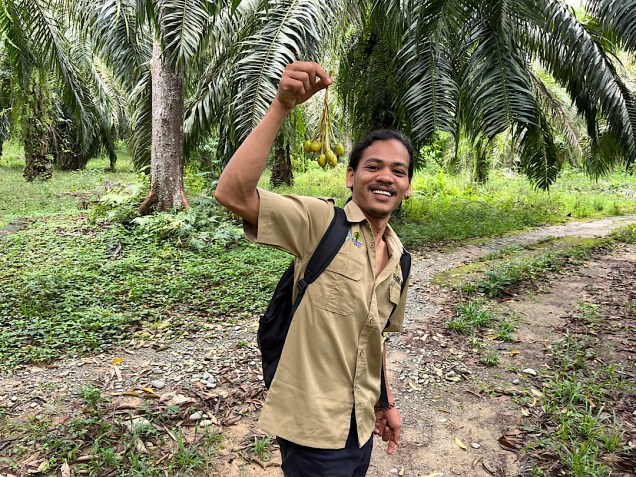

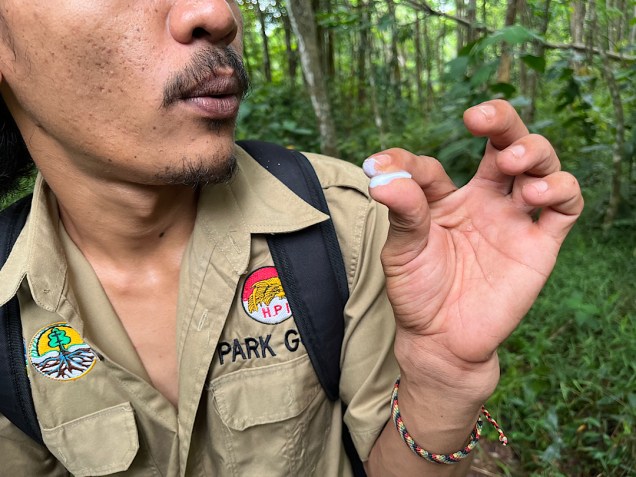 The forest smelled delicious and it thrummed with a symphony of percussive insects.
  By the time we passed through the gate, we were climbing in earnest.Within minutes Dani pointed to some orangutan nests high overhead, empty at the moment but recently occupied.
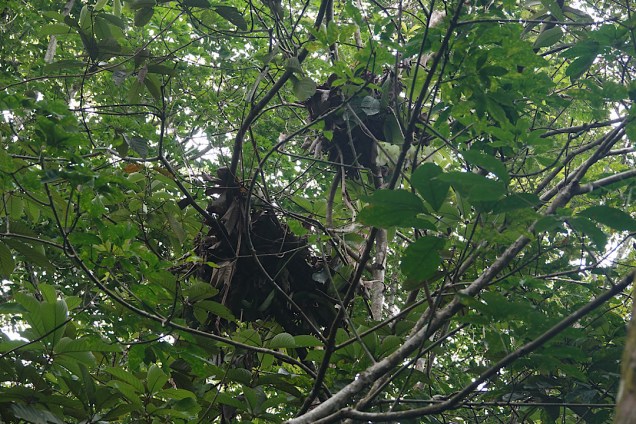 Soon we came upon a small knot of people murmuring with excitement at the proximity of two bright orange forms moving through the nearby trees.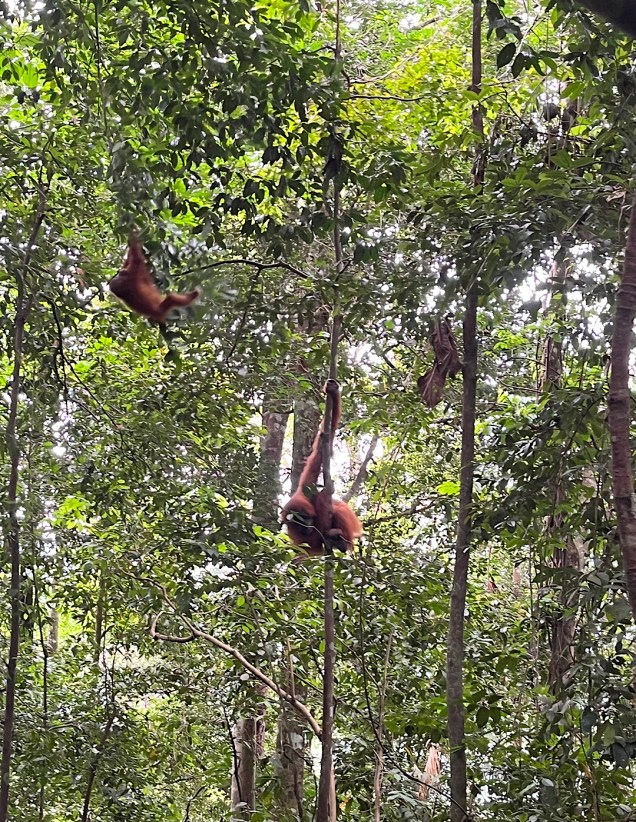
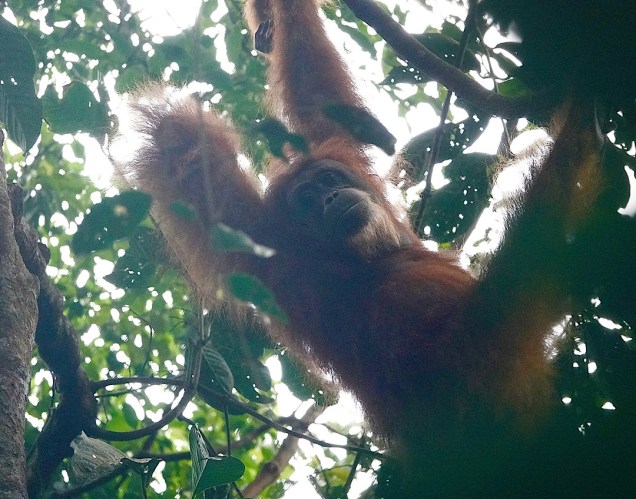
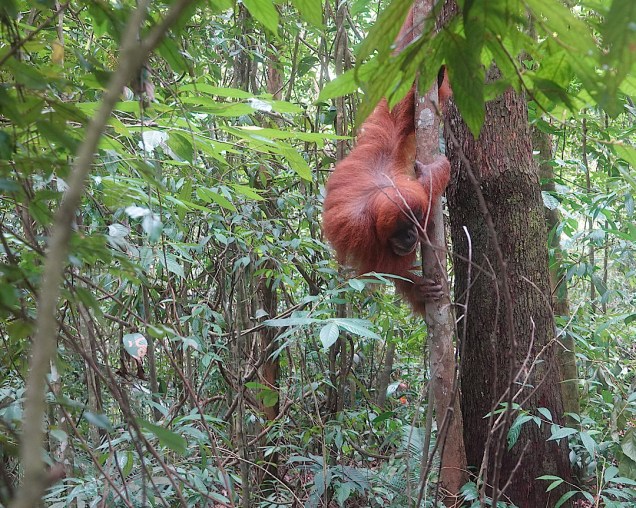
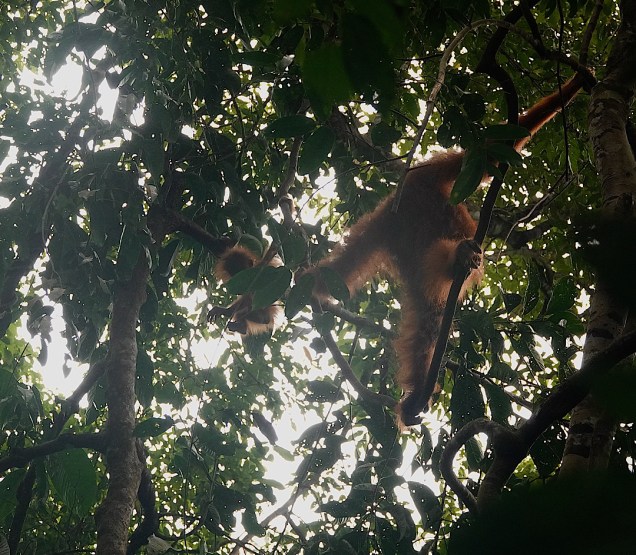
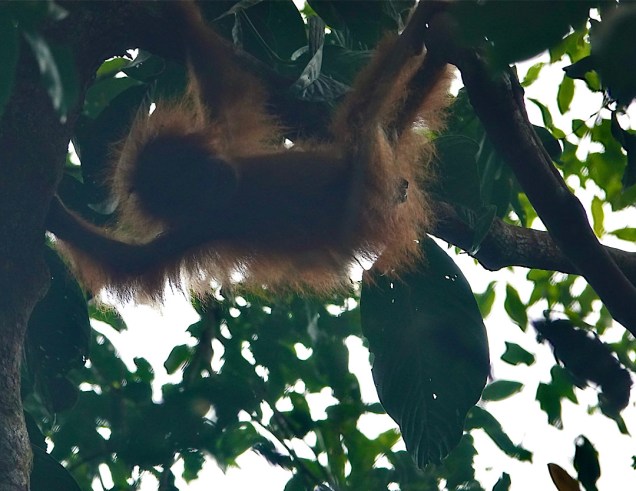 We finally broke away and descended in earnest around 2 pm, my knees by then grievously annoyed by what I’d put them through.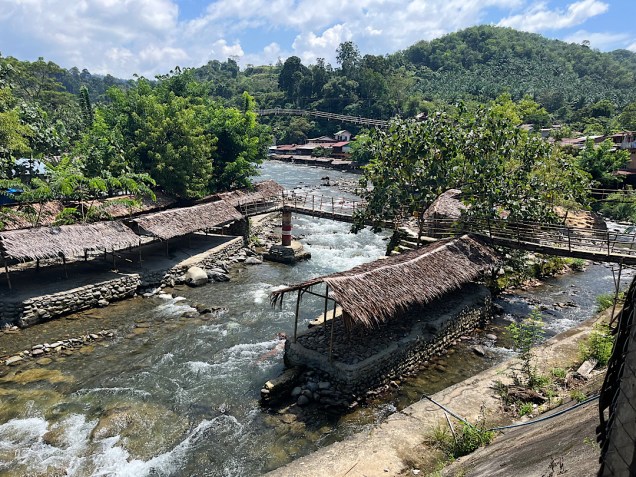

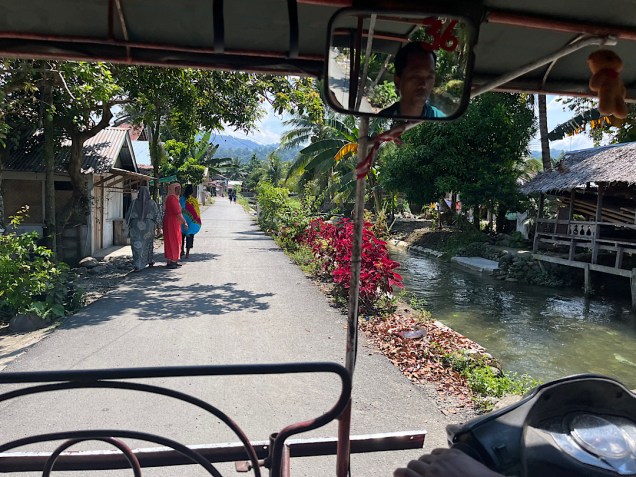
 We rode for a bit, stopped and strolled, took in the spectacularly fertile landscape around us.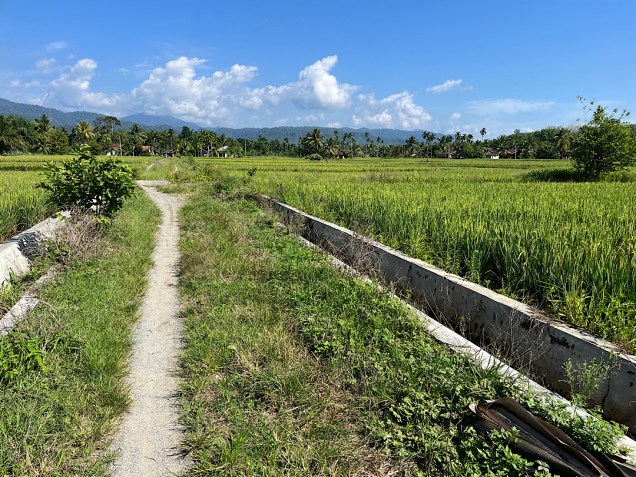
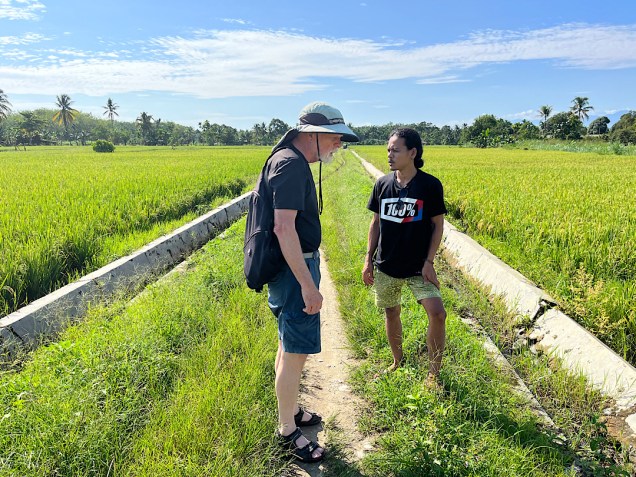
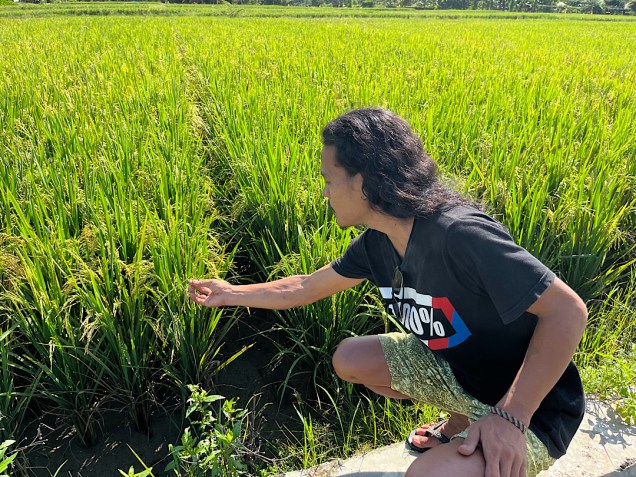 Dani pointed out the rows of sprightly peanut plants growing along the edge of the rice fields. He explained how to tell when the rice was ready for harvesting — only three months after the seedlings are stuck in the flooded fields. Besides rice, so many things grow in this rich volcanic soil you could probably spend a week taking it all in. We saw fields of cassava…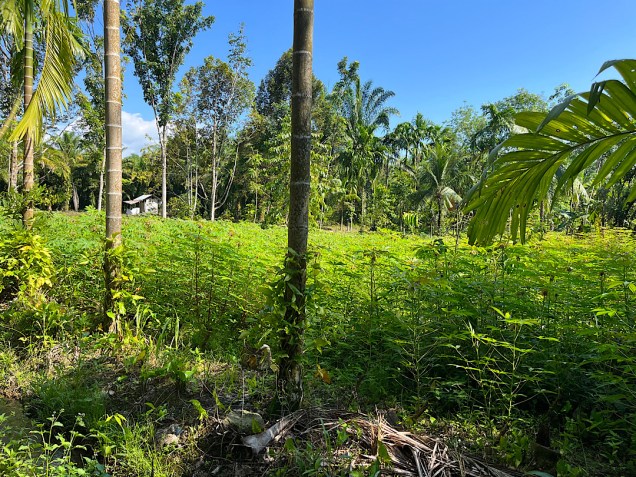
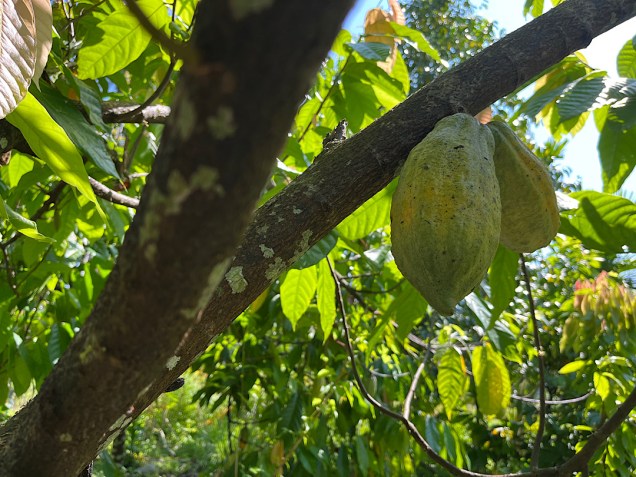

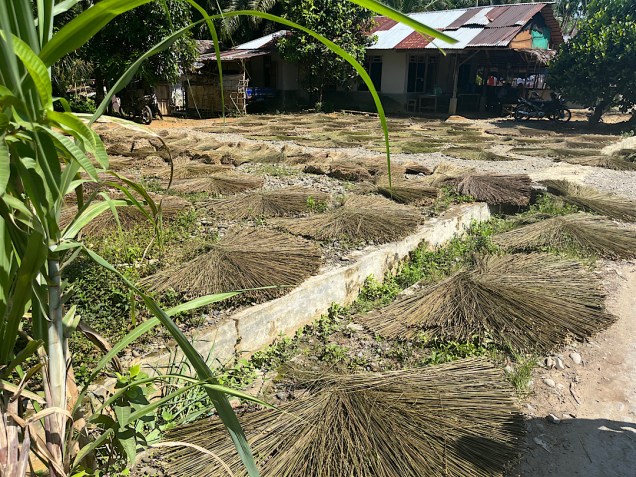
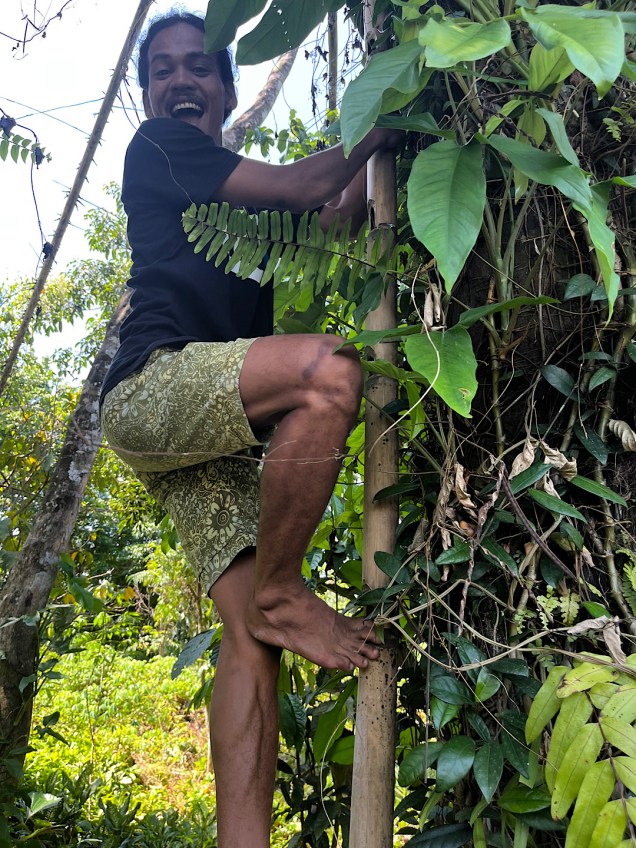

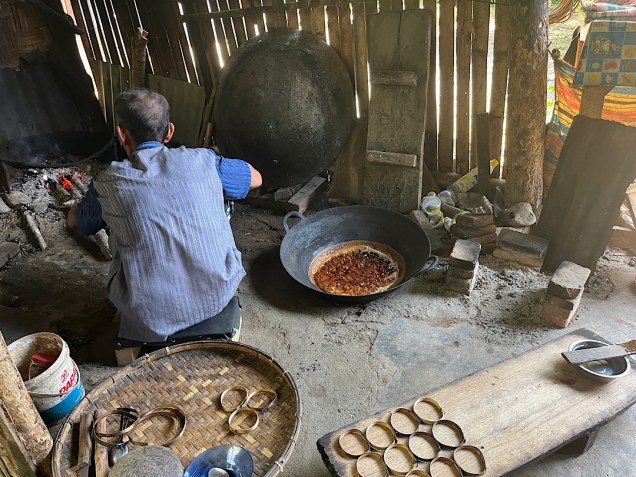 When he judged it to be just right, he poured the thick goo into the molds…
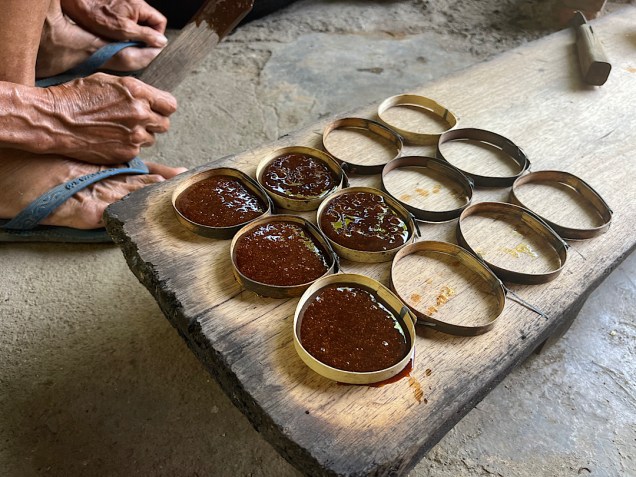 and it soon solidified into a puck of concentrated fruity sweetness.
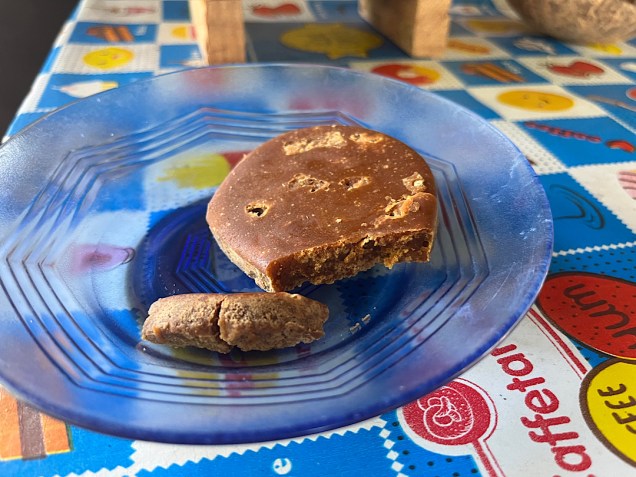 I found it delicious, not as crunchy as the brown cane sugar in my kitchen at home, but containing more complex layers of flavor.
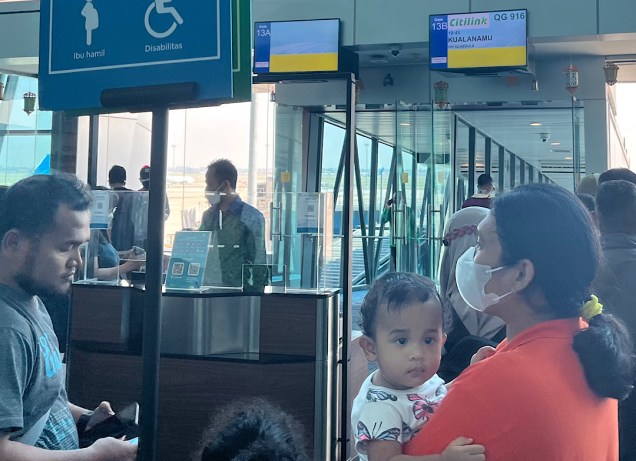 I did not come to Indonesia to do road trips. But now that I’ve done half of one, I can say at least they’re educational. If like Dorothy, you want visceral assurance you are NOT in Kansas, a drive through parts of Sumatra delivers. Our experience Sunday afternoon also solved a mystery for me, namely I had been unable to imagine how it could take four hours to go 65 miles in a nicely maintained Toyota SUV. Now I know.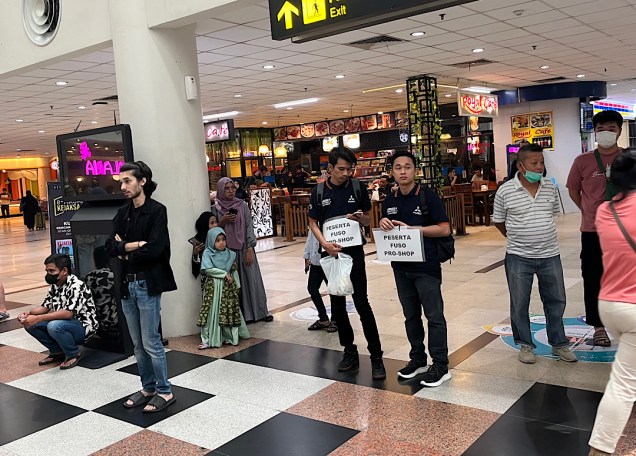
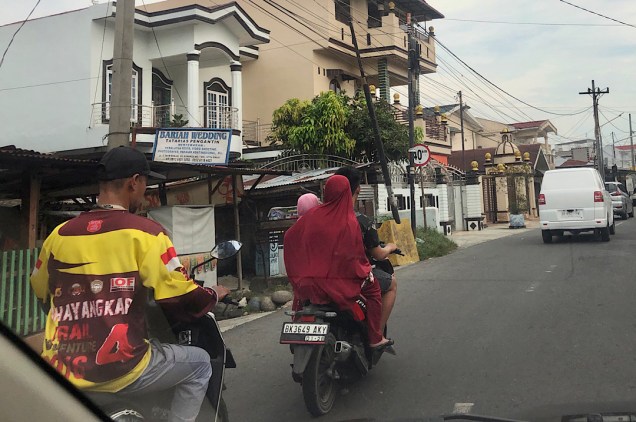 When you’re all barreling over two narrow lanes, driving becomes vastly more freestyle than anything you ever see in the US or Europe, People thread their way up the wrong side of the road. Many folks favor straddling the faded middle divider line, probably to enhance their readiness for passing. Not passing is NOT an option. You simply must get around all the barely motorized vehicles carrying improbable loads.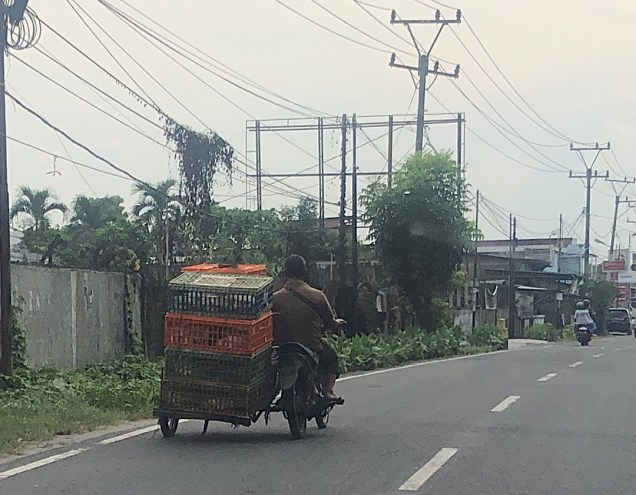
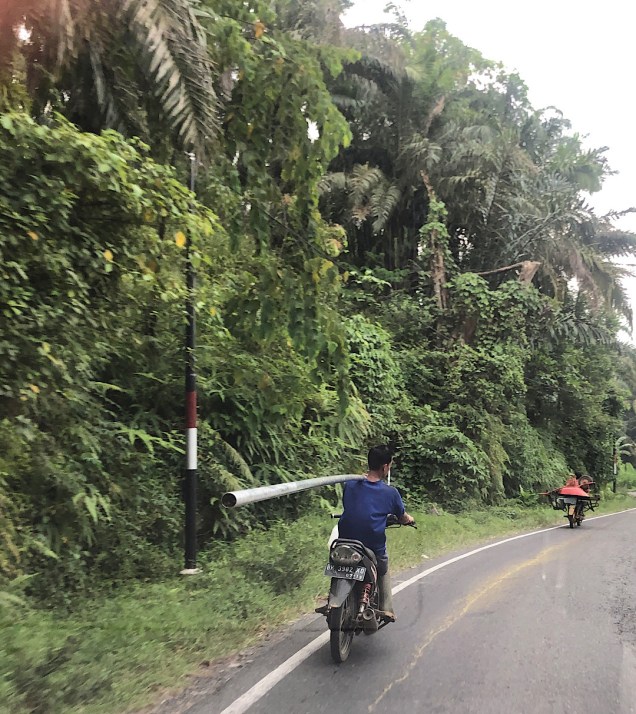 All this chaos feels remarkably dangerous, and we saw direct confirmation that, yes, it is. We passed the large truck whose crash had delayed Hari. Someone had somehow got it upright again, but it was still stuck by the side of the road. Further along, we whizzed by a demolished motorbike whose driver was still struggling to get up from under it.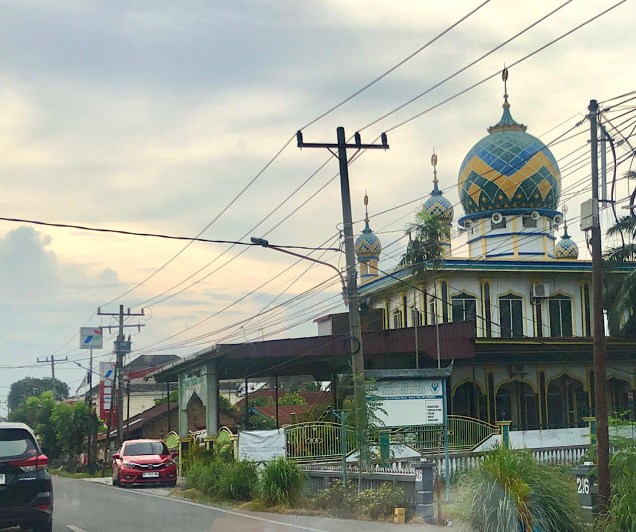
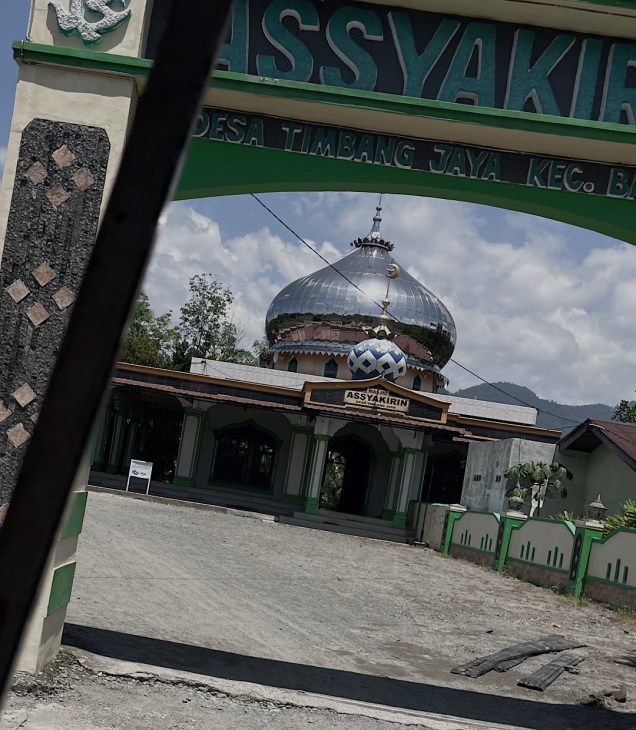 My head swiveled, too, at all the broad rivers we crossed, most the color of coffee with cream.
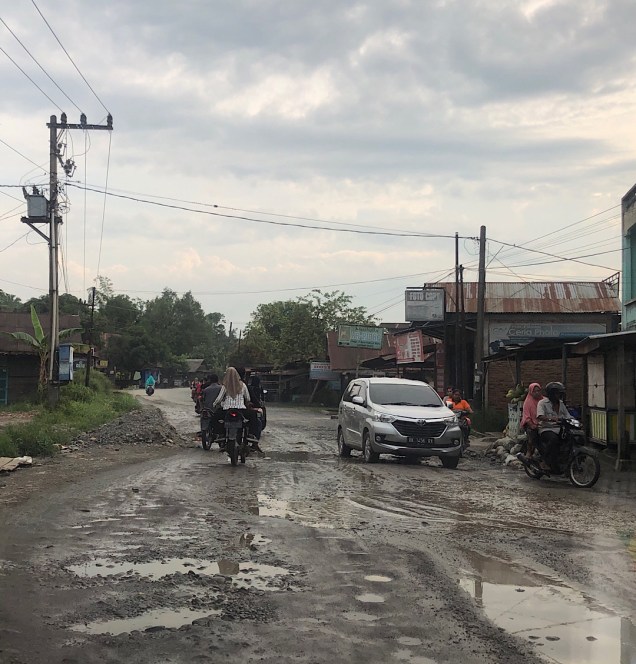 Around 5:35 the light was starting to dim and I cringed at the thought of it vanishing altogether as we rattled along for another 75 minutes. But then Hari piped up that we were almost at our destination! Indeed we bounced over dirt road for only a few minutes, entered a jungly stretch of road, and then stopped at a sign for the lodge next to a dirt path leading into a thicket of green. The sun still hadn’t set when we greeted the owner.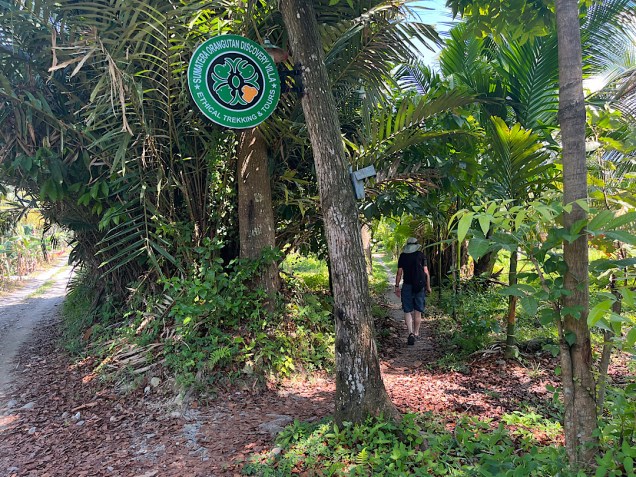
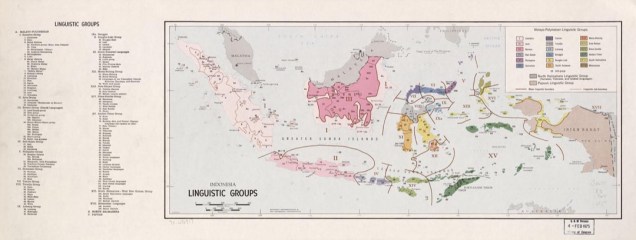 That would be Indonesia, land of thousands upon thousands of islands — 14,000? 17,000? I’m not sure anyone knows. Also home to more humans than only three other countries (India, China, and the USA.)


 At home and abroad