We’re alive after more than two days of driving around, but I’ll wait to share what it’s been like behind the wheel (and in the front passenger seat.) I don’t want to jinx us before we turn in our little Suzuki WagonR in two and a half days.
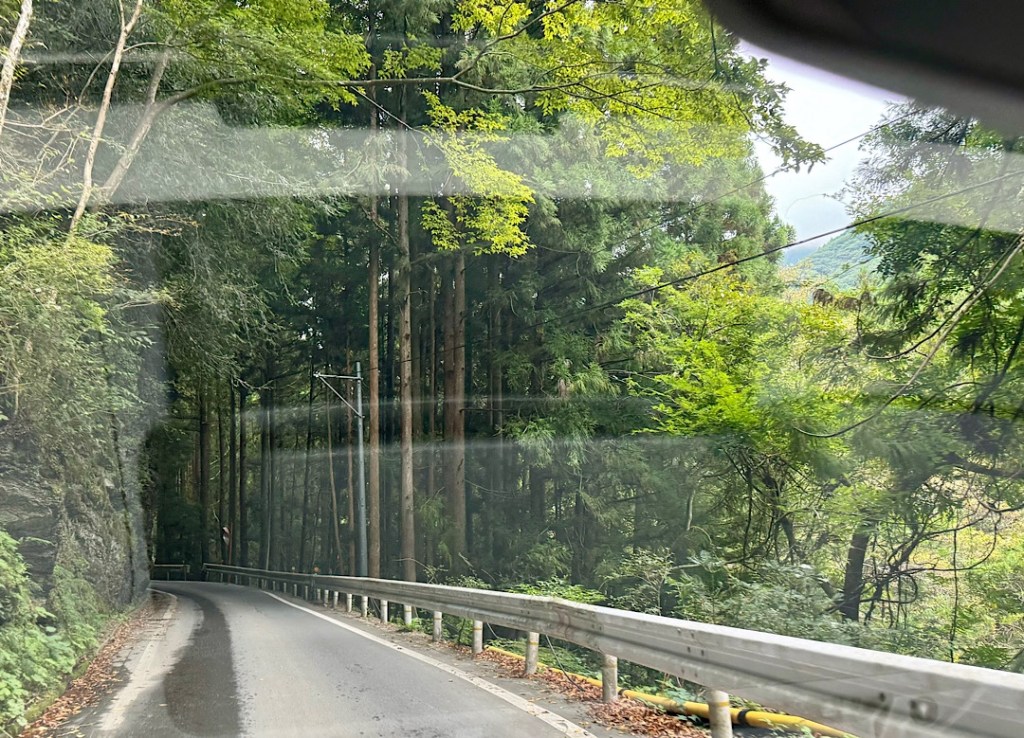
We rented the car because we wanted to visit some of the wildest terrain in Japan, places where the trains don’t penetrate, deep within the mountains of Shikoku (one of Japan’s four main islands.) Yesterday afternoon we drove into the densely forested Iya Valley on roads notched out of almost-vertical cliffs, byways that often narrowed to a single lane.
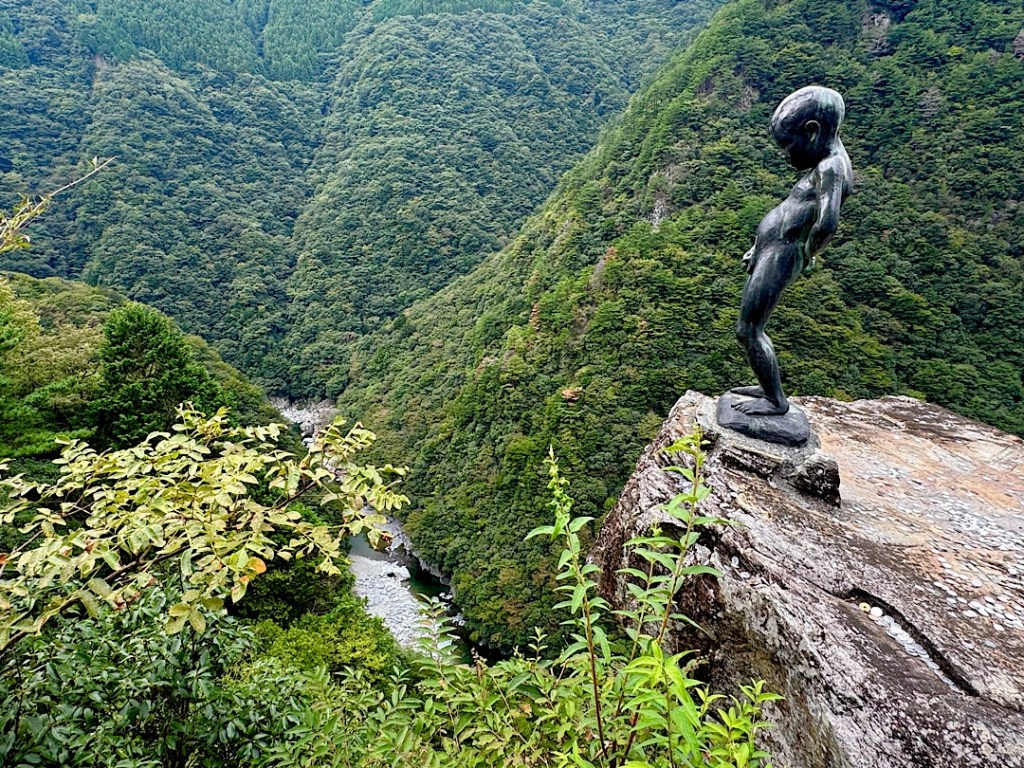
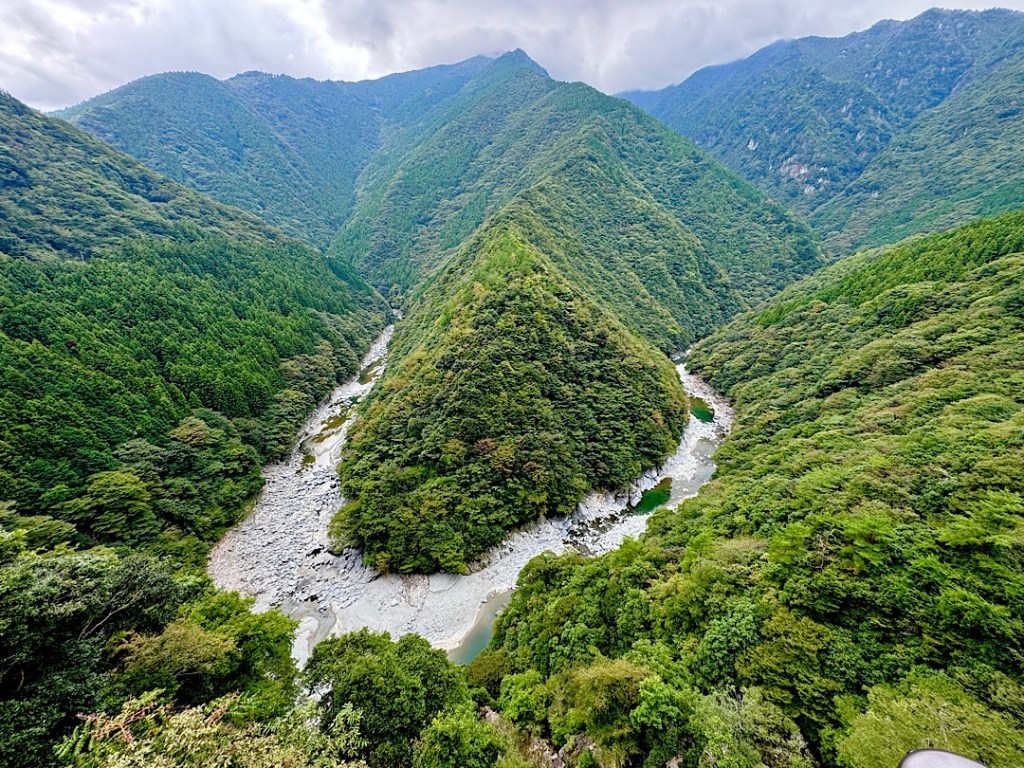
The boy peeing into the valley cut by the river far below is an iconic figure.A photogenic bend in the river.One of the one-lane sections of the road.
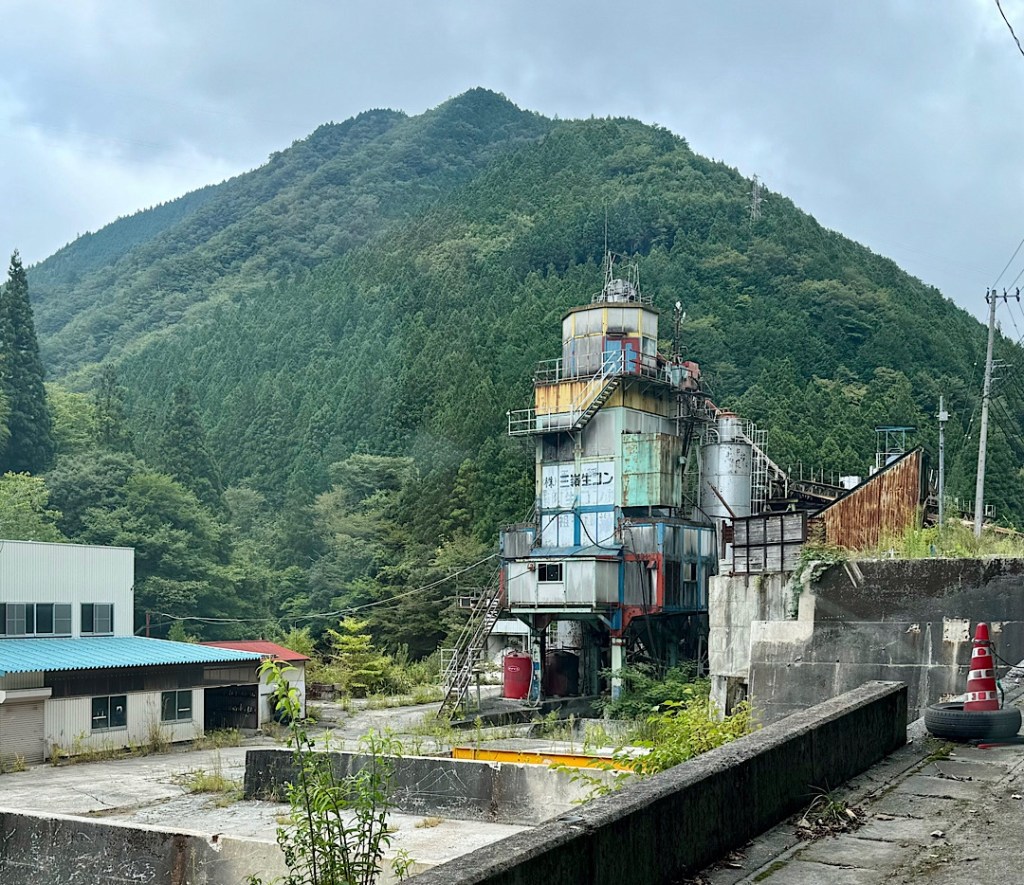
The urban buzz in Tokyo and Kobe and even Takamatsu to me felt more advanced and sophisticated than anything I’ve experienced anywhere else on earth. After 10 days of that, it was jolting to begin passing buildings and one-time enterprises in the Iya Valley that showed signs of decay. Like this facility:
What was it? What did people once do here?
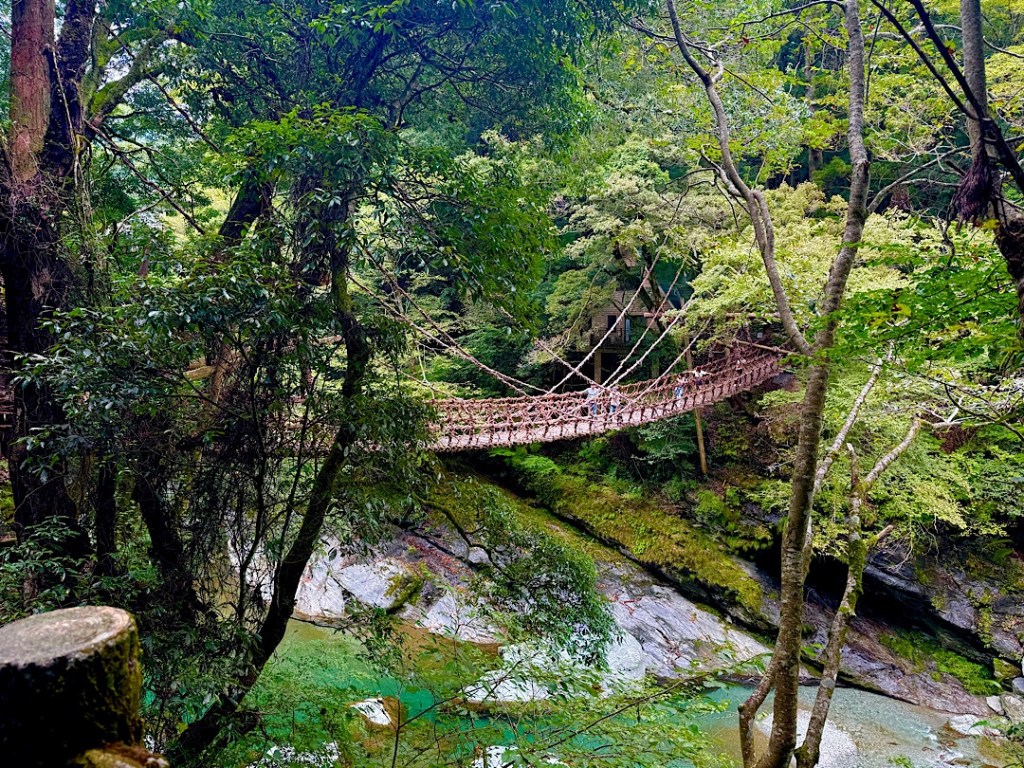
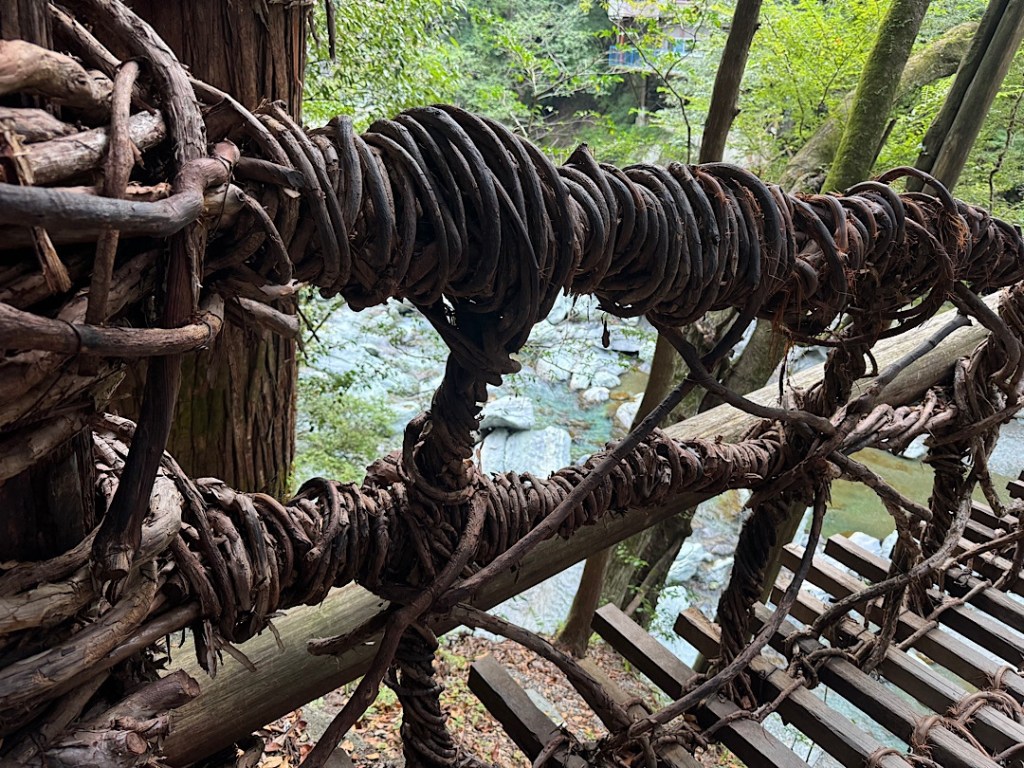
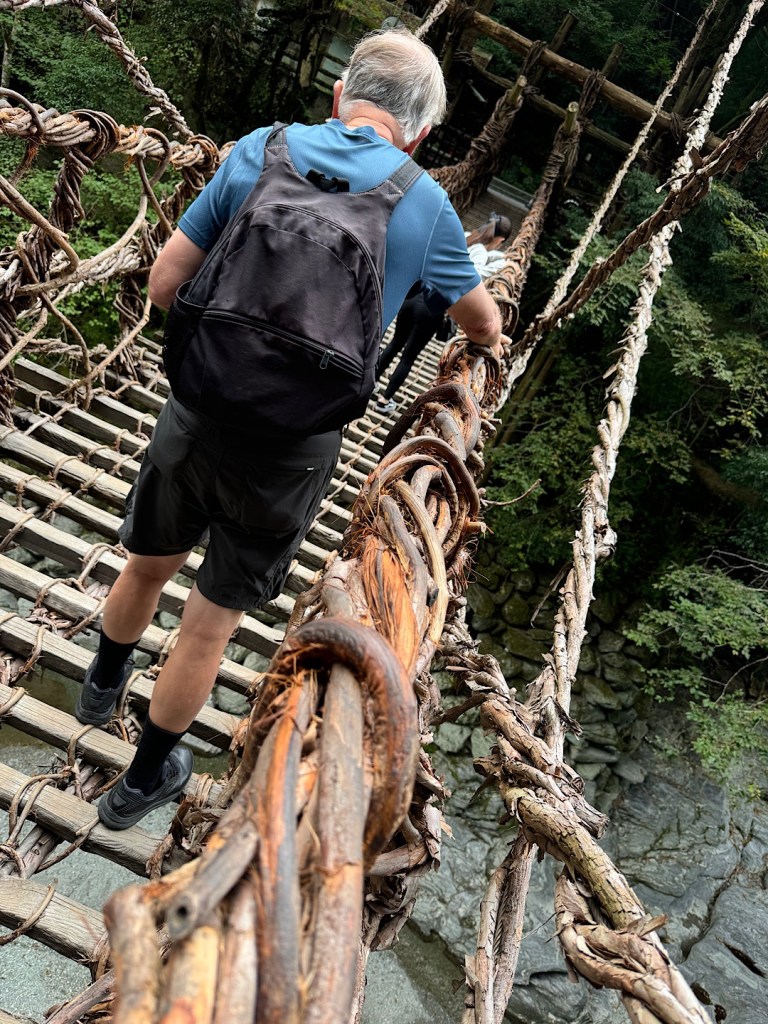
Steve and I were staying in the town of Miyoshi, a base for tourist activities in the area: hiking and mountain climbing. Bathing in hot springs. Walking across bridges that historians think are 800 to 1200 years old, built entirely from vines and planks.
The venerable Kazurabashi bridge was 5 minutes from our Japanese inn.Six tons of vines are required to hold it together.It was surprisingly scary to walk across!
Only about 2300 people live in Miyoshi. If there’s a convenience store in town, we couldn’t find it. It felt like at last we were seeing the effects of Japan’s deadly demographics: an aging population, young people opting not to marry or have children. Countrysides emptying out.
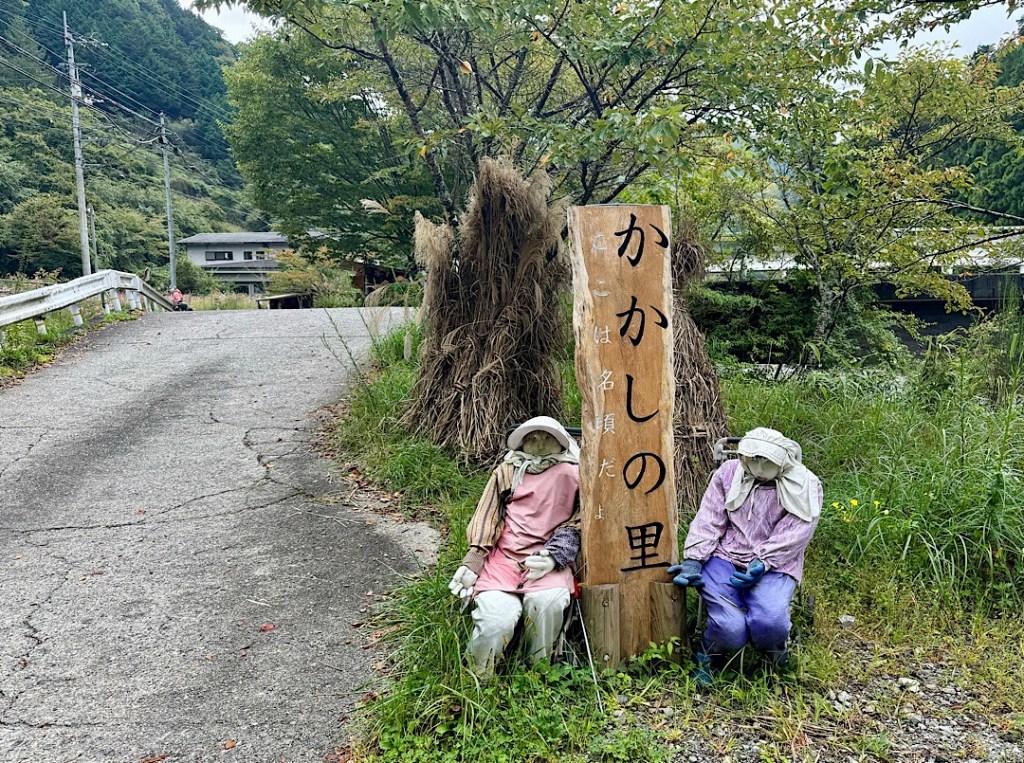
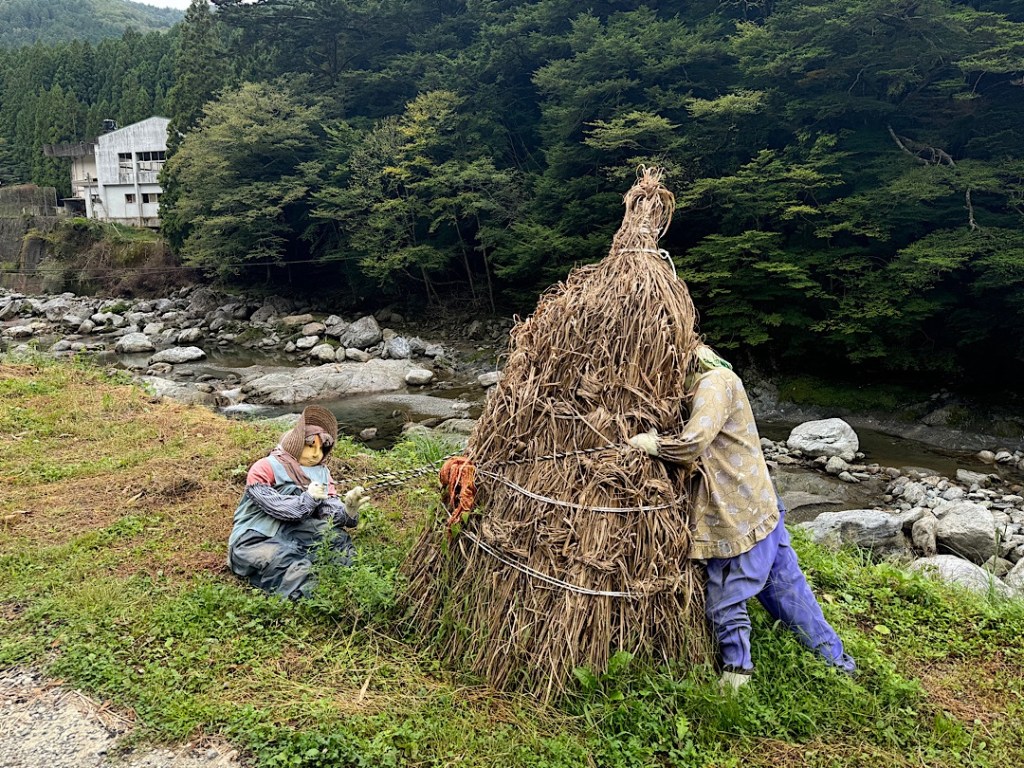
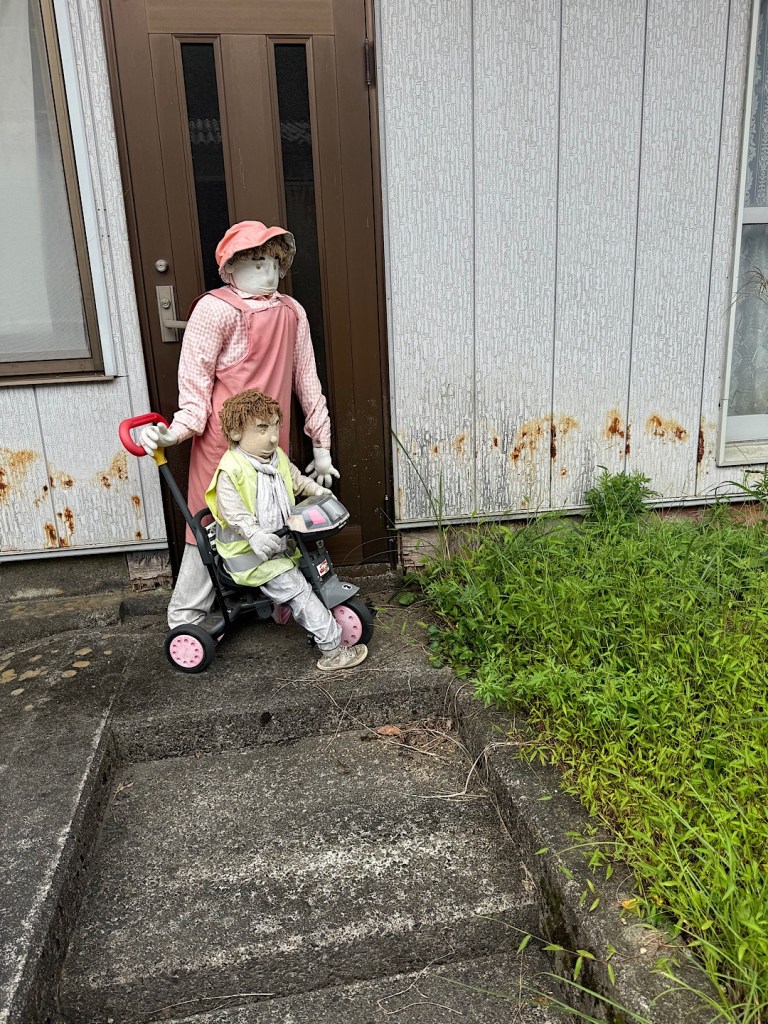
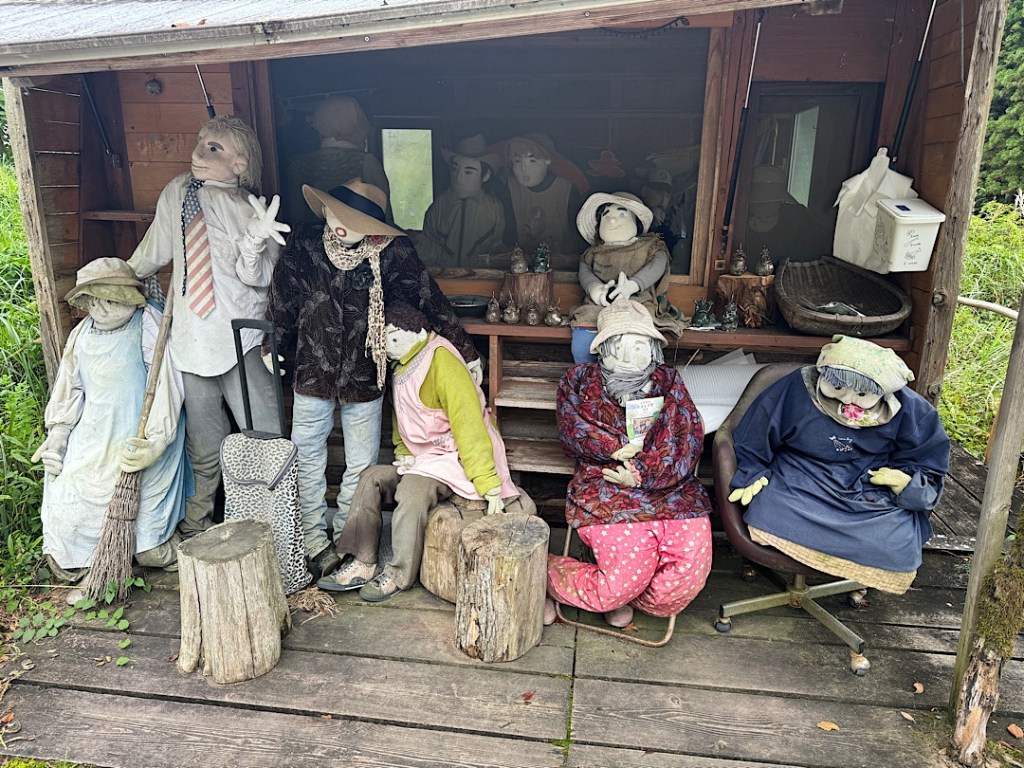
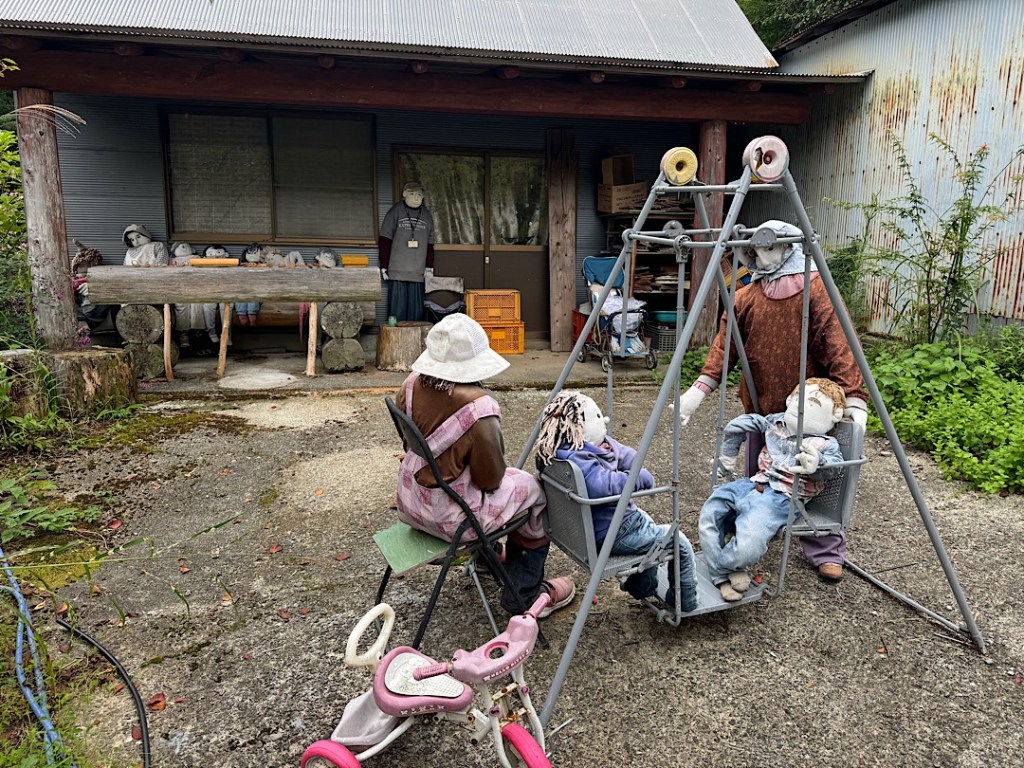
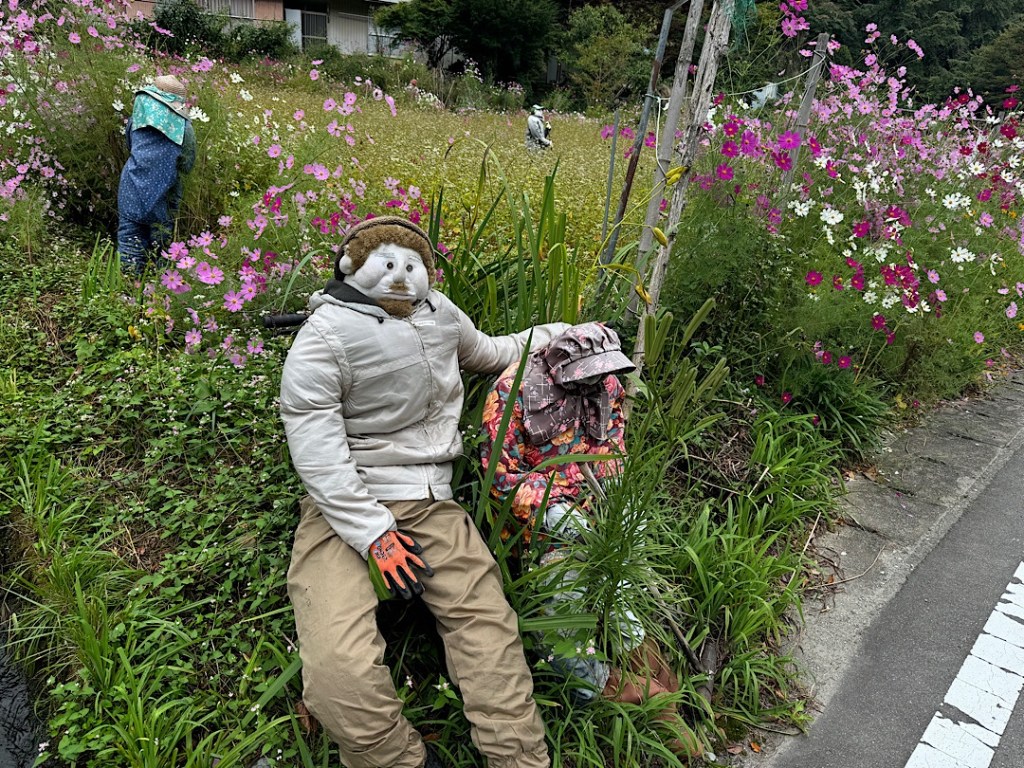
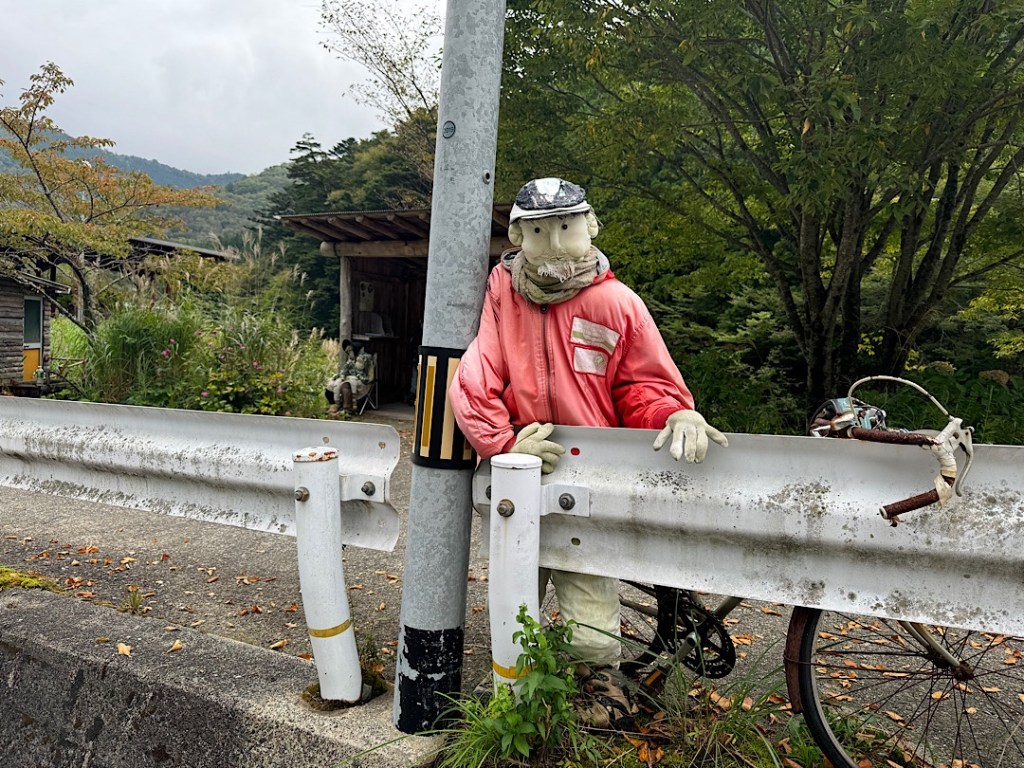
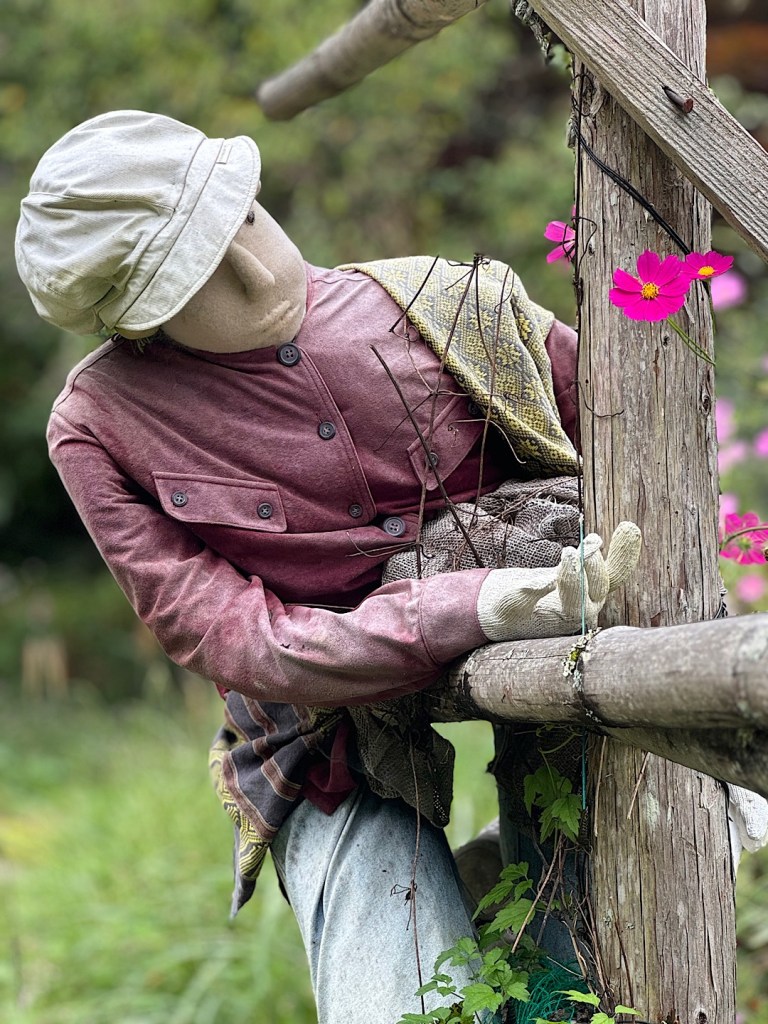
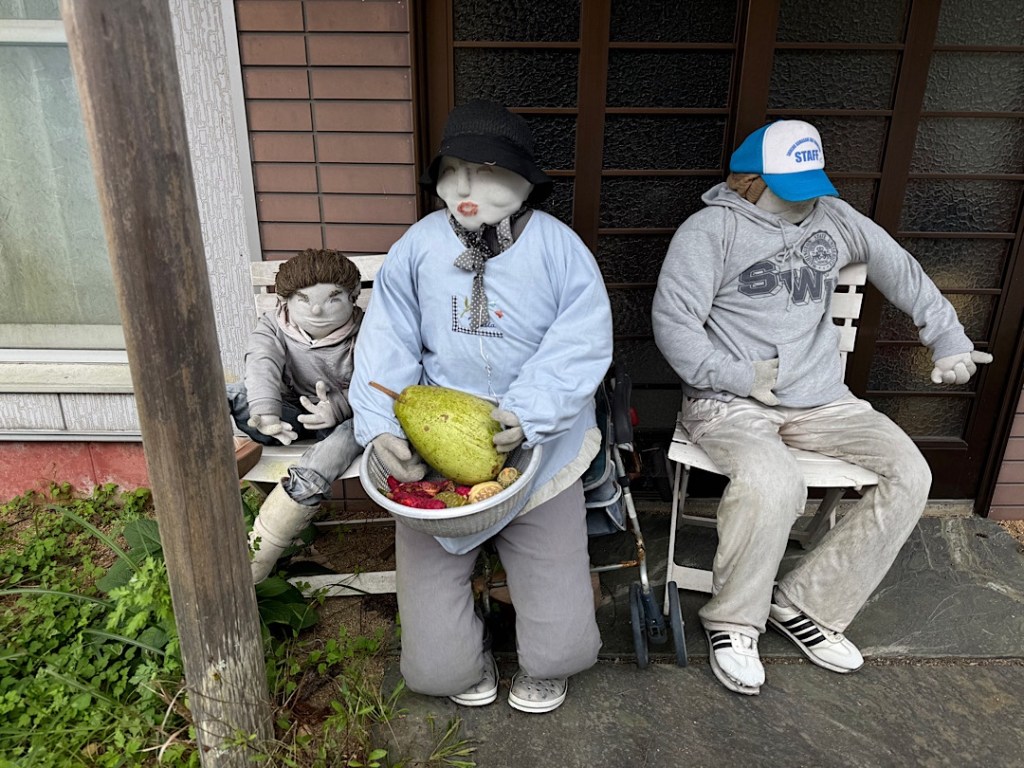
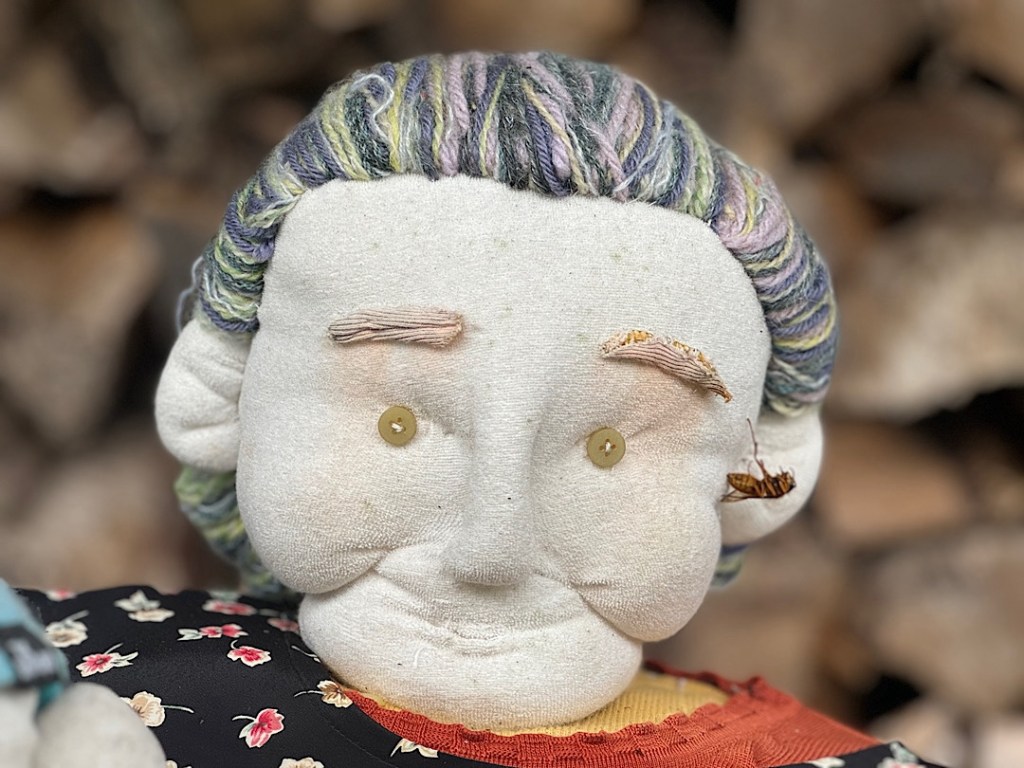
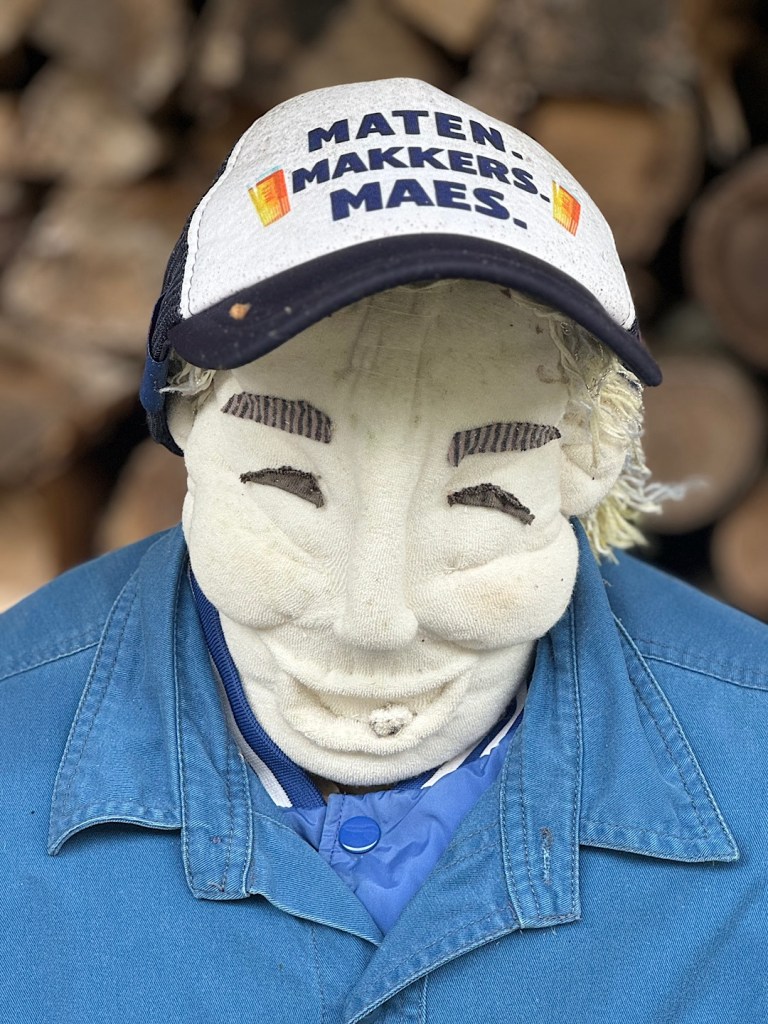
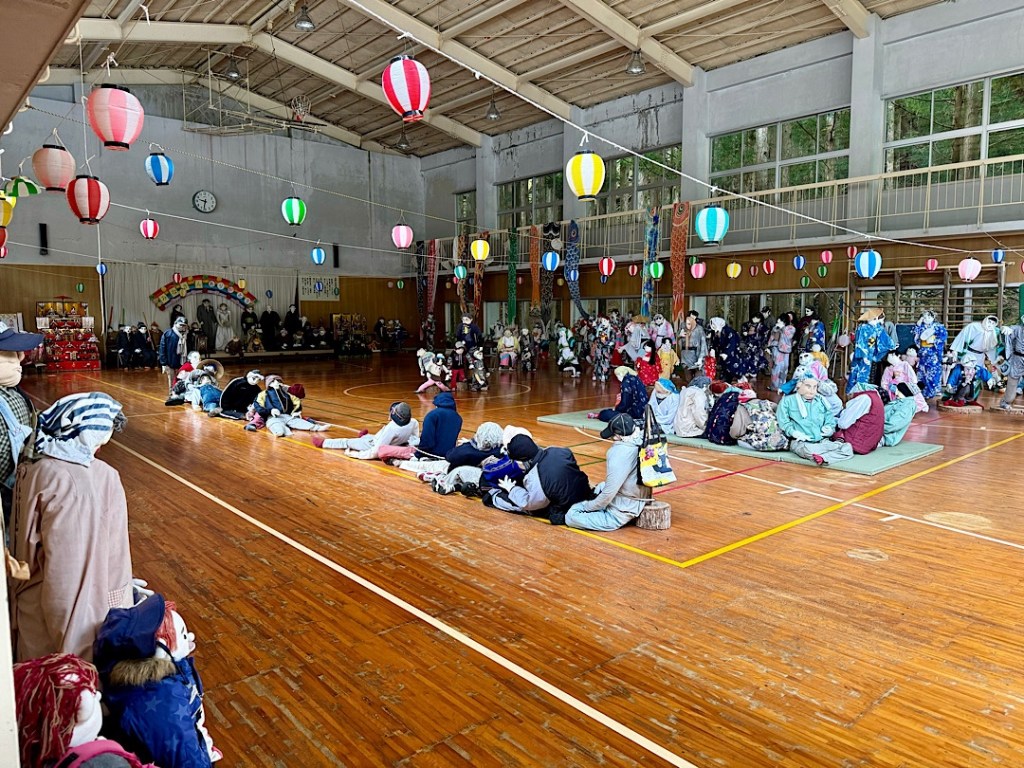
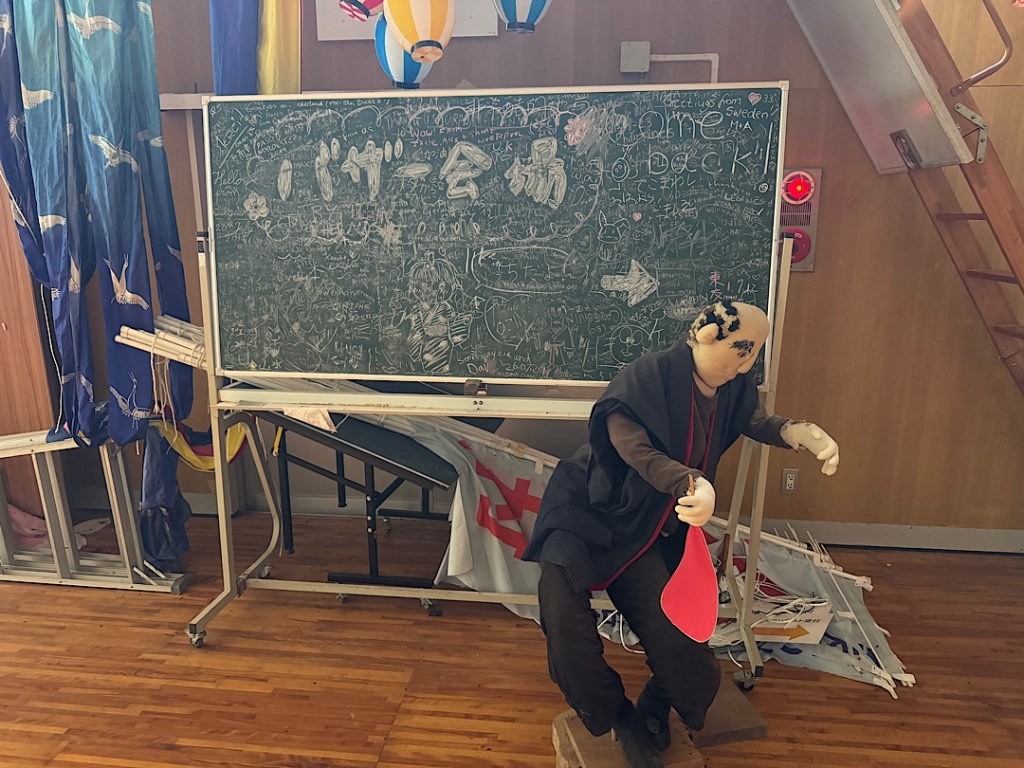
The village of Nagoba, about 45 minutes from Miyoshi, experienced this in dramatic fashion after authorities automated the local dam that had been the town’s biggest employer. From a couple of hundred people, Nagoba’s population plummeted to a few dozen. In 2003 an artist from the village named Tsukiji Ayano returned from living and working in Osaka. Shocked by the change in her home town, she started creating replacement people made of cloth stuffed with newspapers. Since she began, Ayano has made hundreds of the scarecrows (kakashi). She’s brought the village back to life in a manner that’s both charming and eerie, as Steve and I learned when we visited it this morning.
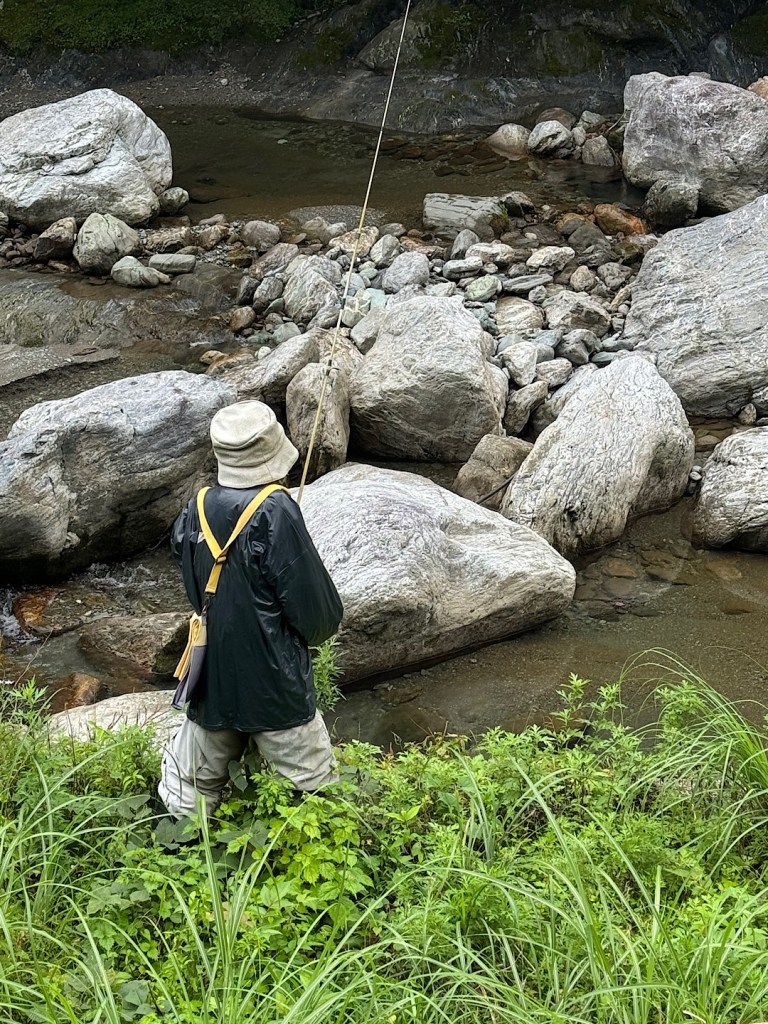
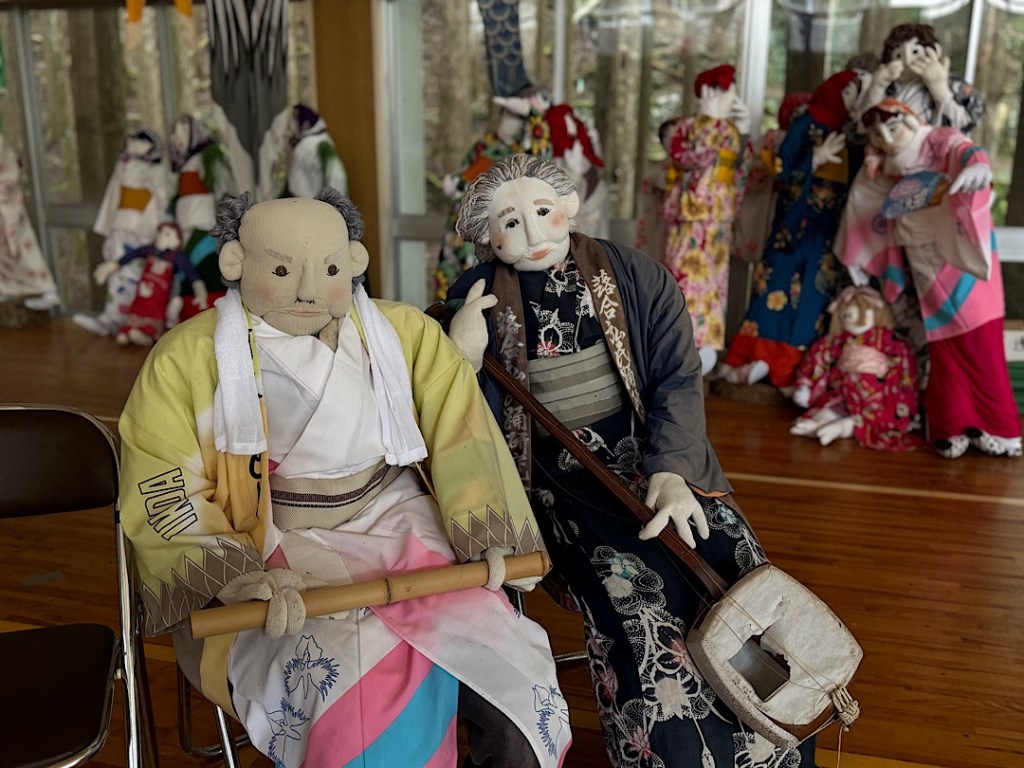
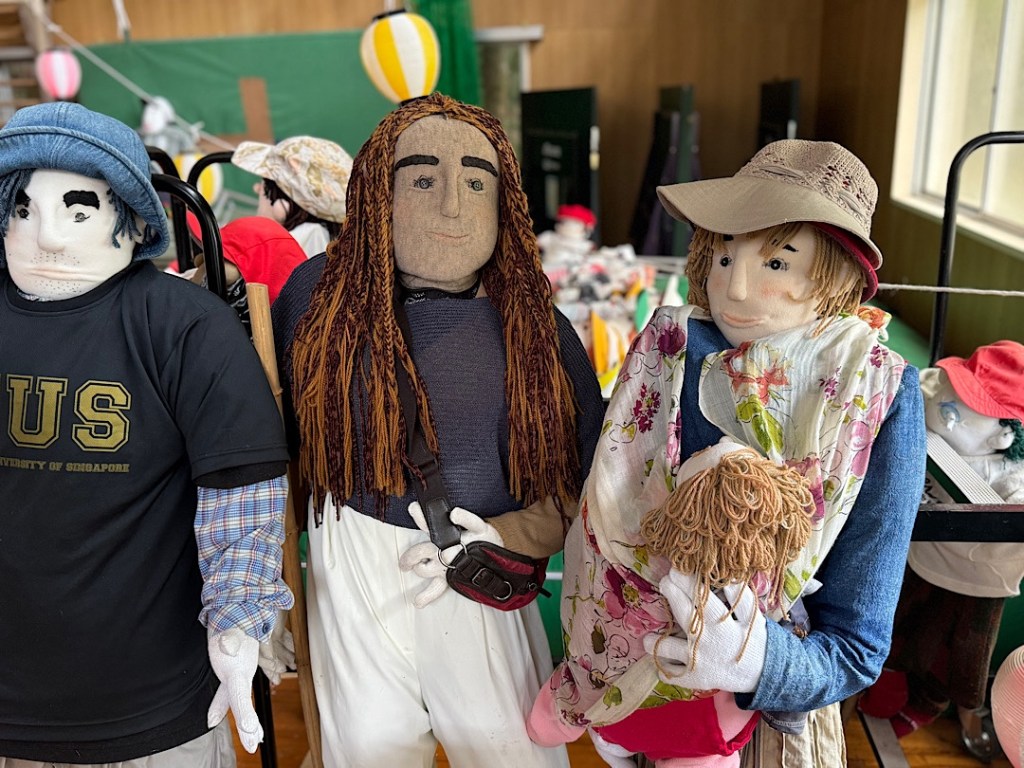
Scarecrow people work at village tasks.A mother and child, long absent in the flesh.I think these folks are waiting at a bus stop. No signs explain what you’re seeing. That would shatter the illusion.We arrived a little after 10 in the morning. For a while, we encountered nobody but the scarecrow people.Scarecrow people sat at the side of the road. Scarecrow people toiled in the front yards.We read online that Ayano has tried to reincarnate everyone who lived in the village of her childhood.Certainly the scarecrow people feel like individuals.I was amazed to note that most of the figures have eyes made from buttons. They feel so lifelike.Some eyes are created differently.The scarecrow people fish…They surprised me, like this guy, hanging out in a tree.Ayano has filled the former kindergarten and elementary school with scarecrow children and their families. She’s packed the school gym with personalities.Grandparents present for a performance?Parents of a future student?
Steve and I wandered around for almost an hour; toward the end of our visit other tourists were trickling in. We never saw any sign of Ayano, however, although we read that she lives in the village and works in her studio there. We were never asked at any point to pay anything; we have no idea how Ayano survives to create her art. It felt like a gift.
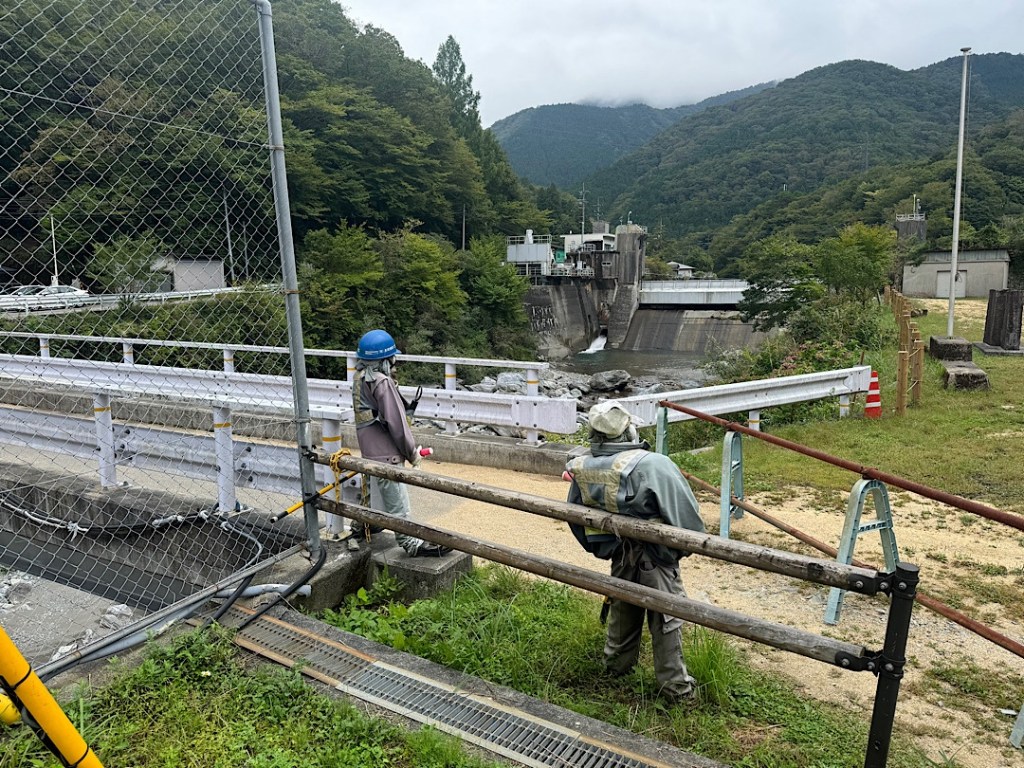
I particularly appreciated these guys. Had they worked at the dam? (You can see it in the photo in the distance.) How had they felt when their jobs disappeared? Where did they go? I’ll never know.
I’d never tasted Kobe beef. So how could we visit Kobe without dining at least once on its eponymous dish? We couldn’t.
Tuesday morning (9/24) we took a bullet train from Tokyo that whisked us south. We ate bento (box lunches) that we bought in the station.
Here’s what they looked like.
We checked into our hotel, and that evening got to the Tor Road Steak Aoyama promptly at 7. I was hungry. Kobe has countless restaurants serving pieces of the highly marbled Wagyu cows; picking a dining spot is a challenge. I had decided to follow the advice of an online blogger (Tom Bricker of Travel Caffeine) who offers a ton of information about Japan travel. In his itinerary for Kobe, Bricker was effusive about Tor Road Steak House, so back in July I made a reservation through the restaurant’s Facebook page. It was a relief when the staff actually seemed to be expecting us.
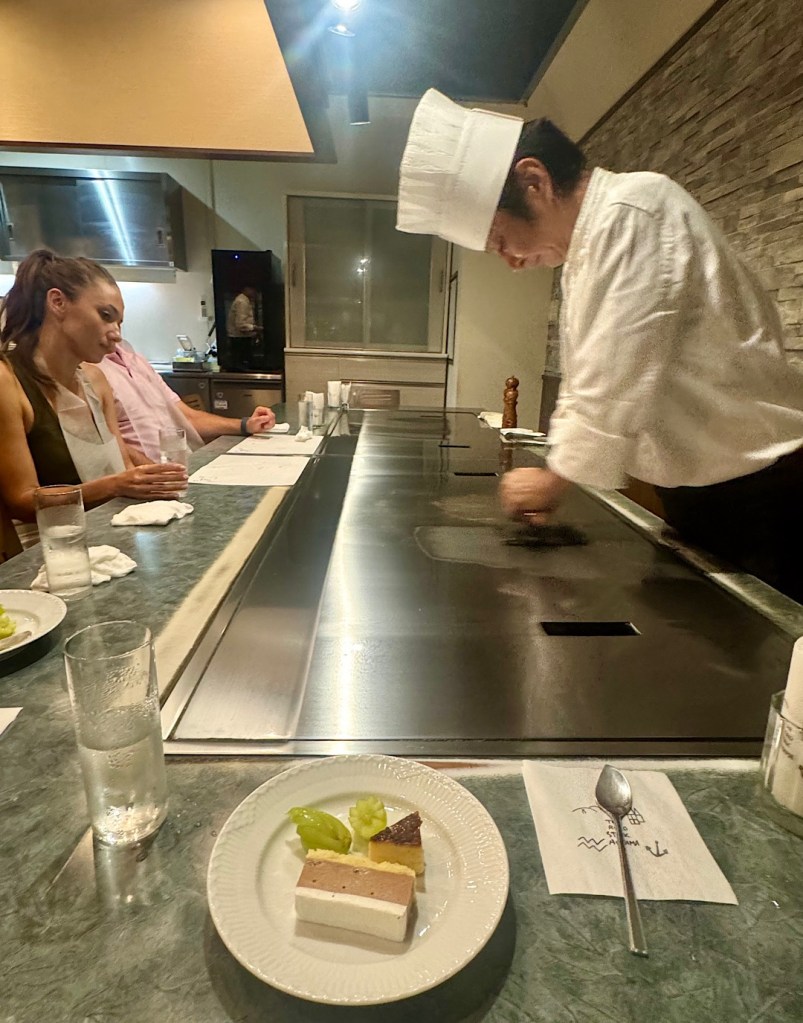
I was startled by the scale of the operation: just a single long gleaming teppanyaki grill (think Benihana) filling the end of a small room. The grill appeared to be set for only eight patrons, and ultimately only four of us were seated: Steve and me and a friendly couple from Prague. We later learned that a bigger group had canceled at the last moment — bad for the restaurant but great for us. The evening wound up feeling like a family meal.
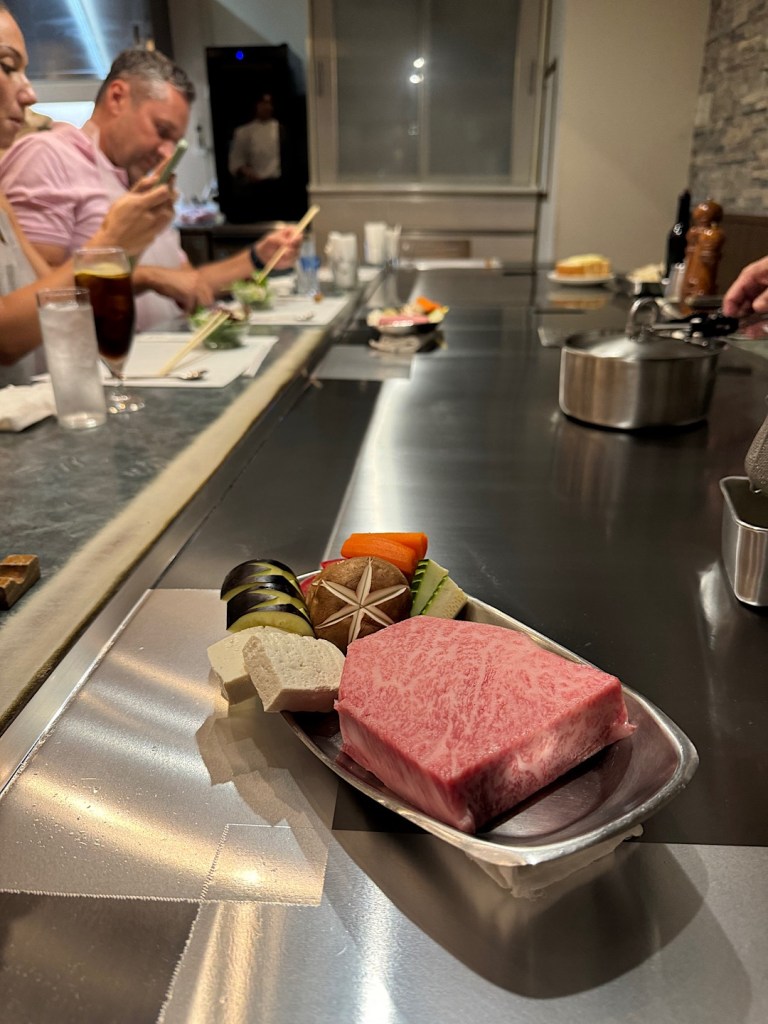
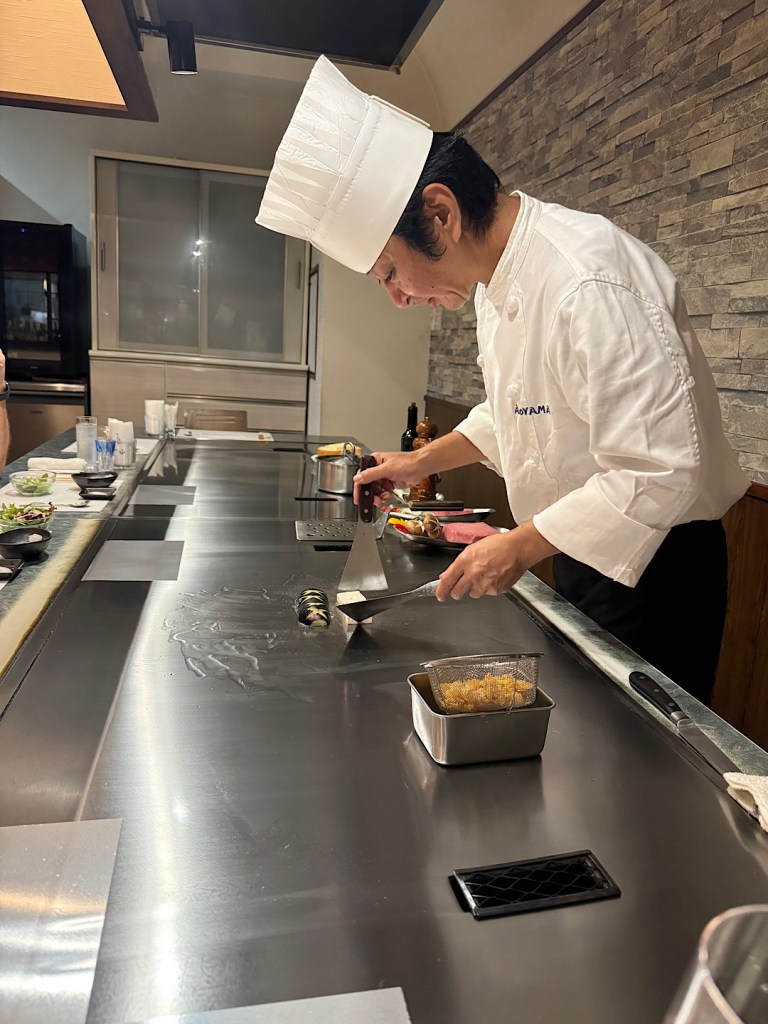
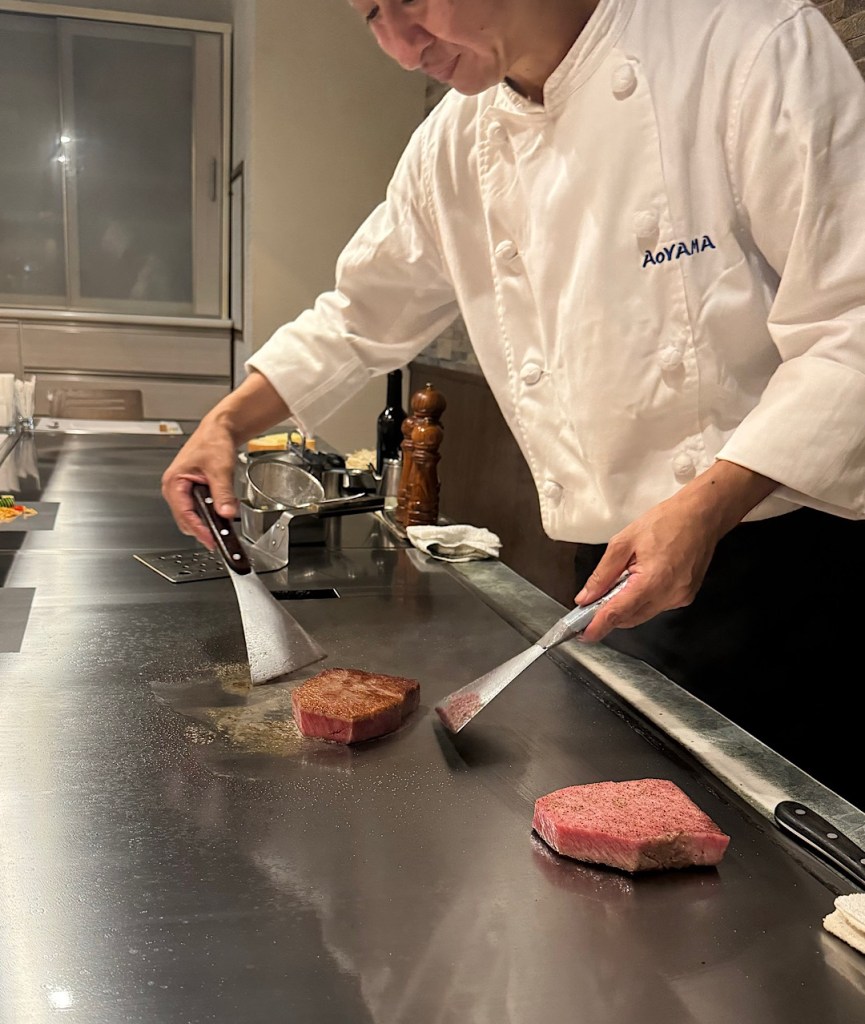
A wiry guy in a white jacket and chef’s toque took his place behind the pristine cooking station. He introduced himself as Shuhai, grandson of the woman who founded Aoyama 61 years ago. Two facts immediately became clear: 1) he was a master with knives and heat and 2) also quite the entertainer. As he cooked — first a round of vegetables, then a 9-ounce chunk of sirloin for Steve and me, he bantered with the four of us nonstop.
He told jokes; answered our questions. It almost distracted me from his moves, which were deft and complex.
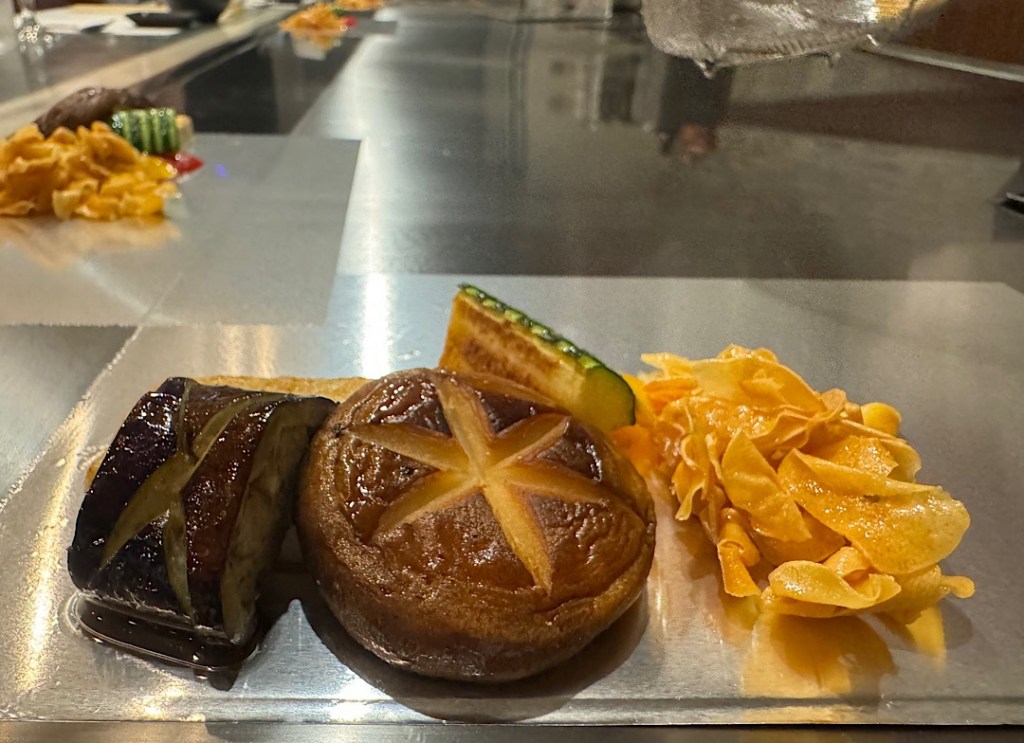
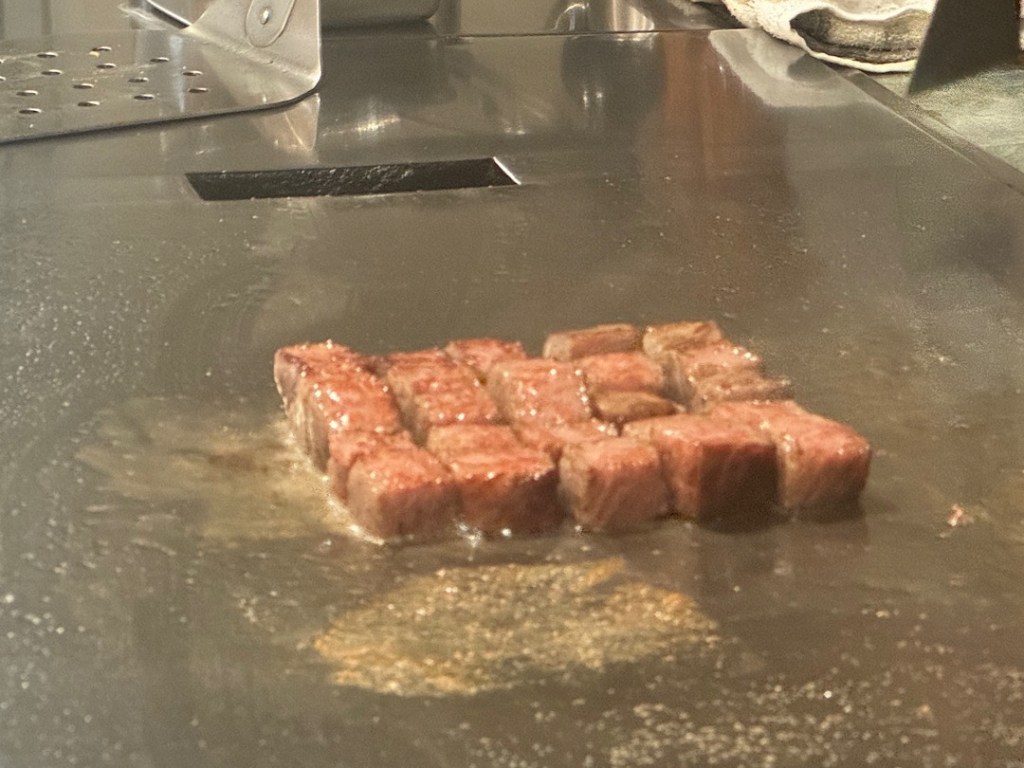
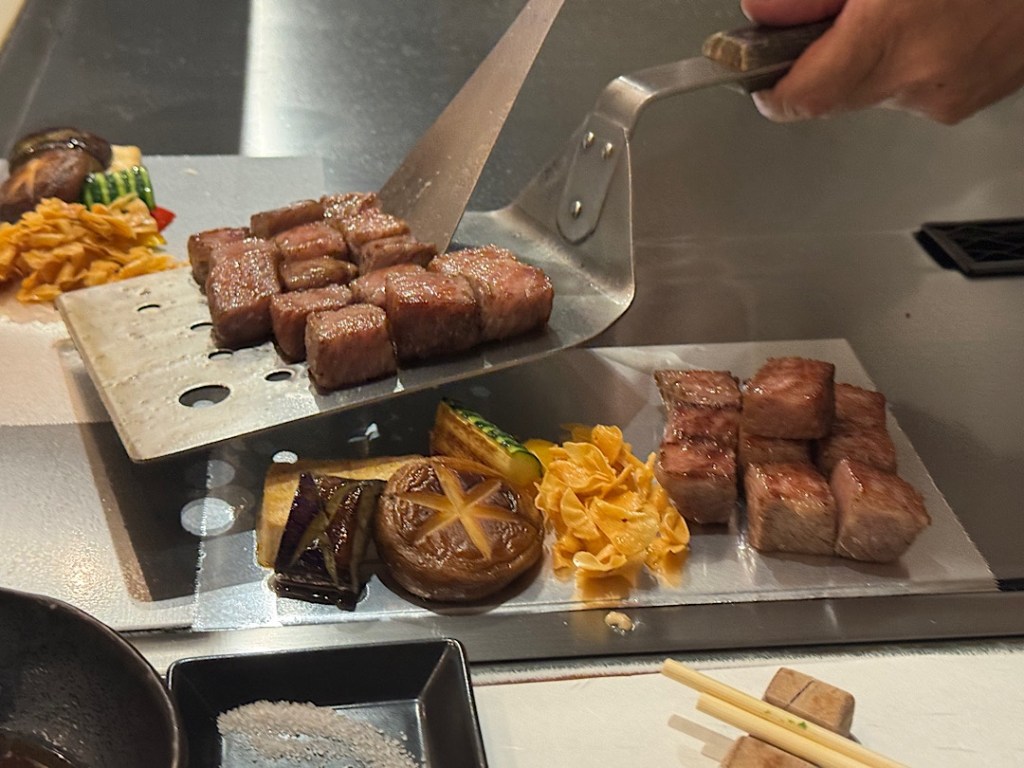
The raw ingredients of our main course and accompaniments, before Shuhai began to work with them.After sautéing very thin slices of garlic, our chef cooked the veggies.He served us each the freshly grilled tofu, eggplant, zucchini, mushroom, and garlic. Then he began searing the beef……and sectioning it into bite-sized morsels. He then divided the Kobe beef cubes between the two of us.We finished off with dessert while the chef buckled down to the demanding work of cleaning the grill.
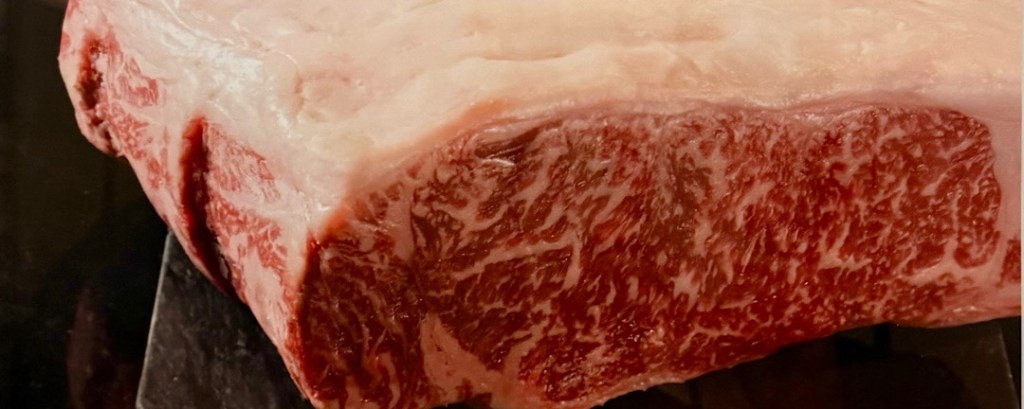
Everything was delicious, but the beef really was extraordinary — tender and suffused with unctuous savory flavors — not at all like chewing on a piece of beef fat.
I wouldn’t want anyone reading this to think beef-eating is Kobe’s only attraction. The region is also famous for its sake, so on our first afternoon, Steve and I visited a museum devoted to the art and history of the local rice wine.
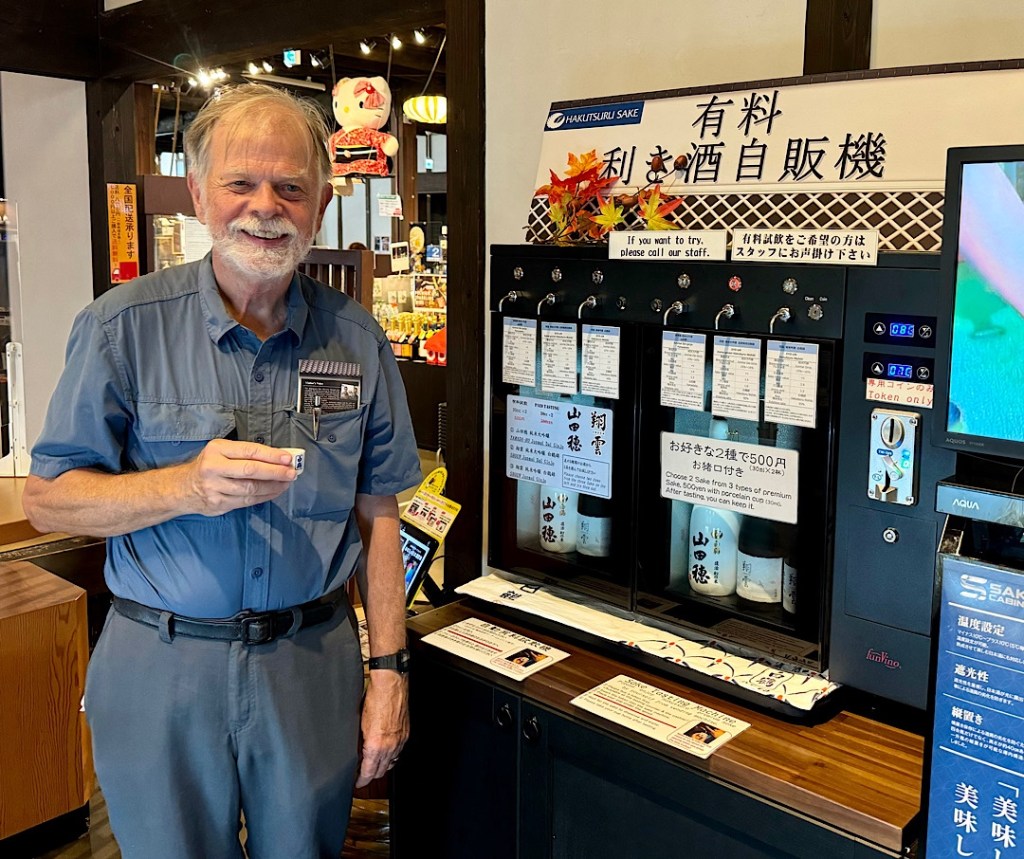
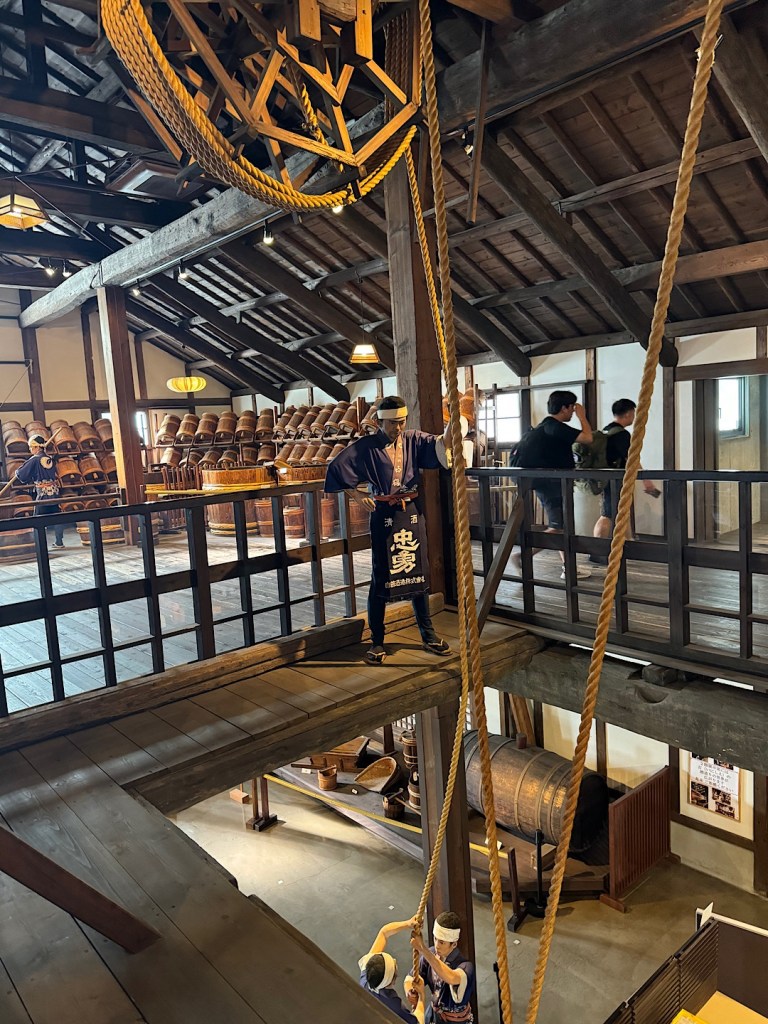
Besides learning about how you make sake, we got to taste three free everyday offerings. For an extra 500 yen (about $3.50) per person, we were able to try three higher-grade versions of the rice wine, dispensed by a machine.The Hakutsuru Sake Brewery Museum also boasted excellent life-size historical figures.
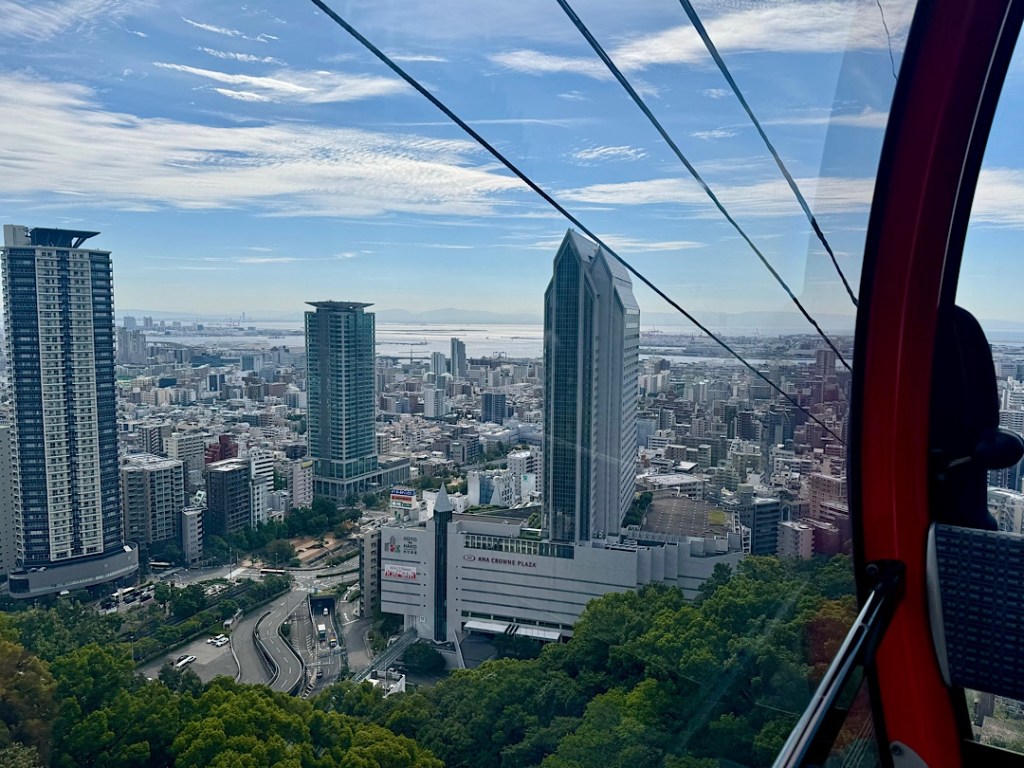
The next day, we took the ropeway up the mountain next to our hotel. It deposited us at the Kobe Nunobiki herb garden, one of the biggest and best herb gardens in all Japan.
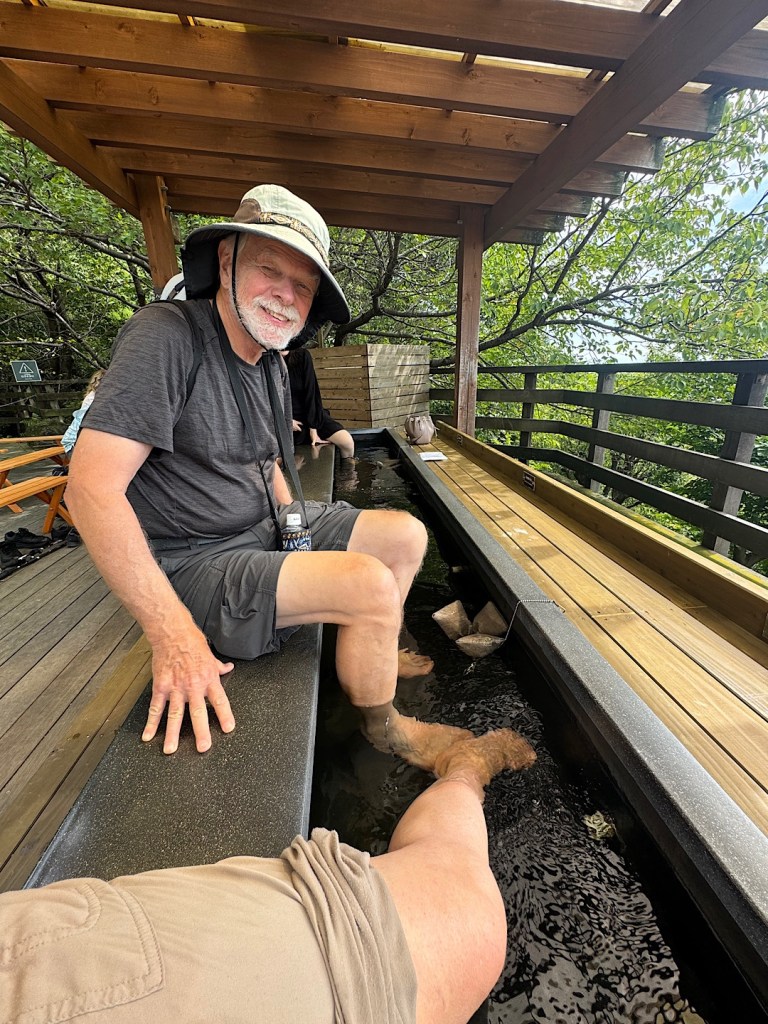
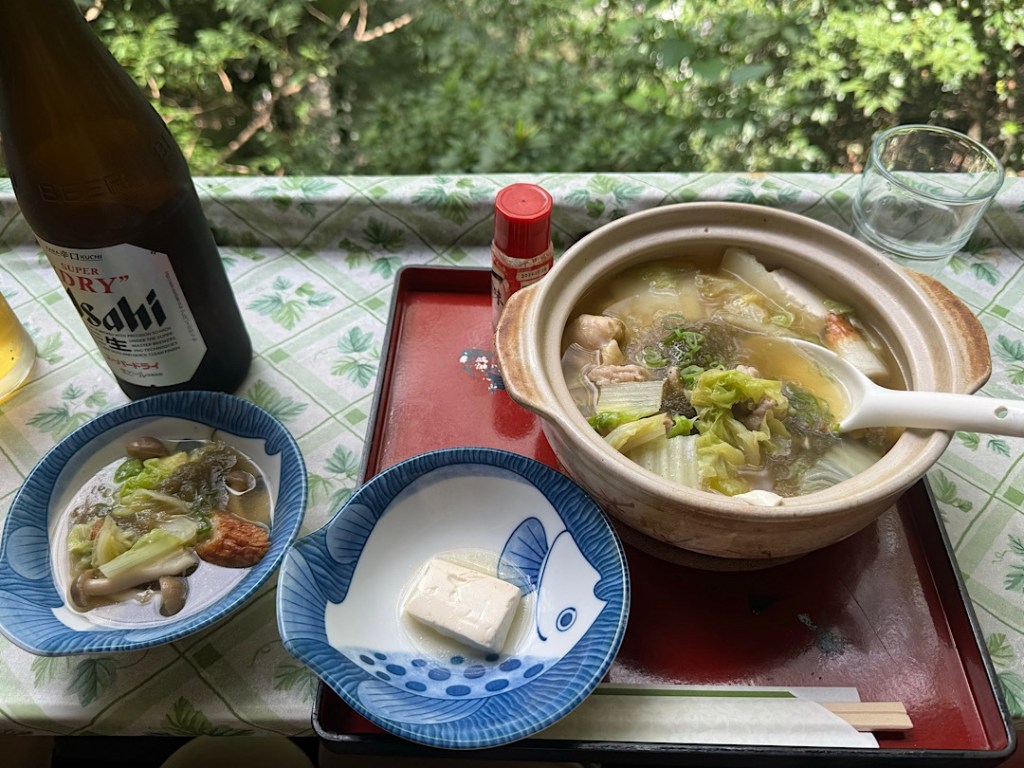
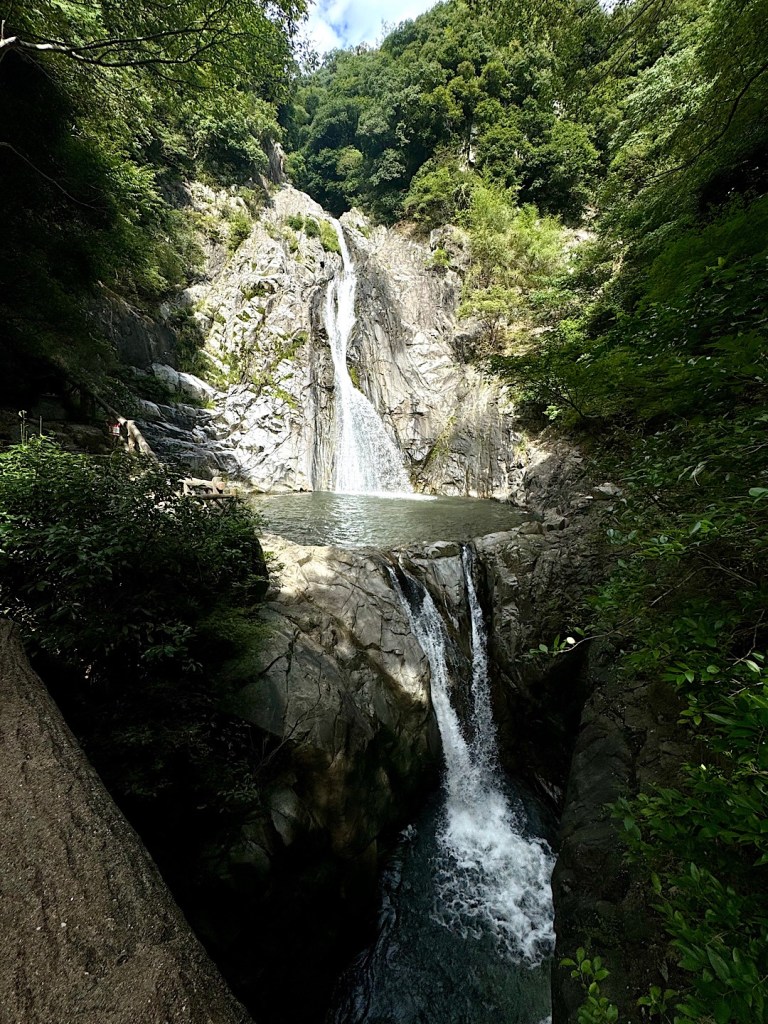
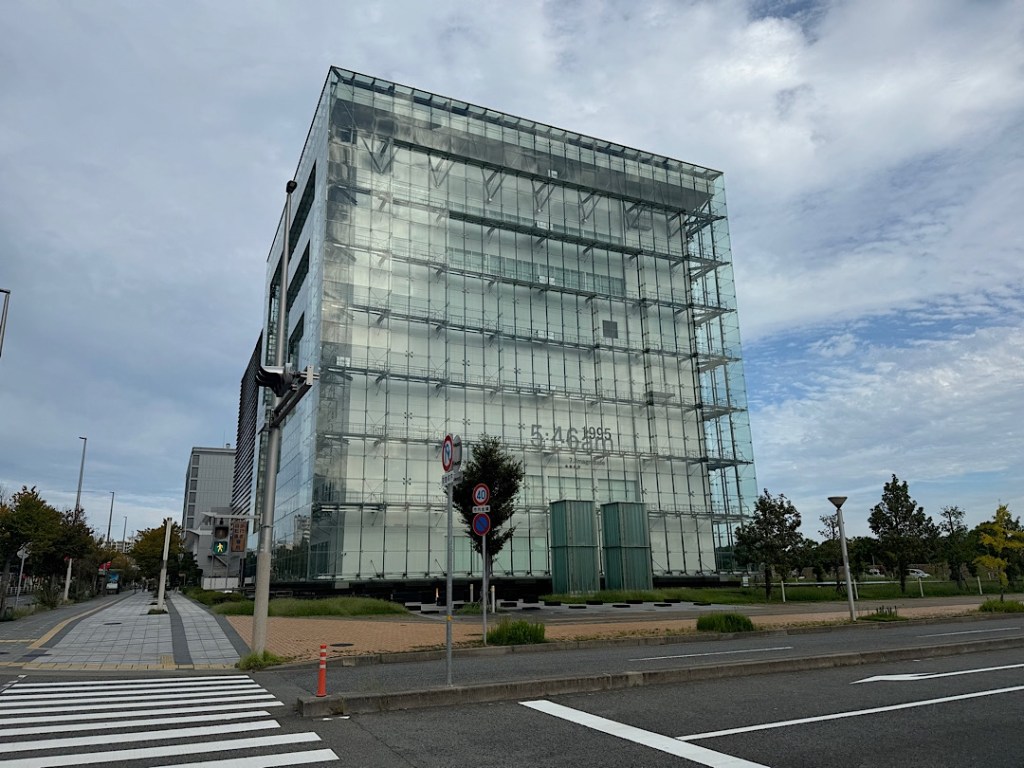
Views of the city and distant sea line were dazzling — as were those of our hotel (the nearest skyscraper to the cable car line.)The garden offered many beautiful plantings, along with some unusual features.We were able to stop for an herbal foot-soaking.And we found some delightful ways to relax. Then we hiked down the mountain, stopping at a 100-year-old tea house for lunch at seats where we could look at the Nunobiki Falls, ranked among the most impressive in Japan. They certainly impressed us.Wednesday afternoon we found our way to this building: the Great Hanshin-Awaji Earthquake Memorial and Disaster Reduction and Human Renovation Institution.
It may sound like a mouthful, but Japan is vulnerable to so many disasters — earthquakes, tsunamis, volcanic eruptions, cyclones, flooding, and mudslides. Kobe suffered a particularly dreadful earthquake back in 1995, and this museum shared what happened then in terrifying detail, along with the efforts to mitigate the impact of such disasters today.
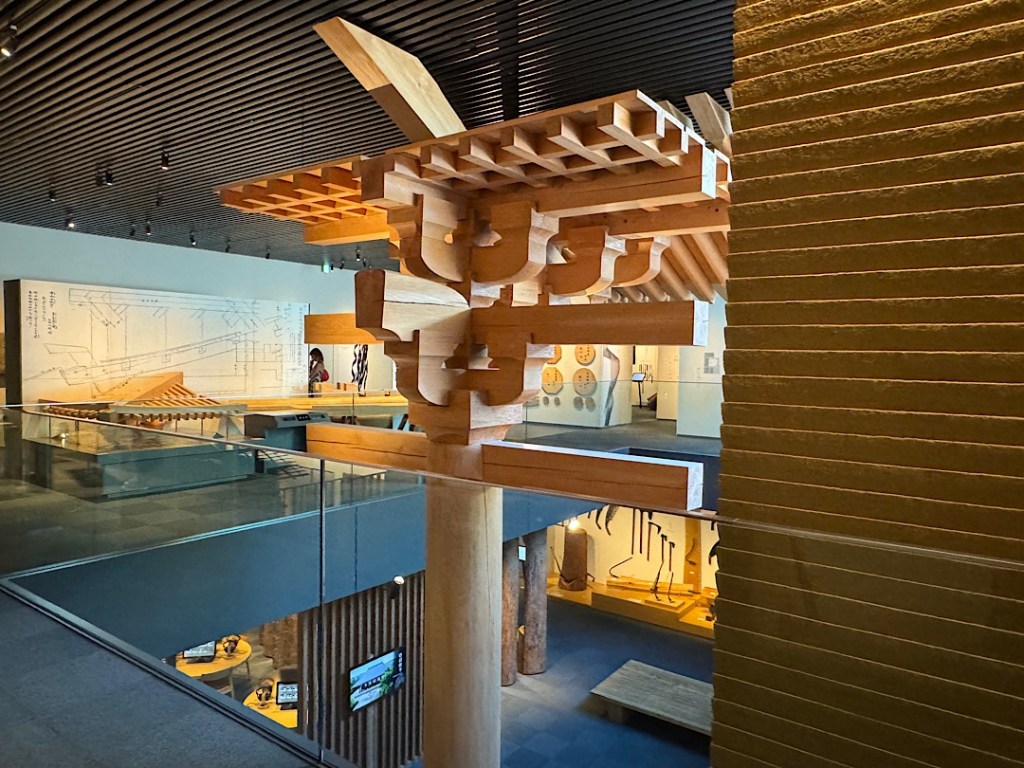
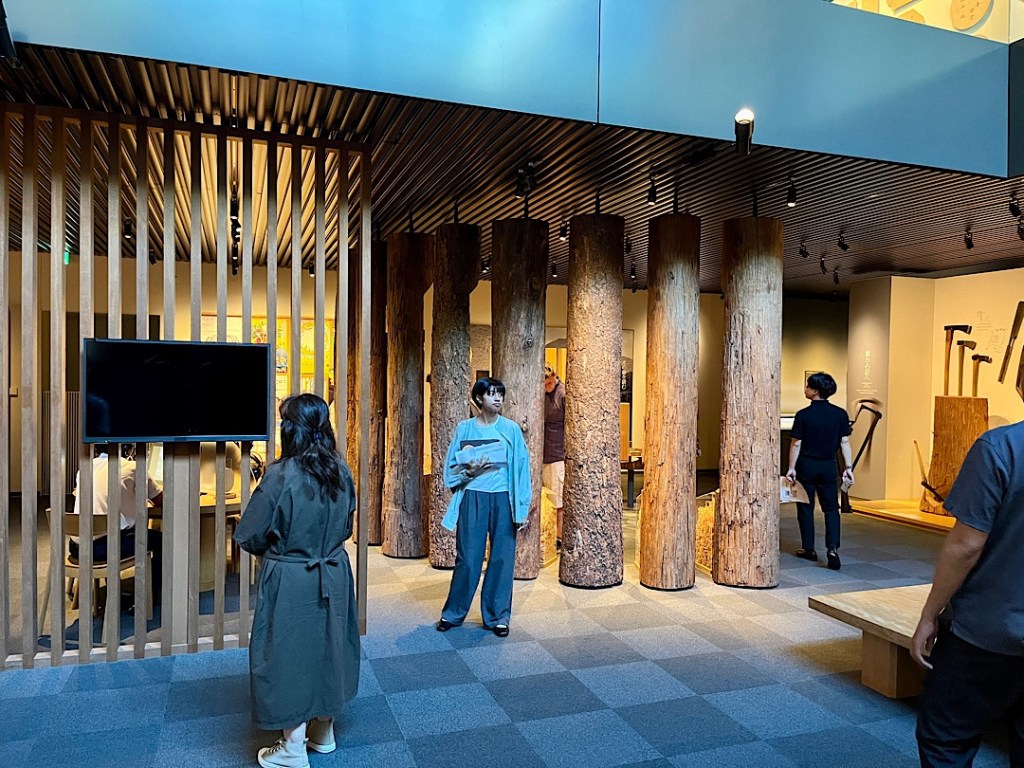
We had a far more peaceful experience Thursday morning at the Takenaka Carpentry Tools Museum, just a short walk from our hotel.
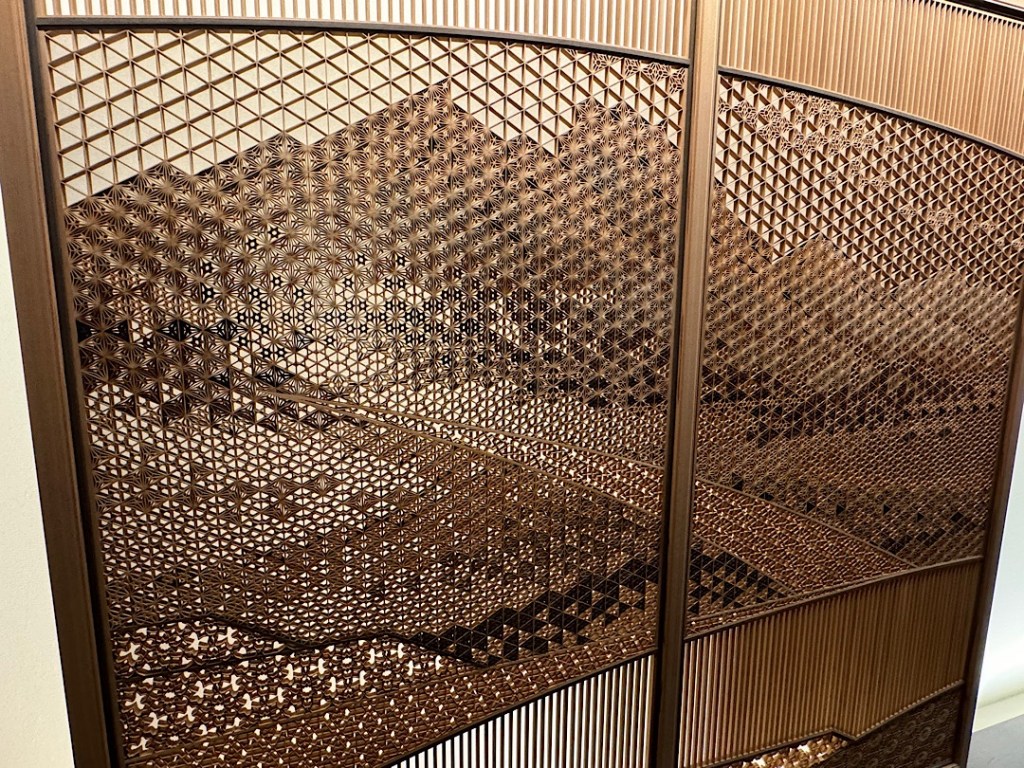
Surprisingly engaging and beautiful, it explained some of the mysteries of traditional Japanese wood construction, covering everything from the tools employed to the raw materials to the gorgeous finished products.
Yesterday we hustled back to the train station to catch more trains for the island of Shikoku, across the Inland Sea from Kobe. We’ll be traveling on Shikoku for 8 days, doing something we once thought would be more terrifying than some of those natural disasters — renting a car and driving ourselves around in it.
I can’t describe all the interesting things we experienced in Tokyo, but for me the biggest highlights were:
1) Checking out the new Toyosu fish market
I had been to the city’s central fish market on two occasions over the years, both seared into my memory. The Tsukiji market was a huge ancient property to which fishermen every morning delivered a staggering quantity of items to feed this country’s appetite for every conceivable product of the sea. Visitors could just stroll in and ramble through it, a thrillingly dangerous pastime as you dodged forklifts careening through the dim, narrow aisles, past fishmongers wielding bloody saws and axes and flashing knives. On offer were massive tuna and every other kind of fish, banal and exotic, along with a vast menagerie of mollusks.
Then the city decided to build something bigger and more modern. The Toyosu fish market replaced Tsukiji in October of 2018, and we were eager to see it. After the long plane rides followed by our monorail and subway journey Thursday night, we didn’t feel like dragging ourselves out of bed at 5 am Friday morning. We only got out the door about 7 am, and it was 8 by the time we reached our destination. That was well after most of the commercial action had concluded, but even if we’d arrived two hours earlier, I’m sure I would have been disappointed.
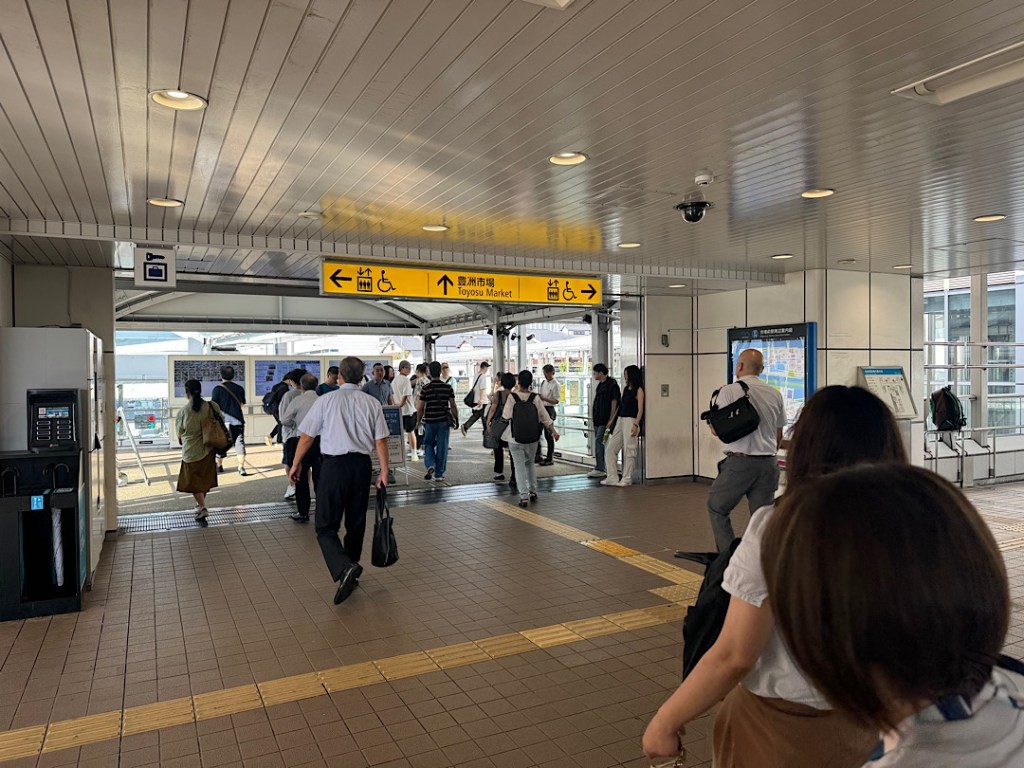
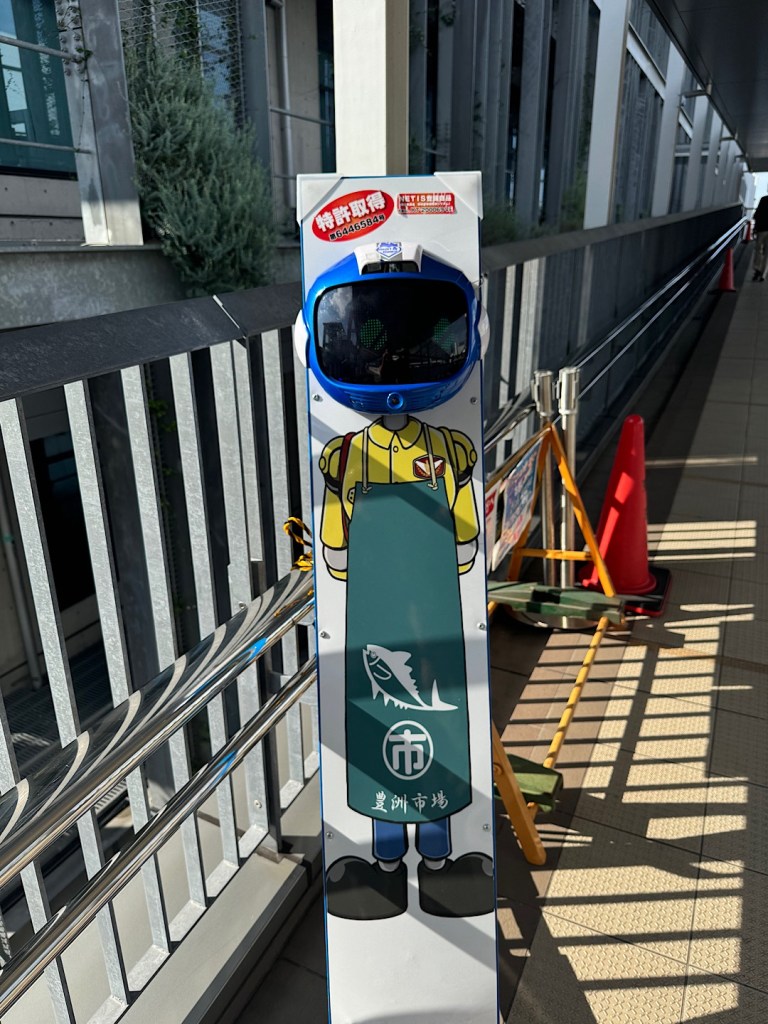
The metro station gleams,A multilingual robot greets visitors, And signage is clear and plentiful.
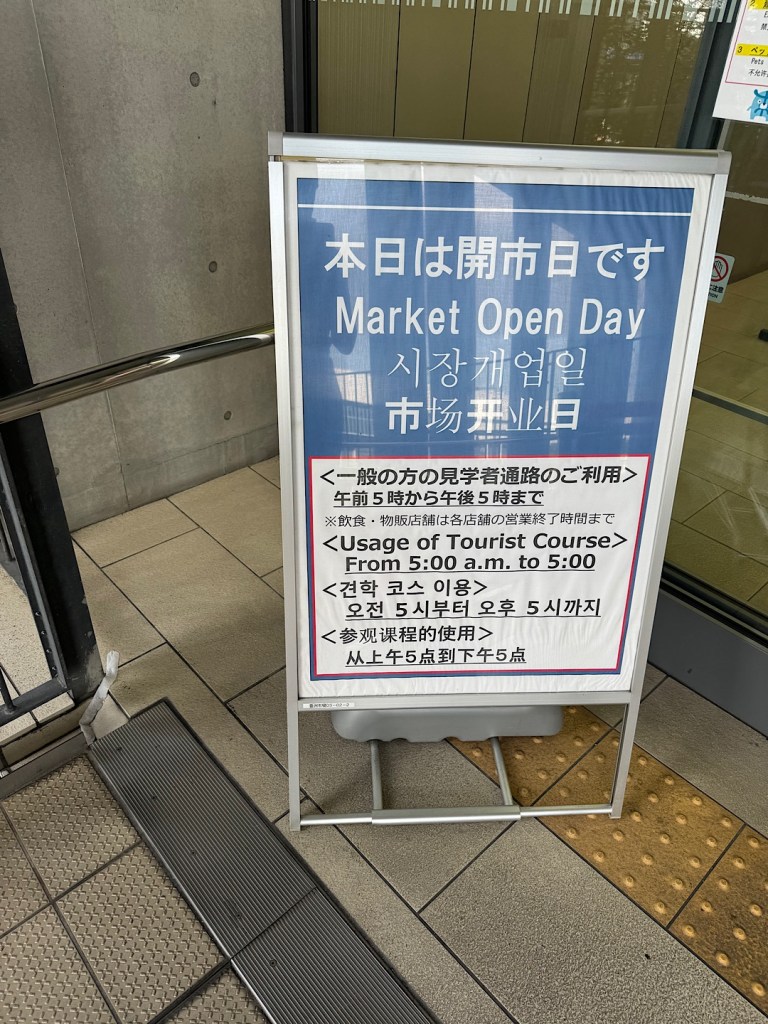
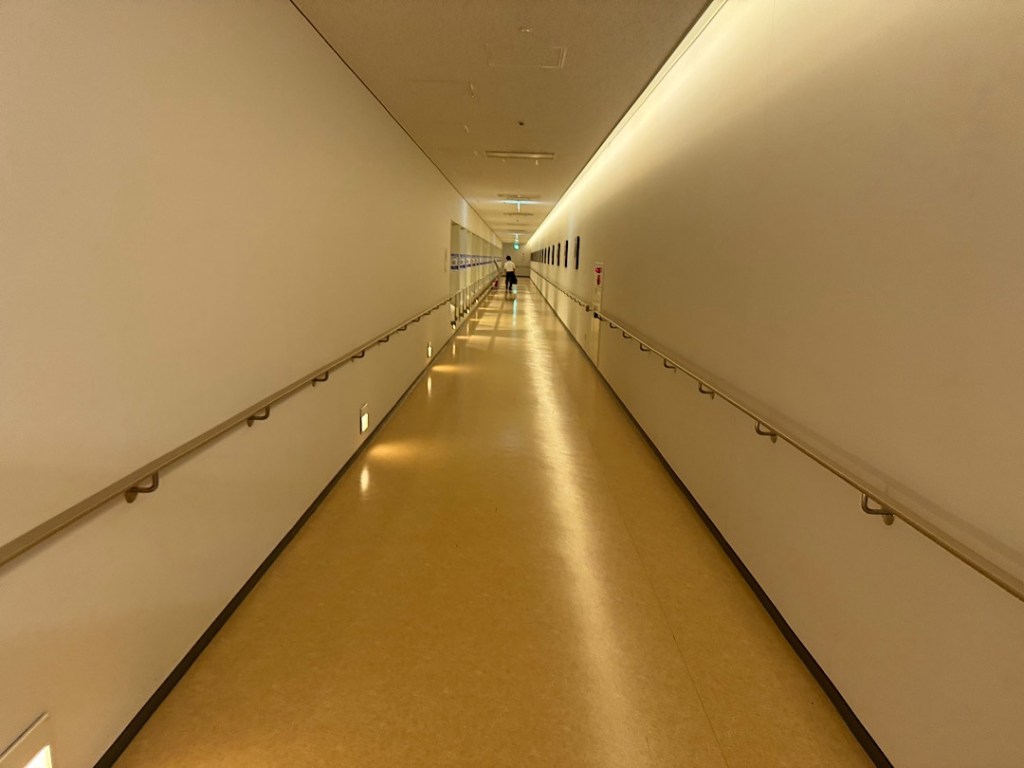
The new market is enormous and welcomes visitors even more clearly than its predecessor did. But now you walk through surgically clean corridors that feel endless.
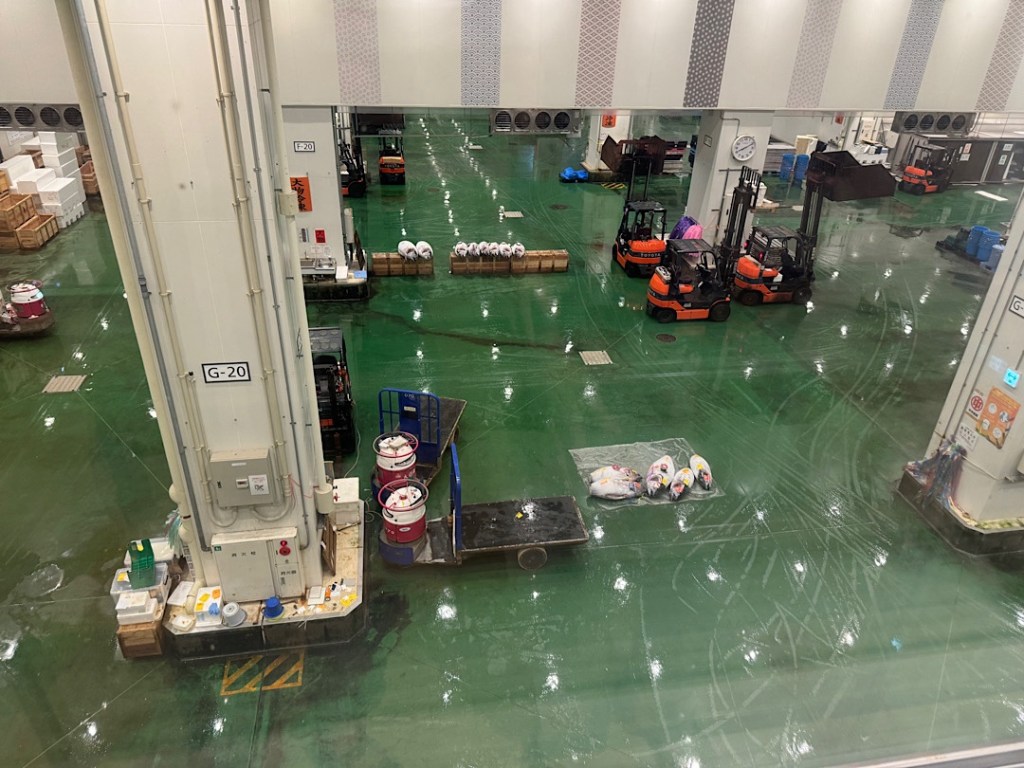
They take you to a gallery overlooking workers far below. No blood or guts were evident; no fishy smells.
This was the view of the wholesale fish floor from the visitor’s gallery. Not yet 8 a.m., all we could see were a few frozen carcasses.Another enormous building houses a wholesale produce market, but it wasn’t any more interesting, as seen from the visitor’s gallery.
I’m sure it’s safer for the tourists and probably the workers too, a Brave New Fishmongering World that I wouldn’t have missed seeing. But I walked away grateful I also had tasted its raw and juicy former incarnation.
2) Having my mind blown at the city’s two teamLab centers
I almost never go to art museums when I’m outside the US. It’s not that I don’t enjoy looking at paintings and sculptures. But for me most museums pale in comparison to walking around and taking in the architecture and shops and street-level glimpses into local life.
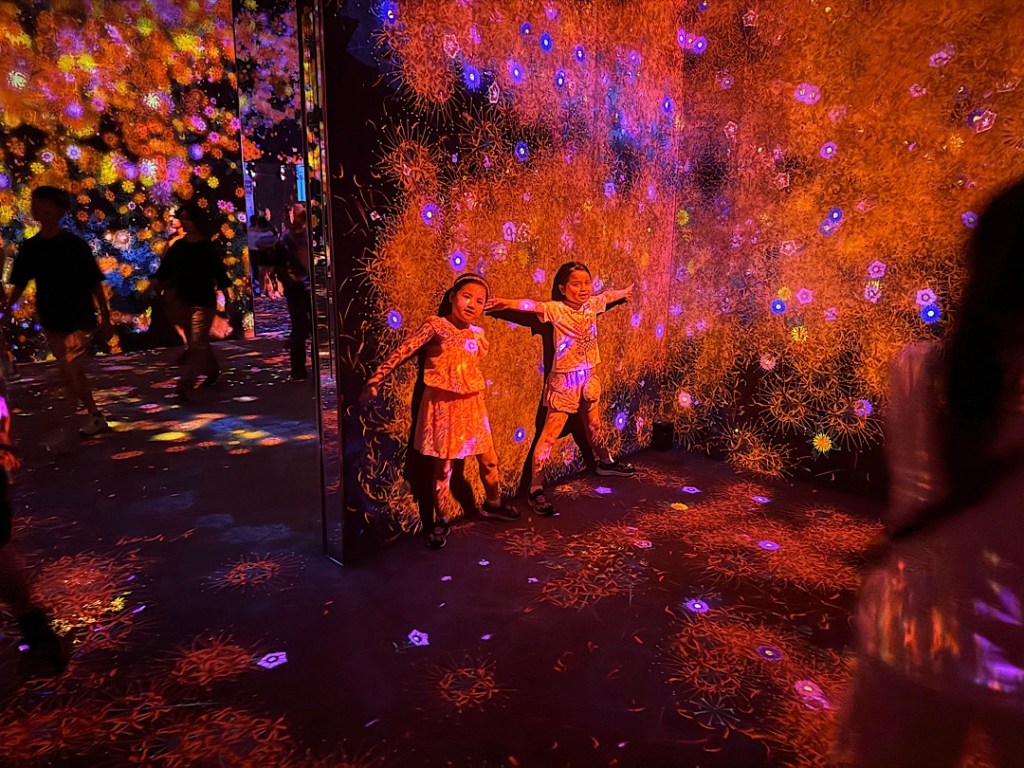
The teamLab art collective doesn’t make ordinary art, however. The collective started more than 20 years ago in Tokyo and has evolved into an eclectic crew of so-called “ultratechnologists” — engineers, artists, animators, architects, and other specialists who create spaces in which participants can lose themselves in fantastic, “borderless” wonderlands. Two are currently open in Tokyo: teamLab Planets (just a short walk from the new fish market) and teamLab Borderless. The latter first opened in 2018 and immediately became the most visited museum in the world (according to the Guinness Book of Records folk.) It then closed and an expanded version opened in February, 2024. Steve and I went to both installations (one Friday morning and the other on Sunday.)
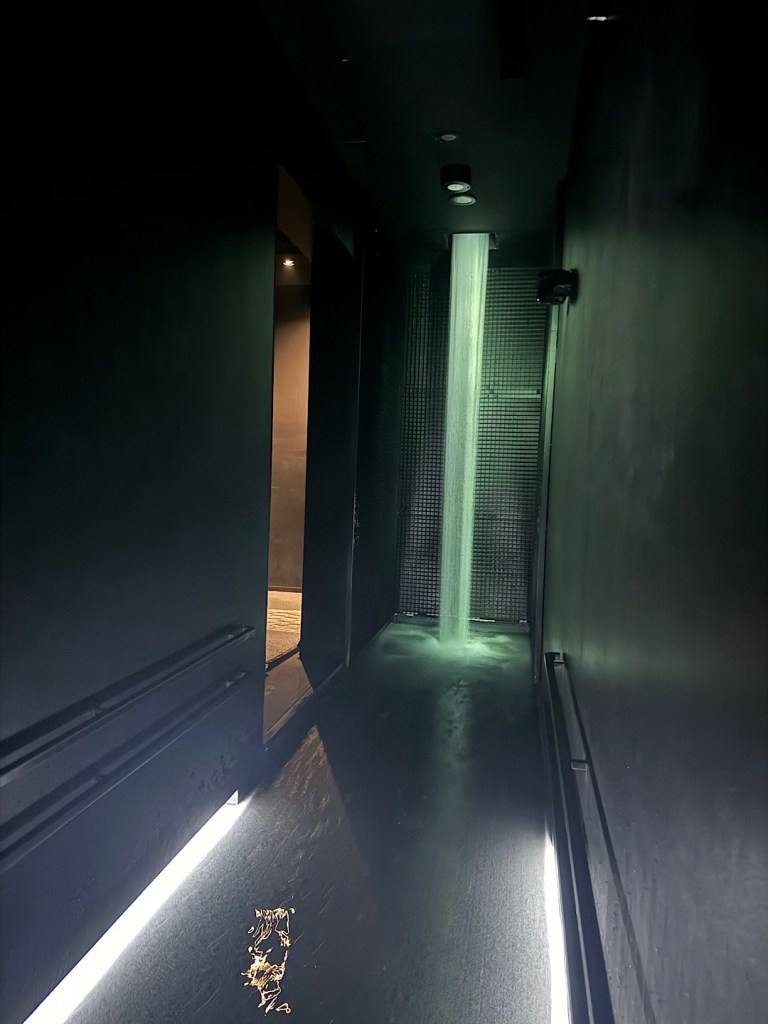
We loved them both but Planets was our favorite. We had to take off our shoes and stow them in lockers, not because this is Japan but because visitors enter by ascending a long, dark ramp down which water streams.
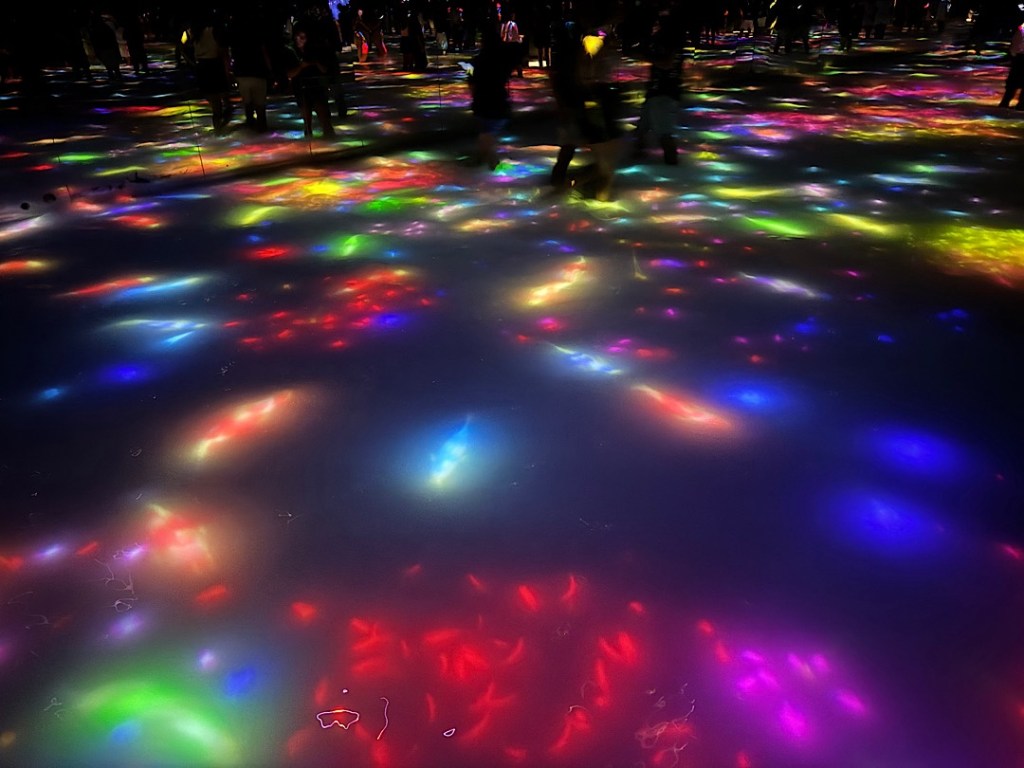
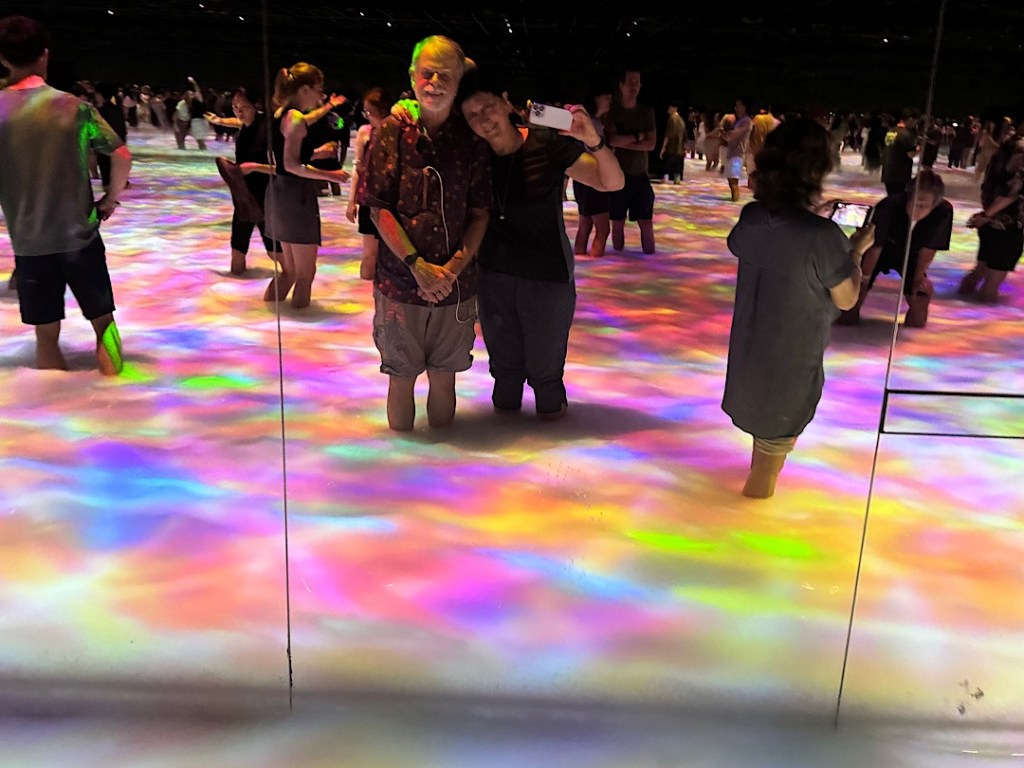
Later we reached an enormous room filled with knee-deep water. Against a mesmerizing musical backdrop, digital fish swam around all us waders, changing course in reaction to our presence. Sometimes the fish transformed into flowers. Petals dropped off and floated through the water and turned back into fish.
I’ve never experienced anything like it — and what we found in the other “galleries.”
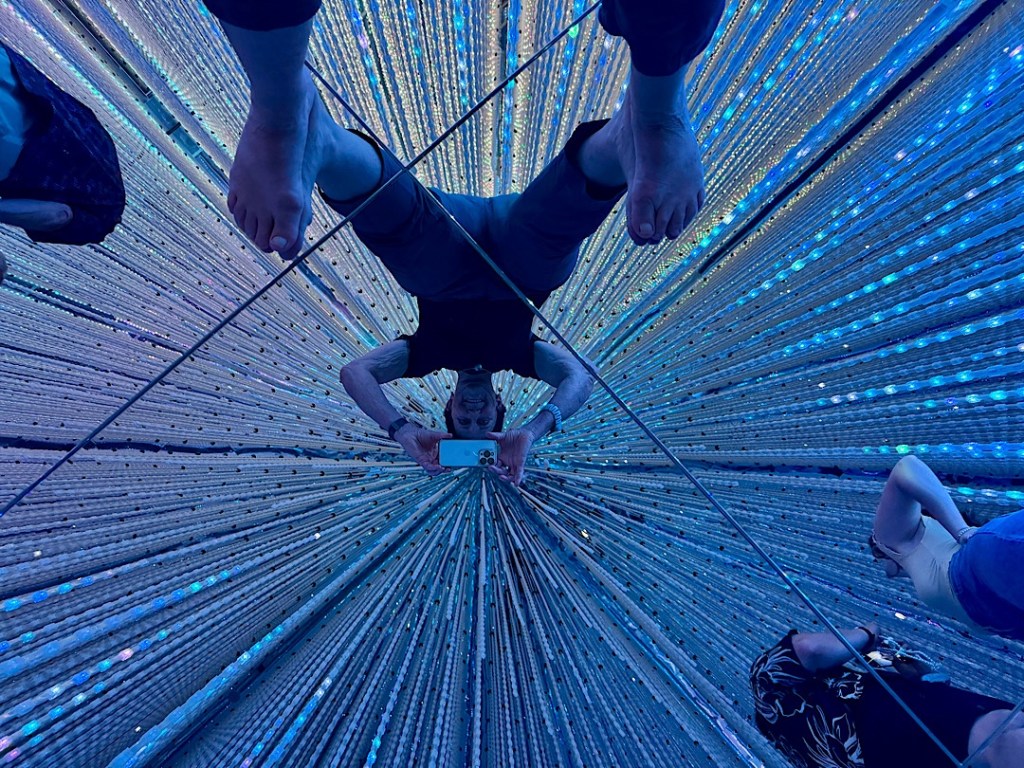
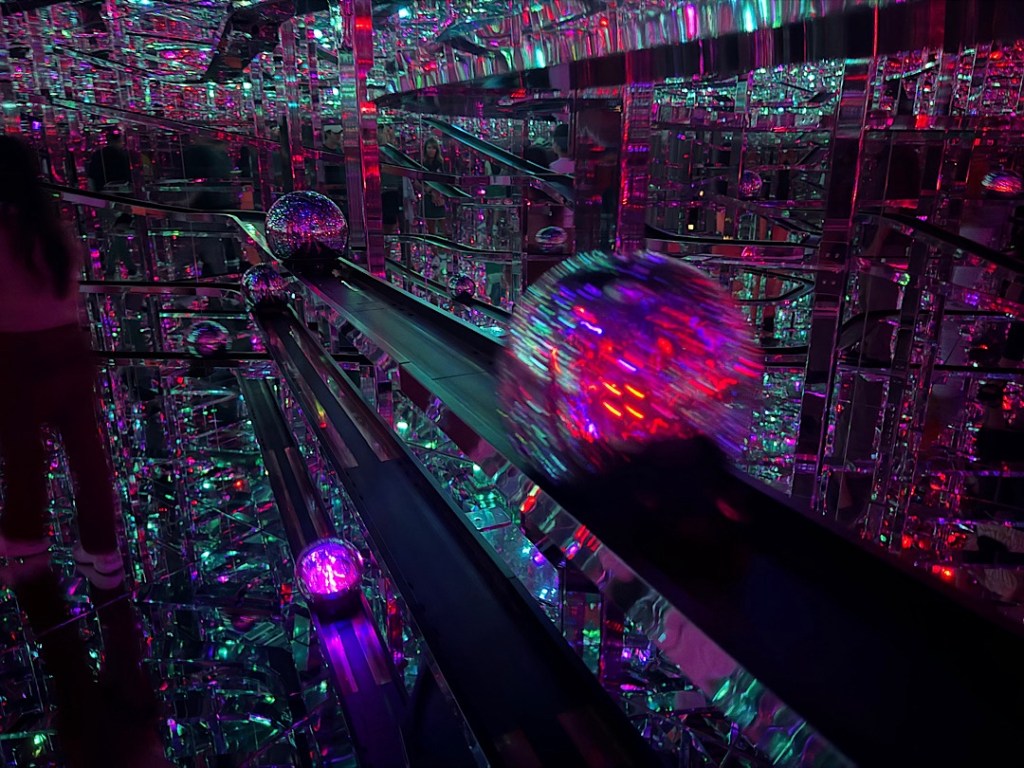
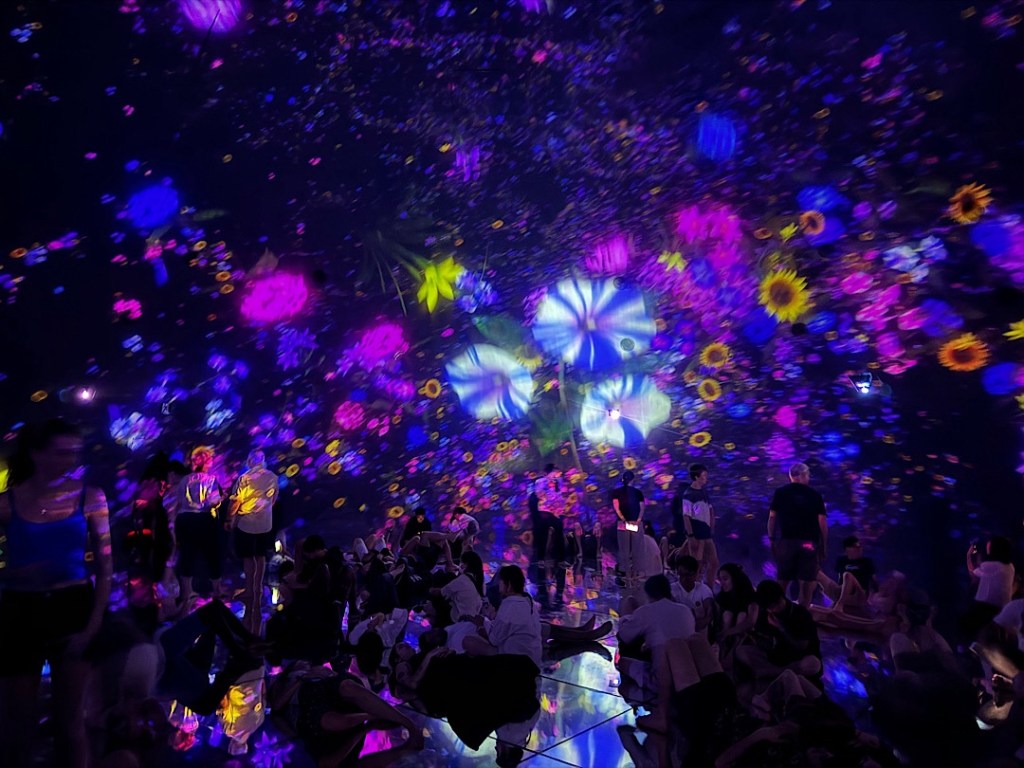
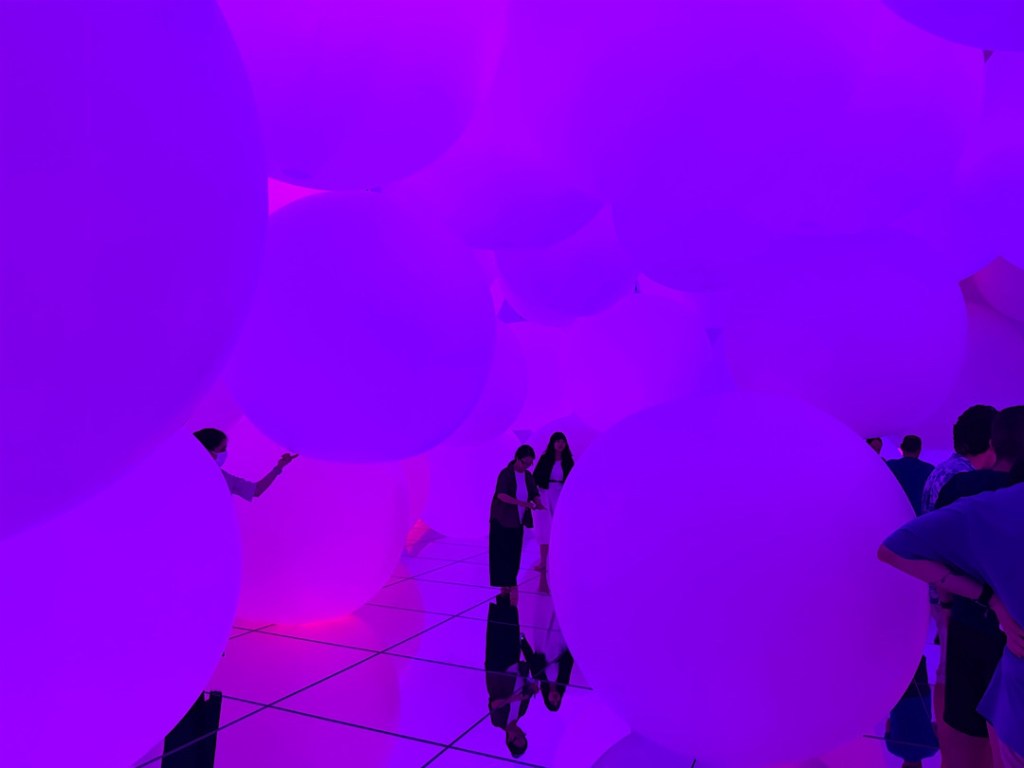
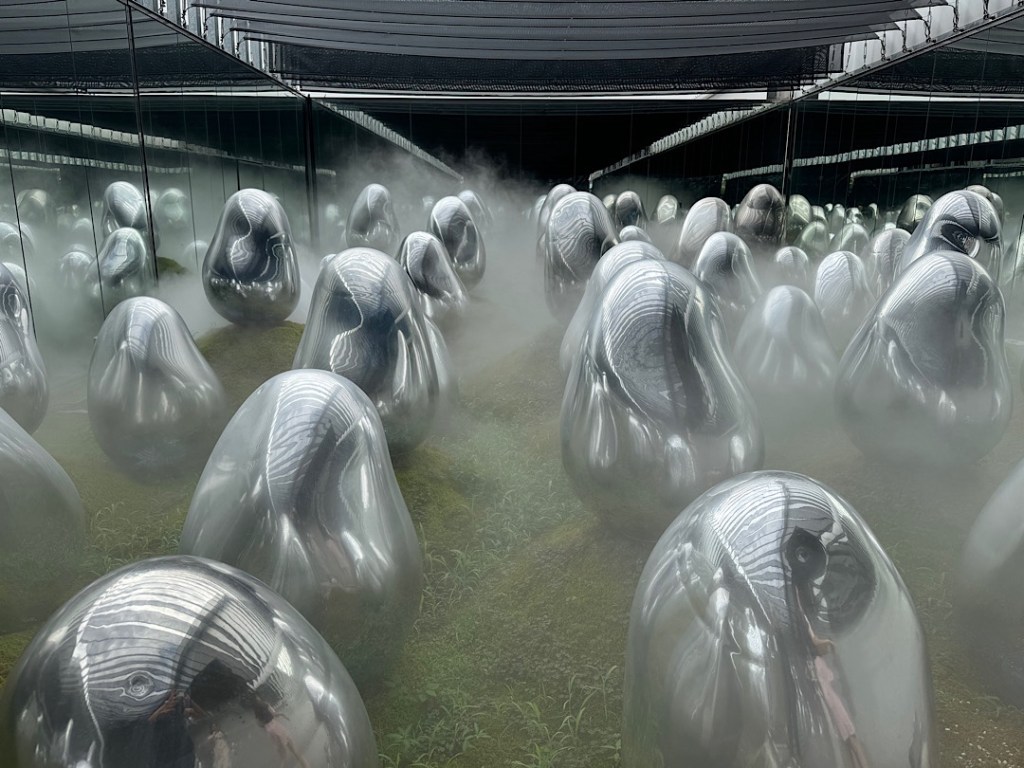
Mirrored walls and ceilings and floors contribute to the sense of infinite wonders.In this gallery, you could lay on the floor and be showered by what felt like all the flowers in the universe.The gigantic balls in this room changed color — in response to the music. And the visitors’ presence?The Planets site includes two beautiful gardens, this one populated by alien shapes nestled in mossy beds.In a second one, we lay among a moving profusion of flowers that appeared to be growing down.
It made me wish I could take every one of my family members and friends to both of these amazing experiences.
3) Attending the sumo tournament
I’m also not big on spectator sports at home or abroad. But sumo is so wildly Japanese it tickles me. The giant wrestlers only compete in six big 15-day-long tournaments a year. Only three of those are held in Tokyo. When I learned that one of the Tokyo tournaments would be wrapping up during our visit, I couldn’t resist getting tickets.
Steve and I went Saturday afternoon, the second to the last day. We watched the action for about two hours, and now that I’ve seen it I can offer a few pointers to anyone thinking of following in our footsteps.
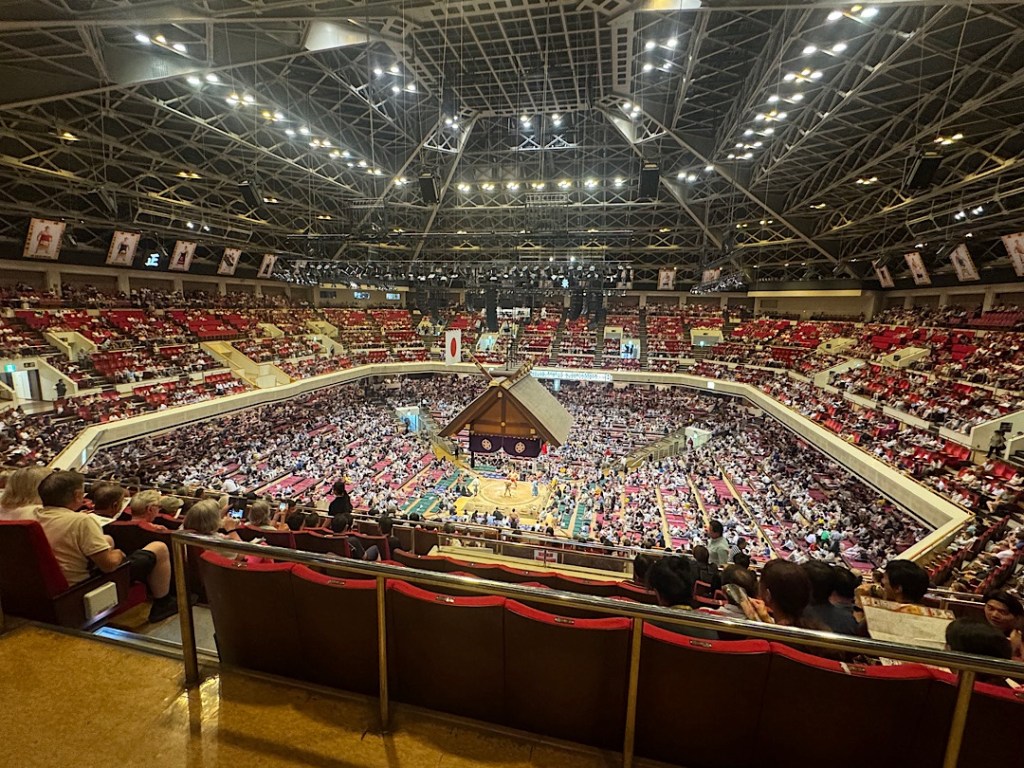
— Because I wasn’t sure how much we would enjoy it, I bought us the cheapest seats (about $65 apiece) Even in the highest sections, we could see all the action clearly.
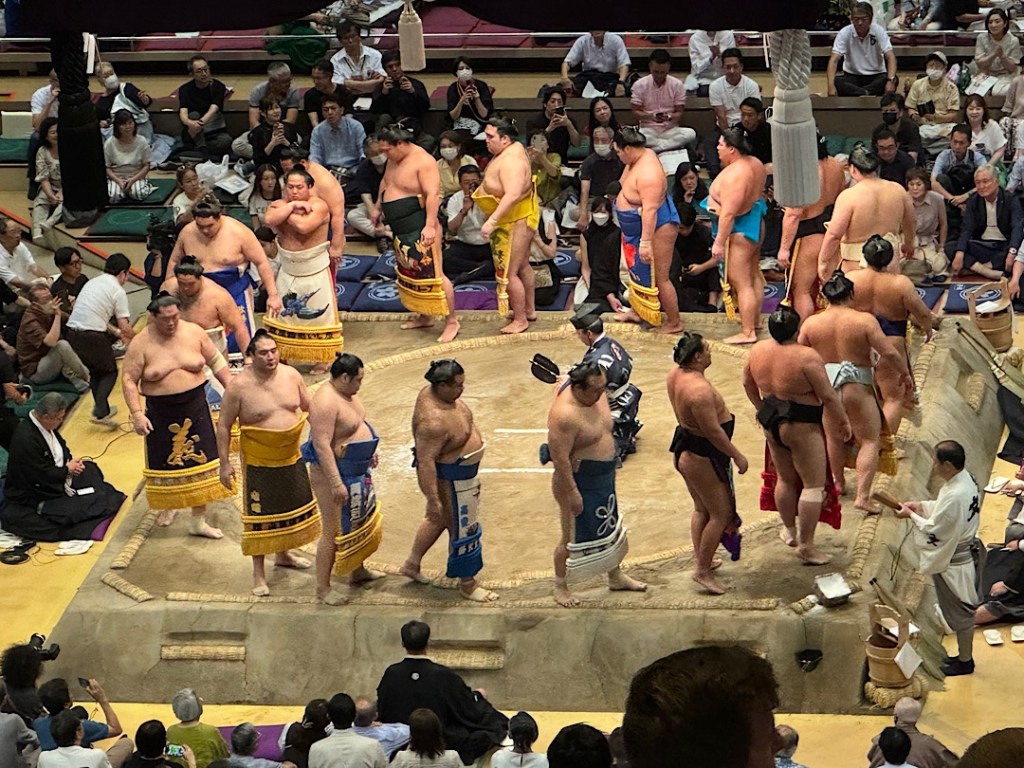
With my camera’s telephoto lens, I saw a lot more. Here are the highest-ranked competitors taking a ceremonial turn around the ring.
Still, it would have been even more fun and exciting to sit closer to the ring. I wouldn’t want one of the best seats because they’re not “seats” at all but mats on the ground. Also, the wrestlers occasionally get thrown into the front rows, and having one land on you looked like it could be painful.
— The wrestlers go through a lot of ceremonial posturing before they start grappling each other. They throw salt into the ring for good luck. They slap their massive bellies to ward off evil spirits. They play chicken games that trigger the fight. But it didn’t take long to puzzle out the basics of what was happening; figuring it out was part of the fun. The action is very brief but often exciting, and the bigger guy by no means always wins (that video above notwithstanding.)
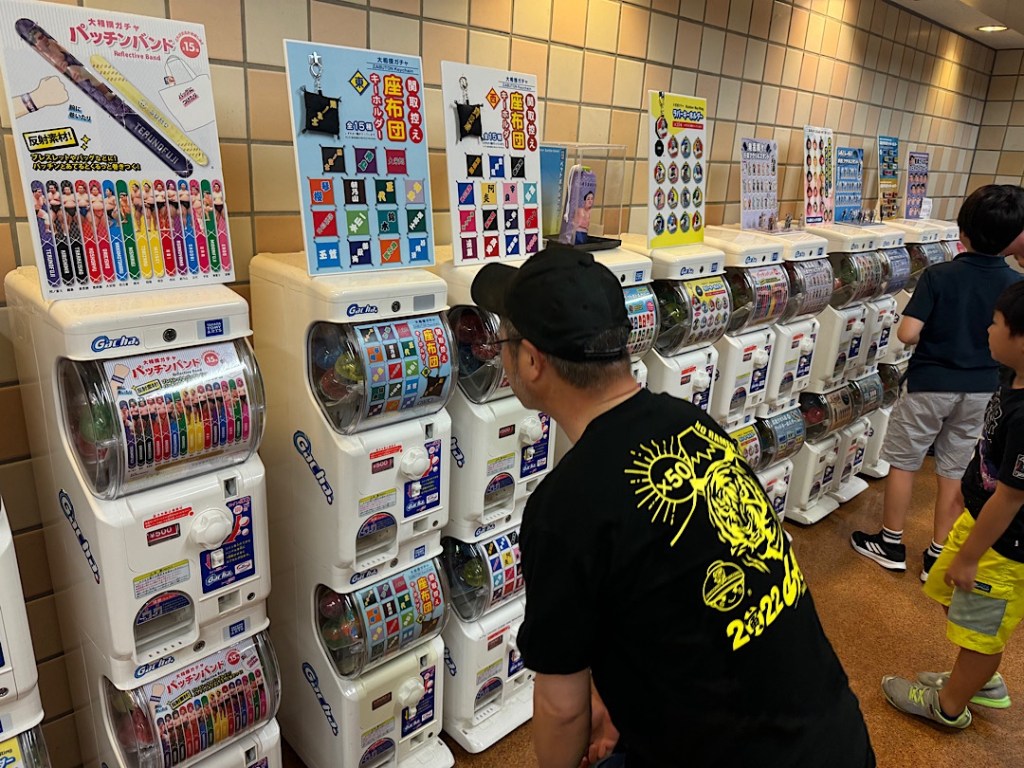
Wristbands? Keychains? Other tokens? You could buy it all.
— Wearing some sumo gear would enhance the fun. There was a lot of it on offer. The crowd was in high spirits and many were clearly devoted to their favorite wrestlers.
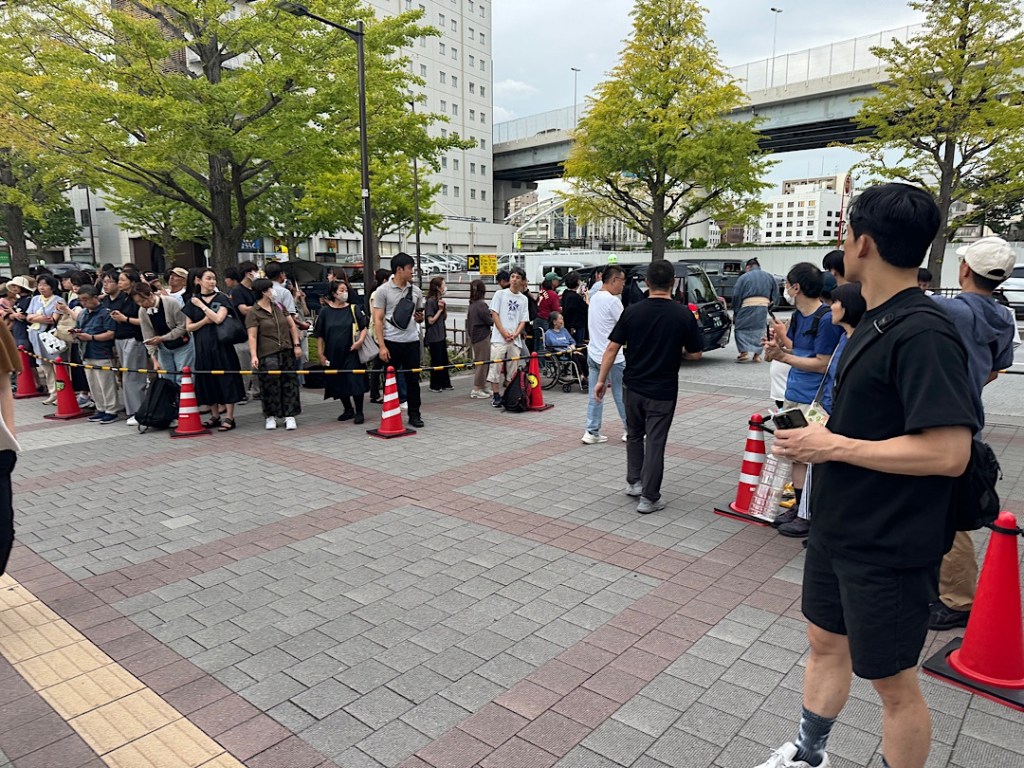
Fans waiting outside in the hope of getting an autograph.
4) Strolling through the neighborhood shrine festival
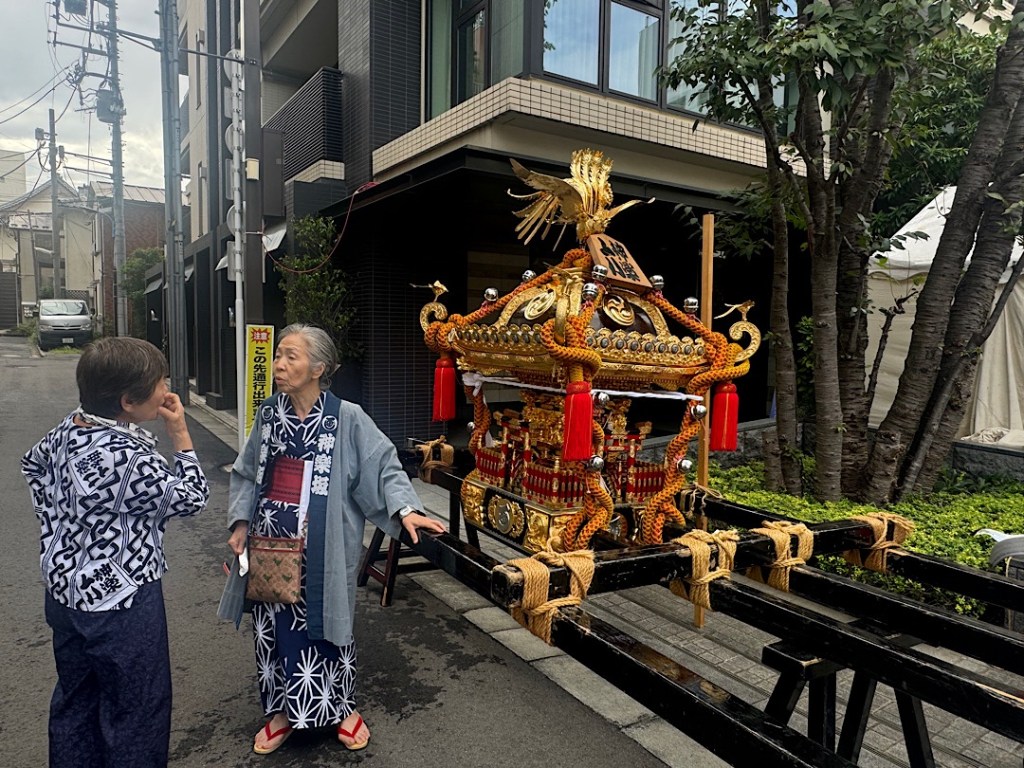
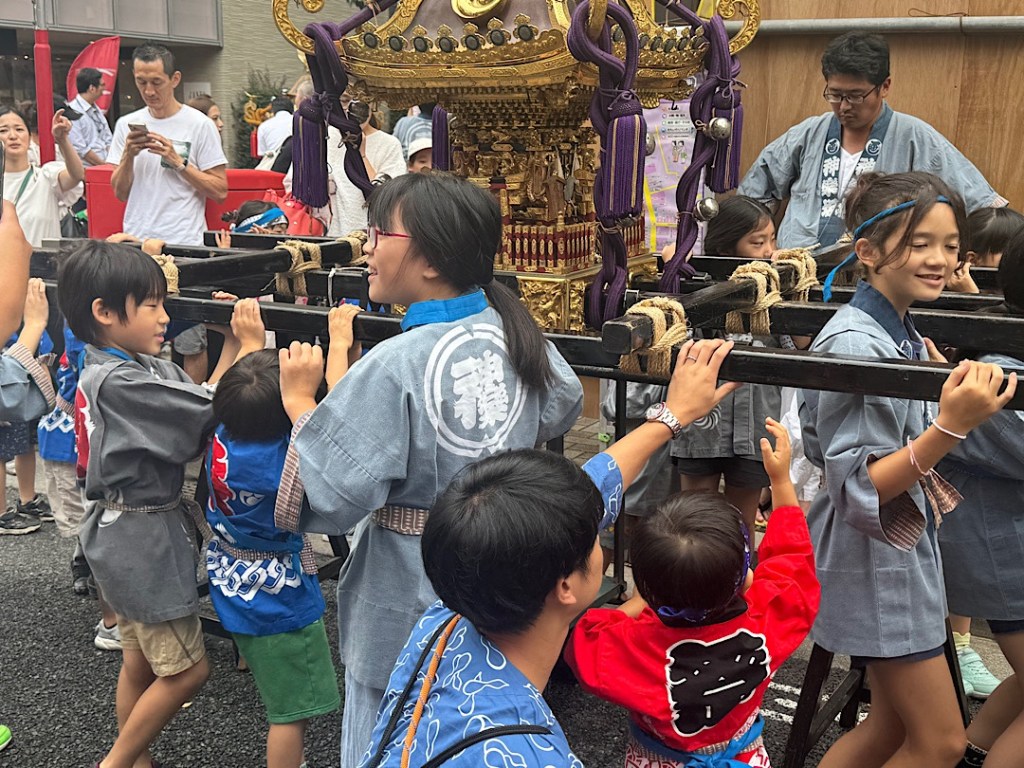
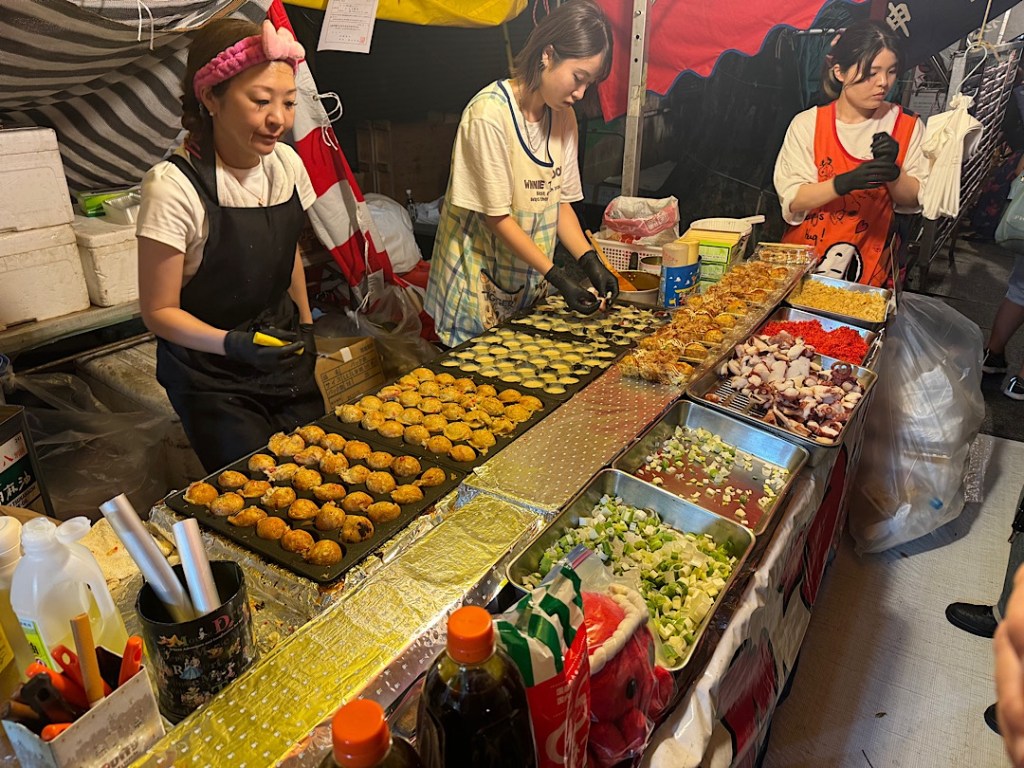
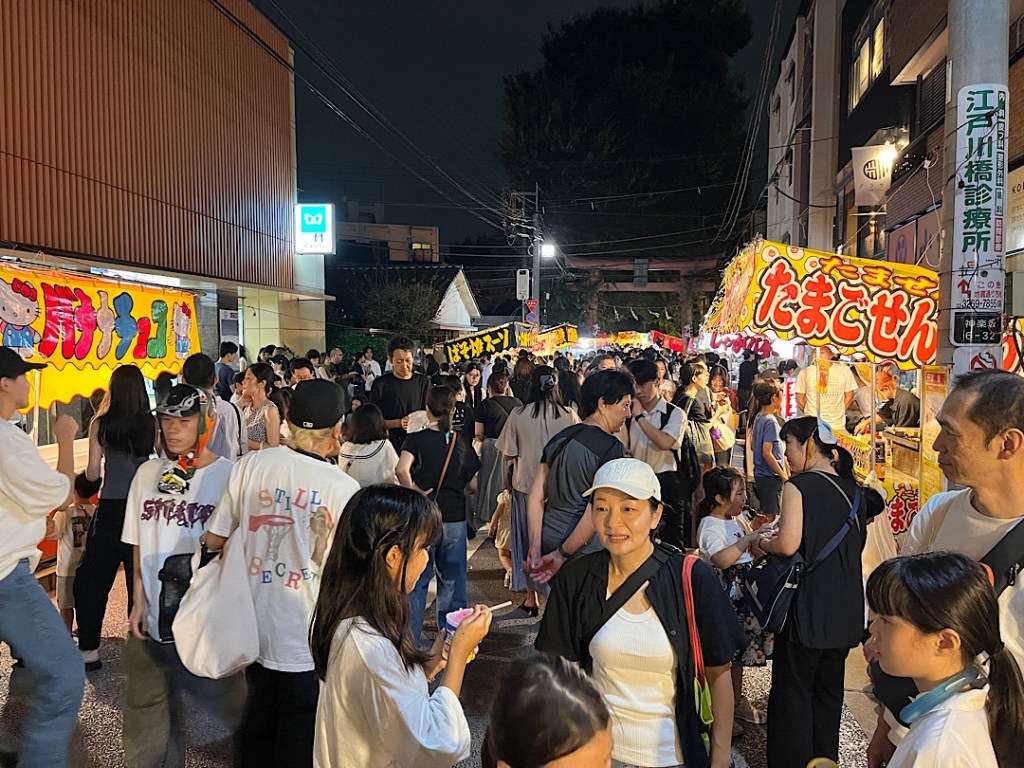
Most Japanese will tell you they’re not religious. But they sure do love a good shrine festival. Both Saturday and Sunday afternoon and evenings, the streets leading to Akagi Shrine (just a five-minute walk from our hotel) were jammed with folks of all ages; their good mood was contagious.
Portable shrines like this one are part of the action.Adults carry them through the street.Even little kids get to take part.But it’s also a chance to drink and eat delicious things like these takomaki — octopus pieces deep fried in delicious batter.Children play street games.The area around the temple was jammed.
5) Dining on Memory Lane and walking home
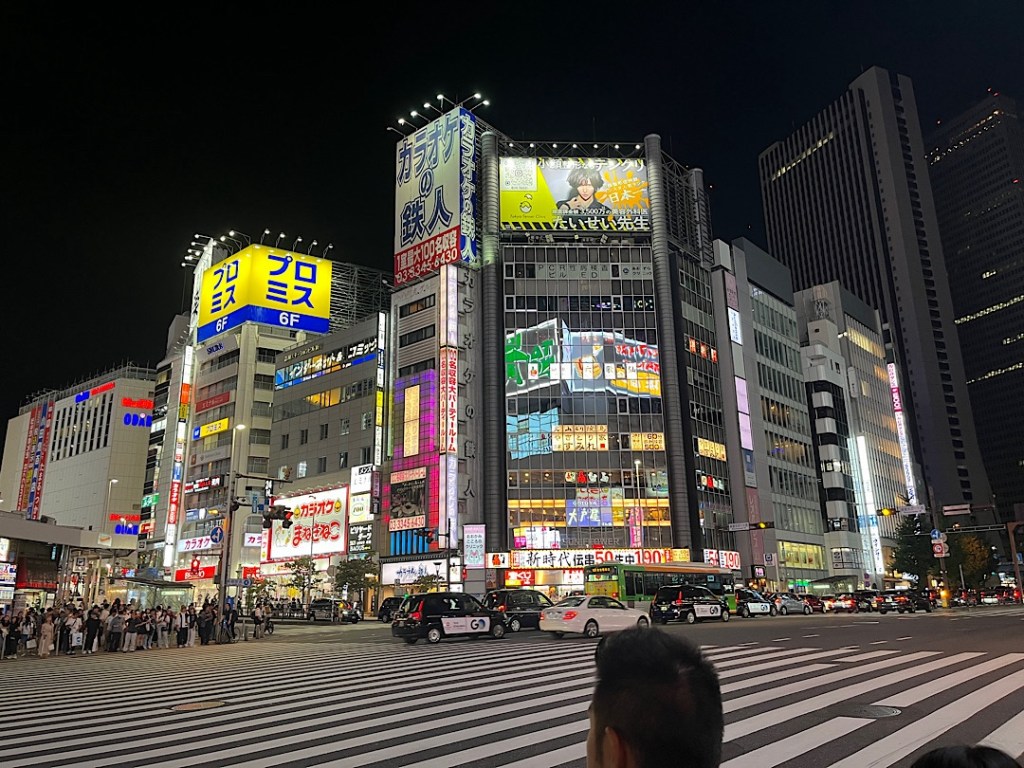
I was so in love with the Kagurazaka neighborhood where we were staying it was hard to leave it to go eat dinner somewhere else. But Steve and I also were huge fans of the “Midnight Diner” Japanese television series, and we wanted to see the neighborhood in which it was set. That would be central Shinjuku, just a few subway stops away from our hotel. It’s so densely crazy you almost expect to see air cars zipping among the skyscrapers.
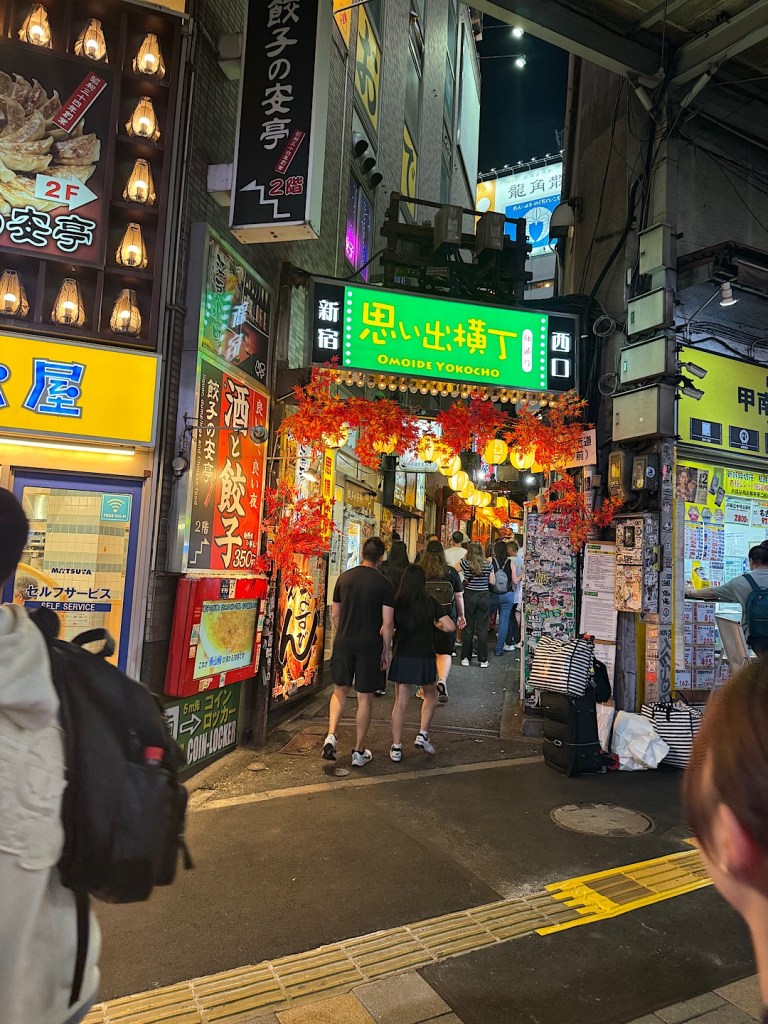
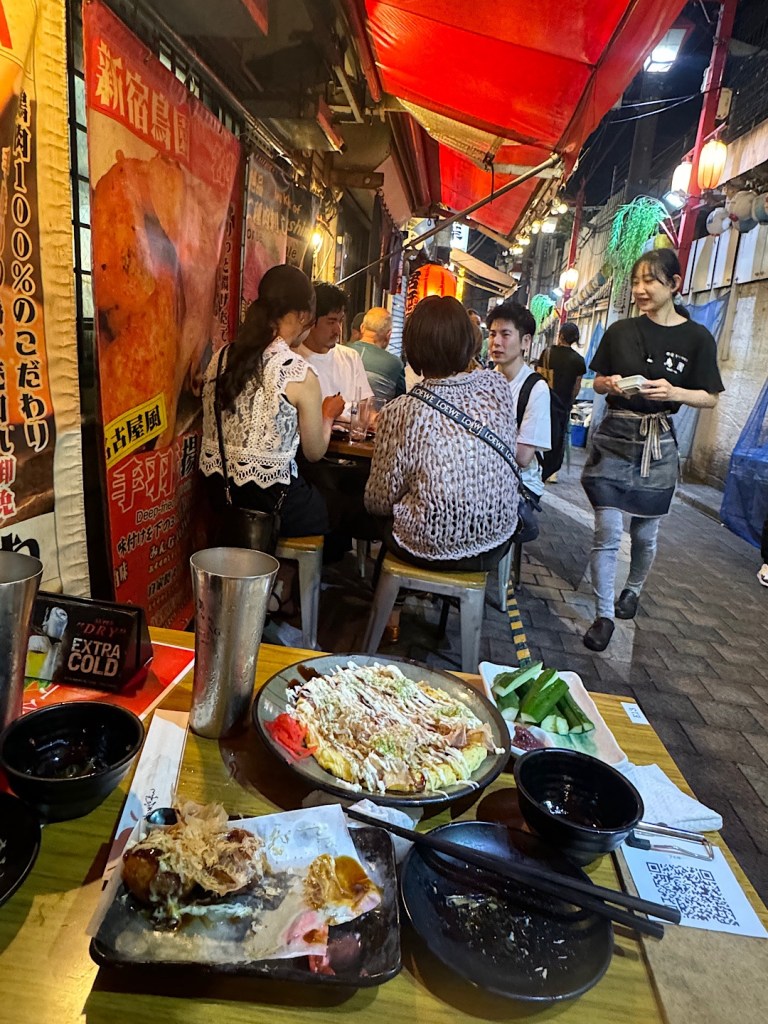
It felt like a miracle when we found the entrance to Omoide Kotocho (Memory Lane), a jolly throwback to 1980s-era Tokyo.
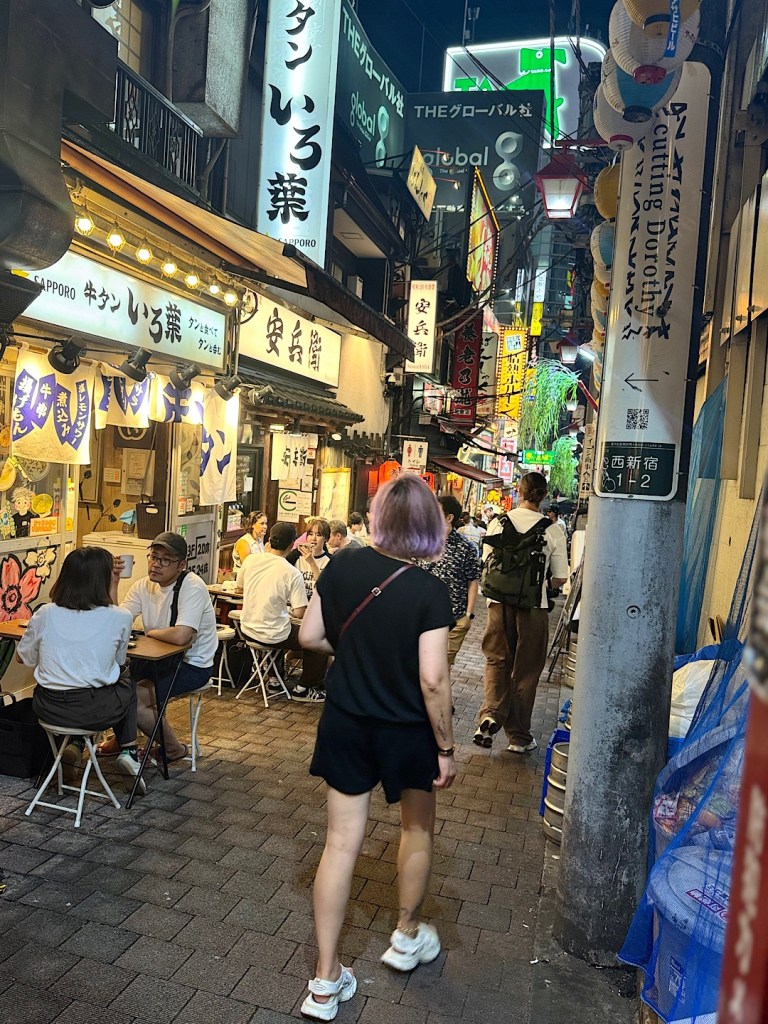
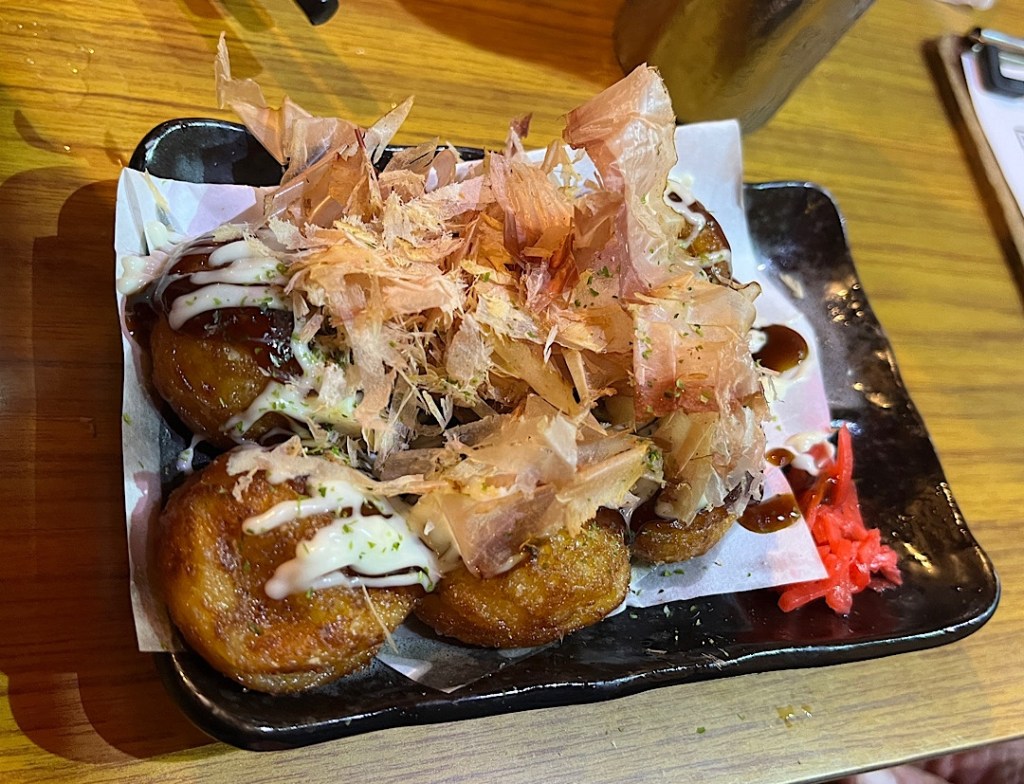
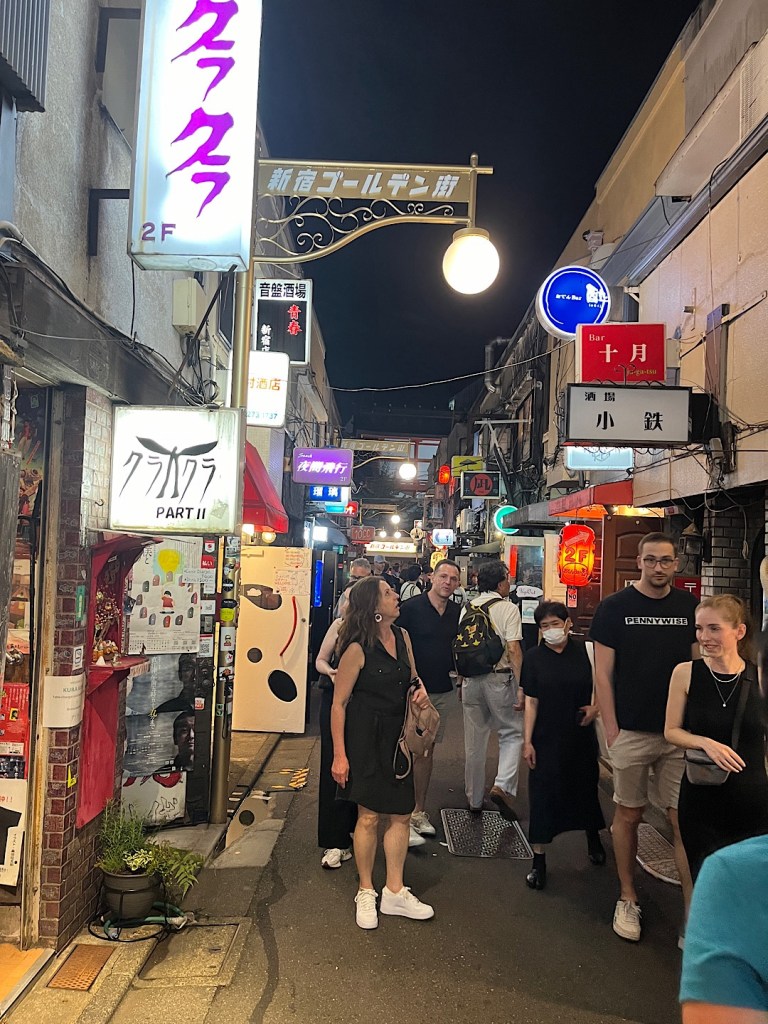
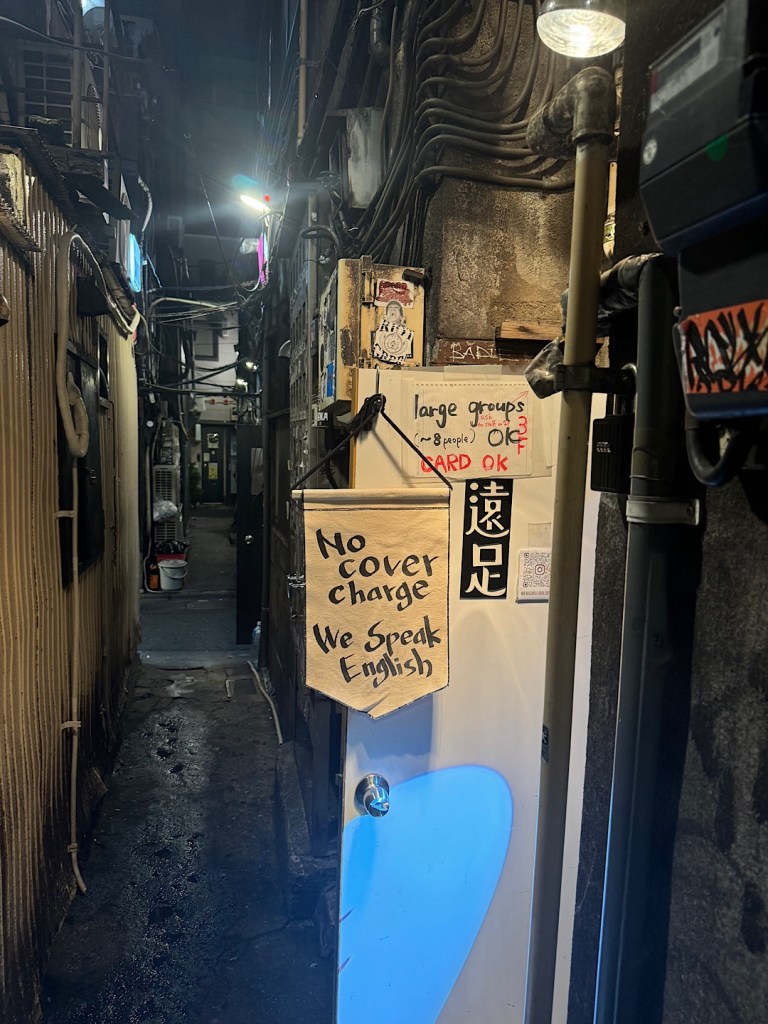
Steve and I quickly found a seat at a table on the sidewalk.We couldn’t resist ordering some of those octopus balls. They were stunningly delicious.We wandered some more after dinner. The “Golden Gai” area is as close as you can get to the world of the Midnight Diner and its master chef.
When we were ready to head home, I checked Google Maps and found it was just a 45-minute walk back to our hotel. We opted to do that and were surprised to find that within 15 or 20 minutes, we were moving once again through peaceful residential streets.
6) Shopping for new tatami mats with Yoshi
Steve met Yoshio Fukushima through work 45 years ago, give or take, and the friendship that developed between them is stronger than ever today. (They e-mail a lot.) Seeing Yoshi on this trip was a huge pleasure. He’s now 85 (but could pass for 60.) He has a wonderful sense of humor.
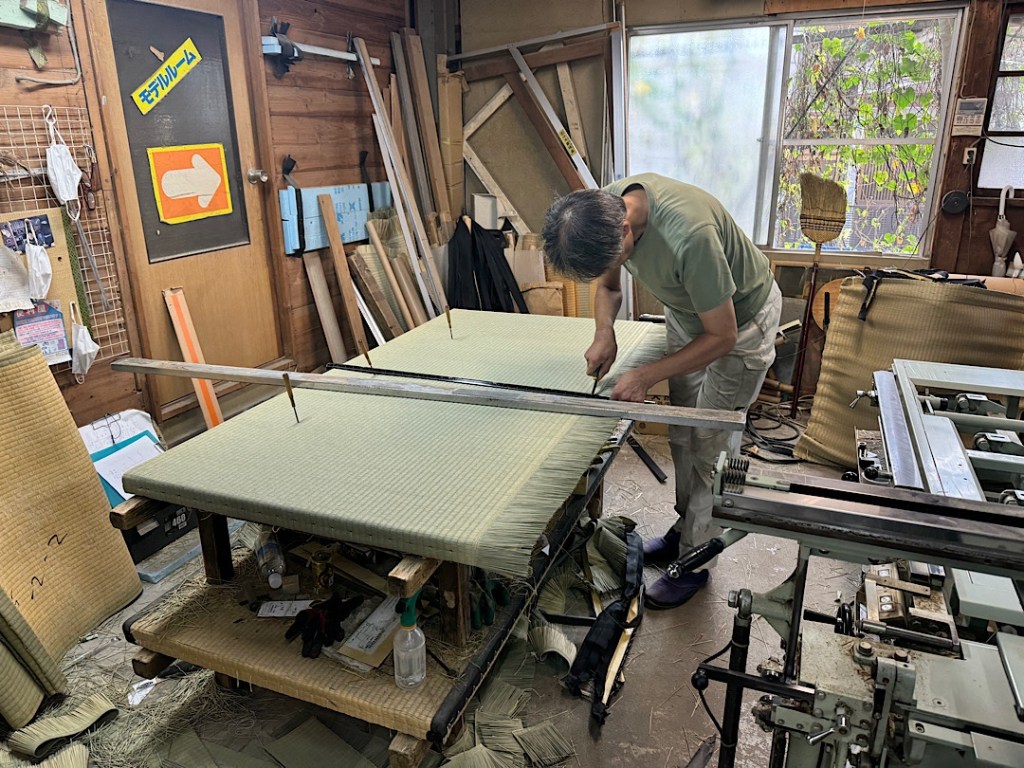
When we alerted him that we wanted to replace the 40-year-old tatami mats we sleep on at our home in San Diego, he kindly looked into where we could buy some. He found a well-reputed shop that makes them just a block or two from our hotel.
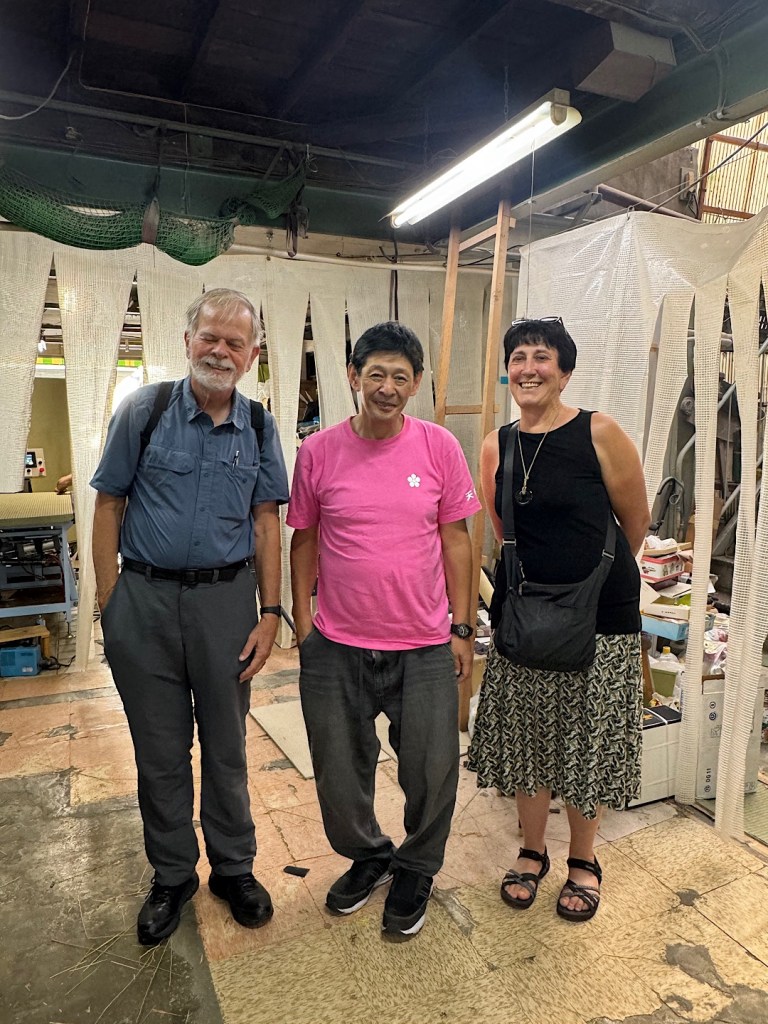
With Kagaharu San, who has worked in the shop for almost 50 years, we discussed details ranging from the mat dimensions to the quality of the straw covering to the mat interior and trim color. Then Yoshi took us to lunch while the owner worked up a price for us. (It turned out to be about $122 per custom-made mat.)
Steve and me with the owner of the shop.
So we’ve paid for three of them. After we return to San Diego and triple-check the dimensions, the artisans will fabricate them. We’ll still have to get them across the Pacific Ocean, but we’re confident we can work it out.
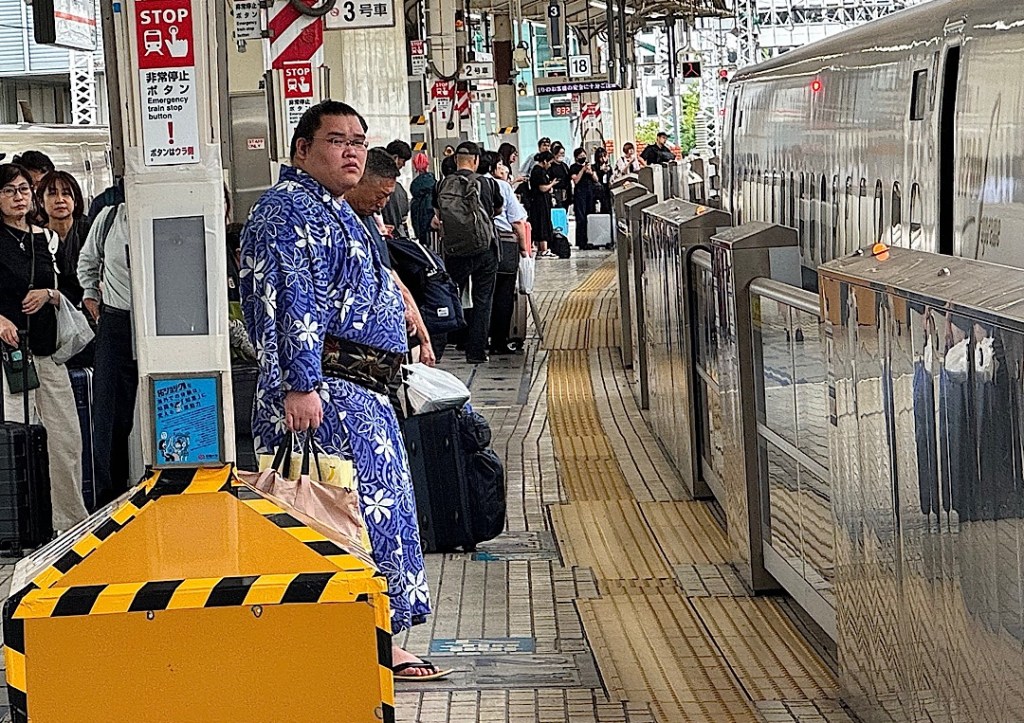
We had to leave Tokyo this morning (Tuesday, September 24). From Tokyo Station we boarded a bullet train bound for Kobe — the start of the part of this trip when we’ll be visiting places we’ve never seen before. Also leaving town on the same train was one of the sumo wrestlers. Somehow that felt lucky.
Near the end of our recent Caribbean travels, I realized I had left my iPad on the Arajet flight from the Dominican Republic to Jamaica. I never got it back; had to buy a new one. So this morning when we climbed into our Lyft to the airport, the first words out of my mouth, after checking its spot in my backpack were, “I have my iPad.” It wasn’t until we had reached the airport that Steve realized he had forgotten his.
It was 7:25 a.m., an hour and 45 minutes before our scheduled departure for Honolulu. What to do?!? We made a split-second decision to pay the Lyft driver (Moe) cash to drive us back to retrieve it. On the way to the airport, we had chatted up Moe and learned that he grew up in Istanbul. Although he’d lived in San Diego for 24 years, we assumed he would still know a thing or two about hauling ass behind the wheel of a vehicle. Indeed he got us home in under 30 minutes (only running one red light) and back in about the same amount of time (pushing his Corolla up to 75 mph on I5 South).
One thing I learned from this experience is that, IF the gods are smiling, it’s still possible to arrive at the San Diego Airport just 5 minutes before one’s plane is scheduled to board and get to the gate with time enough to buy two cups of Peet’s coffee. (It’s helpful to be traveling only with carry-on luggage and to have TSA Pre-check status.)
Another insight is that if one of us verbally confirms that she or he has their iPad, it would probably be a good idea for the other one to follow suit.
Hopefully we can remember this lesson in the weeks ahead.
Could Steve survive a month-long trip without his iPad? It’s pretty unimaginable.











 At home and abroad