The scary highways of Zimbabwe

I was nervous about the driving part of our “self-drive” Zimbabwean safari. Steve also was worried. We’d heard the roads haven’t been maintained for 30 years. That drivers were almost suicidal in their obliviousness while speeding through intersections. That potholes and other obstructions turned traveling on rural roads into a potentially deadly game of Chicken.
As we approached the start of our trip here, I awoke on a couple of nights thinking about how easy it would be to die. But we’d heard from several sources that we’d be fine if we just took it easy. Were they right?

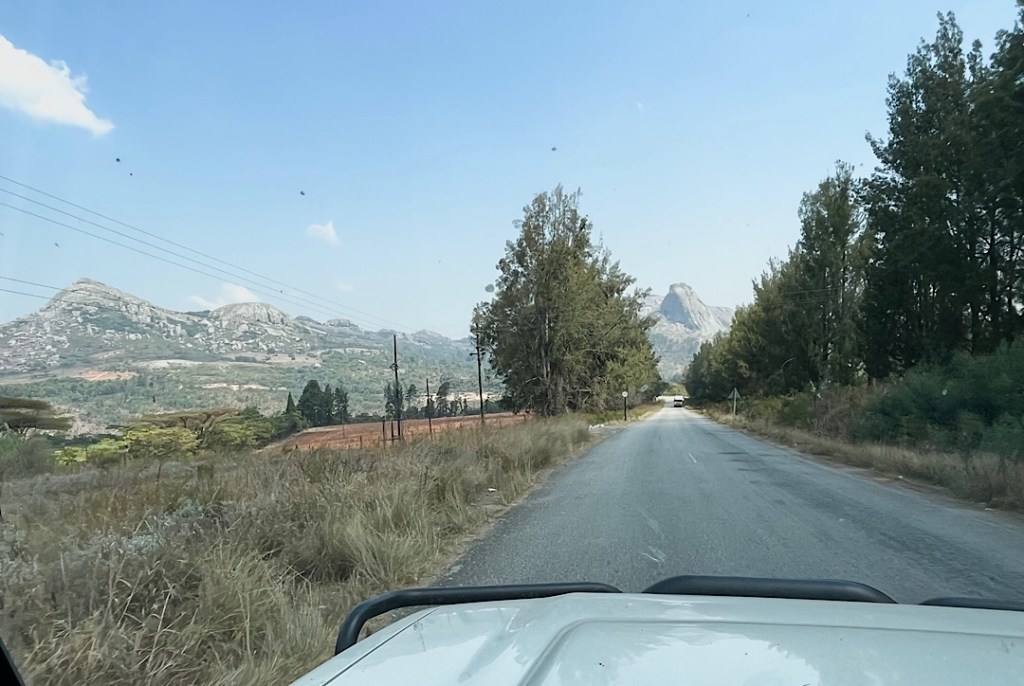
Now that we’re two long drives into the adventure, I’m think they were. A little before 9 Monday morning (9/25) we climbed into our loaded Land Cruiser and drove east from Ant’s guesthouse, heading away from the heart of Harare. The few stoplights we encountered seemed to be working, a rarity, according to what Ant had said. Traffic was light and no one did anything crazy. Soon we paid our two dollars at a toll booth and were passing fields and wooded areas. The further east we went, the lighter the traffic got, and I can tell you I this: When you’re almost alone on the road in a bruiser of a vehicle that can blow over potholes and other rough patches with ease, you begin to relax.

That’s not to say driving in Zim is just like driving in La Jolla. Paved roads are narrow but shrinking, the edges nibbled away by rain and wear. Those ragged fringes often are an inch or two above the adjoining dirt, and if one went over such a mini-escarpment at high speed (say, to avoid a head-on collision with a bus trying to pass someone), one could flip one’s vehicle and come to a messy end.

But Steve never drove at high speed, and the sights and landscapes entertained us: folks unloading huge truckloads of oranges…

,,,or making bricks or selling wooden sheds (or were they tiny homes?)

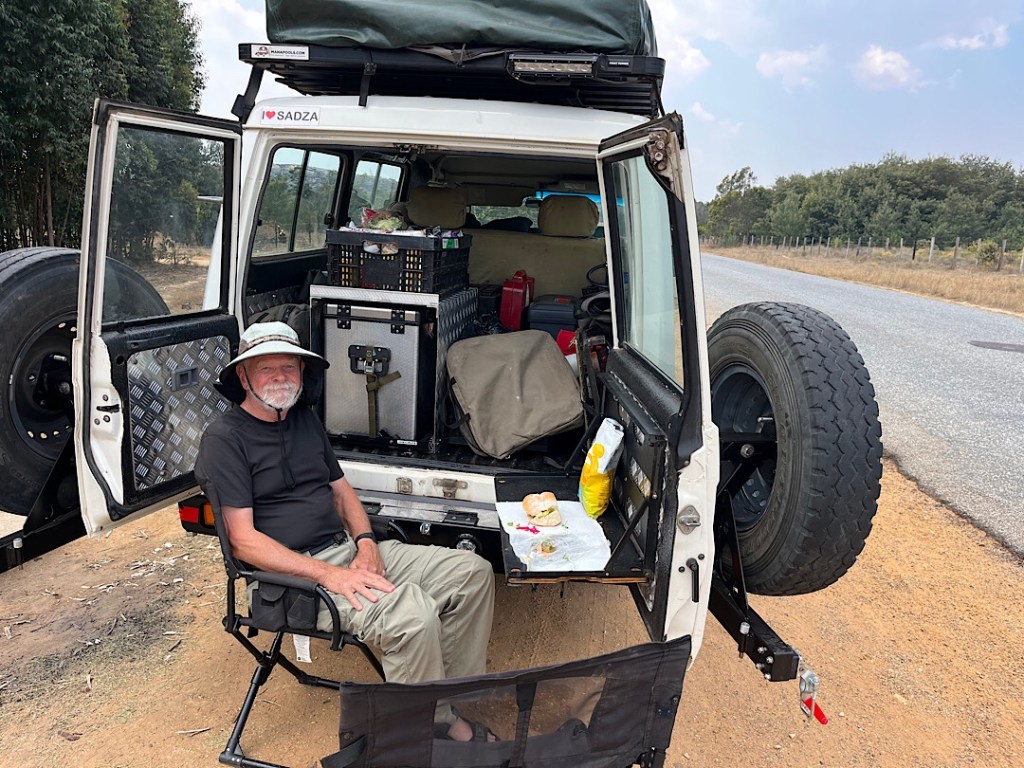
When we got hungry, we lumbered off the tarmac and parked on a dirt stretch near an informal bus stop. We opened up the Cruiser’s back, unfolded two chairs, let down our cooking shelf, made ourselves cheese and tomato and avocado sandwiches, and gobbled them down with chips.
To reach our destination in the northern highlands we had to pull off the main road and bounce over dirt and boulders for more than an hour. That wasn’t pleasant, but I don’t think we saw any other vehicle along the entire punishing stretch. We had that night and another full day to relax and enjoy the glorious countryside.
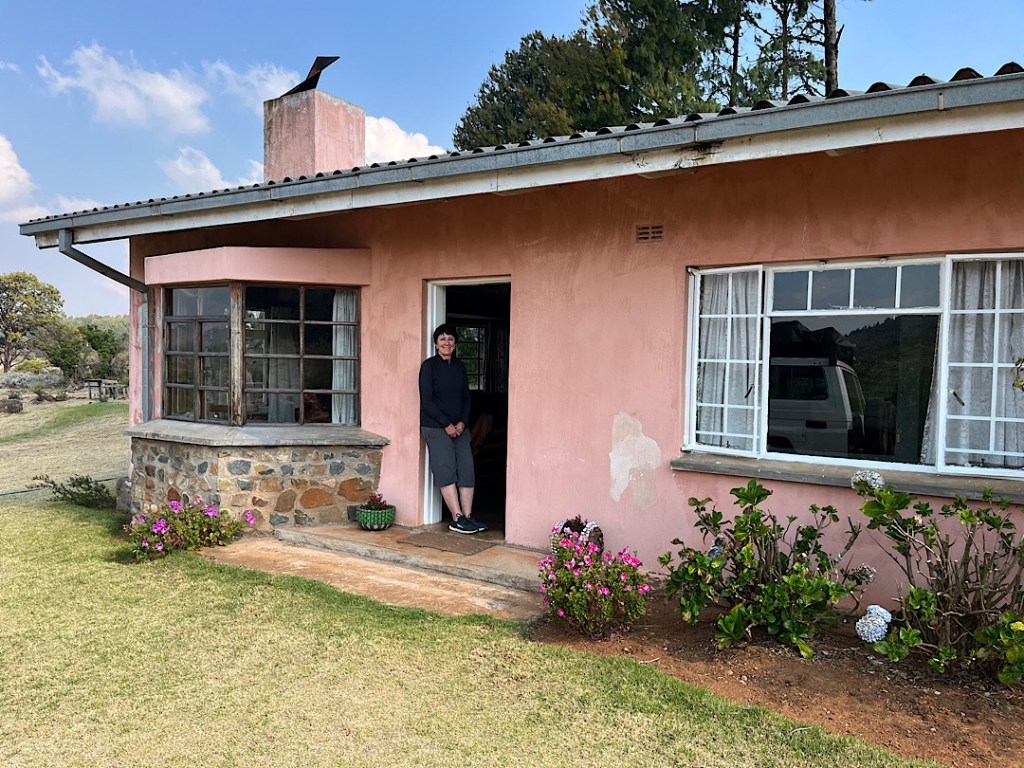
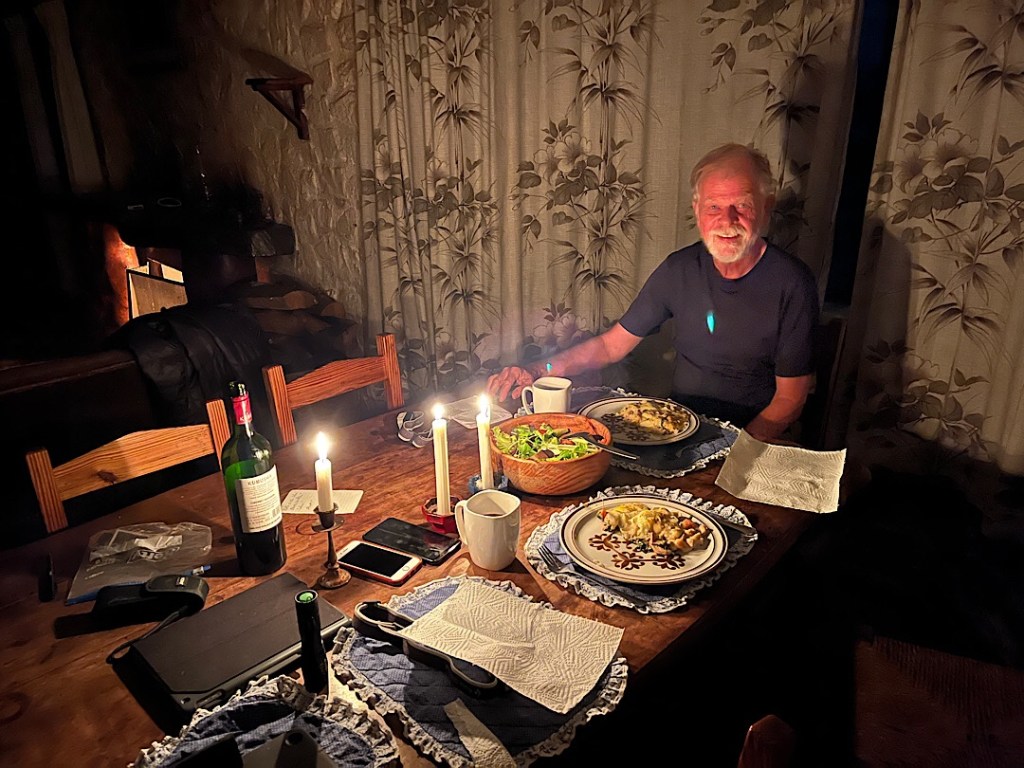
This self-catering “cottage” where we stayed was actually a four-bedroom house.
Although we had only candlepower our first night there, we still enjoyed a delicious dinner of chicken lasagna (pre-cooked and frozen and packed into our Cruiser’s freezer by Ant’s team), a nice salad, and brownies.
Tuesday morning we hiked for five miles around the lovely lakes down the hill from our cottage.
It was one of the most peaceful walks I’ve taken in memory. I think we saw one other person the whole time.
Pines like this scented the air.
That pink house in the distance is our cottage, with the Cruiser parked next to it.

Wednesday we drove eight and a half hours, stopping midway to refuel at a Total Station. For 13 gallons of diesel, we paid $88 (plus a dollar tipto the friendly guy who cleaned our windshield) — more than the price at home. But it was still a relief to see confirmation we wouldn’t be dealing with fuel shortages (another Zimbabwean thing, at least occasionally).

Descending out of the mountains, we dodged more animal traffic…

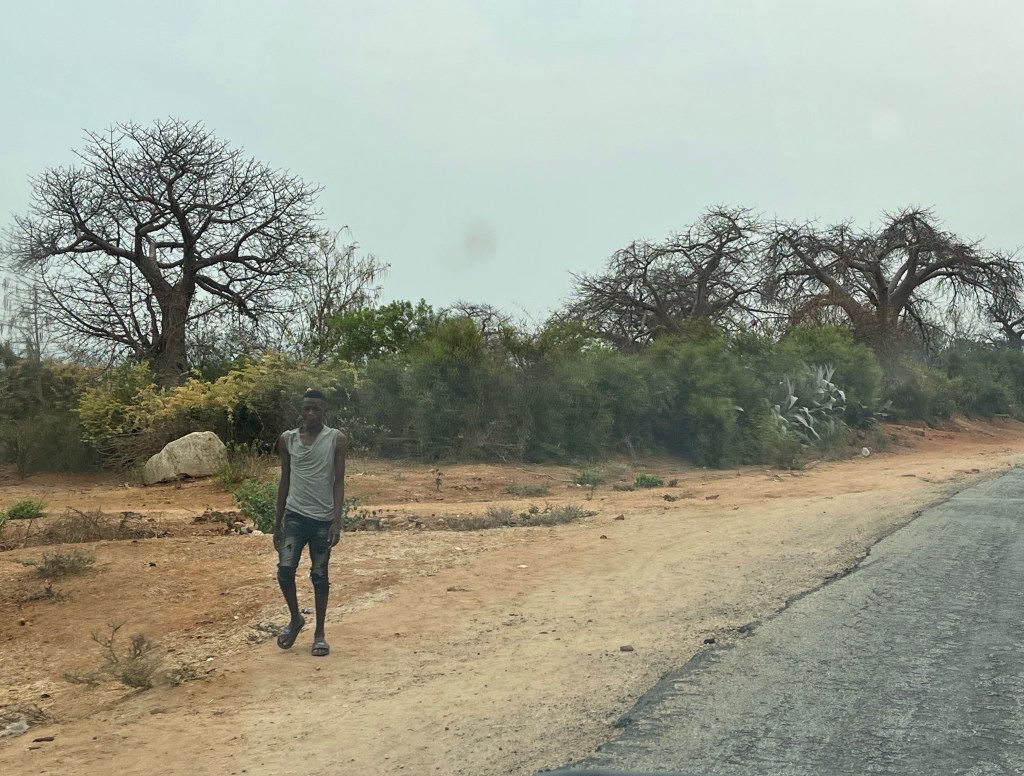
And I thrilled to this sight of our first baobab trees on this trip.
I bought that large colorful rug from the lady on the right, who made it.

Human automotive competition for the road remained light, and it disappeared entirely once we turned onto the washboard lane leading to our destination in the amazing Save (pronounced Sah-vay) Valley Conservancy.

The other scary byway in Zimbabwe is the Internet highway. If good paved roads are scarce, access to the global information stream is rarer. Here our beloved T-Mobile phone service, which gives us instant connectivity in more than 100 countries, provides only text and phone coverage, No data. Ant’s guest house was equipped with good WiFi but we haven’t been anywhere else that has had it.

As part of his services, Ant did provide us with an aging Galaxy Android phone, and we bought $20 of air time from a roadside vendor near Ant’s Sunbird Guest House. It took some work, but Steve finally figured out how to use the Android as a hotspot for all our devices. That’s how I was able to publish my Zimborientation post from our remote mountain shelter Monday night. It felt miraculous.

Since we left there, however, we haven’t had any phone signal most of the time (and if the Galaxy can’t get a signal, we get nothing.) If you’re reading these words, that means I finally found a spot of service. In the meantime, we’ll have to make do with focusing on the actual world around us. That’s not a bad thing.
Zimborientation

I’m starting this post around 7:30 pm in a farmhouse in the Zimbabwean northern highlands, very close to the Mozambique border. Thanks to Apple battery power, my iPad screen is lighted, so I can see what I’m writing. But when my touch-typing fails me, it’s tough to make out the keyboard. Steve and I are alone in the house, and a single candle provides all the illumination except for the dim glow from the big stone fireplace. We need that fireplace, as the temperature outside has plummeted. This doesn’t feel much like Africa.

We’ve now been in Zimbabwe for a bit more than two days, and Zim’s eccentricity is starting to feel routine. Our Rwandair flight Saturday morning from Kigali could not have been smoother or more pleasant, and we touched down at Harare Airport a few minutes early. We were sitting at the very rear of the plane, so when we got to the Passport Control booths (just outside the luggage-collection area), long queues had formed at the two booths designated for foreigners. We chose the shorter one, and it still took almost a half hour to get to the official. “We want a KAZA visa,” I told him.

“Over there,” the man in the booth barked, gesturing to the other line, which was at least as long as it had been 30 minutes earlier. It seemed to consist mostly of young Chinese men and a few women. But our tour outfitter had told us to insist on a KAZA visa. Such a stamp allows you to enter Zimbabwe and Zambia multiple times and cross back and forth between the two countries, something that will be important when we wind up at Victoria Falls 10 days from now. Surely anything would be better than having to get a second Zimbabwean visa AND a Zambian one (and paying $50 a pop for each one). So we gritted our teeth and moved to the back of the long line.

A solid hour passed as we inched forward, watching the sole bureaucrat in the booth doing lots of stamping and writing on each passport that finally made its way before him. By the time we reached the booth, literally every other passenger on our plane was gone. The luggage carousel had stopped running. “We want a KAZA visa,” I said, considerably less perkily.

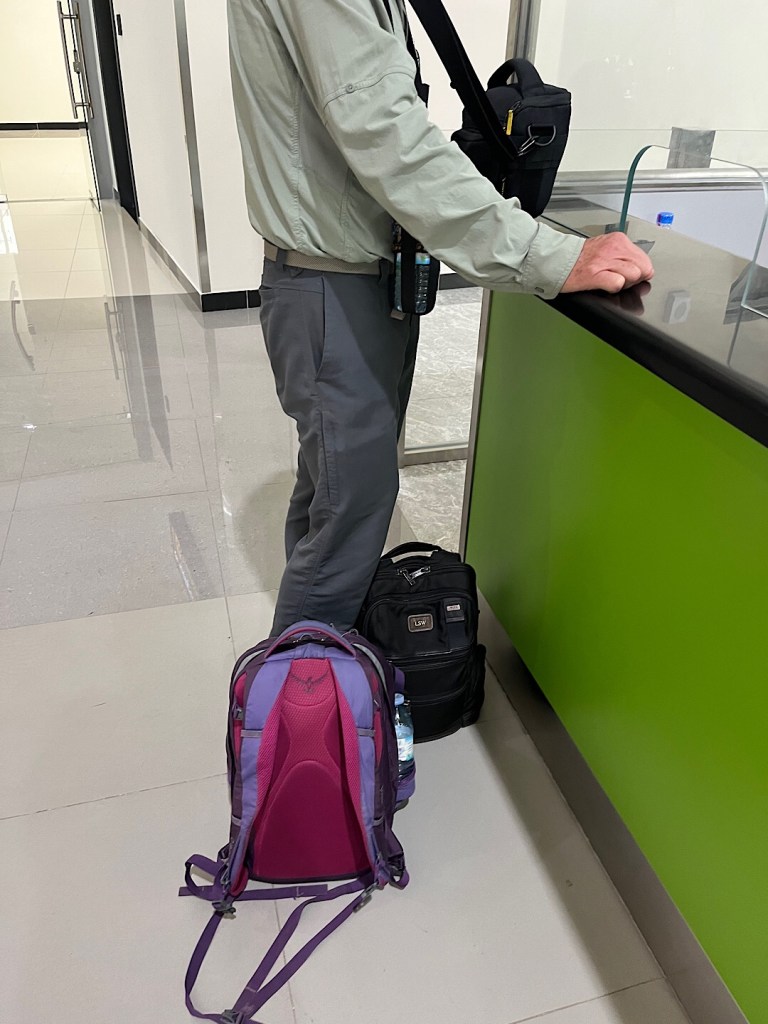
I sneaked this photo of Steve at the window. (Taking pictures of immigration officials anywhere is a risky business.)

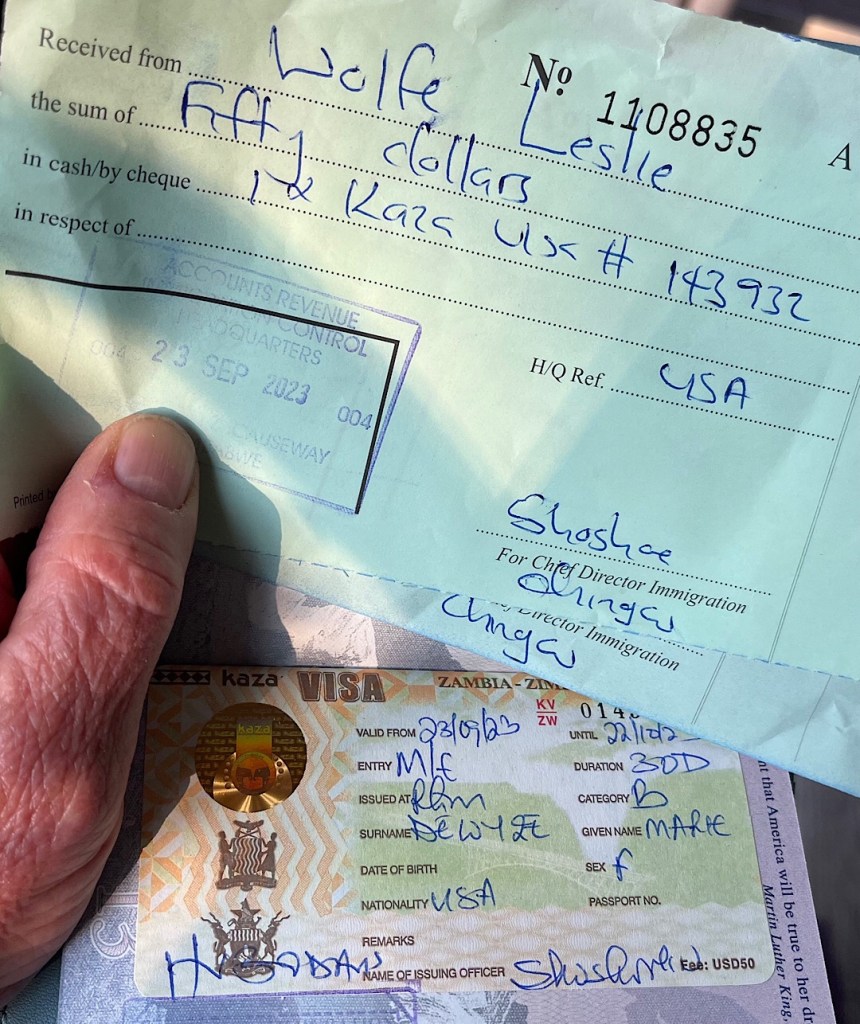
The official knew what that was. But it soon became obvious he couldn’t find his pad of KAZA stickers. He left the booth. Came back frustrated but full of reassurances he and his colleagues WOULD find the pad eventually. More folks joined in the hunt. More time passed. I began losing hope. But damned if they didn’t eventually locate the missing book. The official collected our $50 per, releasing us to pounce upon our bags (which were still, miraculously, on the deserted carousel.)

The visas are VERY fancy, with lots of writing on them and our receipts.

Outside, I was thrilled to finally meet Ant Bown.

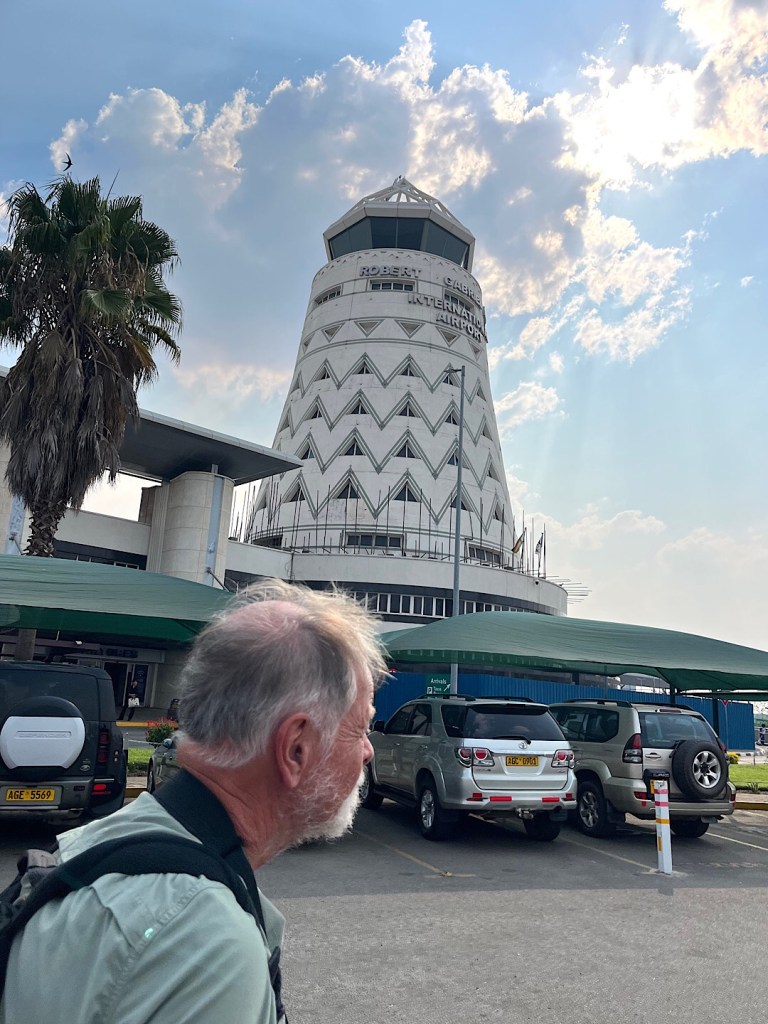
Outside the Robert Gabriel Mugabe International Airport and about to meet our outfitter.

Ant, 47, started Mana Pools Tourism Services Ltd., a “self-drive safari” company, about 6 years ago. His grandfather moved to Zimbabwe back in 1935, when the country was known as Rhodesia, and his mother for years had run the country’s safari company operators’ association. Ant got a degree as an agricultural economist and for 15 years lived in South Africa. But he missed Zim and returned to Harare in 2010. Today he’s passionate about his birth country’s attractions and optimistic about its future.

When I started planning this trip, almost a year ago, I had no desire to tour it with Steve at the wheel. I say that with no disrespect for Steve’s driving skills, which are competent even in places where traffic flows on the left. Just 20 years ago, Zimbabwe appeared hellish. Between 2000 and 2004, all but about 300 of the country’s 4000 or so white farmers had been forced off their land; many were beaten or hacked with machetes, and about a dozen were killed. The farmers’ black workers also lost their jobs, and the UN later estimated that a million people were displaced. In the years that followed, the Zimbabwean dollar became worthless, as annual inflation exceeded 900%.

Today the official economy is still dismal, although the “informal” sector — businesses and side hustles so small they can escape government notice — is booming, according to Ant, who thinks Zimbabweans rank among the most entrepreneurial folks on earth. There’s effectively no banking system. Most people use dollars — the paper ones — for almost all their transactions. But political violence has all but disappeared, crime is low, and racial animosities have evaporated. Steve and I were curious to see how today’s Zimbabweans were faring, after their torturous experience in the 20th century. But still, I didn’t want to DIY it.

So I got the latest copy of Lonely Planet’s Zimbabwe and emailed probably a half-dozen of what sounded like the best tour operators, seeking one that would drive Steve and me around. No one responded, even through I tried a couple of approaches with some. I finally contacted Ant’s 4×4 rental company, thinking maybe he could recommend a driver. Ant and I wound up chatting extensively in email and then via WhatsApp, and in the end, he convinced me we could handle self-driving.

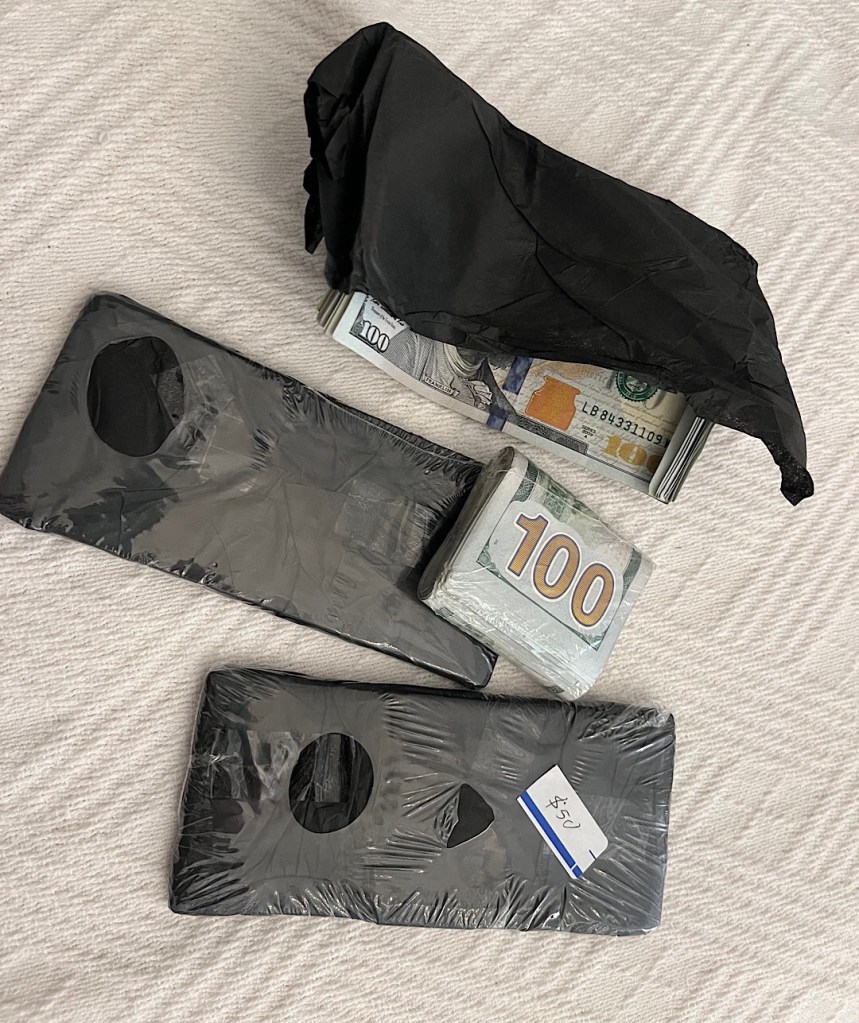
Since we wouldn’t be able to get any money from banks or ATM machines, we had to bring all the cash we envisioned spending in Zimbabwe, including paying Ant for our two-day stay in his guesthouse, the 11-day Land Cruiser rental, and a bunch of food provisions.

I came to trust him partly because of how quickly he responded to my every query and how well-organized he was. But he also charmed me with his directness and good humor. He’s very emphatic and often funny and he didn’t seem to be whitewashing the realities of life here. Zimbabweans were atrocious drivers, he told me early on, but we would be okay if we drove slowly and defensively. The electrical grid was a joke. But his Harare guesthouse never lacked power or hot water because he’d installed solar systems years ago.

At the Oktoberfest gathering.

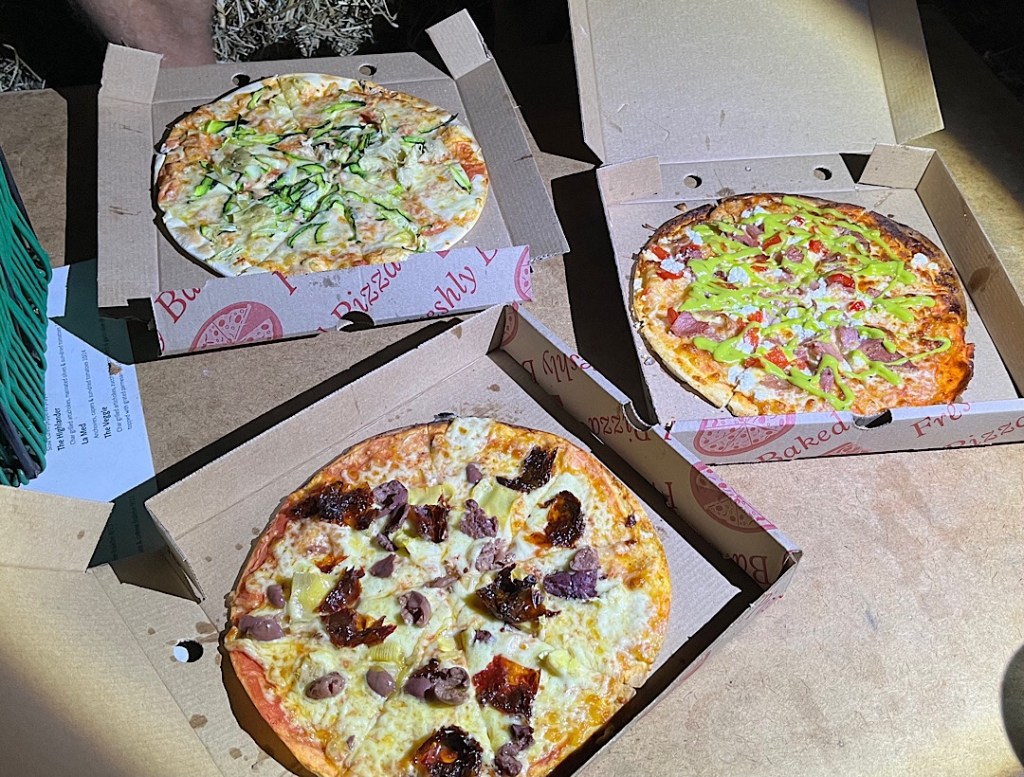
Steve and I got more exposure to Ant’s quick wit and open-mindedness the night we arrived, when he invited us to join him at a local Oktoberfest. It was being held in a private “sports club” that had been brought back to life in the last year or so. We had a blast taking in the high spirits and diversity — tipsy old white guys, black families with kids, a younger black and white cohort, all partying together. Some seemed to be there for the live music; others for the pizza…

…which was delicious.

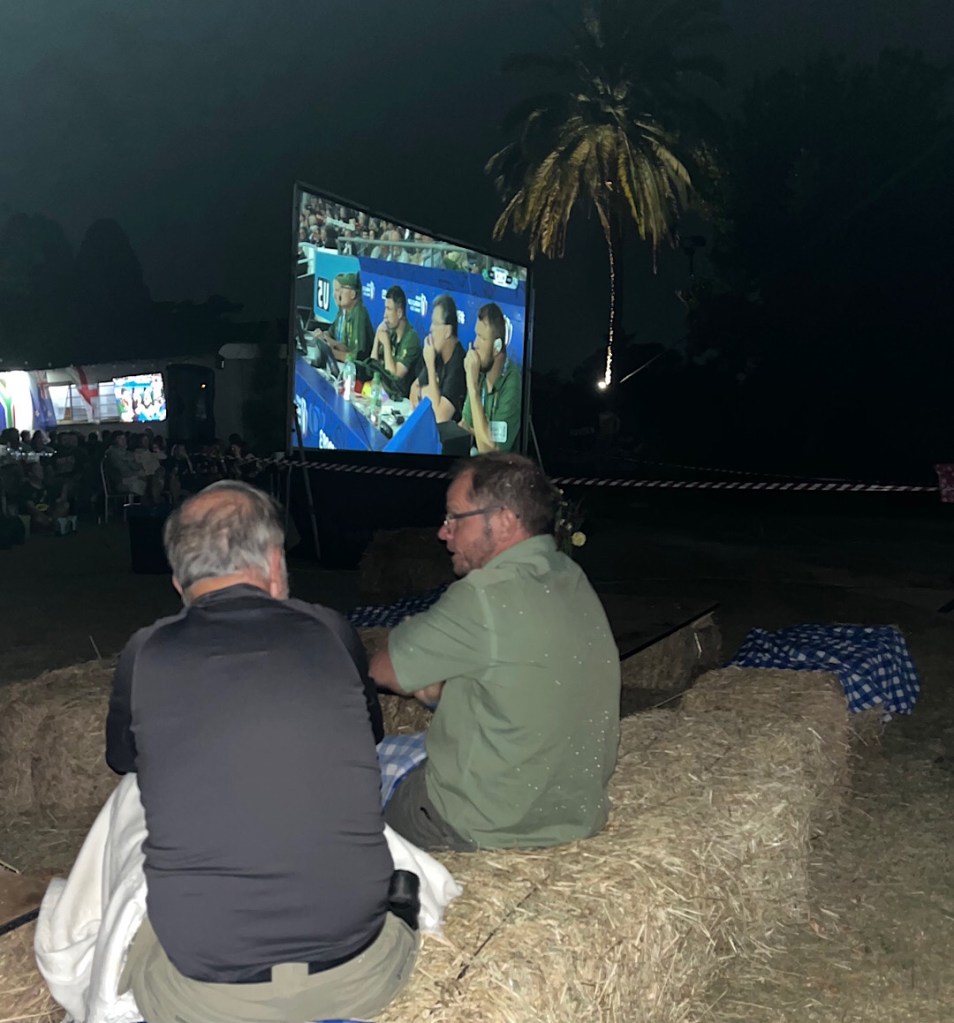
Still others had come for the rugby game that started at 9 (Ireland versus South Africa.) Since neither Ant nor Steve nor I are big rugby fans, we only stayed a few moments to take in the chaotic action on the field. (Steve marveled, “They look like American football players who are all drunk.”)

We were looking at the outdoor screen backwards, but it didn’t matter.

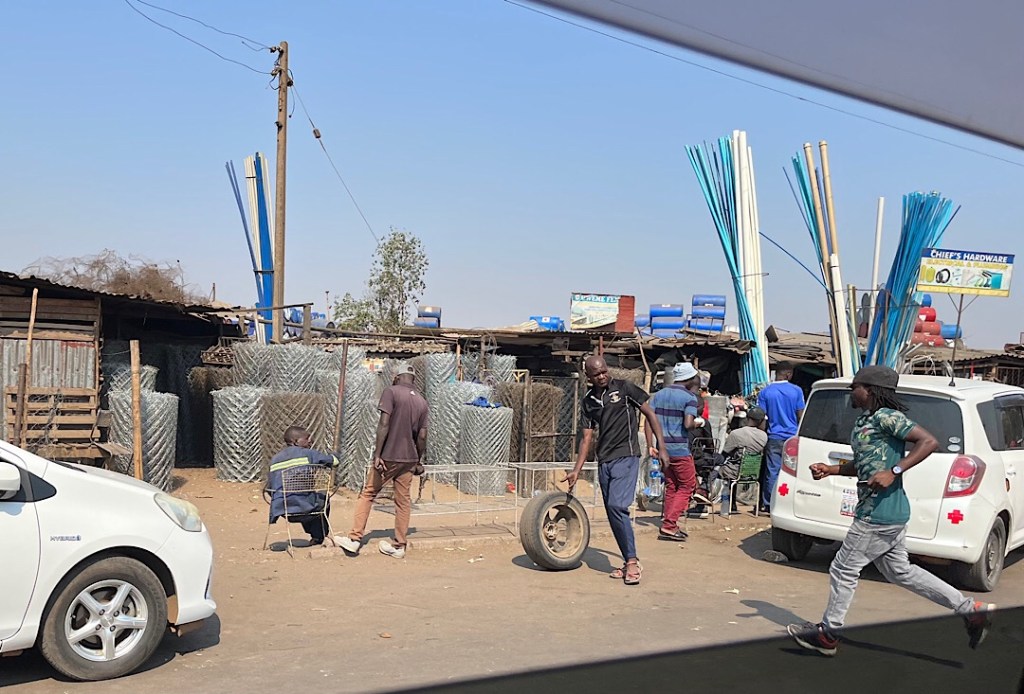
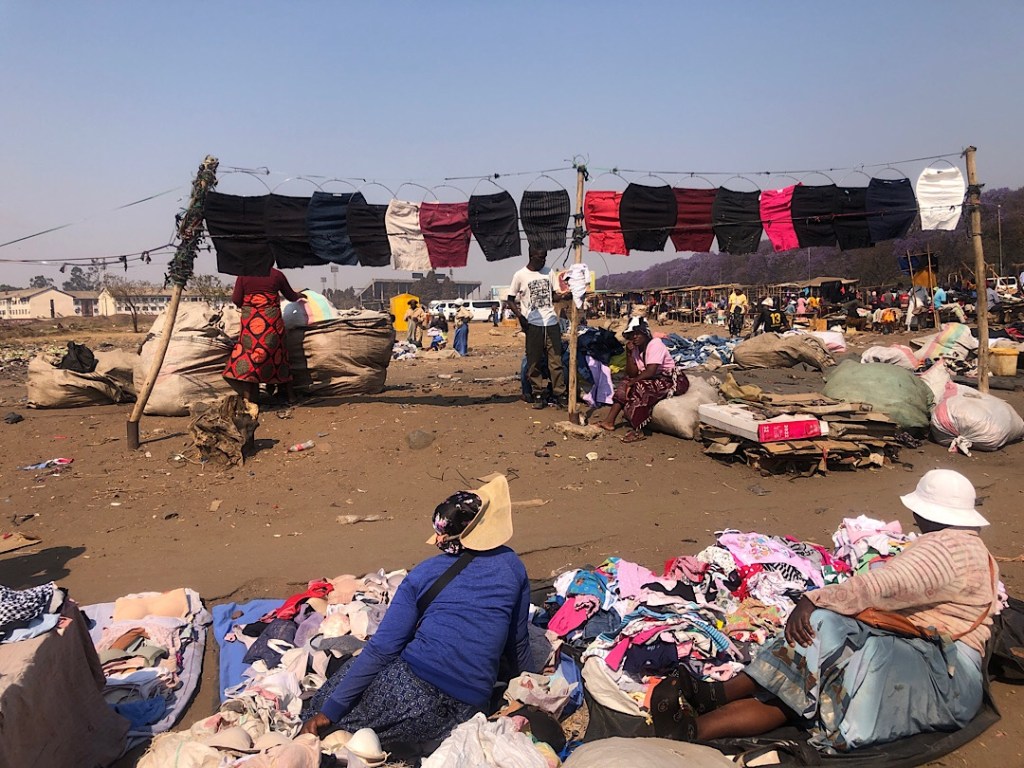
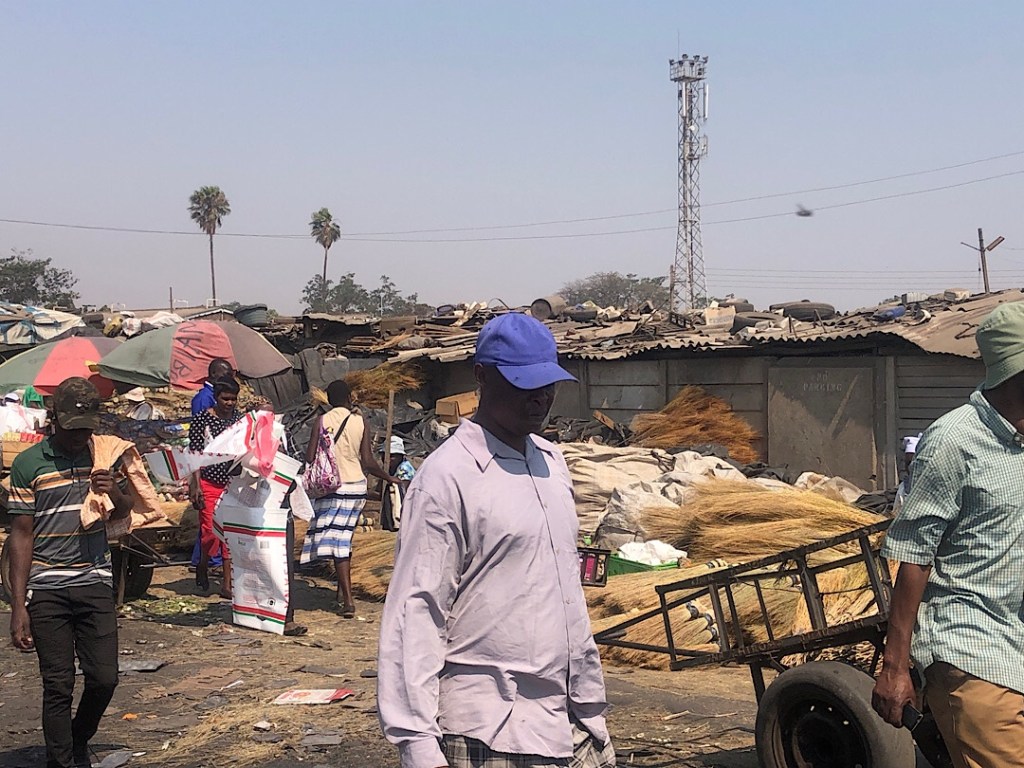
We also wanted to get to bed because we had such a busy schedule lined up for Sunday. First we piled into one of Ant’s small SUVs and got a tour of Harare from Friday Mugwisi, one of Ant’s oldest employees. He took us first to Mbare, the huge, densely dizzying street market near the center of the city. We parked (for $5) then Friday led us throughout the maze of vendors, pointing out one item after another that he insisted was stronger than what you’d find in the big chains and half the price (and often fashioned from recycled materials.) Sadly, we couldn’t take many shots of the wildly photogenic scene. Friday had warned us we’d be pestered for payment if we were obvious about capturing anyone’s image. Still, we caught a few.

Later Friday drove us through the central business district and past many of the most important government buildings. We made a quick visit to the vast botanical gardens, then Steve and I ate lunch amidst the city’s ruling elite at The Three Monkeys, a chic oasis in an upscale little commercial center not far from Ant’s guest house.

We spent a chunk of that afternoon getting oriented to our Land Cruiser and its ingenious contents. But I’ll save those details for later posts. I know first-hand that too much information and sensory input can leave your head spinning.

Uganda, take four

Rwandan roads are at least as good as those in the US, so I’m starting this post from the third row of seats in our 10-passenger van as we drive the two final hours to Kigali, the Rwandan capital. We crossed the border with Uganda a few minutes ago. Writing on the Ugandan byways, which range from good (occasionally) to abysmal (far too common), is pretty much impossible, given the jouncing. Off the road, our three and a half days in Uganda were so packed I couldn’t find a spare minute to get on my iPad when the sun was up. By the time it set, I’d run out of gas.

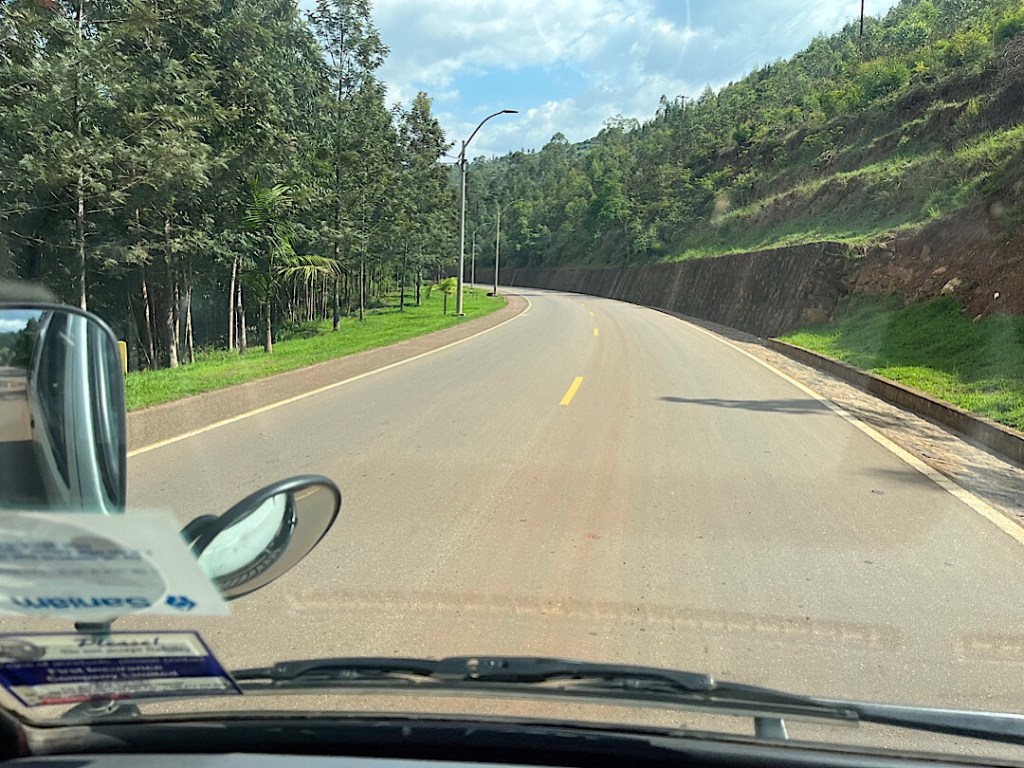
This is what the Rwandan highway looks like.

But I can summarize what we did.

We slogged out of Kampala through mind-bending traffic…

The street in front of our hotel, as seen from the rooftop terrace, was pretty quiet at 6:50 am.
But by 8:30, the streets were crazy.

…then moved westward across the country to finally struggle up the broken dirt roads that lead to the village of Nyakagyesi. The trip ate up ten and a half hours — pretty much all of Monday.

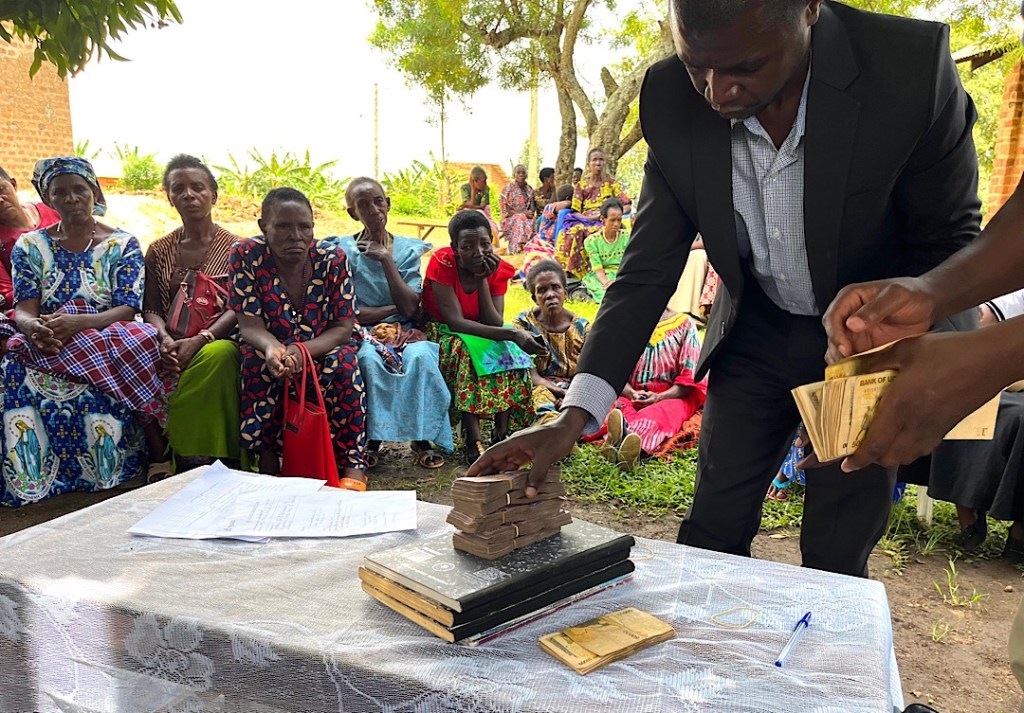
Wednesday we devoted to meeting with the grandmother groups and their members who are receiving micro loans funded by Women’s Empowerment, the San Diego organization for which Steve and I serve as liaisons.

This was the first time Steve and I got to see loan money actually being distributed to a group.

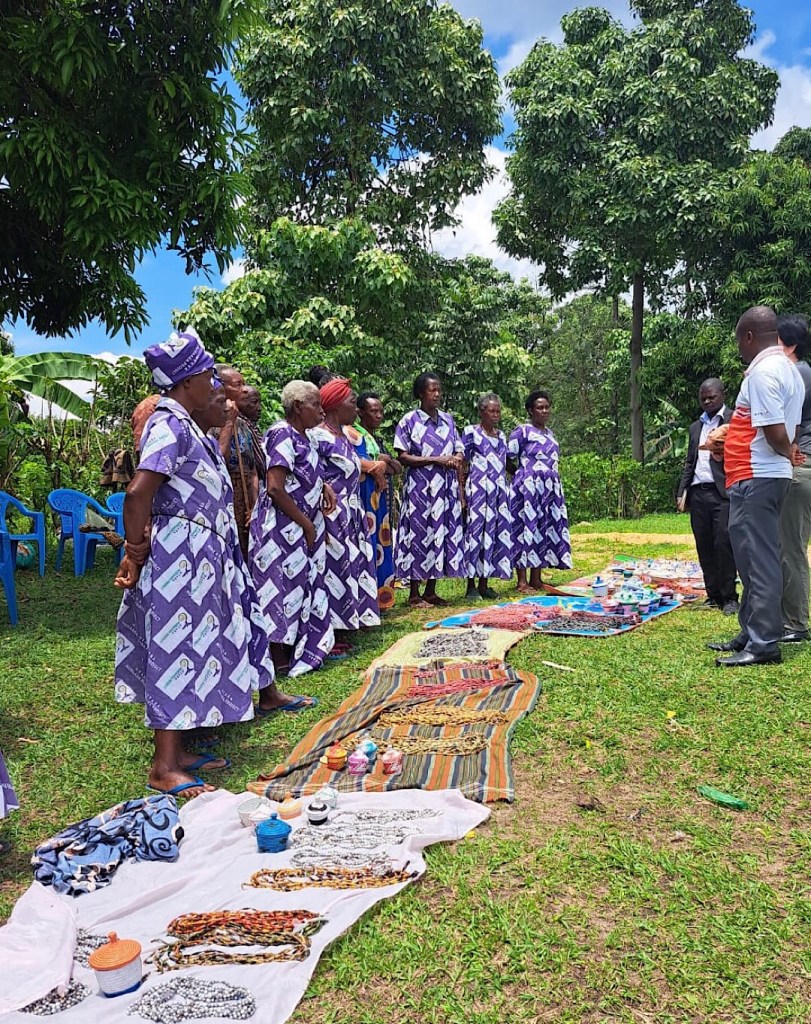
Thursday we toured the first primary school built by the Nyaka Foundation, its beautiful secondary school, and its health center, then we met with yet another set of grandmothers, these specializing in making jewelry, baskets, and other handicrafts.

After that we drove a couple of hours to Buhoma, where you can catch glimpses of the mountains on the other side of the border in Congo. Buhoma is a base for gorilla trekking, but everyone in our group had already done that (Jose and Mari two weeks ago; Steve and I in 2013.) Instead we paid a quick but fun visit to the office of a non-profit organization founded and run (by a woman I know in San Diego) to help the desperately poor local Batwa community.

The setting for all these activities has been a landscape that’s among the most beautiful on earth. A dozen shades of vibrant green, the land is all rugged mountains intermixed with verdant valleys and reddish soil so rich it produces almost every crop you can think of.

This morning an unexpected treat was when our drive to the Rwandan border took us over an 8000-foot pass in the Bwindi Impenetrable Forest (today in fact penetrated by a fairly smooth dirt road.) This forest, home not just to mountain gorillas but also forest elephants, is 100 million years old. Because it didn’t freeze during the last Ice Age, it harbors fantastic biological diversity. We didn’t see any forest elephants on our passage but Deus, our driver, pointed out fresh deposits of their droppings on the road.

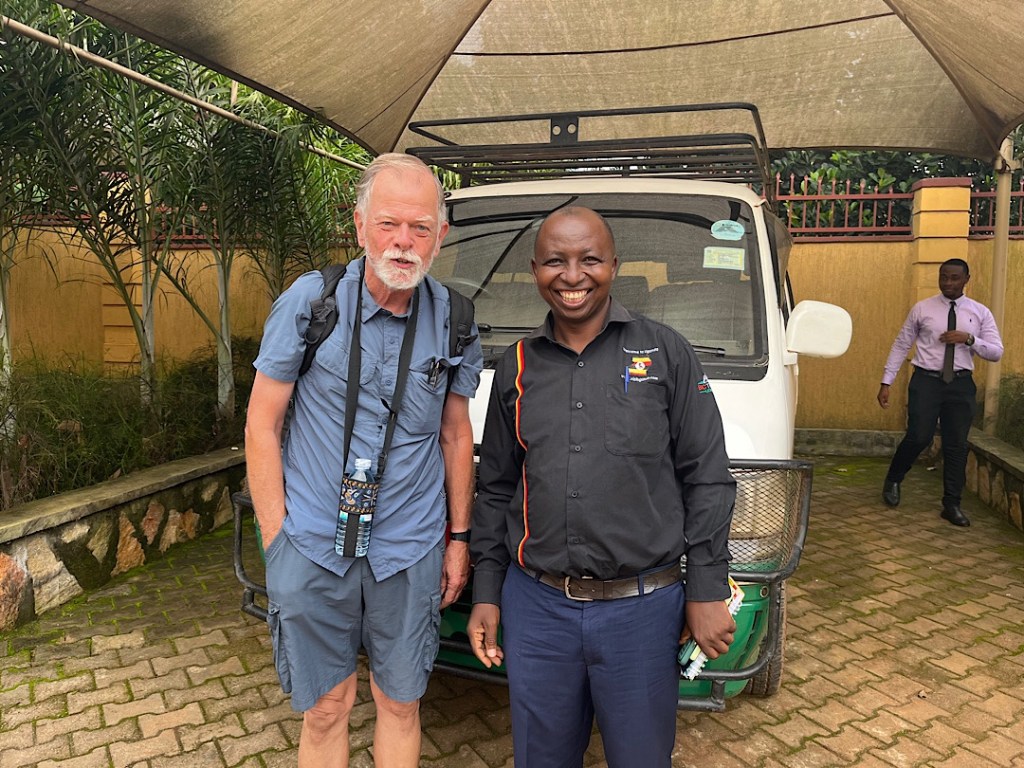
This was our fourth visit to Uganda, and another landscape, an invisible one, has also been coming into focus over the past ten years. It’s the network of relationships we’ve acquired. Some are with people we’ve come to love, like Jennifer Nantale, head of the whole Nyaka organization in Uganda and one of the smartest, toughest women I’ve ever met.

Or Sam Mugisha, the remarkable guy who in his youth jumped at a chance to travel to Japan, became fluent in Japanese, and returned home to start a travel business catering to visitors speaking that language. (He’s also been the outfitter for all our WE trips.)

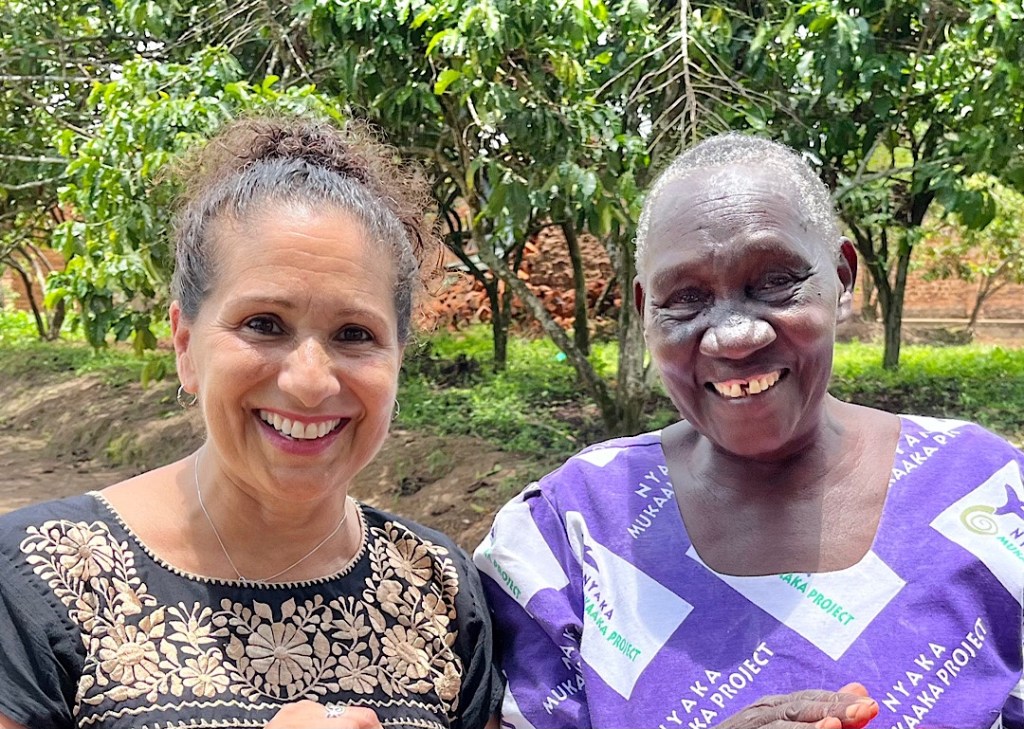
Dozens upon dozens of encounters with various individuals have been more fleeting but still vivid. Some fade quickly, but they’re still part of the tapestry composed of all the warm, kind, hard-working people we’ve gotten to know here. The impression made by others remains sharp for longer, like Norah, whom we met her early Thursday afternoon.

Mari and Norah

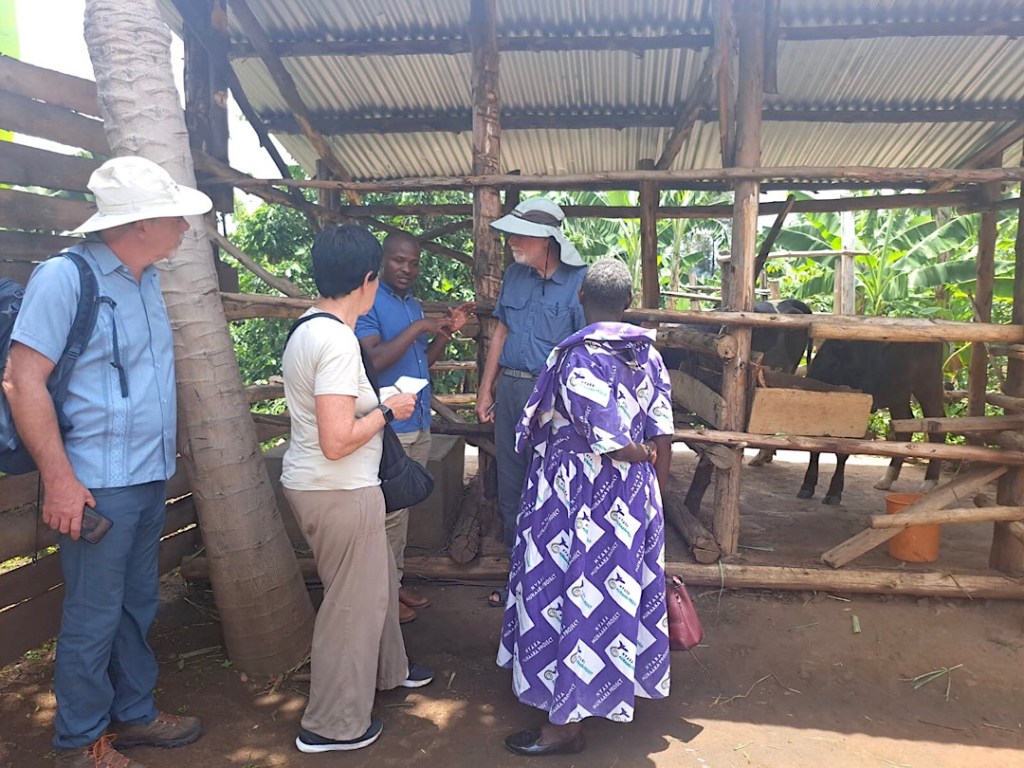
Norah is a 72 widow who’s currently raising four grandchildren ranging in age from 12 to 4. She greeted us with a warm smile and explained that she joined the Kyepatiko granny group four years ago. Now she’s the chairperson. Over the years she’s gotten two loans from the group, the most recent one for 500,000 shillings (about $133). She combined that money with the 3 million shillings she had saved from her coffee crop and used the money to buy a cow and calf. When the calf was a baby, Norah was getting 5 liters of milk a day that she could sell for about 37 cents a liter. But now that the calf has grown, it consumes all its mother’s milk. Still, she had bred the cow about a month before our visit, and she was hoping to have a birth in about 8 months. She would then sell one of the calves.

Norah has a warm and confident presence, and she led us to the back of her substantial house to the clean and well-organized enclosure she has built for her cow and calf.

Besides her fledgling dairy business, Norah has also built up an apiary; today it houses 50 beehives. We couldn’t visit it because the bees would sting us during the day. (Norah and her family collect their honey at night when the insects are sleeping.) It’s a good business. The grandmother can charge about $68 for 5 liters of honey. It adds up to more than $500 over the course of a year. Still Norah said she wants to develop the market further.

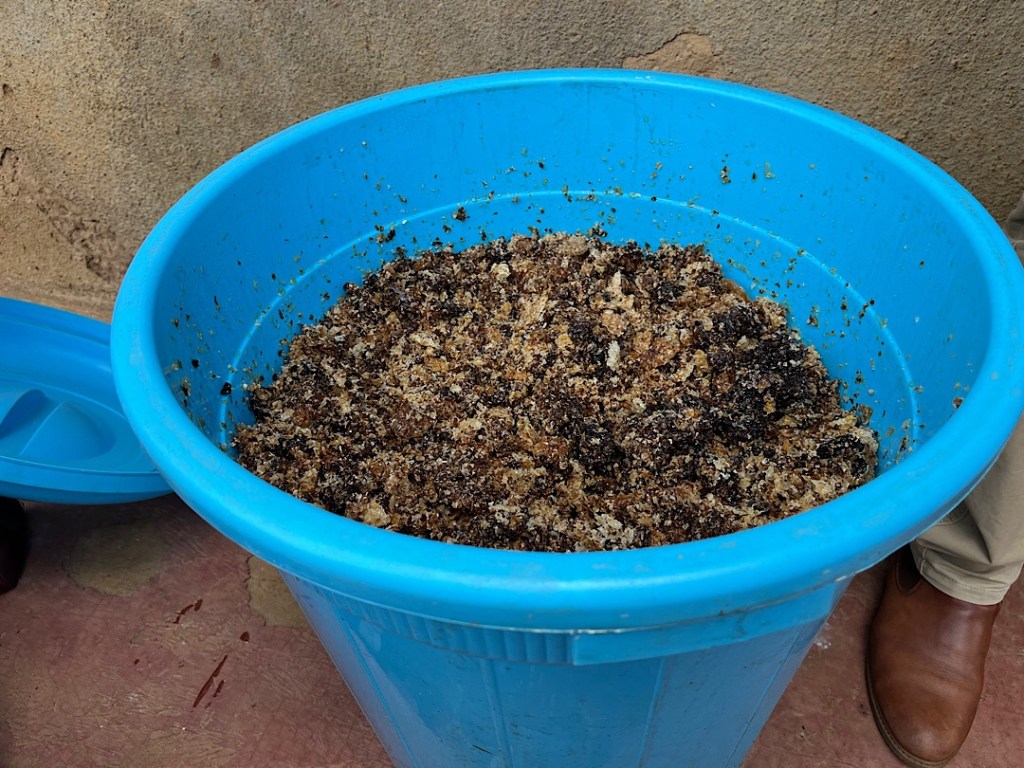
This is what the honey looks like, freshly collected from the hives.

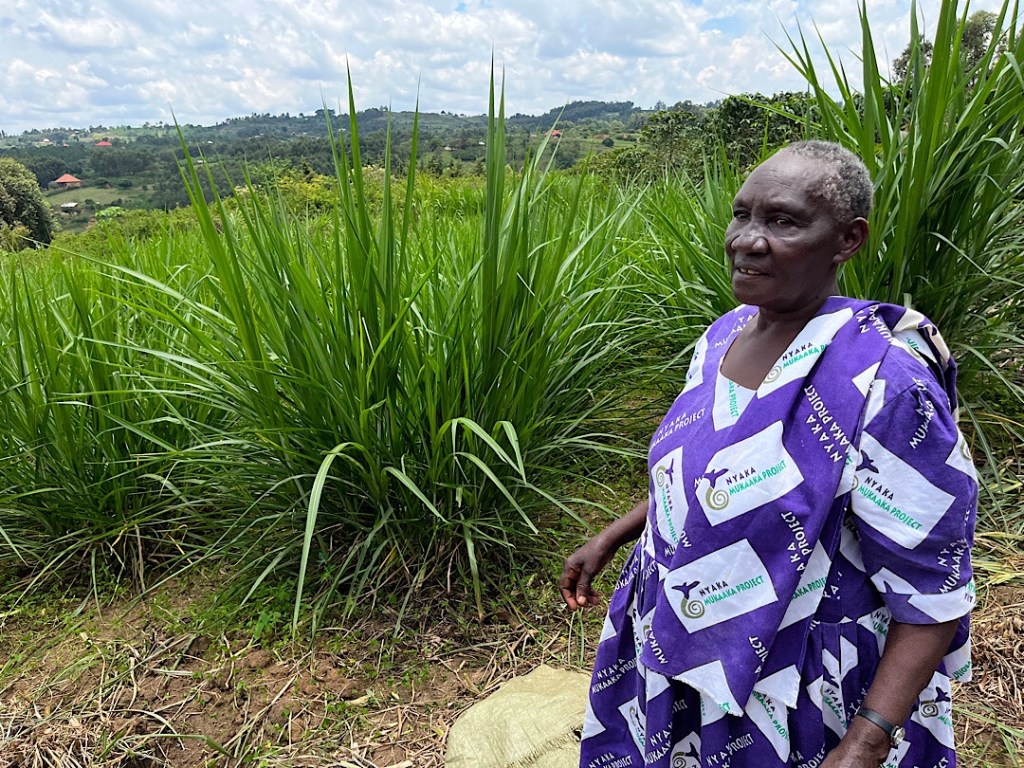
The path to the apiary passed through healthy coffee trees laden with berries. And Norah also seemed proud of her field of emerald spears of elephant grass. She harvests it to feed to the dairy animals (which can’t just wander around, munching other people’s crops.)

Later, we watched Norah direct the grandmother group meeting. She commands attention with ease. Reflecting on our meeting with her at dinner a few nights later, Jose and Mari and Steve and I agreed she was hard to forget. “If she were in the US, she’s be the CEO at some big corporation,” someone said.

But I have to confess: my attention is drifting away from all that. It’s now Saturday morning and in a few minutes Steve and I will board our flight to Harare. Compared to the cozy familiarity of Uganda, Zimbabwe is terra incognito.

Sunday night at the nicest mall in Uganda

The start of this trip has been pretty flawless. Our flight from Chicago to Addis Ababa (capital of Ethiopia) landed behind schedule on Sunday morning, leaving us only 20 minutes to get from one side to the other of the chaotic terminal. Yet somehow we caught our flight to Entebbe, and then were thrilled to find our duffel on the luggage carousel of Uganda’s international airport. Later that afternoon we met up with the other couple from San Diego accompanying us on our mission to visit Women Empowerment’s Uganda partner.

Monday morning, our foursome enjoyed an excellent meeting with our partners at the Nyaka Foundation in Kampala, then we checked into our hotel and ate delicious Indian food in its second-story restaurant. In the afternoon the four of us spent more than an hour at the Ugandan national museum (not dazzling, but worth the visit.)

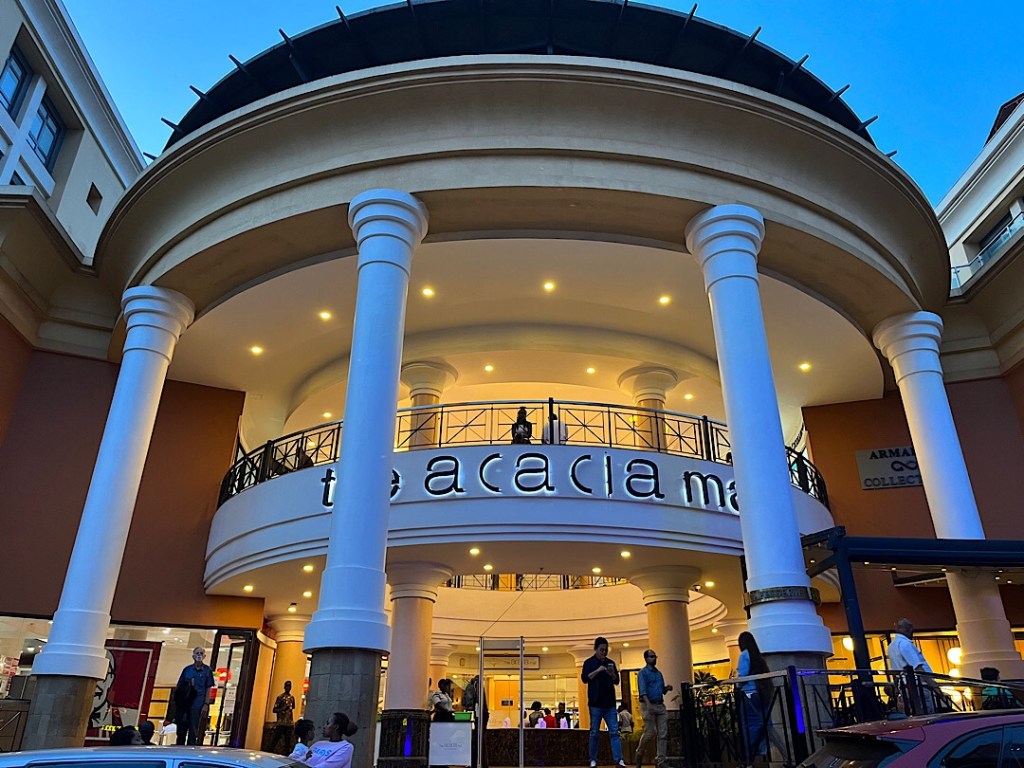
Then… how to pass the several remaining hours until we could reasonably go to bed? Jose and Mari opted to hang out on the hotel’s rooftop terrace, but Steve and I strolled the few blocks to the Acacia Mall, considered by locals to be the fanciest in the capital. A slew of ATM machines line its perimeter, and its facade indeed promised a classy experience within.

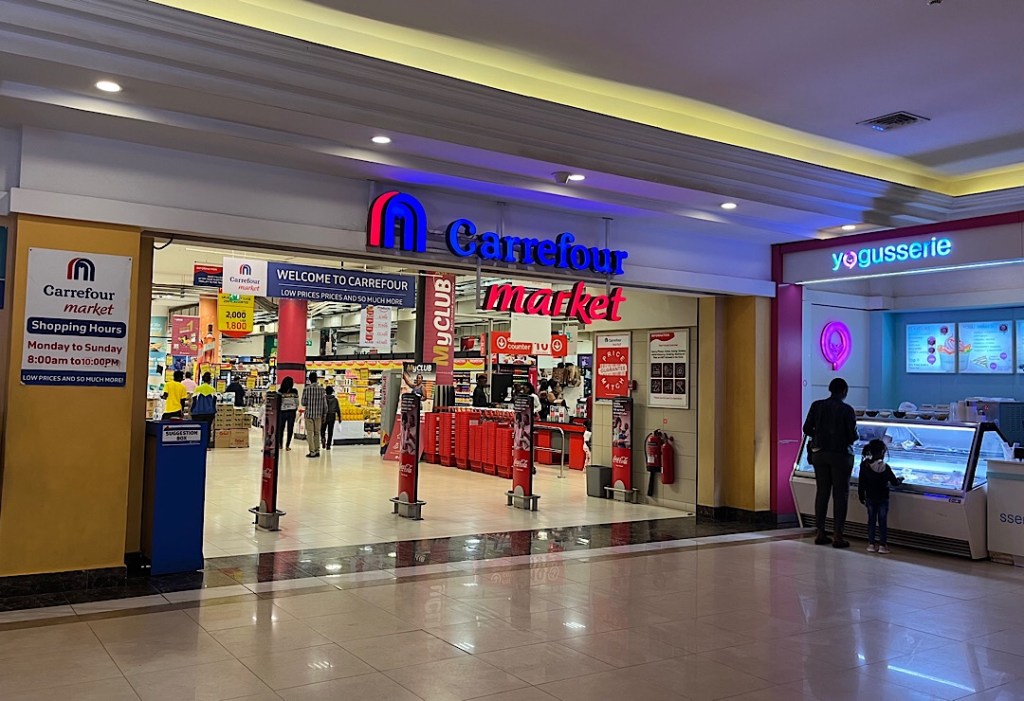
We passed the scrutiny of gun-touting guards and metal detectors, then made a thorough tour of the interior. We found a decent complement of clean, bright shops that could have been plucked from any run-of-the-mill American mall, as well as a busy Carrefour supermarket.

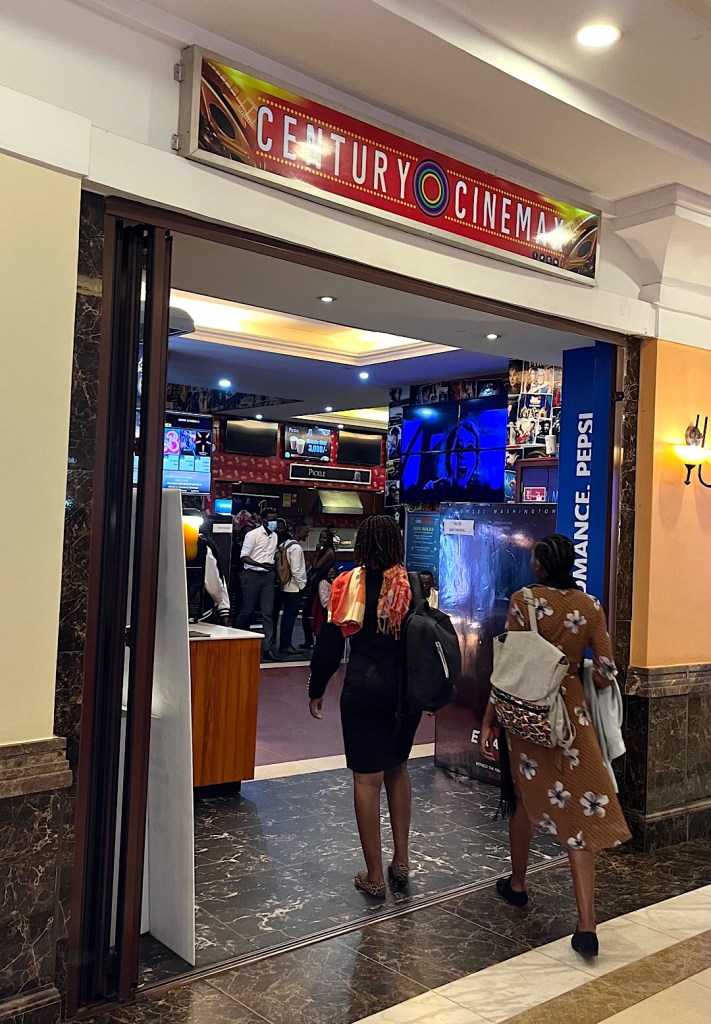
The movie theater was pulling in some customers.

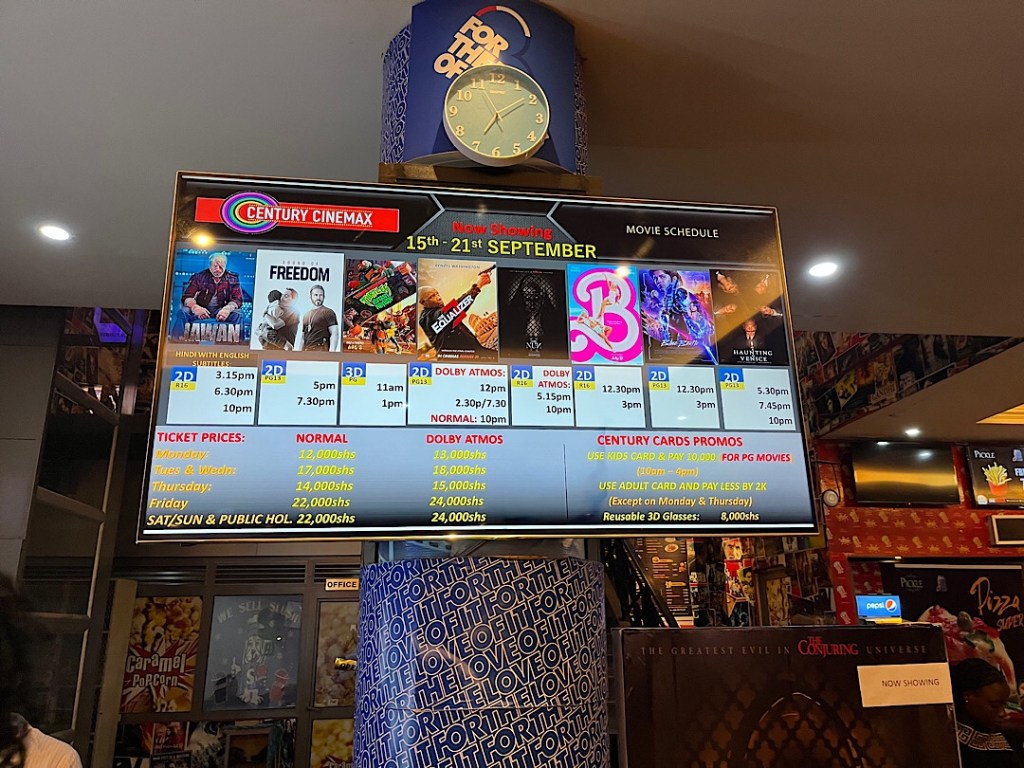
But the last screening of Barbie had started hours earlier.

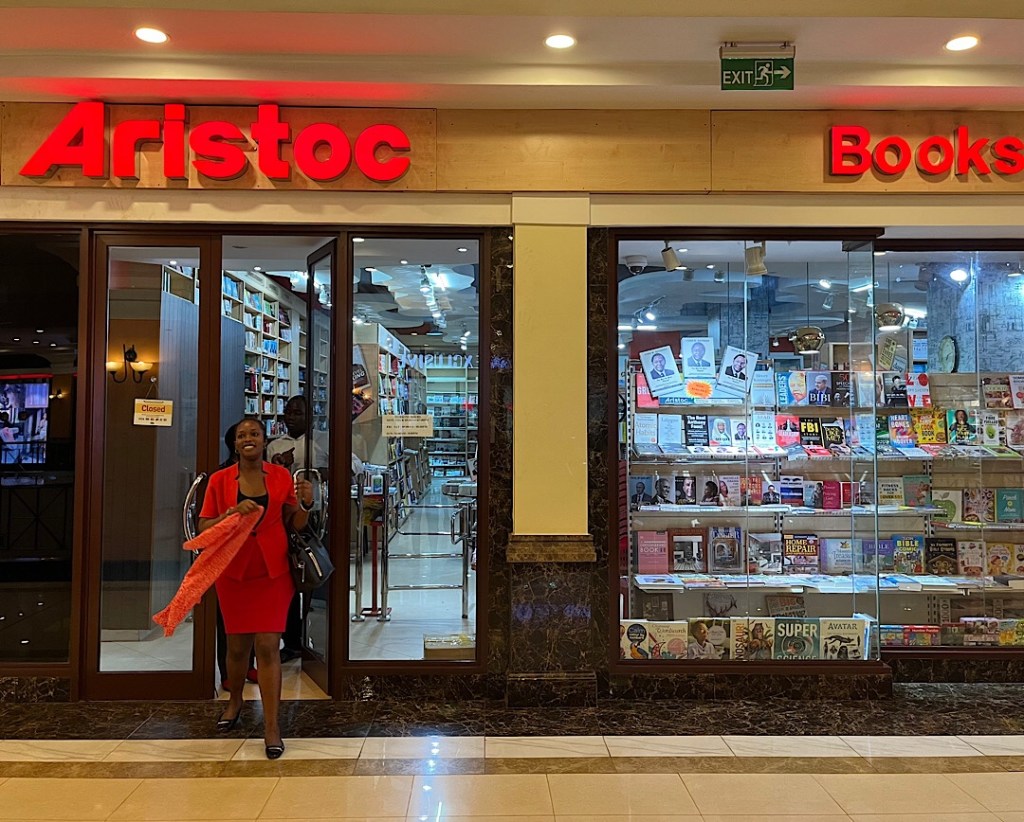
The mall’s bookstore looked impressive, but it was closing as we arrived.

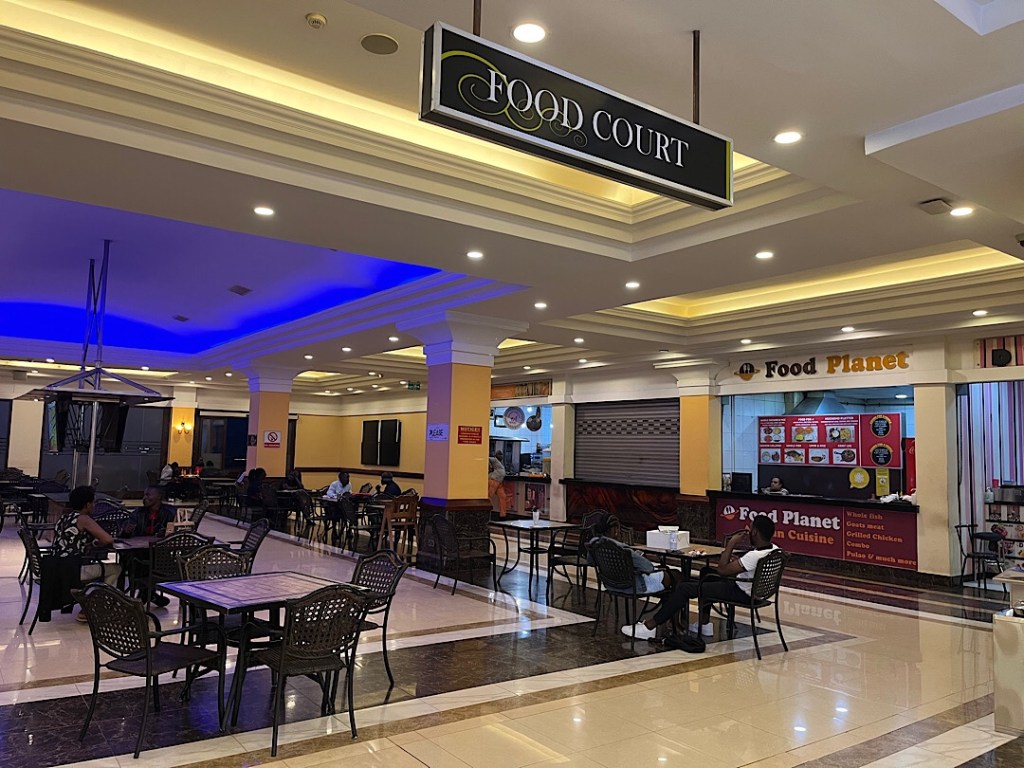
And the dearth of offerings in the food court depressed me.

We could have patronized the Colonel’s big eatery next to the front entrance.

The Indian food back at the hotel seemed a lot more enticing, however. So we made our way back in the dark over the broken, intermittent sidewalks, dodging puddles from the steady rain earlier in the day. Steve and I shared a butter chicken, vegetable pulao, and some garlic nan, washed down with a couple of Lion Special. Once again, it all tasted yummy.

Buckle up

That’s what Steve and I will be doing Friday morning (9/15): buckling up as we take off on perhaps our most ambitious adventure.
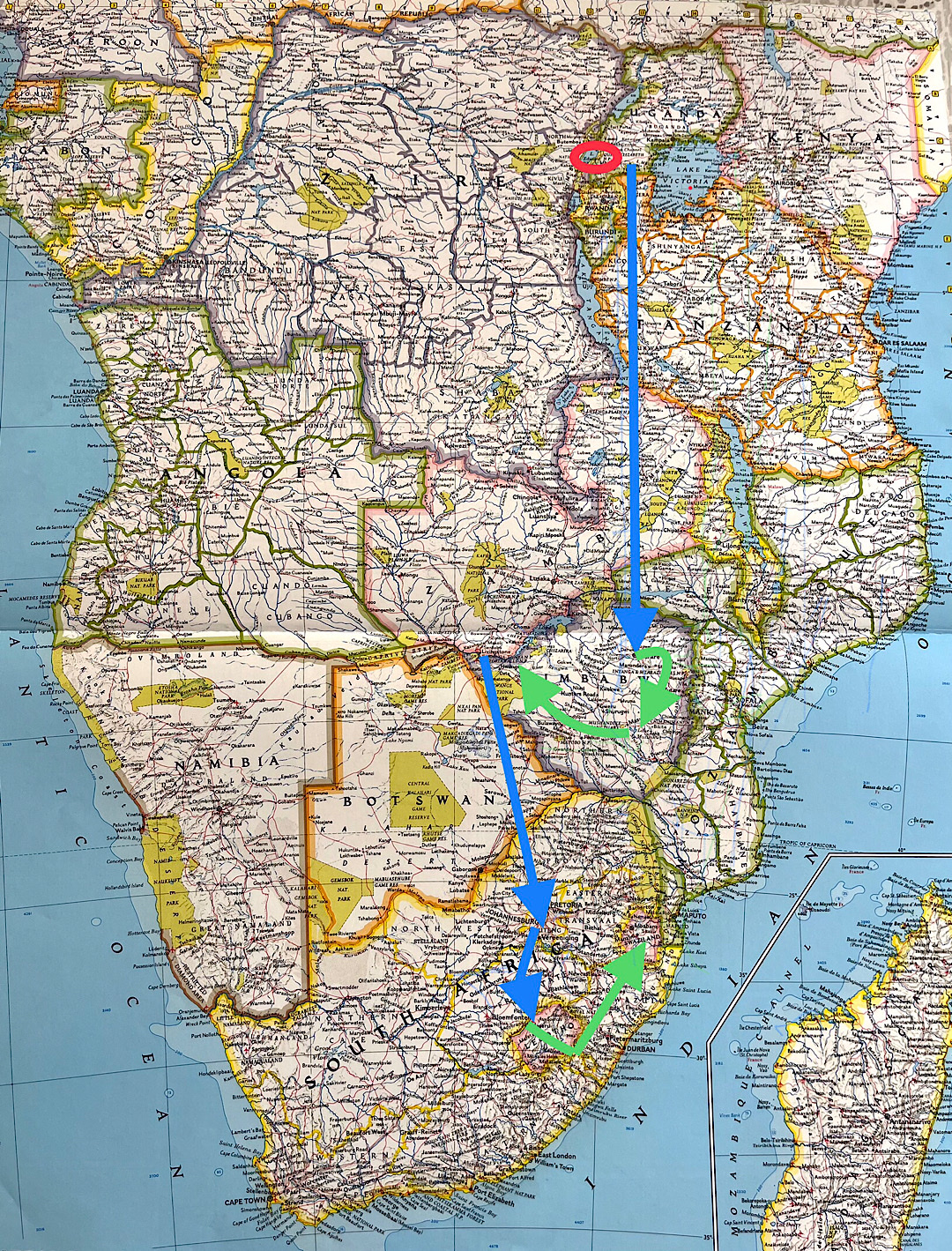
We’re flying off to Africa (via Chicago and Addis Ababa), disembarking in Uganda, which has become one of the few countries to which we’re happy to return. Once again we’ll be visiting the remote village of Nyaka (near where Uganda meets up with the borders of Rwanda and the Democratic Republic of Congo), to take the pulse of the microfinance project there supported by the Women’s Empowerment organization in San Diego. (For almost 10 years we’ve volunteered to be the liaisons between the villagers and their American patrons.)

We will then make our way to Harare, capital of Zimbabwe (once known to the Western world as Rhodesia.) We’ll be renting a Land Rover and driving it into the country’s beautiful eastern mountains (said to be reminiscent of Scotland), then down into a big-game hunting preserve where, trust me, we will not be shooting any animals ourselves. We will move on to the ruins of Great Zimbabwe, the biggest and most impressive stone-walled city in sub-Saharan Africa. After sleeping in a tent on the Land Rover’s roof in Hwange National Park, we’ll wind up at the awesome Victoria Falls, spend a couple of nights at an upscale lodge on the Zambezi River in Zambia, then catch a South African Airlines flight to Johannesburg.

Joburg will be our launch pad for exploring a few more of the world’s microstates. This won’t match our tour of the smallest countries in Europe two years ago. But we should end up knowing more than most folks about the mountain kingdom of Lesotho and mellow little eSwatini (formerly known as Swaziland.) If all goes well, we’ll be home again Oct. 19, five weeks after taking off.

The arrows are my crude effort to show our route. The red encircles the rough area served by the microfinance program. The blue lines are flights and the green ones hint at some of the ground we’ll cover in vehicles.

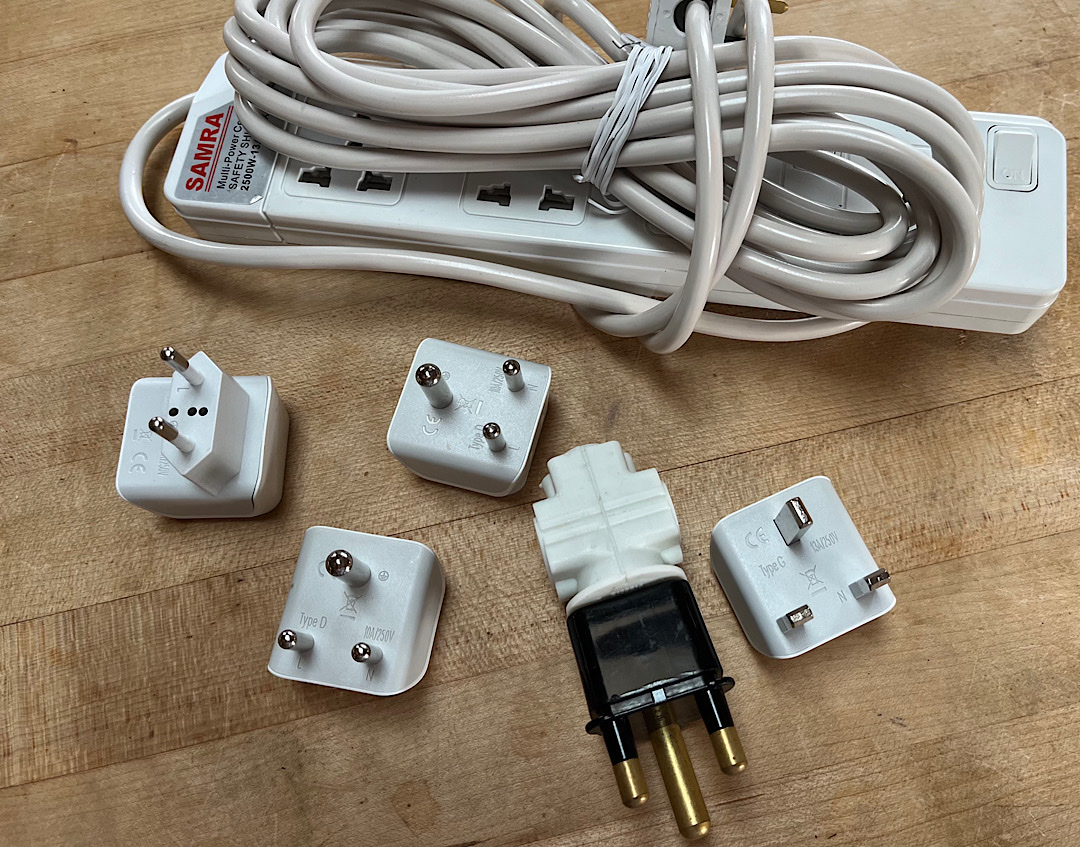
Preparing for this trip has been a challenge. We’ll have to check a duffel bag to carry sleeping bags and towels and other gear for the Land Rover. A motley zoo of electrical adaptors will be necessary to plug into power in this part of the world.

Here’s what we’re packing.

Of course the power is not always on. We know the grid often fails in Southern Africa. I’ll be writing as much as possible, but it may take me a while to post some of my reports. I’m trusting my readers will understand any such delays.